
Sound Therapy for Speech Delay: Helping Your Child Thrive
 By Speech Blubs Team•Mar 9, 2026•12 min.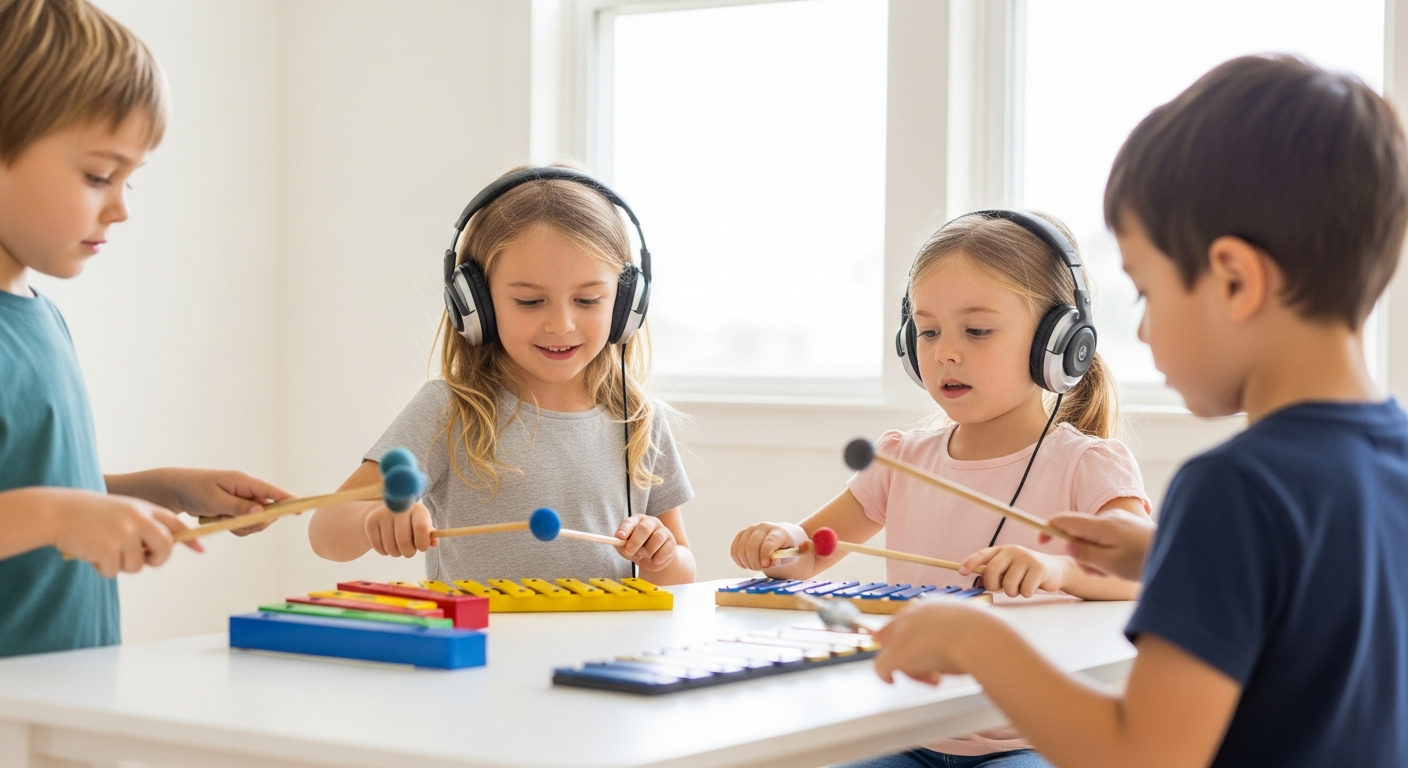
Table of Contents
- Introduction
- What Is Sound Therapy for Speech Delay?
- The Science of Sound: How the Ear Guides the Voice
- Music Therapy: A Harmonious Approach to Communication
- Modern Innovations: Psychoacoustic Music and TLP
- Biofeedback: Seeing the Sounds of Speech
- Why Speech Blubs Complements Sound Therapy
- Practical Strategies for Home
- Setting Realistic Expectations
- Choosing the Right Plan for Your Journey
- Conclusion
- Frequently Asked Questions (FAQ)
Introduction
Have you ever watched your child struggle to find the right words, their eyes searching yours for understanding, while the sounds they produce don’t quite match the thoughts in their heart? It is a deeply emotional experience for any parent. You might wonder if they are hearing the world differently than you are, or if there is a way to bridge the gap between their silent thoughts and spoken language. Statistics suggest that nearly 1 in 4 children will require some form of speech support during their developmental years, making this a common hurdle for families worldwide.
The purpose of this blog post is to explore the innovative world of sound therapy for speech delay and how it can be integrated with modern, joyful learning tools. We will dive into the science of auditory processing, the benefits of music and rhythm in language acquisition, and the emerging technologies that help children "find their voice." At Speech Blubs, we believe every child deserves the chance to speak their mind and heart, and our mission is to provide the "smart screen time" necessary to make that journey effective and fun. By understanding the connection between the ear and the mouth, we can create a supportive environment that fosters confident communication.

What Is Sound Therapy for Speech Delay?
Sound therapy for speech delay is a holistic approach that focuses on the auditory system as the foundation for verbal communication. While we often think of speech as something that happens primarily in the mouth—involving the tongue, lips, and jaw—it actually begins in the ears. The fundamental premise of many sound-based interventions is that the voice can only reproduce what the ear can hear and process accurately.
For children with speech delays, the issue isn't always a lack of ability to move their vocal muscles. Often, it is a challenge in auditory reception or processing. Even if a child’s hearing tests as "normal" in a clinical setting, they may still struggle to differentiate between specific frequencies or process the rapid-fire sequence of sounds that make up human language. Sound therapy aims to "fine-tune" the hearing pathways, ensuring that the brain receives a clear, undistorted signal that it can then translate into clear speech.
The Science of Sound: How the Ear Guides the Voice
To understand why sound therapy for speech delay is so effective, we must look at the work of pioneers like Dr. Alfred Tomatis. He discovered that the ear acts as a primary integrator for language. If there is any confusion in how sounds are received, there will be a corresponding confusion in the output of speech.
The Tomatis Method and Auditory Reception
Dr. Tomatis established that a lack of tone in the voice often indicates a lack of tone in the hearing. His methodology suggests that by exercising the ear muscles and stimulating the inner ear's receptor cells, we can restore the ability to hear missing frequencies. This is particularly important for children who substitute one sound for another or have a "flat" or toneless voice.
Furthermore, research indicates that the right ear typically has a more direct connection to the left hemisphere of the brain, which is the primary center for language processing. Sound therapy often involves training the right ear to become dominant, thereby streamlining the path for language integration. This scientific foundation is part of why we are so passionate about our work at Speech Blubs. We recognize that communication is a multi-sensory experience that requires a harmony between listening and speaking.

Music Therapy: A Harmonious Approach to Communication
Music therapy is another powerful subset of sound therapy for speech delay. Because music and language share fundamental elements—such as rhythm, melody, pitch, and timing—the brain processes them in remarkably similar ways.
Benefits for Social and Emotional Growth
An observational study involving children aged 3.5 to 6 years showed that music therapy could facilitate significant advances in speech development within a short period. Using the Nordoff-Robbins approach, where children actively participate in making music, researchers found improvements in:
- Phonological Capacity: The ability to recognize and manipulate sounds.
- Speech Understanding: A deeper comprehension of sentences and instructions.
- Social Interaction: An increased interest in communicating and building relationships with others.
When a child improvises with a therapist or engages with rhythmic structures, they are practicing the "ebb and flow" of conversation. For a parent whose 3-year-old "late talker" loves animals, the "Animal Kingdom" section of our app offers a similar rhythmic and motivating way to practice "moo" and "baa" sounds, mimicking the turn-taking found in music therapy. You can download Speech Blubs on the App Store or find us on Google Play to see these principles in action.
Modern Innovations: Psychoacoustic Music and TLP
In recent years, "The Listening Program" (TLP) has gained traction as a tool for addressing speech and language disorders. TLP uses psychoacoustically modified music to gently stimulate the speech centers of the brain. This method relies on neuroplasticity—the brain's ability to rewire itself in response to new experiences.
By exposing the ear to different ranges of sound, TLP helps children achieve speech and language milestones. It targets mid-range frequencies (300Hz-5000Hz), which are critical for human speech. As the listener progresses into higher frequencies, they often experience improved clarity, better overall sentence structure, and increased confidence in social settings. This type of intervention is often used by Speech-Language Pathologists (SLPs) as a supplement to traditional therapy, much like how our app serves as a "smart" tool for daily practice.
Biofeedback: Seeing the Sounds of Speech
For older children with residual speech sound disorders (RSSD), such as difficulty with the "r" sound, sound therapy can be enhanced by visual-acoustic biofeedback. This technology allows children to see their speech on a screen.
Using instrumentation like ultrasound probes under the chin or acoustic mapping, children can see a real-time display of their tongue’s position and the resulting sound waves. This bypasses the auditory channel if the child has trouble hearing the difference between their error and the correct sound. By matching a visual target on the screen, they can learn to adjust their articulation. This high-tech approach mirrors our philosophy of using "smart screen time" to turn a challenge into a visual, interactive, and achievable goal.
Why Speech Blubs Complements Sound Therapy
At Speech Blubs, we provide a joyful, effective solution that aligns with the principles of sound therapy. We don’t just want children to watch a screen; we want them to interact, imitate, and engage with the world around them.
Our Mission: Empowering Every Voice
Our company was born from the personal experiences of our founders, who all grew up with speech problems. They created the tool they wished they had—one that blends scientific principles with the power of play. We are committed to providing a screen-free alternative to passive viewing (like mindlessly watching cartoons) by creating a tool for family connection. Our research-backed method is designed to be the bridge between silence and that first, beautiful "I love you."
The Power of Peer-Led Video Modeling
Our unique approach centers on "video modeling." Instead of watching an adult or a cartoon character, children watch other children—their peers—making sounds and words. This activates "mirror neurons" in the brain, making the child much more likely to imitate what they see and hear.
"When children see someone their own age succeeding at a task, their confidence skyrockets. It transforms therapy from a 'chore' into a fun activity with a friend."
For example, if a child is struggling with the "s" sound, seeing a peer slowly and playfully demonstrate the sound in our "Mouth Gym" section can be the breakthrough they need. This is a powerful supplement to sound therapy for speech delay, as it provides both the auditory input and the visual roadmap for success.
Practical Strategies for Home
While professional therapy and specialized tools are vital, there are many ways you can incorporate the principles of sound therapy into your daily routine:
- Face-to-Face Interaction: Always position yourself at your child’s eye level when speaking. This allows them to see the physical movement of your lips and jaw, reinforcing the sound they hear.
- Rhythmic Reading: Choose books with strong rhymes and rhythms. Books like Goodnight Moon or rhyming animal stories are excellent for "surrounding" your child with target sounds.
- Active Listening Games: Play games where your child has to identify sounds (a bell, a whistle, a clap). This sharpens their auditory discrimination skills.
- Mirror Play: Spend time in front of a mirror making silly faces and sounds together. This helps them connect the physical feeling of speech with the auditory output.
- Use Smart Screen Time: Instead of passive videos, use an interactive platform. Ready to get started? Create your account and begin your 7-day free trial today.
Setting Realistic Expectations
It is important to remember that every child’s journey is unique. Sound therapy for speech delay and tools like Speech Blubs are powerful aids, but they are not overnight "cures." Our goal is to foster a love for communication, build foundational skills, and reduce the frustration that often comes with being misunderstood.
Progress might look like a new syllable one week, or the ability to follow a two-step instruction the next. These small victories are the building blocks of confidence. We encourage parents to frame these activities as joyful family learning moments rather than high-pressure training sessions. Consistent, daily engagement is far more effective than sporadic, intense practice.
Choosing the Right Plan for Your Journey
We believe in transparency and providing the best possible value for our community of parents. We offer two main paths to help your child find their voice:
- Monthly Plan: For $14.99 per month, you get full access to our library of 1,500+ activities and peer-led videos.
- Yearly Plan: Our most popular choice is $59.99 per year, which breaks down to just $4.99 per month.
The Yearly Plan is the clear best choice for families. Not only do you save 66% compared to the monthly rate, but the Yearly Plan includes exclusive benefits that are not available with the monthly option:
- A 7-Day Free Trial: Try the full experience before you commit.
- Reading Blubs App: Access to our additional app designed to transition speech skills into early literacy.
- Priority Support: 24-hour support response time to answer any questions you have.
- Early Access: Be the first to try new updates and features.
If you are unsure if your child could benefit, take our quick 3-minute preliminary screener to get a simple assessment and a free 7-day trial. You can also read testimonials from other parents who have seen their children flourish using our approach.
Conclusion
Sound therapy for speech delay offers a fascinating and effective way to look at language development through the lens of the auditory system. By focusing on how children hear and process the world around them, we can better support their ability to speak. Whether through music, specialized listening programs, or interactive video modeling, the goal remains the same: to empower your child to communicate with clarity and confidence.
At Speech Blubs, we are honored to be a part of your family's journey. We combine the science of sound with the joy of play to create a unique learning experience that children actually look forward to. Don't wait to start supporting your child's communication goals.
Ready to see the difference? Sign up for your account today and choose the Yearly plan to get your 7-day free trial, the Reading Blubs app, and the best overall value for your child's future. Let's help them speak their mind and heart together!
Frequently Asked Questions (FAQ)
1. How does sound therapy actually help with speech?
Sound therapy works by stimulating the auditory pathways and the brain's language centers. By improving how a child hears and processes different frequencies, it makes it easier for them to imitate and produce those sounds themselves. It addresses the "input" side of communication so the "output" can be clearer.
2. Is Speech Blubs considered a form of sound therapy?
While Speech Blubs is primarily a speech therapy tool using video modeling, it incorporates many principles of sound therapy. By using peer-led audio and visual cues, it helps children process the frequencies of human speech in a fun, rhythmic way that encourages the brain to build new neural pathways for communication.
3. How long should my child use these tools each day?
Consistency is more important than duration. We recommend short, engaging sessions of 10 to 15 minutes a day. This keeps the experience "joyful" and prevents the child from feeling overwhelmed, making it a sustainable part of your daily routine.
4. What is the difference between an articulation disorder and a language delay?
An articulation disorder is physical in nature, where a child has trouble coordinating their mouth muscles to make specific sounds (like a lisp). A language delay involves difficulty understanding or using words and sentences to communicate meaning. Sound therapy and Speech Blubs can be beneficial for both, as they support the overall auditory-verbal foundation.
About the author