
Supporting Bilingual Kids with Speech Delay Concerns
 By Speech Blubs Team•Mar 12, 2026•14 min.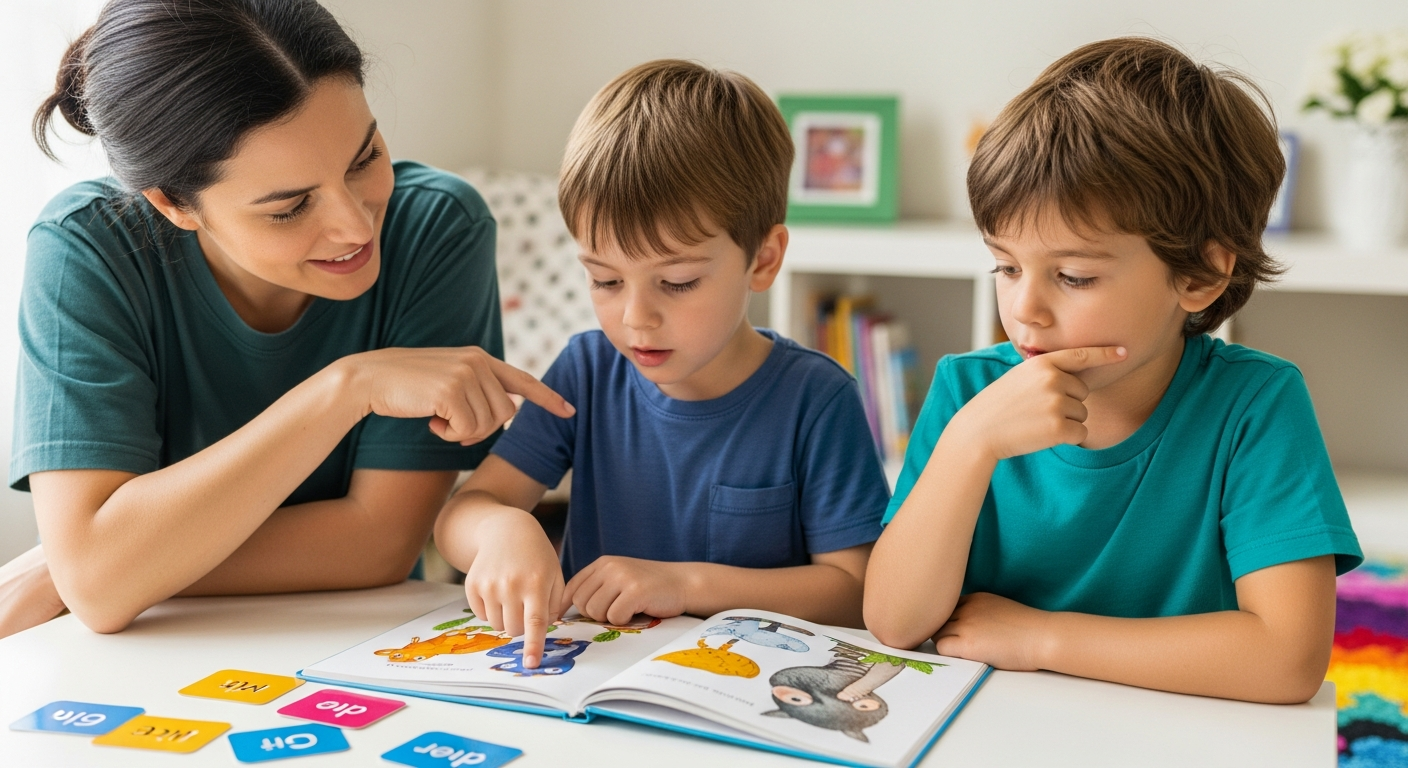
Table of Contents
- Introduction
- Understanding the Bilingual Brain
- The Myth of the Bilingual Delay
- Normal Milestones: What to Expect
- Code-Mixing: Confusion or Mastery?
- When to Seek Support: Identifying Real Red Flags
- How Speech Blubs Supports Bilingual Families
- Strategies for Supporting Your Bilingual Child at Home
- The Value of Early Intervention
- Building Confidence in a Multilingual World
- Frequently Asked Questions (FAQ)
- Conclusion
Introduction
Imagine you are at a playdate. Your toddler is happily stacking blocks while the other children chatter away. You notice that your neighbor’s child, who only hears English, is already putting three words together. Your child, who hears both Spanish and English at home, is mostly using single words and a few gestures. A cold knot of worry forms in your stomach. You start to wonder: Is the second language slowing them down? Should we stop speaking our native language so they can catch up?
If you have ever felt this way, you are not alone. At Speech Blubs, we talk to thousands of parents every day who share these exact concerns. Our mission is to empower children to speak their minds and hearts, and that includes the millions of children growing up in multilingual households. Our founders grew up with speech challenges themselves and created the tool they wished they had—a way to turn "screen time" into "smart time" that actually builds communication skills.

The purpose of this post is to dive deep into the relationship between bilingualism and speech development. We will explore what is normal, what counts as a "red flag," and how you can support your child's journey without sacrificing your family’s cultural heritage. The most important thing to remember is this: Bilingualism does not cause speech delays. While the path to fluency might look a little different for a child learning two languages, the destination is the same—a confident, capable communicator.
Understanding the Bilingual Brain
To understand why a bilingual kids speech delay is often a myth, we first need to look at how the brain processes multiple languages. Research shows that infants are born with the incredible ability to distinguish between all the sounds of all human languages. By the time they are about six months old, their brains start to specialize in the sounds they hear most frequently.
For a bilingual child, this specialization happens for two sets of sounds. This doesn't "overload" the brain. In fact, it does the opposite. Raising a child with multiple languages is like giving their brain a constant workout. It builds cognitive flexibility, improves problem-solving skills, and enhances their ability to focus.
Simultaneous vs. Sequential Bilingualism
There are generally two ways children become bilingual:
- Simultaneous Bilingualism: This happens when a child is exposed to two languages from birth or before the age of three. These children often reach their milestones on a very similar timeline to monolingual children, though their vocabulary is split between two "buckets."
- Sequential Bilingualism: This occurs when a child has already established a foundation in one language and is then introduced to a second (usually after age three), perhaps when they start preschool or daycare. These children might go through a "silent period" where they focus more on listening and processing the new language before they feel comfortable speaking it.
Regardless of the method, the underlying mechanics of language acquisition remain the same. If a child has a genuine speech delay, it will show up in both languages, not just one.

The Myth of the Bilingual Delay
The idea that learning two languages causes a "confusion" or "delay" is a persistent myth that scientists have worked hard to debunk. Years of research have shown that bilingual children develop language skills at the same rate as their monolingual peers.
The confusion often arises because of how we measure a child's progress. If you only count the English words a bilingual child knows, they might appear "behind." However, if you count their total conceptual vocabulary—for example, knowing "dog" in English and "perro" in Spanish counts as two distinct labels for the same concept—most bilingual children are exactly where they should be, or even ahead.
At Speech Blubs, we focus on the process of fostering a love for communication. We don't want parents to feel pressured to hit a specific number by a specific date. Instead, we want to see kids feeling joyful and confident when they try to express themselves. If you are ever feeling uncertain, we recommend taking our quick 3-minute preliminary screener. It involves just nine simple questions and provides you with a personalized assessment and a next-steps plan.
Normal Milestones: What to Expect
Even though every child is unique, there are general milestones that we look for in all children. For bilingual kids, we look at their progress across all the languages they speak.
12 Months: The Foundation
By their first birthday, most children should be:
- Cooing and babbling with different sounds.
- Using gestures like pointing or waving goodbye.
- Responding to their name.
- Understanding simple instructions (like "Give it to me").
18 Months: The Vocabulary Spark
By 18 months, many children are using about 10 to 20 words. In a bilingual home, these words might be a mix. For example, a child might use "Mama," "Milk," "Agua," and "No." All of these count toward their total!
24 Months: Putting it Together
At age two, the "vocabulary explosion" usually happens. Children typically have a vocabulary of 50 or more words and are beginning to combine them into simple phrases like "More juice" or "Dame pan."
3 Years: Complex Conversations
By age three, a child’s speech should be mostly understandable to strangers, even if they still make some sound errors. They should be using sentences with three or more words and following more complex, multi-step directions.
Key Takeaway: Bilingual children should reach these milestones at roughly the same age as monolingual children. The difference is that their total word count is distributed across two languages.
Code-Mixing: Confusion or Mastery?
Have you ever heard your child say something like, "I want my zapatos" or "Can we go to the parque?" This is called code-mixing (or code-switching), and it is a perfectly normal, healthy part of bilingual development.
Parents often worry that code-mixing is a sign of confusion. In reality, it is a sign of linguistic sophistication. Your child is using all the tools in their "language toolbox" to get their point ahead. If they can’t remember the word for "shoes" in English, they bridge the gap with the Spanish word they do know. This shows that their brain is flexible and focused on the goal: communication.
As they get older and gain more exposure, they will naturally learn which words belong to which language and how to separate them based on who they are talking to. At Speech Blubs, we celebrate these moments because they show a child is actively engaging with their world. You can see how other families handle these milestones by reading our parent testimonials.
When to Seek Support: Identifying Real Red Flags
While bilingualism isn't the cause of delay, about 1 in 4 children will need some form of speech support regardless of how many languages they speak. It is important to know when a struggle is a normal part of learning and when it might be a sign that your child needs a little extra help.
You should consider consulting a professional if your child:
- Does not respond to sounds or their name by 12 months.
- Does not use any gestures (pointing, waving) by 12 months.
- Has a total vocabulary (across all languages) of fewer than 10 words by 18 months.
- Is not combining words by age two.
- Shows a significant loss of skills they previously had.
- Seems excessively frustrated when trying to communicate.
If you notice these signs, the first step is often an evaluation by a Speech-Language Pathologist (SLP). If possible, look for an SLP who has experience with bilingual children. They will know how to assess your child’s skills in both languages to get a complete picture.
How Speech Blubs Supports Bilingual Families
At Speech Blubs, we’ve created a "smart screen time" experience that is specifically designed to bridge the gap for children who need a boost. Our approach is rooted in video modeling.
The Power of Peer-to-Peer Learning
Traditional cartoons are often passive; children sit and watch brightly colored characters move around without really engaging their own speech muscles. Speech Blubs is different. Our app features videos of real children—not cartoons—performing speech exercises, making sounds, and saying words.
This triggers "mirror neurons" in your child’s brain. When they see a peer making a "B" sound or saying "Lion," their brain naturally wants to imitate them. It’s like a digital playdate where the goal is to learn and have fun together.
Practical Scenario: The Animal Kingdom
For a parent whose 3-year-old "late talker" loves animals but is struggling to bridge their two languages, the "Animal Kingdom" section of our app is a great starting point. Imagine your child watching a peer roar like a lion or say "Elephant." Because the visual is so clear and the peer is so engaging, the child feels motivated to join in. They aren't just watching; they are practicing the motor movements needed for speech in a low-pressure, joyful environment.
You can download Speech Blubs on the App Store or get it on Google Play to see this methodology in action.
Strategies for Supporting Your Bilingual Child at Home
Beyond using the app, there are many ways you can create a language-rich environment at home.
- Stick to the "One Person, One Language" (OPOL) or "Minority Language at Home" (ML@H) methods if they work for you. However, don't feel like you have to be a drill sergeant. The most important thing is that communication feels natural and loving.
- Read Together Daily: Read books in both languages. Look at the pictures and talk about what you see. You don't even have to read the text exactly—just narrate the story!
- Narrate Your Day: Talk about what you are doing while you are doing it. "I am washing the green apple. Now I am cutting the apple." This provides constant, high-quality language input.
- Don't Drop a Language: One of the biggest mistakes parents are often told to make is to drop their native language to "help" the child learn the majority language (like English). This is rarely helpful and can actually be harmful. It can damage the child’s connection to their family and culture, and it deprives them of the cognitive benefits of bilingualism.
- Use "Smart" Alternatives to TV: Instead of letting your child watch hours of passive YouTube videos, switch to interactive tools. Our Yearly plan offers the best value for this, as it includes the extra Reading Blubs app, which helps transition those early speech skills into literacy.
The Value of Early Intervention
If your child does have a speech delay, the best thing you can do is act early. Early intervention takes advantage of the brain’s incredible plasticity during the toddler years. It’s not about "fixing" your child; it’s about giving them the tools they need to reduce frustration and build confidence.
Speech Blubs is a powerful supplement to professional therapy. Many SLPs actually recommend our app to families because it encourages children to practice at home between sessions. By making practice feel like play, children are more likely to engage and make progress.
To get started with the full suite of features, including early access to new updates and a 24-hour support response time, we recommend the Yearly Plan. Here is how our pricing breaks down:
- Monthly Plan: $14.99 per month. (Great for a short-term boost).
- Yearly Plan: $59.99 per year. This is the clear best choice for families. It breaks down to just $4.99 per month—a 66% savings!
The Yearly Plan also includes a 7-day free trial, so you can explore all the activities with your child before committing. Plus, you get the Reading Blubs app included at no extra cost. Ready to get started? Create your account and begin your 7-day free trial today.
Building Confidence in a Multilingual World
It is completely normal to feel a bit of "parent guilt" or worry when it comes to speech. We want the best for our children, and we want them to be able to make friends and succeed in school. If you are raising a bilingual child, you are giving them a massive head start in life, even if the beginning feels a little slow.
Think of it like building two houses at once instead of one. It might take a little longer to get the roofs on both, but once they are finished, your child will have twice the space to live and grow.
Our goal at Speech Blubs is to make that building process joyful. We want to replace the "Is something wrong?" anxiety with "Look what they just said!" excitement. By using peers as teachers, we create a safe space where mistakes are just part of the fun.
Frequently Asked Questions (FAQ)
1. Does speaking two languages at home cause speech delays?
No. Scientific research consistently shows that bilingualism does not cause speech or language delays. Bilingual children reach major milestones—like saying their first words and combining words—at the same ages as children who speak only one language.
2. My child mixes English and Spanish in the same sentence. Is this a sign of confusion?
Not at all! This is called code-mixing, and it’s a sign of a very active and capable brain. Your child is using their entire vocabulary to communicate their needs. As they get older and receive more exposure to both languages, they will naturally learn to separate them based on the context.
3. Should we stop speaking our native language if our child is struggling with English?
No. Experts generally recommend that parents speak the language they are most comfortable with. This ensures your child receives high-quality, grammatically correct input. Dropping a native language can hinder a child's overall language development and impact family bonding.
4. How can I tell if my bilingual child actually has a delay?
The key is to look at their progress in both languages combined. If they are not meeting milestones like babbling by 12 months, using 10+ words by 18 months, or combining words by 24 months in any language, you should consult an expert. You can also use the Speech Blubs preliminary screener for a quick assessment.
Conclusion
Navigating the world of bilingualism can feel like a complex journey, but it is one of the greatest gifts you can give your child. While the worry about "bilingual kids speech delay" is common, the science is clear: your child’s brain is more than capable of handling multiple languages.
Remember to look at the big picture. Count every word, every gesture, and every attempt to communicate as a victory. Focus on creating a home where language is a source of joy, not a source of stress. Whether you are singing songs in Mandarin, reading stories in French, or practicing animal sounds in English with Speech Blubs, you are building a foundation that will serve them for a lifetime.
If you are looking for an immediate, effective, and joyful way to support your child’s development, we invite you to join our community. Our "smart screen time" is a screen-free alternative to passive viewing, focusing on connection and peer-to-peer imitation.
Don’t wait to start building your child’s confidence. Download Speech Blubs on the App Store or Google Play to begin your journey today. For the best value and access to all our specialized features, including the 7-day free trial and the Reading Blubs app, be sure to select the Yearly plan. Let’s help your child speak their mind and heart, in every language they choose to speak!
About the author