
Sweet & Easy Valentine Crafts for Kids
 By Speech Blubs Team•Jan 13, 2026•23 min.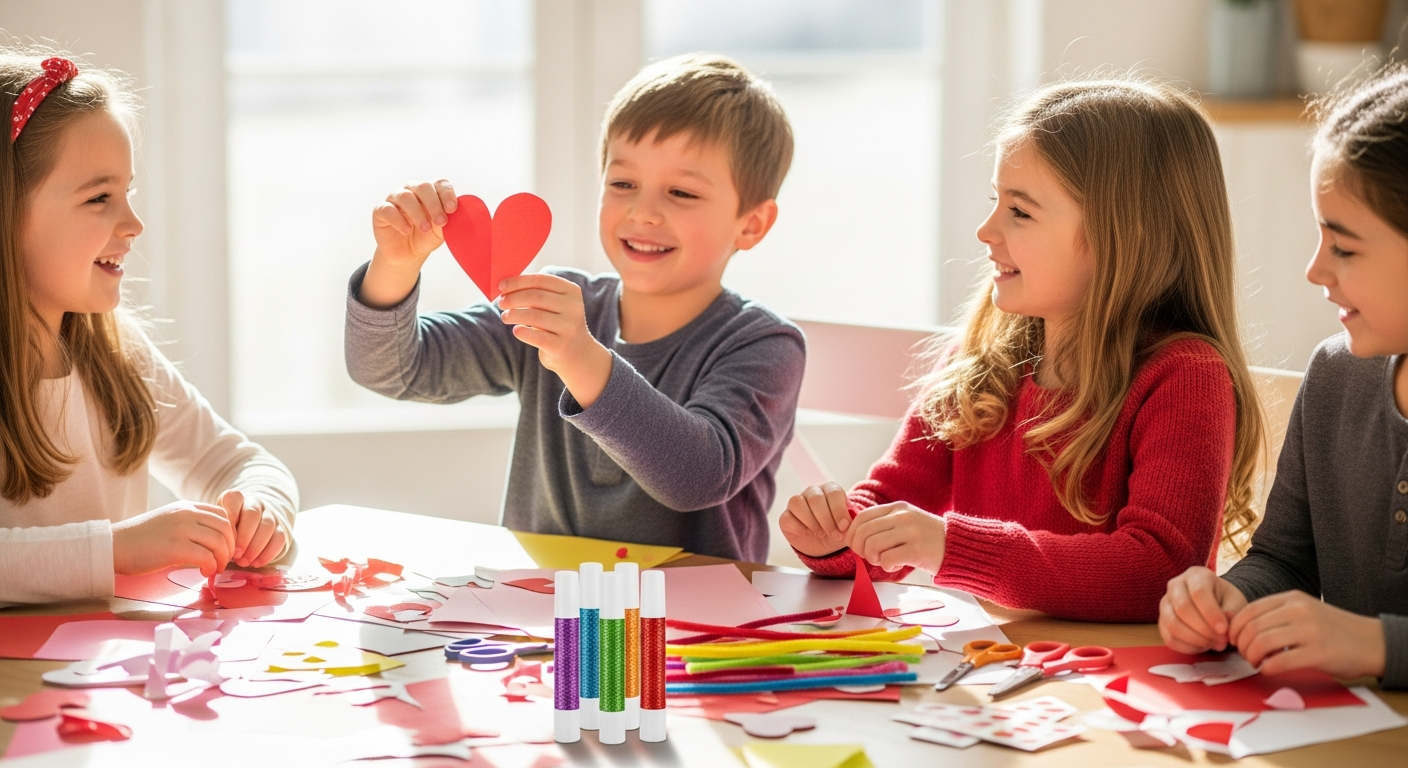
Table of Contents
- Why Crafts Matter: Beyond the Glitter and Glue
- Our Favorite Easy Valentine Crafts for Kids
- Making Craft Time "Smart Screen Time" with Speech Blubs
- Is Your Child Ready for a Communication Boost?
- Why Choose Speech Blubs? Our Commitment to Your Family
- Unlock the Full Potential: Our Best Value Plans
- Conclusion
Valentine's Day is a time when hearts, kindness, and expressions of affection fill the air, creating a magical atmosphere for families. But beyond the sweet treats and warm sentiments, did you know that engaging in simple craft activities can be a powerful catalyst for your child's development, especially in communication? Imagine a cozy afternoon, surrounded by colorful paper, glitter, and glue, as your little one eagerly describes the "big red heart" they're making, or giggles while imitating the sound of a "buzzing bee" on their handmade card. These seemingly small moments are rich with opportunities for learning, bonding, and fostering essential speech and language skills. This post will guide you through a delightful collection of easy Valentine's Day crafts, offering practical tips to turn each creative endeavor into a joyful learning experience, helping your child speak their minds and hearts, and strengthening your family connections along the way.

Why Crafts Matter: Beyond the Glitter and Glue
Crafting is far more than just a fun way to pass the time; it's a multi-sensory journey that profoundly impacts a child's holistic development. From the moment tiny fingers grasp a crayon to the proud display of a finished masterpiece, children are actively engaging numerous cognitive and physical processes. For parents, these moments are not just about the end product, but about the process, the shared laughter, and the invaluable conversations that unfold.
Benefits for Speech and Language Development
One of the most significant, yet often overlooked, benefits of crafting is its direct contribution to speech and language development. As children engage with materials and create, they naturally encounter situations that encourage verbal expression and comprehension.
Vocabulary Expansion
Every craft introduces new words. Think about the "texture" of the felt, the "sparkle" of the glitter, the "smooth" paper, or the "crinkly" tissue. When you describe these attributes, you're building your child's internal dictionary. As you work together, you might discuss "cutting," "gluing," "folding," "stamping," or "painting." For a child whose vocabulary might be lagging, describing their actions and the materials they're using provides vital repetition and context. At Speech Blubs, we believe in empowering children to "speak their minds and hearts," and a rich vocabulary is fundamental to achieving this. Engaging in crafts naturally provides countless opportunities for parents to model and prompt new words, expanding their child's expressive language.
Following Directions
Crafting involves a sequence of steps, making it an excellent exercise for developing auditory processing and the ability to follow multi-step directions. "First, cut out the heart, then glue it onto the card." This practice is crucial for school readiness and daily communication. As children follow instructions, they also learn to ask clarifying questions, further enhancing their communicative competence.

Expressing Ideas and Feelings
A craft is a tangible representation of a child's thoughts and emotions. When they create a Valentine for a grandparent, they're learning to express love and appreciation. Asking them, "Who are you making this for?" or "What do you want to tell them?" encourages them to articulate their feelings. For children who might struggle with verbalizing complex emotions, the visual nature of a craft can be a bridge, allowing them to point, gesture, and use emerging words to convey their message. This aligns perfectly with our mission at Speech Blubs to help children find their voice, regardless of where they are on their communication journey.
Social-Emotional Growth
Crafting often involves sharing materials, taking turns, and collaborating, especially in a family setting. These interactions foster crucial social skills, empathy, and patience. When a child proudly presents their craft, they experience a boost in self-esteem and confidence, which are vital components of effective communication. A confident child is more likely to engage in conversation and share their thoughts.
Fine Motor Skills & Cognitive Development
Beyond language, crafts are a workout for those small muscles in the hands and fingers, developing fine motor skills crucial for writing, drawing, and daily tasks. Cutting with scissors improves hand-eye coordination and bilateral integration. Gluing small pieces requires precision. Moreover, planning a craft, choosing colors, and problem-solving (e.g., "How can I make this stand up?") stimulate cognitive functions like creativity, critical thinking, and spatial reasoning.
Building Confidence & Family Connection
There's immense joy and pride in creating something with your own hands. Completing a craft, no matter how simple, provides a sense of accomplishment for children. This boosts their self-confidence and willingness to try new things, including new words and phrases. Most importantly, crafting together creates precious moments of shared experience. It's an opportunity to unplug from digital distractions, engage in meaningful conversation, and build lasting family memories. These joyful, connected moments are at the heart of what we champion at Speech Blubs, providing a powerful tool for family connection through "smart screen time" experiences that blend scientific principles with play.
Our Favorite Easy Valentine Crafts for Kids
We've curated a collection of simple yet incredibly engaging Valentine's Day crafts that require minimal supplies and can be adapted for various age groups. Remember, the goal is not perfection, but participation, exploration, and conversation!
Heart-Themed Creations
Hearts are the quintessential symbol of Valentine's Day, and there are countless ways to incorporate them into fun crafts.
Heart Stamps
This craft is wonderfully simple and endlessly customizable, perfect for even the littlest hands.
- How to make it: You can use various items to create heart stamps. A potato cut in half with a heart shape carved into it works beautifully. For an even easier option, bend a toilet paper roll into a heart shape and secure it with tape. Dip the stamp into paint and press it onto paper.
- Language opportunities: Talk about "red paint," "pink paint," "stamping," "making a heart," "press down," "lift up." Ask, "How many hearts did you stamp?" or "What color is your heart?"
- Speech Blubs connection: For a child focusing on action verbs, this is a great chance to practice "stamp" or "press." Our app includes various categories where children can learn new verbs and expand their understanding of actions, making a perfect complement to hands-on play.
Paper Heart Wreaths
A lovely decoration that allows for color recognition and sequencing.
- How to make it: Cut strips of construction paper. Fold each strip into a heart shape, securing the ends with glue or tape. Link the hearts together to form a chain, then connect the ends to create a wreath. Alternatively, cut out many paper hearts of different sizes and colors, and glue them onto a paper plate with the middle cut out to form a collage wreath.
- Language opportunities: Discuss "long strips," "short strips," "different colors," "big hearts," "small hearts." Practice counting the hearts. "Can you make a red heart? Now a pink heart?"
- Speech Blubs connection: If your child is working on descriptive words or colors, use the "Colors" section of Speech Blubs to reinforce learning before or after the craft. Then, identify the colors on their wreath using the new vocabulary.
Suncatchers
These beautiful creations brighten any window and are surprisingly easy to make.
- How to make it: Cut two large heart shapes out of contact paper. Place one heart sticky-side up. Let your child tear or cut small pieces of tissue paper (red, pink, purple, white) and stick them onto the contact paper. Once covered, place the second contact paper heart sticky-side down on top, sealing the tissue paper inside. Trim any excess, punch a hole, and hang! For older children, crayon shavings melted between wax paper can create a stained-glass effect.
- Language opportunities: Focus on "sticky," "colorful," "see-through," "light," "dark." Talk about tearing the paper: "rip, rip, rip!" and placing it "on top."
- Speech Blubs connection: Children learning about spatial concepts like "on top," "underneath," or "next to" can practice these phrases while arranging their tissue paper pieces. Our app provides various sections, like "Talk About It," designed to build these foundational language skills through engaging activities.
3D Paper Hearts/Bouquets
A charming way to create gifts or decorations.
- How to make it: Cut several paper hearts of the same size. Fold each heart in half vertically. Glue one half of a folded heart to one half of another, repeating until all hearts are connected to form a 3D shape. Attach to a craft stick or straw to create a "flower" stem, add paper leaves, and place in a decorated cup for a homemade bouquet.
- Language opportunities: Practice "fold," "glue," "attach," "stem," "leaves," "bouquet." Discuss who the bouquet is for and what message it conveys.
- Speech Blubs connection: If your child is working on prepositions like "in" or "on," placing the finished heart flowers "in" the cup or "on" the table offers a natural opportunity for practice.
Cardboard Lacing Hearts
This activity is fantastic for developing fine motor control and concentration.
- How to make it: Cut a heart shape from sturdy cardboard. Punch holes around the edge of the heart with a hole punch. Provide yarn or shoelaces for your child to "lace" through the holes.
- Language opportunities: Focus on words like "lace," "through," "hole," "in," "out." Discuss patterns they might be making with the lacing. "Are you lacing it up or down?"
- Speech Blubs connection: This craft is perfect for children practicing sequential thinking and direction-following. It can be paired with activities in Speech Blubs that focus on "first, then, next" instructions, reinforcing both fine motor and cognitive skills.
Handprint & Fingerprint Keepsakes
These crafts capture a moment in time, creating cherished mementos while being incredibly easy and personal.
Fingerprint Heart Tree
A beautiful and sentimental art piece.
- How to make it: Draw or paint a tree trunk with branches on a piece of paper. Dip your child's finger in pink or red paint and have them press their prints onto the branches to create heart-shaped leaves.
- Language opportunities: Talk about "branches," "leaves," "fingerprints," "making dots," "many, many." Count the fingerprints as they are made.
- Speech Blubs connection: This craft can be used to practice counting and color identification. If your child is working on identifying body parts, you can talk about their "finger" as they make the print.
Handprint Bouquets/Butterflies
Sweet crafts that highlight those quickly growing little hands.
- How to make it: Trace your child's hands on colored paper. Cut them out. These handprints can be used as "flowers" in a bouquet (attached to straws) or combined to create butterfly wings (glued to a toilet paper roll body).
- Language opportunities: Focus on "trace," "cut," "my hand," "your hand," "wings," "flower." Ask, "Whose hand is this?" and "What color is your handprint?"
- Speech Blubs connection: For children learning to identify body parts or express possession, this is a great practical application. You can say, "This is my handprint," or "This is your handprint."
Thumbprint Heart Magnets
Adorable and easy gifts for loved ones.
- How to make it: Using Crayola's air-dry clay, have your child press their thumbprints into small heart shapes. Once dry, paint the hearts and glue a small magnet to the back.
- Language opportunities: Talk about "clay," "soft," "hard" (when dry), "paint," "magnet." Discuss how the magnet "sticks" to metal.
- Speech Blubs connection: This activity reinforces concepts of "soft" vs. "hard" and provides a tangible item to describe.
Recycled & Household Item Crafts
Turning everyday items into treasures encourages creativity and resourcefulness.
Toilet Paper Roll Vase
An eco-friendly and personalized gift.
- How to make it: Decorate a toilet paper roll with paint, glitter, or paper. This can serve as a small vase for a single paper flower or a collection of small ones.
- Language opportunities: Discuss "decorating," "recycling," "saving," "flower holder." "What colors will you use to decorate your vase?"
- Speech Blubs connection: This craft offers excellent opportunities to discuss "before" and "after" concepts (before decorating, after decorating).
Paper Bag Air Balloons
Simple, charming, and fun to hang.
- How to make it: Decorate a small paper bag (e.g., lunch bag) with hearts. Attach a small paper "basket" to the bottom with string. You can punch a hole at the top and add string to hang it.
- Language opportunities: Talk about "up," "down," "flying," "basket," "balloon." "Where will your balloon fly?"
- Speech Blubs connection: Concepts of "up" and "down" or "light" and "heavy" can be explored while making and hanging the balloon.
Cereal Hearts (Bird Feeders)
A kindness craft that benefits nature.
- How to make it: Thread O-shaped cereal onto pipe cleaners shaped into hearts. These can be hung outside for birds after enjoying them indoors as décor.
- Language opportunities: Talk about "cereal," "stringing," "pipe cleaner," "for the birds," "eating." "Are the birds hungry?"
- Speech Blubs connection: This craft lends itself to talking about animals ("bird"), food ("cereal"), and simple actions ("eat," "hang").
Sensory & Play-Based Crafts
Engage multiple senses and provide unique tactile experiences.
Valentine Playdough
A delightful sensory experience with a festive twist.
- How to make it: Make homemade playdough (many no-cook recipes exist) and add red food coloring, glitter, or even a touch of chocolate extract for a festive scent. Provide heart-shaped cookie cutters.
- Language opportunities: Focus on adjectives like "soft," "squishy," "smelly" (if scented), "red," "sparkly." Practice action verbs like "roll," "squish," "cut," "make."
- Speech Blubs connection: Playdough is fantastic for practicing descriptive language. Our "Talk About It" section in Speech Blubs encourages children to describe objects, textures, and actions, making it a perfect partner to playdough fun.
Borax Crystal Hearts
A fascinating science experiment disguised as a craft.
- How to make it: Shape pipe cleaners into heart forms. Suspend them in a solution of hot water and Borax (adult supervision required for mixing). Over 24 hours, crystals will form on the hearts.
- Language opportunities: Discuss "crystal," "grow," "change," "solution," "science," "sparkly." "What do you think will happen?"
- Speech Blubs connection: This activity encourages prediction and observation, excellent for cognitive and language development. It’s a great way to talk about cause and effect.
Wearable & Giftable Crafts
Create items that can be worn or given as thoughtful presents.
Valentine Heart Wands
Perfect for imaginative play and dress-up.
- How to make it: Cut out two matching paper hearts. Decorate them. Glue them together with a craft stick or dowel sandwiched in between. Add ribbons for extra flair.
- Language opportunities: Talk about "magic," "sparkly," "wave," "wish," "dress-up." "What kind of magic will your wand make?"
- Speech Blubs connection: Engaging in imaginative play with props like a wand can encourage narrative skills and expressive language.
Pipe Cleaner Rose Rings
A simple and sweet accessory.
- How to make it: Twist a red pipe cleaner into a rose shape. Form the remaining length into a ring to fit your child's finger.
- Language opportunities: Focus on "twist," "bend," "rose," "ring," "finger." "What color is your rose?"
- Speech Blubs connection: This craft helps develop fine motor skills essential for future writing, while also providing a prop to talk about colors and shapes.
Creative Art Projects
These crafts encourage artistic expression and experimentation with different mediums.
Watercolor Cards
Beautiful, personalized cards that allow for artistic freedom.
- How to make it: Provide watercolor paints and paper. Encourage children to paint hearts, patterns, or free-form designs. Once dry, fold into cards and add a message.
- Language opportunities: Talk about "blending colors," "wet," "dry," "painting," "making a card." Ask, "What colors did you mix?"
- Speech Blubs connection: Practicing color names and describing the painting process helps build vocabulary and narrative skills.
Q-Tip Painted Heart Art
A unique way to explore painting and fine motor control.
- How to make it: Draw a large heart outline on paper. Provide Q-tips and various colors of paint. Have your child use the Q-tip to dot paint within the heart outline.
- Language opportunities: Focus on "dot, dot, dot," "mixing colors," "inside the line," "outside the line." Practice counting the dots.
- Speech Blubs connection: This activity hones fine motor skills and offers opportunities to reinforce prepositions ("inside," "outside") and counting.
Making Craft Time "Smart Screen Time" with Speech Blubs
While hands-on crafts provide invaluable screen-free bonding time, we understand that modern parenting often involves a balance. At Speech Blubs, we've carefully crafted an app that transforms screen time into "smart screen time," a powerful tool for developing communication skills that perfectly complements your crafting adventures.
Our mission at Speech Blubs is to empower children to "speak their minds and hearts," and our app was born from the personal experiences of our founders, who all grew up with speech problems. They created the tool they wished they had—an immediate, effective, and joyful solution for the 1 in 4 children who need speech support. We blend scientific principles with play, using a unique "video modeling" methodology where children learn by watching and imitating their peers. This active engagement is a powerful alternative to passive viewing, making it a natural extension of interactive play like crafting.
How Speech Blubs Complements Craft Activities
Imagine this scenario: you're making a "Heart Dinosaur" craft with your child, cutting out various colored paper hearts and assembling them.
- Vocabulary Reinforcement: While cutting, you can say, "Let's cut the red heart!" Afterward, you can open Speech Blubs to the "Actions" section and practice words like "cut," "glue," "paint," or "make" by watching and imitating other children.
- Descriptive Language: When choosing colors for your "Watercolor Cards," you can ask, "What color will you use for the sky?" Then, reinforce those color names in Speech Blubs' "Colors" section. The app features diverse content designed to expand vocabulary related to colors, shapes, animals, and more.
- Emotional Expression: After making a "Handprint Bouquet" for a loved one, you can discuss the feelings associated with giving and receiving gifts. Speech Blubs has sections dedicated to emotions, helping children identify and articulate how they feel, aligning with our goal for them to "speak their minds and hearts."
- Following Directions: Many crafts, like the "Borax Crystal Hearts," involve multi-step instructions. Speech Blubs includes activities that encourage following sequences, strengthening comprehension skills vital for both crafting and daily life.
Speech Blubs acts as a reinforcing tool, taking the vocabulary and concepts learned during hands-on play and providing a dynamic, interactive platform for practice and generalization. It's about taking the joy of creating a "No-Sew Heart Pillow" and then using the app to talk about "soft," "pillow," or "sleep." We provide a powerful tool for family connection, where you and your child can engage with educational content together, building skills and confidence.
Is Your Child Ready for a Communication Boost?
Sometimes, as parents, we have a gut feeling that our child might need a little extra support with their speech and language. It's a common concern, and early intervention can make a world of difference. If you're wondering if your child could benefit from a structured and playful approach to communication development, we've made it easy to get some clarity.
Take our quick 3-minute preliminary screener. It involves 9 simple questions designed to provide you with an immediate assessment and a personalized next-steps plan. This isn't a diagnostic tool, but a helpful guide to understand your child's communication profile and see how Speech Blubs might be able to assist. Completing the screener also gives you access to a free 7-day trial of our app, allowing you to experience our unique learning method firsthand.
Why Choose Speech Blubs? Our Commitment to Your Family
At Speech Blubs, we are deeply committed to providing an effective and joyful solution for children's speech and language development. Our founders, driven by their own childhood experiences with speech challenges, envisioned an app that could truly make a difference – a tool they wished they had when they were young. This personal connection fuels our dedication to every child and family we serve.
We pride ourselves on our scientifically-backed methodology, particularly our "video modeling" technique. This unique approach leverages the power of mirror neurons, allowing children to learn by observing and imitating their peers. This isn't passive screen time; it's active, engaging, and proven effective, earning us high ratings on the MARS scale, which measures the quality and effectiveness of health apps. You can learn more about the research behind our methods here.
But don't just take our word for it; the true testament to our impact comes from the families who use Speech Blubs every day. We receive countless stories from parents describing the breakthroughs their children have achieved, from saying their first words to confidently expressing complex thoughts. These testimonials highlight how our app helps build confidence, reduces frustration, and fosters a love for communication in children. We invite you to read what other parents are saying about their child's success with Speech Blubs.
It's important to set realistic expectations: while Speech Blubs is a powerful tool, we focus on fostering a love for communication, building confidence, reducing frustration, and developing key foundational skills. We aim to create joyful family learning moments and serve as a powerful supplement to a child's overall development plan and, when applicable, professional therapy. Our approach always encourages adult co-play and support, turning learning into a shared adventure.
Unlock the Full Potential: Our Best Value Plans
We believe in transparency and making our powerful speech and language support accessible to every family. That's why we offer straightforward pricing plans designed to fit your needs, with clear advantages for our most committed users.
You can choose between our Monthly and Yearly plans:
- Monthly Plan: For just $14.99 per month, you get access to the core Speech Blubs app, packed with engaging activities and our unique video modeling methodology.
- Yearly Plan: Our most popular and highly recommended option is the Yearly plan, priced at an incredible $59.99 per year. This breaks down to just $4.99 per month, allowing you to save 66% compared to the monthly subscription!
The Yearly Plan isn't just about saving money; it's about unlocking the full Speech Blubs experience and getting the most value for your child's developmental journey.
When you choose the Yearly plan, you receive exclusive, high-value features that are not included with the Monthly plan:
- A 7-day free trial: Experience the full breadth of Speech Blubs before committing. This trial is only available with the Yearly plan selection.
- The extra Reading Blubs app: Enhance your child's literacy journey with our complementary Reading Blubs app, included at no additional cost.
- Early access to new updates: Be among the first to explore new features, activities, and content as soon as they're released.
- 24-hour support response time: Get priority assistance from our dedicated customer support team whenever you need it.
We genuinely want you and your child to have the best possible experience, which is why we encourage you to choose the Yearly plan. It offers the most comprehensive support, the greatest savings, and the added peace of mind of a free trial and priority support.
Ready to provide your child with an engaging and effective pathway to confident communication? Create your account and begin your 7-day free trial today by selecting the Yearly plan to unlock all the benefits!
Conclusion
Valentine's Day crafts offer a delightful blend of creativity, connection, and invaluable developmental benefits for children of all ages. From expanding vocabulary and honing fine motor skills to fostering emotional expression and building confidence, these simple activities are far more than just fun – they are powerful learning experiences. As you gather glitter, glue, and colorful paper, remember that each shared laugh and every whispered word contributes to your child's ability to "speak their minds and hearts."
By integrating hands-on crafting with innovative tools like Speech Blubs, you're creating a rich, multi-faceted learning environment. Our app transforms screen time into "smart screen time," reinforcing the language and social skills practiced during your crafting adventures through scientifically-backed video modeling. We are dedicated to providing the immediate, effective, and joyful solution that our founders, who understood speech challenges firsthand, wished they had.
Don't let this Valentine's season pass without embracing the joy of creation and the power of communication. Whether you're making a "Heart Suncatcher" or a "Fingerprint Heart Tree," these moments are building blocks for your child's future.
Ready to embark on a journey of joyful communication with your child? We encourage you to start your 7-day free trial of Speech Blubs today! Simply download Speech Blubs on the App Store or Google Play and select the Yearly plan to unlock all the exclusive features, including the bonus Reading Blubs app and priority support. Give your child the gift of confident communication this Valentine's Day!
FAQ
Q1: What age group are these Valentine crafts suitable for? A1: Many of these crafts are designed to be "easy" and adaptable for various age groups, from toddlers with adult assistance to older elementary children who can work more independently. For toddlers, focus on simple tasks like stamping, tearing paper, or placing stickers. Preschoolers can engage in cutting with child-safe scissors and gluing. Older children can tackle more intricate designs, multi-step projects like Borax crystal hearts, or detailed drawing and painting. The key is adapting the complexity to your child's developmental stage and focusing on the process rather than perfection.
Q2: How can crafts help my child's speech development? A2: Crafts offer a natural and engaging environment for speech development. They help expand vocabulary by introducing new words related to materials, colors, shapes, and actions (e.g., "glue," "cut," "smooth," "sparkly"). Following multi-step instructions during crafts improves comprehension and the ability to follow directions. Discussing their creations encourages expressive language, asking questions, and articulating ideas and feelings. Shared crafting time also promotes social-emotional skills like turn-taking and collaboration, all of which contribute to stronger communication.
Q3: What is video modeling, and how does Speech Blubs use it? A3: Video modeling is a scientifically-backed technique where children learn by observing and imitating actions performed by peers on video. At Speech Blubs, we leverage this methodology to teach complex communication skills. Children watch other kids making sounds, words, and phrases, which activates mirror neurons in their brains, making the learning process highly effective and engaging. This "smart screen time" is an active form of learning, unlike passive viewing, and is designed to make speech practice fun and relatable for children, ultimately empowering them to "speak their minds and hearts."
Q4: Which Speech Blubs plan offers the best value? A4: The Yearly plan for Speech Blubs offers the absolute best value. Priced at $59.99 per year (which breaks down to just $4.99 per month), it allows you to save 66% compared to the Monthly plan ($14.99 per month). Beyond the significant cost savings, the Yearly plan includes exclusive, high-value benefits such as a 7-day free trial (not available with the Monthly plan), the additional Reading Blubs app, early access to new updates, and 24-hour priority support response time. We strongly recommend choosing the Yearly plan to get the full suite of features and maximize your child's communication journey.
About the author