
Understanding Causes of Delayed Speech in 2 Year Olds
 By Speech Blubs Team•Mar 12, 2026•15 min.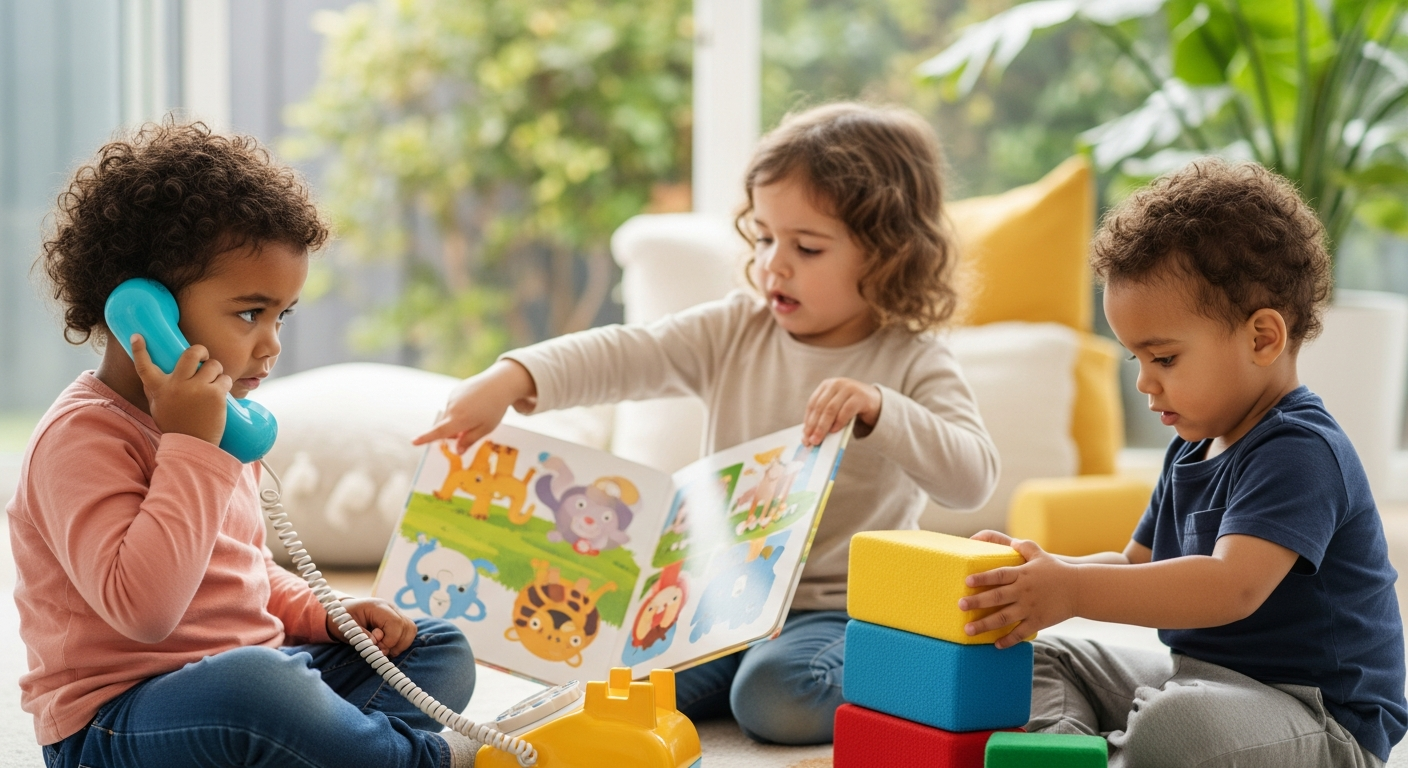
Table of Contents
- Introduction
- What is the Difference Between Speech and Language?
- Typical Milestones for a 2-Year-Old
- Common Physical Causes of Delayed Speech in 2 Year Olds
- Oral-Motor and Neurological Factors
- Developmental and Global Delays
- The Role of the Environment and Stimulation
- How Speech Blubs Can Help Your 2-Year-Old
- Choosing the Right Support: Monthly vs. Yearly Plans
- Practical Strategies to Use at Home Right Now
- When to Seek Professional Help
- Frequently Asked Questions
- Conclusion
Introduction
Did you know that nearly 1 in 4 children will face a challenge with speech or language development at some point in their early years? If you are sitting on the living room floor, watching your two-year-old play, and wondering why the words haven't started flowing like they have for the other kids at daycare, you are certainly not alone. It is one of the most common concerns parents bring to their pediatricians. At Speech Blubs, we understand this journey intimately because our founders grew up with speech problems themselves. They created the tool they wished they had—a way to turn screen time into a joyful, "smart" learning experience that helps children find their voices.
The purpose of this blog post is to dive deep into the various causes of delayed speech in 2 year old toddlers. We want to help you understand the difference between speech and language, identify the signs that it might be time for a little extra help, and explore the physical, developmental, and environmental factors that might be at play. Most importantly, we want to provide you with practical strategies to support your child’s communication at home. While every child develops on their own unique timeline, understanding the "why" behind a delay is the first step toward empowering your little one to speak their mind and heart.

What is the Difference Between Speech and Language?
Before we explore the causes, it is vital to clear up a common point of confusion. We often use the terms "speech" and "language" interchangeably, but in the world of child development, they represent two different sets of skills.
What is Speech?
Speech refers to the physical act of producing sounds. It involves coordination between the breath, the vocal cords, the tongue, the lips, and the jaw. When we talk about a "speech delay," we are usually talking about a child who has trouble forming words or sounds correctly, or whose speech is difficult for others to understand. A child might know exactly what they want to say, but the "mechanics" of getting the sound out are proving difficult.
What is Language?
Language is much broader. It is the entire system of giving and receiving information. It involves understanding what others say (receptive language) and using words, gestures, or signs to express thoughts and needs (expressive language). A child with a language delay might be able to pronounce words perfectly but struggle to put those words together into a meaningful sentence.
At Speech Blubs, we focus on both. Our unique "video modeling" methodology allows children to see their peers making sounds and using language in context. This triggers "mirror neurons" in the brain, encouraging kids to imitate what they see. If you are curious about where your child currently stands, we recommend taking our quick 3-minute preliminary screener. It consists of 9 simple questions and provides you with a personalized assessment and next-steps plan.
Typical Milestones for a 2-Year-Old
To understand what might be causing a delay, we first need a baseline of what typical development looks like. While we always advocate for focusing on the joy of the process rather than a rigid checklist, milestones give us a helpful "map" for the journey.
By the age of two, most children will:
- Use between 50 and 100 words spontaneously.
- Start combining two words together (e.g., "More juice," "Mommy go," "Doggy big").
- Follow simple, one-step directions without needing a physical gesture (e.g., "Go get your shoes").
- Point to pictures in a book when you name them.
- Be understood by primary caregivers about 50% of the time.
If your child is not yet hitting these marks, it is not a reason to panic, but it is a signal to start observing more closely. Early intervention is a powerful gift, and recognizing a delay early allows you to provide the support your child needs during these critical years of brain development. You can explore more about our mission and the science behind our approach on the Speech Blubs homepage.

Common Physical Causes of Delayed Speech in 2 Year Olds
Sometimes, the hurdle is purely physical. If the "machinery" of the mouth or ears isn't working optimally, speech development can slow down.
Oral Impairments and Anatomical Issues
Some children are born with physical differences that make certain sounds difficult to produce. A common example is a cleft palate or cleft lip, which can affect the airflow and resonance of speech. Another physical factor is a "short frenulum"—the small fold of tissue under the tongue. If this tissue is too tight (often called being "tongue-tied"), it can limit the tongue's range of motion, making it hard to produce sounds like "l," "t," or "d."
Hearing Loss and Chronic Ear Infections
This is one of the most frequently overlooked causes of delayed speech in 2 year old children. If a child cannot hear clearly, they cannot learn to imitate sounds. Even if a child passed their newborn hearing screen, they can develop hearing issues later.
Chronic ear infections (otitis media) can lead to a buildup of fluid in the middle ear. Imagine trying to learn a new language while wearing earplugs or standing underwater—that is what it feels like for a child with persistent ear fluid. The sounds they hear are muffled and inconsistent, which makes it incredibly difficult for them to map out the sounds of their native language. If your child has had multiple ear infections, a visit to an audiologist is often a great first step.
Oral-Motor and Neurological Factors
Beyond the physical structure of the mouth, we have to look at how the brain communicates with the muscles used for speaking.
Oral-Motor Problems
For some children, the brain has trouble sending the right signals to the muscles of the lips, tongue, and jaw. This is often referred to as an oral-motor delay. These children might have difficulty coordinating the complex movements required for speech. You might notice they have trouble with other oral tasks, like chewing certain textures of food or blowing bubbles.
Childhood Apraxia of Speech (CAS)
In more specific cases, a child might have Childhood Apraxia of Speech. This is a neurological condition where the child knows what they want to say, but the brain struggles to plan and sequence the muscle movements necessary to say it. It isn't a problem of muscle weakness, but rather a "programming" issue. These children often benefit greatly from intensive speech therapy and supplemental tools that provide clear, visual models for sound production.
Developmental and Global Delays
Sometimes, a speech delay is one part of a larger developmental picture.
Autism Spectrum Disorder (ASD)
Speech and language delays are often one of the first signs parents notice in children who are later diagnosed with autism. However, it is important to look at the way the child communicates, not just the number of words they have. Children with ASD may have difficulty with social communication—such as making eye contact, responding to their name, or using gestures like pointing to show you something interesting.
Intellectual and Global Developmental Delays
In some cases, a child may have an intellectual disability that affects their overall ability to process information, which in turn impacts their language development. A global developmental delay means the child is reaching milestones more slowly across several areas, including motor skills, social skills, and cognitive abilities.
Regardless of the underlying cause, we believe in the power of play to bridge the gap. Our methodology is designed to be a "smart screen time" experience that fosters a love for communication rather than making it feel like "work." We invite you to read our research to see how we’ve utilized scientific principles to create an effective learning tool.
The Role of the Environment and Stimulation
While we want to be very clear—a speech delay is not your fault—the environment does play a role in how language is nurtured.
Lack of Verbal Interaction
Children learn to talk by being talked to. In our busy lives, it can be easy to fall into a routine of "doing" rather than "talking." If a child isn't exposed to a rich variety of sounds, words, and conversational turns, their development might lag. This doesn't mean you need to be a constant narrator, but simply engaging in "serve and return" interactions—where you respond to your child's babbles or gestures with words—is vital.
The "Passive Screen Time" Trap
Not all screen time is created equal. Watching passive cartoons where characters don't look at the camera or wait for a response does very little for language development. In fact, excessive passive viewing can sometimes correlate with slower language growth because it replaces active, human interaction.
This is why we created Speech Blubs as a screen-free alternative to passive viewing. It is an interactive tool designed for adult co-play. When you use the app with your child, you are participating in a joyful family learning moment. For a parent whose 2-year-old "late talker" loves animals, the "Animal Kingdom" section of the app offers a fun, motivating way to practice "moo" and "baa" sounds alongside a peer on the screen.
"At Speech Blubs, our mission is to provide an immediate, effective, and joyful solution for the millions of children who need speech support. We blend scientific principles with play to create experiences that empower children to speak their minds and hearts."
How Speech Blubs Can Help Your 2-Year-Old
Our app is built on the foundation of video modeling. This is a scientifically proven technique where children learn by watching their peers. In the app, your child will see real children (not cartoons!) making sounds, saying words, and using facial expressions.
Why Peer Modeling Works
Children are naturally fascinated by other children. When they see a peer successfully making a "b" sound for "ball," it builds their confidence. They think, "If that kid can do it, I can too!" This reduces the frustration often associated with speech delays and fosters a genuine love for communication.
Our approach is designed to:
- Build foundational communication skills.
- Increase the child's vocabulary through themed sections.
- Encourage imitation through fun filters and interactive elements.
- Create a low-pressure environment where mistakes are just part of the play.
Many parents have found that using Speech Blubs as a supplement to professional therapy or as a starting point while waiting for an evaluation has made a significant difference. You can see many of these stories by visiting our parent success stories page.
Choosing the Right Support: Monthly vs. Yearly Plans
We want to be transparent about how you can access our tools so you can make the best choice for your family. We offer two main paths to joining the Speech Blubs community:
- Monthly Plan: This plan costs $14.99 per month. It provides full access to the Speech Blubs app, allowing you to explore all the activities and video modeling content on a month-to-month basis.
- Yearly Plan (Best Value): This is the plan we recommend for most families. It costs $59.99 per year, which breaks down to just $4.99 per month—a 66% saving compared to the monthly rate.
Choosing the Yearly plan gives your child the consistent, long-term support that is often necessary for language development. It also includes several exclusive, high-value features that the Monthly plan does not:
- A 7-Day Free Trial: You can try the full experience for a week to ensure it’s the right fit for your child before committing.
- The Reading Blubs App: You get full access to our second app, designed to help children transition from speaking to reading.
- Priority Support: You receive early access to all new updates and a guaranteed 24-hour response time from our support team.
Ready to start your journey? You can download Speech Blubs on the App Store or get it on Google Play to begin today.
Practical Strategies to Use at Home Right Now
While you explore the potential causes of a delay and look into professional support, there are many things you can do today to encourage your child's speech.
1. Narrate Your Day
Think of yourself as a sports commentator for your life. As you go through your daily chores, talk about what you are doing. "I am washing the big red apple. Now I am cutting it. Crunch, crunch!" This exposes your child to language in a natural, meaningful context.
2. Follow Their Lead
If your child is interested in a toy truck, don't try to make them look at a book about birds. Join them on the floor and talk about the truck. "Vroom, vroom! The truck goes fast. Look, big wheels!" When you follow their interest, they are much more likely to be engaged and motivated to communicate.
3. Use "Expansions"
If your child says a single word, like "Dog," you can expand on it. Say, "Yes, a big brown dog!" By adding one or two words to what they have already said, you are showing them how to take the next step in language development without correcting them or making them feel pressured.
4. Create a Need to Communicate
Sometimes, we are so good at anticipating our children's needs that they don't need to use words. Try giving them a small portion of their favorite snack and then waiting. Look at them expectantly. They might point, make a sound, or say "more." When they do, celebrate it! "Oh, you want more? More crackers, please!"
5. Read and Sing Every Day
Books and songs are packed with rhythm and repetition, which are the building blocks of language. Don't feel like you have to read the words on the page exactly—pointing at pictures and making animal sounds is just as valuable for a 2-year-old.
When to Seek Professional Help
If you have concerns about the causes of delayed speech in 2 year old toddlers, your first stop should always be your pediatrician. They can rule out physical issues and provide a referral to a Speech-Language Pathologist (SLP).
An SLP is a trained expert who can conduct a comprehensive evaluation of your child's receptive and expressive language, as well as their oral-motor skills. They can help determine if your child is a "late talker" who will likely catch up on their own or if there is an underlying delay that requires therapy.
Remember, early intervention is not about "fixing" your child; it’s about giving them the tools to navigate the world with more ease and less frustration. If you are not quite ready for a full evaluation but want to start some "smart" practice at home, you can sign up on our website and start exploring our activities.
Frequently Asked Questions
1. Is it true that boys talk later than girls?
While some research suggests that, on average, boys may start speaking slightly later than girls, the milestones for a 2-year-old remain the same regardless of gender. If a boy is not meeting the 50-word mark or using two-word phrases by age two, it is still worth investigating rather than assuming he will simply "catch up" because he is a boy.
2. Can screen time actually cause a speech delay?
Passive screen time—where a child sits and watches videos without interaction—does not provide the linguistic engagement needed for development. While it might not "cause" a delay in a medical sense, it can contribute to one by taking away time that would otherwise be spent in active communication. This is why "smart screen time" that encourages interaction, like Speech Blubs, is a better alternative.
3. Does my child being bilingual cause a speech delay?
No. This is a common myth. Bilingual children may have a smaller vocabulary in each individual language initially, but their total combined vocabulary across both languages should be comparable to that of a monolingual child. Learning two languages is a cognitive benefit, not a cause of delay.
4. What is the most common cause of speech delay?
In many cases, the cause is never fully identified, and the child is simply a "late talker." However, among identified causes, hearing issues (like fluid in the ears) and oral-motor coordination problems are very high on the list.
Conclusion
Navigating the causes of delayed speech in 2 year old children can feel overwhelming, but remember that you are your child's best advocate. Whether the delay is caused by a physical factor like a tongue-tie, a developmental hurdle like autism, or is simply a matter of your child being a "late bloomer," the most important thing is that you are taking action.
At Speech Blubs, we are here to support you every step of the way. Our app isn't just a collection of games; it's a bridge to communication built on peer modeling and the joy of play. We want to help your child find the confidence to share their thoughts, their jokes, and their love with you.
Don't wait to give your child the support they deserve. Start your 7-day free trial today by signing up on our website or downloading the app from the App Store or Google Play. We highly recommend choosing the Yearly plan to unlock the full suite of features—including the Reading Blubs app and priority support—at the very best value. Let’s work together to help your little one speak their mind and heart!
About the author