
15 Creative Color Matching Toddler Activities to Try
 Por Speech Blubs Team•18 mar 2026•14 min.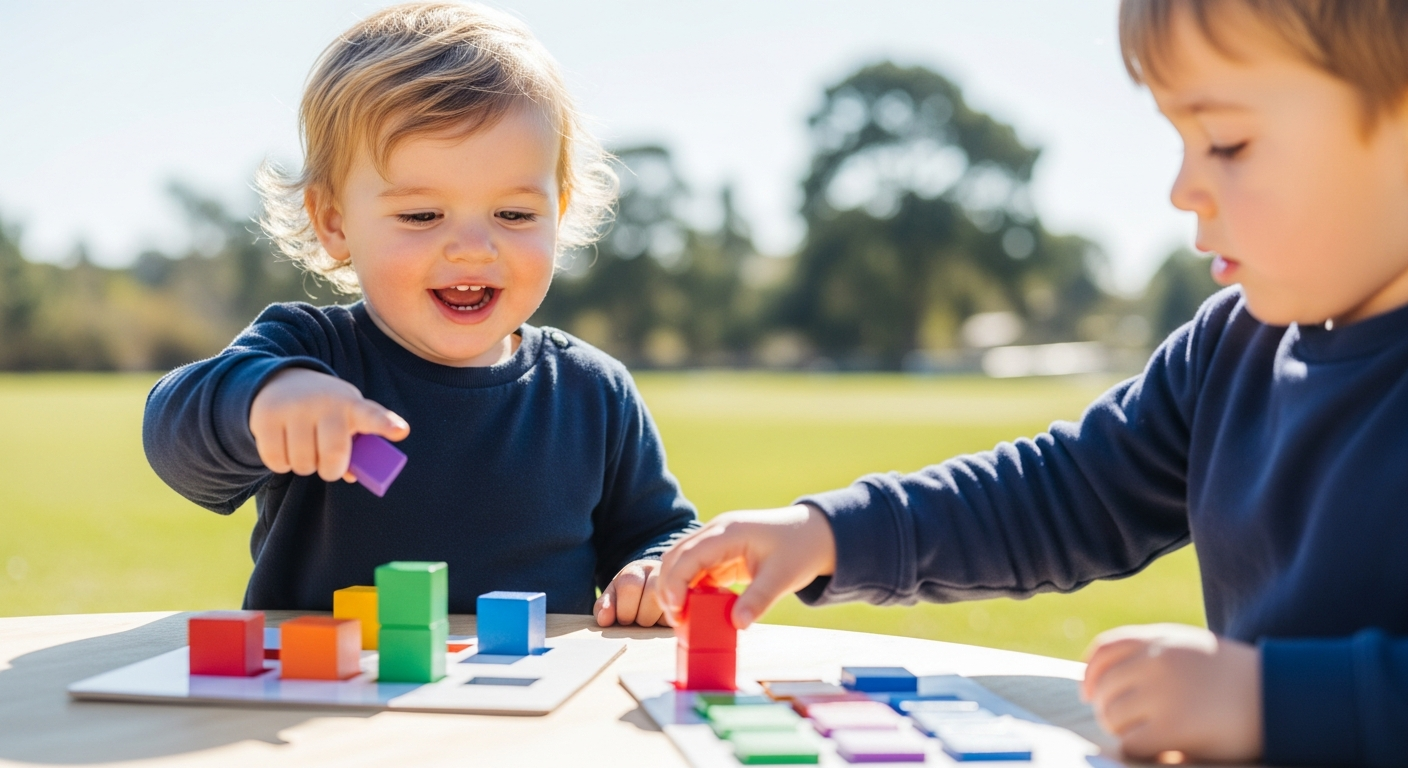
Table of Contents
- Introduction
- Why Color Matching Matters for Language Development
- Developmental Milestones: When Do Kids Learn Colors?
- Low-Prep Color Matching Toddler Activities
- Sensory and Active Color Play
- Advanced Matching for Older Toddlers
- How Speech Blubs Enhances Color Learning
- Choosing the Right Plan for Your Family
- Setting Realistic Expectations
- Practical Tips for Success
- Summary of the Journey
- FAQ
- Conclusion
Introduction
Did you know that by the time a child reaches their third birthday, their brain has already formed about 1,000 trillion connections? It is a period of explosive growth where every game, every conversation, and every discovery serves as a building block for future success. One of the most exciting milestones in this journey is the moment your little one begins to distinguish between the vibrant hues of the world around them. While it might seem like a simple game of "put the red block with the red block," color matching is actually a complex cognitive task that paves the way for advanced mathematical thinking, literacy, and, most importantly, communication.
At Speech Blubs, our mission is to empower children to speak their minds and hearts. We understand that for many parents, navigating the early years of development can feel like a mix of wonder and worry. Perhaps you’ve noticed your toddler is a "late talker," or maybe you’re simply looking for ways to enrich their daily play. We are here to support you with an empathetic, expert perspective born from our own personal histories. Our company was founded by four friends who all grew up with speech problems themselves; we created the tool we wished we had as children. Today, we provide a joyful, effective solution for the one in four children who need extra speech support.

In this post, we will explore the developmental science behind color recognition and provide you with 15 creative, low-prep color matching toddler activities that you can do at home today. We’ll also show you how to blend these physical activities with "smart screen time" through the Speech Blubs app to create a holistic learning environment. Our goal is to help you foster a love for communication and build your child’s confidence through the power of play.
Why Color Matching Matters for Language Development
Before we dive into the activities, it’s helpful to understand why we place such an emphasis on color matching. It isn’t just about learning the names of the rainbow; it’s about developing the foundational skills required for speech.
Categorization and Logic
To match two blue objects, a toddler must first observe the objects, identify a specific attribute (color), and ignore other attributes (size, shape, or texture). This is one of a child's first experiences with logical categorization. If a child can categorize objects visually, they are better prepared to categorize sounds and words later on.
Vocabulary Expansion
Colors provide a massive boost to a child’s descriptive vocabulary. Instead of just saying "ball," they begin to say "red ball." This transition from single nouns to adjective-noun combinations is a major leap in language complexity. Using Speech Blubs can further enhance this by showing children peers who are using these descriptive words in real-time.
Confidence and Interaction
There is a visible spark of joy when a child successfully matches a pair. This success reduces frustration—a common barrier for children with speech delays—and builds the confidence needed to attempt new sounds and words.
Developmental Milestones: When Do Kids Learn Colors?
Every child develops at their own pace, but there are general trends that can help you set realistic expectations.
- 26 to 29 Months: Many children begin to match black and white objects. They might not know the names of the colors yet, but they can see that they are "the same."
- 29 to 33 Months: This is typically when children begin to integrate primary colors like red, yellow, and blue. They might start to group two objects of the same color together.
- 33 Months and Beyond: Older toddlers can often match three to five objects of the same color and may begin to correctly name one or two colors.
If you are ever concerned about whether your child is meeting their milestones, we recommend taking our quick 3-minute preliminary screener. It involves nine simple questions and provides an assessment and a next-steps plan to give you peace of mind.

Low-Prep Color Matching Toddler Activities
You don't need expensive toys to teach color recognition. Most of the best learning happens with items you already have in your kitchen or craft drawer.
1. The Classic Sock Match
Laundry day is a golden opportunity for learning. Gather a pile of mismatched, brightly colored socks. Lay out one of each color and ask your child, "Can you find the one that looks like this?"
- Speech Blubs Tip: While you sort, use the "video modeling" technique. Say the color clearly, wait for your child to look at your mouth, and encourage them to imitate the shape. This mimics how children learn in our app by watching their peers.
2. Dot Sticker Categorization
Dot stickers are a toddler's best friend. Take a piece of white paper and draw four large circles in different colors (red, blue, green, yellow). Give your child a sheet of matching dot stickers and encourage them to "hide" the circles by placing the correct sticker inside. This builds fine motor skills alongside color recognition.
3. The "Found Object" Rainbow
This is a fantastic way to get kids moving. Place a red, blue, and yellow piece of construction paper on the floor. Challenge your child to go on a "treasure hunt" around the room to find one toy that matches each paper.
- Real-World Scenario: For a parent whose 3-year-old "late talker" loves cars, the "transportation" section of our app can be used alongside this. After finding a yellow toy car, you can watch a peer in the app make the "vroom vroom" sound, connecting the physical object to a functional sound.
4. Egg Carton Sorting
Don't throw away that empty egg carton! Paint the bottom of each well a different color. Provide your child with a bowl of colorful items—poms poms, large buttons, or even dyed pasta—and let them sort the items into the matching wells.
5. Cereal Pipe Cleaner Fun
If you have colorful loop cereal (like Fruit Loops), grab some pipe cleaners. Ask your child to thread the red cereal onto the red pipe cleaner. This is an excellent "quiet time" activity that requires deep focus and hand-eye coordination.
Sensory and Active Color Play
Toddlers learn best when their whole bodies are involved. These activities use sensory input to reinforce color concepts.
6. Colored Water Scoop-and-Sort
Fill a shallow bin with water and add a few drops of food coloring to different sections (or use colored plastic balls). Give your child a slotted spoon and some colored cups. This "scoop and sort" game is highly engaging and provides a tactile experience that helps "stick" the concept in their memory.
7. The Gross Motor Color Hop
Use sidewalk chalk to draw large colored circles on your driveway. Call out a color and have your child jump to it! This associates the word with a big, fun physical movement, which is excellent for kinesthetic learners.
8. Shaving Cream Color Mixing
Spray some shaving cream on a plastic tray and add drops of primary-colored food coloring. Let your child mix them with their hands. As they mix blue and yellow to make green, talk about what is happening. "Look! It was yellow, now it's green!"
9. Nature Color Walk
Take the learning outside. Bring a few colored cards with you on a walk around the neighborhood. Can you find a leaf that matches the green card? A flower that matches the yellow one? Nature provides the most diverse palette for color matching toddler activities.
10. Magnetic Letter Sort
If you have a set of magnetic letters on your fridge, grab some colored bowls. Instead of focusing on the letters themselves, ask your child to put all the "blue ones" in the blue bowl. This is a great way to repurpose toys for different developmental stages.
Advanced Matching for Older Toddlers
As your child becomes more confident, you can increase the challenge to keep them engaged and learning.
11. The "Mistake" Game
Once your child is a pro at matching, try sneaking an "error" into a sorted pile. For example, put a blue block in a pile of red ones. See if they spot it! If they do, ask them, "Does this go here?" This encourages critical thinking and allows them to take the lead in "correcting" you, which is a huge confidence booster.
12. Checkerboard Match
If you have a classic red and black checkerboard, give your child the pieces and ask them to place the red pieces on the red squares. This requires a higher level of visual discrimination and spatial awareness.
13. Rainbow Toy Wheel
Gather a large variety of toys from the playroom. Work together to arrange them in a large circle on the floor, following the order of the rainbow (ROYGBIV). This creates a beautiful visual representation of their hard work and can stay out as a "museum exhibit" for the afternoon.
14. Sponge and Lego Correspondence
Take four different colored sponges and four matching Lego bricks. Ask your child to place one brick on each sponge. This introduces "one-to-one correspondence," a fundamental math skill, while reinforcing color matching.
15. The "I Spy" Color Edition
This is the perfect activity for car rides or waiting rooms. "I spy with my little eye, something that is... blue!" This encourages your child to scan their entire environment and use their vocabulary in a functional, social way.
How Speech Blubs Enhances Color Learning
While physical play is vital, "smart screen time" can be a powerful supplement to your child's overall development plan. At Speech Blubs, we don't believe in passive viewing. We provide a screen-free alternative to cartoons by creating an interactive experience where your child is the star.
Our Scientific Methodology: Video Modeling
Our app is built on the principle of video modeling. Research shows that children are highly motivated to imitate their peers. In the app, your child will see other children performing activities, making sounds, and naming colors. This triggers "mirror neurons" in the brain, making it easier for your child to mimic the behavior they see.
Joyful Family Connection
We frame the app's use as a tool for family connection. We encourage parents to sit with their children, use the funny face filters together, and celebrate every attempt at a new word. It’s about creating joyful family learning moments that reduce the pressure often associated with speech therapy. To see how other families have transformed their daily routines, you can read our parent testimonials.
Choosing the Right Plan for Your Family
We want to be transparent about our pricing so you can make the best choice for your family's needs. We offer two main paths to help your child find their voice:
- Monthly Plan: For $14.99 per month, you get full access to the Speech Blubs language therapy app.
- Yearly Plan (Best Value): For $59.99 per year, which breaks down to just $4.99 per month.
The Yearly plan is our most popular choice for a reason. Not only do you save 66% compared to the monthly rate, but it also includes exclusive, high-value features that support long-term progress:
- A 7-Day Free Trial: Try everything before you commit.
- Reading Blubs App: An additional app included at no extra cost to help transition from speech to literacy.
- Priority Support: 24-hour response time from our support team.
- Early Access: Be the first to try our new updates and features.
The Monthly plan does not include these additional benefits, making the Yearly plan the clear choice for families dedicated to seeing consistent growth. You can sign up and start your trial today to see the difference for yourself.
Setting Realistic Expectations
As a child development expert, I want to remind you that progress isn't always a straight line. Some days your child will be a color-matching genius, and other days they might just want to throw the pom poms across the room. Both are okay!
Our goal isn't to guarantee that your child will be giving public speeches in a month. Instead, we focus on:
- Fostering a genuine love for communication.
- Building the foundational skills (like categorization and imitation) that make speech possible.
- Reducing the frustration that comes when a child can't express their needs.
- Creating a supportive environment where "mistakes" are just part of the fun.
By combining the color matching toddler activities listed above with the expert-designed tools in Speech Blubs, you are giving your child a robust, multi-sensory environment to thrive in.
Practical Tips for Success
To get the most out of these activities, keep these simple tips in mind:
Scaffold the Learning: Start with just two very different colors (like black and white) before moving to a full rainbow. If they get frustrated, take a step back.
Use Descriptive Language: Instead of just saying "Yes!" when they match a blue block, say "That's right! You found the blue block. It matches the blue paper."
Follow Their Lead: If your child is obsessed with dinosaurs, make every activity dinosaur-themed. Blue dinosaurs go in the blue cave!
Keep It Short: Toddler attention spans are brief. 5-10 minutes of focused play is often better than a forced 30-minute session.
Summary of the Journey
Teaching your child about colors is one of the most rewarding parts of early parenthood. You are literally watching their world expand from shades of gray into a technicolor landscape of meaning. Whether you are sorting socks, jumping on chalk circles, or using "smart screen time" to practice peer imitation, you are doing the important work of helping your child "speak their mind and heart."
Remember, you don't have to do this alone. We created Speech Blubs to be the partner we wish we had. From our founders' personal experiences to our scientifically backed methodology, every part of our app is designed to make your journey easier and more joyful.
FAQ
1. What if my toddler shows no interest in color matching?
This is completely normal! Every child has different interests. Try integrating colors into something they already love. If they love snacks, try sorting colored cereal. If they love cars, use colored "parking lots." If you're still concerned about their general engagement levels, our 3-minute screener can help determine if there are other areas of development that might need attention.
2. Is screen time bad for my toddler's speech?
Not all screen time is created equal. Passive viewing (like watching cartoons) doesn't require a child to interact or respond. Speech Blubs is "smart screen time"—it is interactive, uses peer-to-peer video modeling, and is designed to be used alongside a parent. It serves as a digital bridge to real-world communication.
3. How many colors should my 2-year-old know?
At age 2, many children are just starting to match colors. They might not be able to name them correctly yet. By age 3, many can name at least one or two. Focus on the matching skill first, as the naming skill (vocabulary) usually follows once the visual concept is solidified.
4. How can I tell if my child has a color vision deficiency (color blindness)?
True color blindness is rare in toddlers and hard to diagnose until they are older and can reliably name colors. However, if your child consistently struggles with matching specific pairs (like red and green) but excels at others, mention it to your pediatrician at your next visit. In the meantime, keep focusing on the fun of the activities!
Conclusion
We hope these color matching toddler activities inspire you to turn your next rainy afternoon into a vibrant learning adventure. By focusing on these foundational skills, you aren't just teaching colors—you are giving your child the tools they need to navigate the world and express themselves with confidence.
Ready to take the next step in your child's language journey? Join the thousands of families who have found success with our unique approach. Download Speech Blubs on the App Store or Google Play today.
For the best experience and the most comprehensive support, we highly recommend our Yearly Plan. It’s the most cost-effective way to access our full suite of tools, including the Reading Blubs app and our 7-day free trial. Let’s work together to help your child speak their heart and mind!
Sobre el autor