
15 Engaging Ocean Toddler Activities for Home
 Por Speech Blubs Team•18 mar 2026•14 min.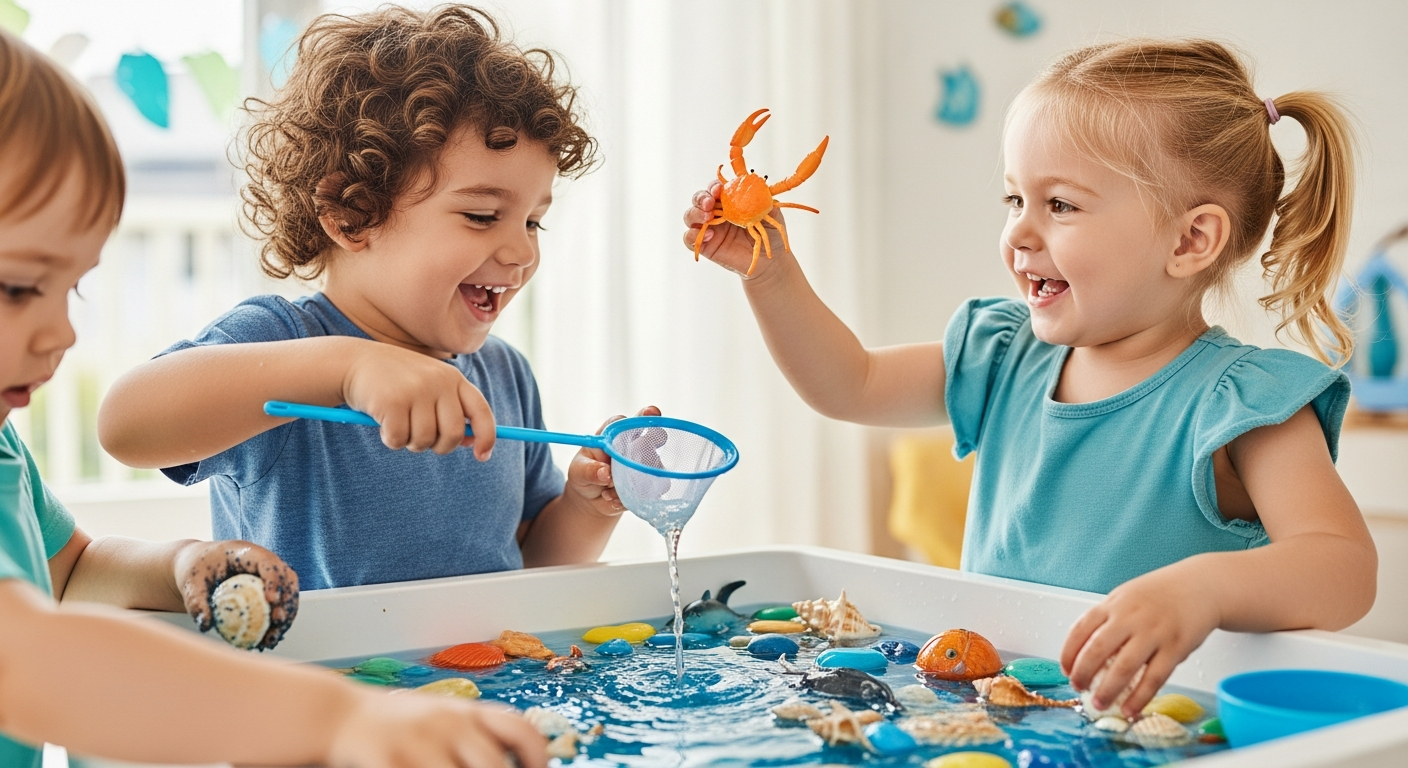
Table of Contents
- Introduction
- The Power of Sensory-Based Ocean Toddler Activities
- Creative Art Projects: Bringing the Sea to Life
- STEM Exploration: Simple Science for Tiny Explorers
- Enhancing Communication Through Play
- Active Play and Gross Motor Fun
- Building a "Smart" Routine with Speech Blubs
- Literacy: Dive Into a Good Book
- Practical Tips for Parents
- FAQ
- Conclusion
Introduction
Did you know that the ocean covers more than 70% of our planet, yet for a curious toddler, a single blue sensory bin or a handful of seashells can feel like an entire universe of wonder? There is something inherently magical about the sea that captures a child’s imagination, from the rhythmic crashing of waves to the mysterious creatures that glow in the deep. For parents and caregivers, this natural fascination offers a golden opportunity to build foundational skills in a way that feels like pure play.
In this post, we are going to dive deep into a variety of ocean toddler activities that go beyond mere entertainment. We will explore sensory play that builds fine motor strength, STEM experiments that spark early scientific thinking, and creative arts and crafts that encourage self-expression. Most importantly, we will discuss how these activities can be paired with intentional communication strategies to help your child "speak their minds and hearts."

At Speech Blubs, our mission is rooted in the personal experiences of our founders, who grew up navigating their own speech challenges. They created the tool they wished they had—a joyful, scientifically-backed solution for the 1 in 4 children who need a little extra support with their communication. By blending the hands-on "ocean toddler activities" found in this guide with our unique "smart screen time," you can create a holistic environment where your child feels confident to explore, learn, and speak. Our goal today is to provide you with a comprehensive roadmap for bringing the magic of the sea into your living room while fostering a lifelong love for learning.
The Power of Sensory-Based Ocean Toddler Activities
Sensory play is the cornerstone of early childhood development. When a child squishes blue-dyed spaghetti or splashes in "bubble foam," they aren’t just making a mess; they are building neural pathways. These activities help toddlers process sensory information, develop hand-eye coordination, and learn the descriptive vocabulary needed to explain their world.
1. The Blue Spaghetti Ocean
This is a fan favorite because of its unique texture. To create it, simply cook spaghetti as usual, drain it, and toss it with a few drops of blue food coloring and a splash of oil to keep it from sticking.
- How it helps: As your child pulls and stretches the "seaweed," they are strengthening the small muscles in their hands.
- Speech Tip: Use this time to model descriptive words like slimy, long, sticky, and blue.
2. Ocean Bubble Foam
Bubble foam is incredibly easy to make and provides hours of entertainment. Mix two parts water with one part tear-free bubble bath in a blender or use an electric mixer until stiff peaks form. Add a drop of blue food coloring to transform it into a frothy sea.
- The Activity: Hide plastic sea creatures (sharks, dolphins, crabs) at the bottom of a bin filled with foam and ask your child to "rescue" them.
- Speech Blubs Connection: For a child who loves animals but is a "late talker," the "Living Ocean" section of our app offers a perfect digital companion to this physical play. After rescuing a plastic dolphin from the foam, you can watch a real child on the app model the "click-click" sounds or the word "dolphin," encouraging your toddler to imitate through our proven video modeling methodology.
3. Frozen Sea Creature Rescue
On a warm day, nothing beats the excitement of an ice rescue. Freeze small plastic fish or shells inside a large block of ice (an empty ice cream tub works well for this). Provide your toddler with a small spray bottle of warm water or a toy hammer.

- The Learning Goal: This teaches patience and cause-and-effect. They learn that warmth melts ice, and persistent effort leads to the "rescue."
Creative Art Projects: Bringing the Sea to Life
Art is one of the best ways for toddlers to work on their fine motor skills and color recognition. These "ocean toddler activities" focus on the process rather than a perfect finished product.
4. Potato Masher Crabs
Who knew a kitchen tool could be an art supply? Have your child dip a round potato masher into red paint and stamp it onto white paper. These circular prints become the bodies of crabs. Once the paint is dry, you can help them draw or glue on legs and googly eyes.
- Relatable Scenario: If your 3-year-old is working on their "C" or "K" sounds, the word "Crab" is a fantastic practice word. You can use the Speech Blubs preliminary screener to see if your child is meeting their age-appropriate milestones and get a customized plan for words like these.
5. Jellyfish Ribbon Craft
Use a paper plate cut in half as the "bell" of the jellyfish. Let your child paint it their favorite color. Punch holes along the flat edge and have your child thread ribbons, yarn, or pipe cleaners through the holes to create tentacles.
- The Benefit: Threading is a high-level fine motor skill that prepares children for writing.
6. Salt Watercolor Under the Sea
This is a "magical" art project. Have your child draw an ocean scene with white crayons on white cardstock (you may need to help them press down hard). Then, have them paint over the entire page with blue watercolors. The wax from the crayon will "resist" the paint, making the drawings pop out. Sprinkle a little table salt over the wet paint to create a textured, "bubbly" effect.
STEM Exploration: Simple Science for Tiny Explorers
Science doesn't have to be complicated. At the toddler level, STEM is about observation and asking "Why?" These ocean-themed experiments are safe, simple, and fascinating.
7. Saltwater Density Experiment
Why is it easier to float in the ocean than in a swimming pool? You can show your child with two glasses of water. Leave one as fresh water and stir several tablespoons of salt into the other. Try to float an egg or a small plastic toy in both.
- The Observation: The object will likely sink in the fresh water but float in the salt water.
- Scientific Value: This introduces the concept of density and buoyancy in a visual way.
8. The "Blubber" Glove
If you’ve ever wondered how whales stay warm in freezing water, this activity is for you. Fill a gallon-sized Ziploc bag with vegetable shortening (lard). Have your child put their hand inside a clean bag, then place that hand inside the "blubber" bag. Submerge their hand into a bowl of ice water.
- The Result: They won't feel the cold! This is a powerful way to explain how animals adapt to their environment.
9. How Do Fish Breathe?
Explain that fish have gills instead of lungs. You can simulate this using a coffee filter. Wrap a coffee filter over a jar and pour water mixed with "pepper" (representing oxygen) through it. The filter catches the pepper just like gills catch oxygen from the water.
Enhancing Communication Through Play
At Speech Blubs, we believe that every moment is a learning moment. Our approach is built on the science of mirror neurons—when children see other children performing an action or saying a word, they are much more likely to try it themselves. This is why our app features "video modeling" rather than passive cartoons.
When you engage in "ocean toddler activities," you are creating a "joint attention" environment. This is the foundation of all communication. You and your child are looking at the same thing, interested in the same thing, and talking about the same thing.
Why Choose Speech Blubs?
We offer a "smart screen time" experience that acts as a powerful supplement to your child’s overall development. Unlike passive videos, our app requires interaction. We provide a screen-free alternative to the "zombie mode" many parents fear. Instead, we encourage "co-play," where you and your child use the app together to learn new sounds and words.
If you are ready to see the difference for yourself, you can download Speech Blubs on the App Store or get it on Google Play to begin your journey.
Transparency in Our Pricing
We believe in building trust through transparency. We offer two main paths for our families:
- Monthly Plan: $14.99 per month. This is a great way to test the waters if you aren't sure yet.
- Yearly Plan: $59.99 per year. This is our best value option, breaking down to just $4.99 per month—a 66% saving!
Why the Yearly Plan is the Clear Choice: The Yearly plan isn't just about the lower price. It includes exclusive benefits that the monthly plan does not:
- A 7-day free trial to ensure it's the right fit for your family.
- Access to the Reading Blubs app, which helps transition your child from speaking to early reading.
- Early access to new updates and a 24-hour support response time.
To get the full suite of features and the free trial, we highly recommend that you create your account and sign up for the yearly plan here.
Active Play and Gross Motor Fun
Toddlers have a lot of energy! These activities move the "ocean" theme into the realm of physical movement, which is essential for coordination and confidence.
10. Beach Clean-Up Mission
You don't need to be at the coast for this. Scatter "ocean debris" (clean recyclables like bottle caps or paper scraps) across your backyard or living room. Give your child a bucket and a pair of tongs or a "grabber."
- The Mission: They must "save the sea turtles" by picking up all the trash.
- The Lesson: This introduces early environmental stewardship while working on gross motor movements like bending, reaching, and balancing.
11. Life-Size Blue Whale Drawing
Did you know a blue whale can grow to be 100 feet long? Grab some sidewalk chalk and head to a driveway or a park path. Use a measuring tape to mark out 100 feet. Let your child help you draw a giant outline.
- The Impact: Walking from the "tail" to the "head" of the whale gives toddlers a real sense of scale and wonder.
12. Shark Tag (A Movement Game)
Create "islands" using pillows or carpet squares. One person is the "shark" (swimming on the floor), and the other is the "fish." The fish must jump from island to island to stay safe.
- Social Skills: This game teaches turn-taking and following simple rules, which are key pre-social skills.
Building a "Smart" Routine with Speech Blubs
We often hear from parents who feel overwhelmed by the choices available for their children. They want to be involved, but they also need tools that actually work. Our method is backed by science and research, placing us in the top tier of speech apps worldwide.
For instance, if your child is fascinated by the sharks you just drew in chalk, you can open the "Animal Kingdom" or "Living Ocean" section of Speech Blubs. You’ll see a peer—a child just like yours—modeling the word "Shark." Your child isn't just watching a cartoon; they are watching a real human face move, which activates their own brain's speech centers.
"We don't promise that your child will be giving public speeches in a month. Every child's journey is unique. Instead, we focus on fostering a love for communication, reducing the frustration that comes from not being understood, and creating joyful family learning moments."
To hear more about how we've helped thousands of families, you can read our latest parent testimonials.
Literacy: Dive Into a Good Book
Reading together is one of the most effective ways to build language. When you pair reading with hands-on "ocean toddler activities," the concepts stick.
13. Ocean Storytime Recommendations
- The Pout-Pout Fish by Deborah Diesen: Excellent for rhythm, rhyme, and emotional vocabulary.
- The Rainbow Fish by Marcus Pfister: A classic story about sharing and friendship.
- Mister Seahorse by Eric Carle: Beautiful illustrations that introduce various types of sea creatures.
14. DIY Ocean Alphabet Hunt
Fill a bin with sand or blue beads and hide plastic letters inside. As your child finds a letter, help them think of an ocean word that starts with that sound.
- S is for Shark.
- W is for Whale.
- C is for Crab.
15. World Oceans Day (June 8th)
Mark your calendar! This is a great day to consolidate everything you've learned. You can visit a local aquarium or simply spend the day doing your favorite activities from this list. Teaching children to care for the ocean at a young age builds empathy and global awareness.
Practical Tips for Parents
We know that life as a parent is a balancing act. Here are a few ways to make these activities more manageable:
- Prep in Advance: Dye the spaghetti or freeze the ice creatures the night before.
- Embrace the Mess: Use a shower curtain or a large plastic tablecloth under your sensory bins for easy cleanup.
- Follow Their Lead: If your child is more interested in the "water" than the "fish," that’s okay! The goal is engagement, not a strict lesson plan.
- Co-Play is Key: Whether you're playing with bubbles or using Speech Blubs, your presence is the most important factor in your child's success.
FAQ
What age is best for these ocean toddler activities?
Most of these activities are designed for children aged 18 months to 5 years. However, they can easily be adapted. For younger toddlers, focus on the sensory aspects (touch and feel). For older preschoolers, lean more into the STEM experiments and detailed art projects.
Is the Speech Blubs app safe for my toddler?
Absolutely. We prioritize "smart screen time," which means our app is ad-free and designed to be an interactive tool rather than a passive distraction. We encourage parents to use the app alongside their children to maximize the learning benefits.
Can I do these activities if I don't live near the beach?
Yes! The beauty of these "ocean toddler activities" is that they use everyday household items like pasta, soap, and ice to recreate the magic of the sea right in your home or backyard.
How does the 7-day free trial work?
When you choose our Yearly plan ($59.99/year), you automatically receive a 7-day free trial. This gives you full access to all our features, including the "Living Ocean" section and the bonus Reading Blubs app. If you find it's not a fit for your family, you can cancel within those 7 days at no cost.
Conclusion
The ocean is a vast, beautiful mystery, and exploring it through the eyes of a toddler is a reminder of how much wonder there is in the world. By integrating these 15 ocean toddler activities into your routine, you are doing so much more than filling an afternoon. You are building their muscles, sparking their scientific curiosity, and—most importantly—opening the door to better communication.
At Speech Blubs, we are here to support you every step of the way. We understand the worries and the triumphs that come with raising a child who is learning to find their voice. Our goal is to empower your child to speak their mind and heart through joyful, play-based learning that feels like a treat, not a chore.
Ready to dive in? Start your 7-day free trial today by downloading the app on the App Store or Google Play. For the best value, be sure to select our Yearly plan, which includes the Reading Blubs bonus and deep discounts to help your child thrive all year long. Let’s make some waves together!
Sobre el autor