
15 Fun and Easy Easter Activity Toddler Ideas for Home
 Por Speech Blubs Team•18 mar 2026•14 min.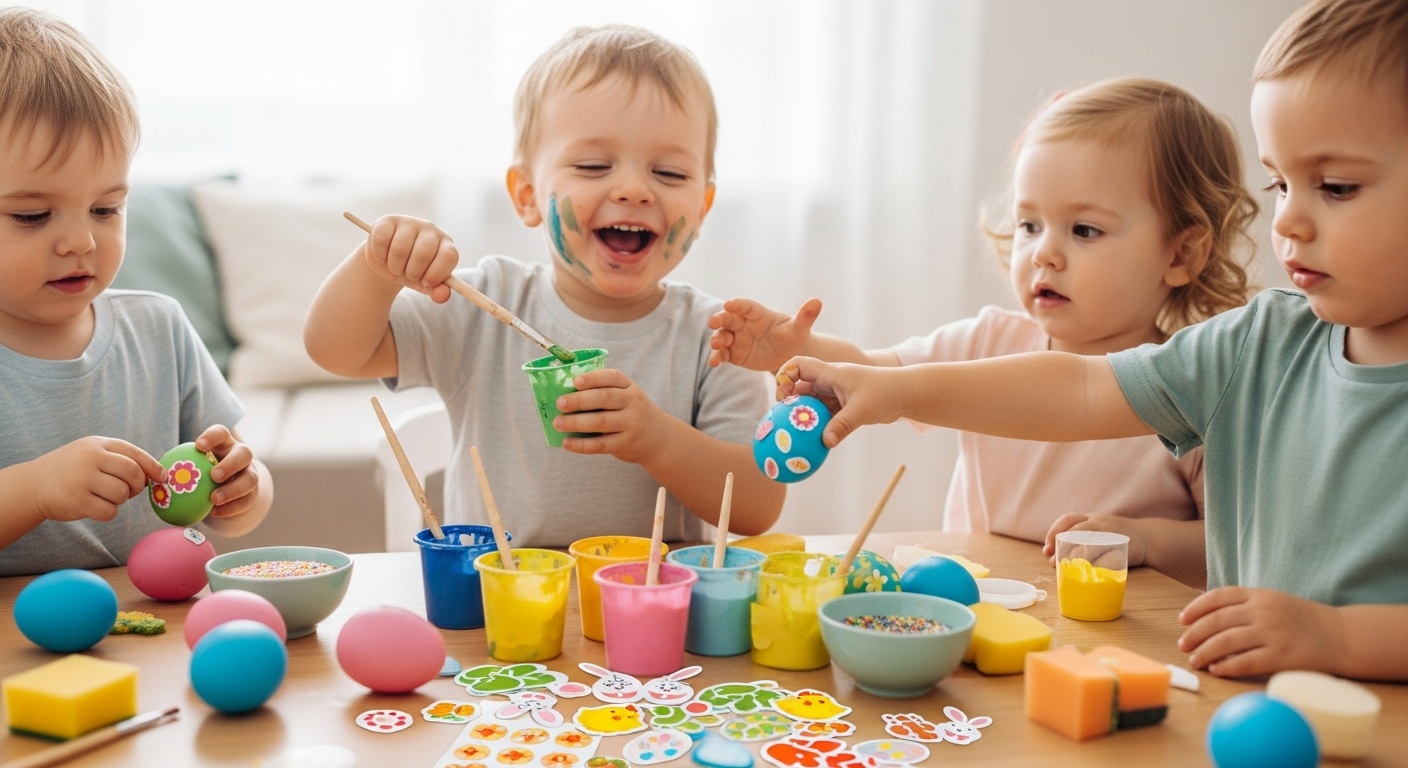
Table of Contents
- Introduction
- The Power of Play-Based Learning at Easter
- Sensory Easter Activities for Toddlers
- Fine Motor Easter Crafts
- Gross Motor Games to Get Moving
- Cognitive and Language-Based Easter Fun
- Creative and Messy Fun (With a Purpose)
- Making "Smart Screen Time" Work for You
- Realistic Expectations and Joyful Learning
- Understanding the Value of Speech Blubs Membership
- Conclusion
- Frequently Asked Questions
Introduction
Did you know that for a toddler, a simple plastic egg isn’t just a container for candy—it’s a treasure chest of sensory input, a tool for fine motor practice, and a spark for new vocabulary? As the spring flowers begin to bloom and the excitement of the holiday builds, many parents find themselves looking for ways to make the season special without the stress of complicated setups. We understand that life with a toddler is a whirlwind of curiosity and energy, and finding the right easter activity toddler-friendly ideas can feel like a daunting task on your already busy to-do list.
In this post, we are going to explore a wide variety of engaging, low-prep, and educational activities designed specifically for the littlest bunnies in your home. From sensory bins that encourage tactile exploration to gross motor games that get them moving, we’ve gathered the best ways to celebrate while supporting your child’s development. We will also show you how these festive moments can be perfectly paired with "smart screen time" to boost communication skills.

At Speech Blubs, our mission is to empower children to "speak their minds and hearts." We believe that every holiday is an opportunity for connection and growth. Our founders, who all grew up navigating their own speech challenges, created the tool they wished they had—a joyful, scientifically-backed way to support the 1 in 4 children who need a little extra help with their speech. Our goal today is to provide you with practical, realistic strategies that foster a love for learning and communication through the magic of Easter play.
The Power of Play-Based Learning at Easter
Before we dive into the specific activities, it’s important to understand why holiday-themed play is so beneficial for toddlers. At this age, children are like sponges, soaking up the world through their senses. A themed easter activity toddler session isn't just about the "cute" factor; it’s about creating a rich environment for language and cognitive development.
When a child reaches into a sensory bin filled with crinkly Easter grass, they are experiencing different textures. When they try to balance a plastic egg on a spoon, they are working on hand-eye coordination and core stability. Most importantly, when you narrate these actions—saying words like "crack," "hop," "yellow," or "soft"—you are building their internal dictionary.
We always emphasize that the best learning happens during joyful family moments. Our approach focuses on "video modeling," a scientific principle where children learn by watching and imitating their peers. You can see this in action by visiting our research page, which explains how seeing other children perform actions can trigger mirror neurons in a toddler’s brain. This Easter, as you do these activities, you can supplement the fun by letting your child watch other "blubbers" imitate bunnies or name colors within our app.
Sensory Easter Activities for Toddlers
Sensory play is a cornerstone of toddler development. It helps build nerve connections in the brain's pathways, which lead to the child's ability to complete more complex learning tasks.

1. The Giant Easter Sensory Bin
Fill a large plastic tub with paper Easter grass (or dried green lentils for a less messy option). Hide plastic eggs, small toy bunnies, and plastic carrots inside.
- Language Tip: Ask your child, "Where is the blue egg?" or "Can you find the hidden bunny?"
- Speech Blubs Connection: For a child who is just starting to name objects, the "Toy Box" section in our app is a great companion. After they find a toy in the bin, they can see a peer naming similar toys on the screen, reinforcing the vocabulary.
2. Shaving Cream Egg "Wash"
This is a fantastic outdoor or high-chair activity. Put a pile of shaving cream on a tray and hide plastic eggs inside. Give your toddler a small bowl of water and a cloth to "wash" the eggs clean.
- Sensory Benefit: The cold, fluffy texture of the cream contrasted with the hard, smooth eggs provides excellent tactile feedback.
- Safety Note: Always supervise your child to ensure they don't ingest the shaving cream.
3. Easter Egg Snack Hunt
Who says egg hunts have to be about candy? Fill plastic eggs with toddler-friendly snacks like Cheerios, blueberries, or small crackers. Hide them in plain sight. This turns snack time into a problem-solving game. If your child is struggling with the concept of finding things, you can take our quick 3-minute preliminary screener to see if they are hitting their cognitive and language milestones.
Fine Motor Easter Crafts
Fine motor skills involve the use of the small muscles in the hands and fingers. These are crucial for later skills like writing and buttoning clothes.
4. Dot Sticker Egg Decorating
Traditional egg dyeing can be very messy for a two-year-old. Instead, cut out large egg shapes from cardstock and give your child a sheet of colorful dot stickers.
- The Challenge: Peeling stickers off the sheet is one of the best ways to practice the "pincer grasp."
- Real-World Scenario: For a parent whose child is obsessed with patterns, this activity allows them to practice sequences. You can say, "First a red dot, then a yellow dot!"
5. Bunny Pom-Pom Drop
Take a clean, empty plastic bottle and tape a picture of a bunny over it, making sure the bottle's mouth is the "mouth" of the bunny. Give your toddler a bowl of colorful pom-poms and let them "feed" the bunny by dropping the pom-poms into the bottle.
- Focus: This requires concentration and precision.
6. Q-Tip Painting Eggs
Instead of a bulky paintbrush, give your child a Q-tip. This forces them to hold the tool with their fingertips rather than a full fist. Use pastel-colored washable paints and let them make dots or stripes on paper eggs.
Gross Motor Games to Get Moving
Toddlers have a lot of energy! Channeling that energy into a themed easter activity toddler game is a great way to improve their balance and coordination.
7. The "Bunny Hop" Race
Put on some upbeat music and encourage your child to hop from one side of the room to the other.
- Speech Integration: In Speech Blubs, the "Animal Kingdom" section features peer models making animal sounds and movements. Before you hop, you can watch a peer do it together. Download Speech Blubs on the App Store to find the bunny modeling video and see how your child reacts to watching another child "hop, hop, hop!"
8. Egg on a Large Spoon Walk
Use a large wooden spoon and a plastic egg. Encourage your toddler to walk from the sofa to the chair without letting the egg fall. It’s much harder than it looks for a 3-year-old! This activity builds core strength and focus.
9. Sticky Wall Egg Hunt
Use clear contact paper and tape it to a wall with the sticky side facing out. Draw a large basket shape on the bottom. Hide paper eggs around the room and have your child find them and stick them onto the wall "basket." This encourages them to reach high and squat low, working different muscle groups.
Cognitive and Language-Based Easter Fun
These activities focus on sorting, matching, and early logic skills.
10. Easter Color Sorting
Gather eggs of four different colors. Place four colored bowls (or sheets of colored paper) on the floor. Ask your child to put the blue eggs in the blue bowl and the yellow eggs in the yellow bowl.
- Speech Blubs Integration: If your child is still learning their colors, our "Living Colors" section is the perfect tool. After sorting real eggs, you can use the app to see children naming the colors "Red," "Blue," and "Green." This reinforces the concept through multiple senses.
11. Plastic Egg Shape Match
Some plastic eggs come with different "joiners" (zigzag edges vs. wavy edges). Take them apart and see if your child can find the matching halves. This is a great early geometry lesson.
12. Easter Storytime with a Twist
Read a book like "Llama Llama Easter Egg." As you read, pause and ask your child to point to things. "Where is the bunny's ear?" or "Can you show me the basket?" If you're looking for more ways to engage with stories, the Yearly plan of our app includes the Reading Blubs app, which is specifically designed to bridge the gap between speaking and early reading. You can create your account and begin your 7-day free trial today to gain access to these extra tools.
Creative and Messy Fun (With a Purpose)
Sometimes, you just have to embrace the mess! These activities are great for sensory seekers.
13. Edible Egg Paint
If you have a "mouther" who puts everything in their mouth, mix some plain Greek yogurt with a drop of food coloring. Let them use this "paint" to decorate hard-boiled eggs or even a piece of toast. It’s safe, colorful, and fun.
14. Potato Stamped Eggs
Cut a potato in half and carve some simple lines or dots into the flat surface. Dip the potato into paint and let your child use it as a stamp. The weight and grip of the potato make it a unique sensory experience compared to traditional stamps.
15. The "Hatch" Game
Freeze small plastic toy animals inside large ice cubes (you can use balloons filled with water to make "egg-shaped" ice). Give your toddler a small spray bottle with warm water and let them "thaw" the eggs to see what hatches. This is a brilliant science experiment that also works on hand strength through the use of the spray bottle.
Making "Smart Screen Time" Work for You
We know that as a parent, you might feel guilty about screen time. However, there is a big difference between passive viewing (like a cartoon that a child just stares at) and "smart screen time." At Speech Blubs, we’ve designed our experience to be interactive. Our app isn't meant to replace you; it’s meant to be a tool for family connection.
When you use Speech Blubs, we encourage "co-play." Sit with your child, watch the peer models together, and then try the actions in real life. If the child on the screen is making a "fish face," you and your toddler can try to make a fish face too. This imitation is the foundation of all communication.
Our methodology is rooted in the fact that children are most motivated by other children. Seeing a "cool" older kid say a word or make a sound is often more effective than an adult repeating the same word. This is why we have helped over 5 million families worldwide. You can read our testimonials to see how other parents have used our app to reduce frustration and build confidence in their late talkers.
Realistic Expectations and Joyful Learning
It’s easy to look at social media and feel like your easter activity toddler plans need to be picture-perfect. But in reality, a toddler might only engage with an activity for five minutes before they want to move on—and that’s okay!
The goal isn't a perfect craft; the goal is the interaction. Whether they are throwing the Easter grass across the room or successfully stacking three eggs, they are learning. We don't promise that your child will be a master orator overnight, but we do promise that by focusing on these joyful, playful moments, you are building the foundational skills they need for life.
If you ever feel overwhelmed or unsure if your child’s development is on track, remember that you aren't alone. We are here to provide a supportive community and effective tools. Our app is a powerful supplement to your child's overall development plan and can be a wonderful companion to professional therapy if your child is already receiving it.
Understanding the Value of Speech Blubs Membership
We want to be transparent about how you can join our community. We offer two main plans to fit your family’s needs:
- Monthly Plan: For $14.99 per month, you get full access to our library of 1,500+ activities and voice-activated learning tools.
- Yearly Plan: This is our most popular and high-value option. At $59.99 per year, it breaks down to just $4.99 per month—a 66% savings compared to the monthly rate.
Why choose the Yearly Plan? Beyond the significant cost savings, the Yearly plan offers exclusive features that the monthly plan does not:
- 7-Day Free Trial: You can try the full version of the app for a week at no cost to ensure it’s the right fit for your child.
- Reading Blubs: You get full access to our secondary app designed to foster early reading skills.
- Priority Support: Enjoy a 24-hour support response time and early access to all new content updates.
Investing in the yearly plan is an investment in a year's worth of "smart screen time" that grows with your child. Whether you are working on animal sounds in the spring or holiday vocabulary in the winter, we have content that keeps them engaged.
Conclusion
Easter is a season of new beginnings, making it the perfect time to start a new routine of playful learning. Whether you’re hiding snacks in eggs, hopping like a bunny in the backyard, or exploring new words through a toddler easter activity, the most important ingredient is your presence and encouragement.
By combining these physical activities with the peer-led video modeling found in Speech Blubs, you are providing your child with a comprehensive, joyful, and effective environment for growth. We invite you to become a part of our mission to help every child speak their mind and heart.
Ready to see the magic of peer modeling for yourself? Download Speech Blubs on Google Play or the App Store today. We highly recommend starting with our Yearly plan to take advantage of the 7-day free trial and the Reading Blubs bonus app. Let’s make this Easter a milestone in your child’s communication journey!
Frequently Asked Questions
What is the best age to start Easter activities with a toddler?
Most toddlers can begin participating in simple Easter activities around 18 months. At this age, they are developing the fine motor skills needed to grasp eggs and the gross motor skills to walk during an egg hunt. Always ensure that any activity is age-appropriate and free of small choking hazards, especially when using plastic eggs.
How can I make an Easter egg hunt easier for a younger toddler?
For younger toddlers (1-2 years old), "hide" the eggs in plain sight rather than tucking them away. You can place them on the grass or on low-level furniture. Using larger eggs can also make them easier to spot and pick up. The goal is to build their confidence and help them understand the concept of "finding."
Is "smart screen time" really better than regular cartoons?
Yes! Passive screen time, like watching a cartoon, often involves a child sitting quietly and not interacting. "Smart screen time," like Speech Blubs, uses "video modeling" which encourages the child to mimic sounds, facial expressions, and words. It is designed to be an active, vocal experience rather than a passive one.
What should I do if my toddler gets frustrated during an activity?
Frustration is a normal part of toddlerhood! If an activity like egg stacking is too hard, simplify it. Offer more help or move on to a sensory activity that doesn't have a "right" way to play, like the Easter grass sensory bin. Keeping the mood light and fun is more important than completing the task.
Sobre el autor