
15 Joyful Toddler Snow Activities for Winter Learning
 Por Speech Blubs Team•25 mar 2026•14 min.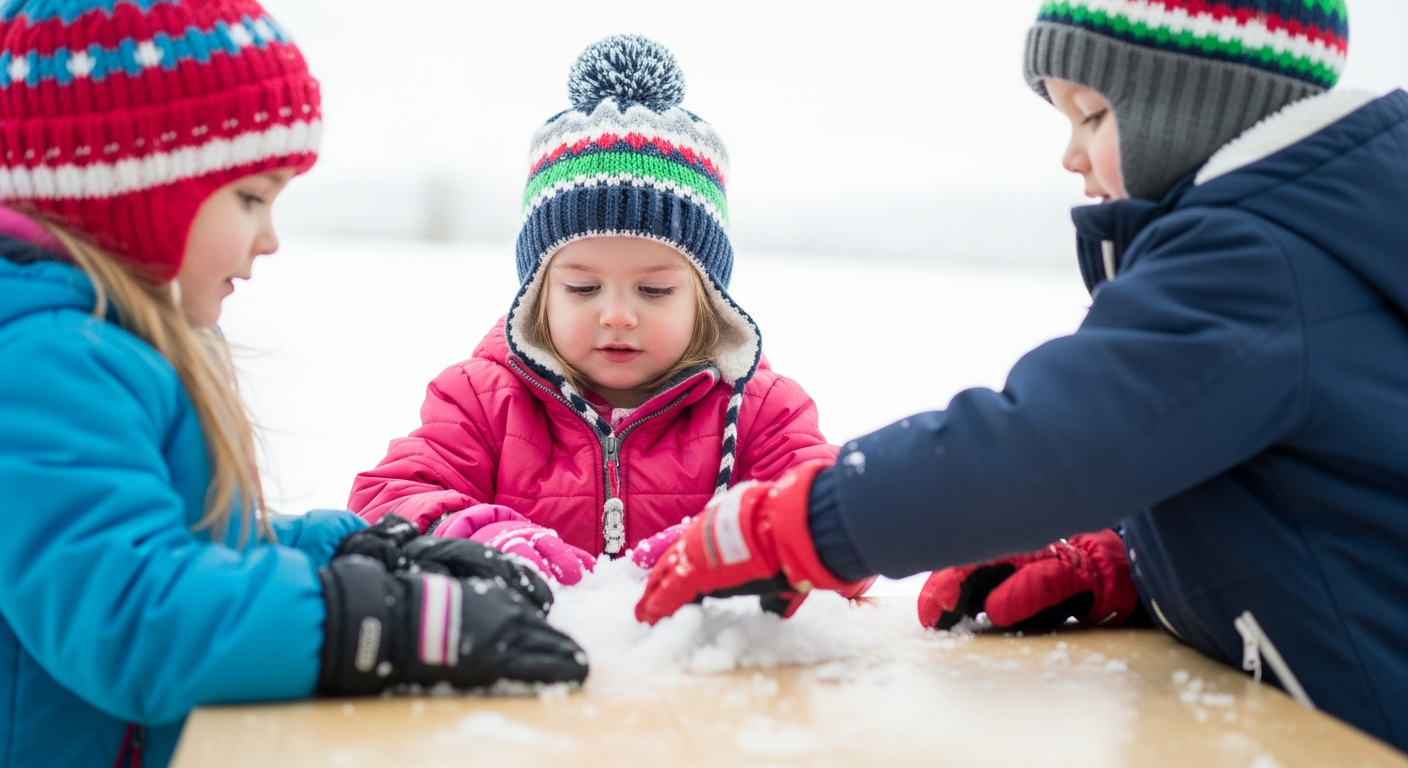
Table of Contents
- Introduction
- The Power of Play and Peer Imitation
- Outdoor Toddler Snow Activities
- Indoor Snow Sensory Play
- Science and Snack Activities
- Why Speech Blubs is the Perfect Winter Companion
- Setting Realistic Expectations
- FAQ: Toddler Snow Activities & Speech Development
- Conclusion
Introduction
Have you ever watched your toddler press their nose against a cold windowpane, eyes wide with wonder as the first white flakes of winter begin to drift down? For a small child, snow isn't just a weather event or a driveway that needs shoveling; it is a magical, transformative substance that turns the familiar world into a giant, sparkling playground. However, for parents, the arrival of winter often brings a familiar sense of dread: "How am I going to keep this bundle of energy entertained when it’s freezing outside?"
At Speech Blubs, we believe that every environment—even a chilly, snow-covered one—is a laboratory for language development. Our mission is to empower children to "speak their minds and hearts," and we know that the most profound learning happens when children are having so much fun they don't even realize they’re practicing complex skills. Whether you are bundled up in snowsuits or bringing the "white stuff" inside to a warm kitchen, snow play offers a unique multisensory experience that can jumpstart communication.

In this post, we are going to explore 15 engaging toddler snow activities designed to foster a love for communication, build confidence, and reduce the frustration that often comes with speech delays. We will cover outdoor adventures, indoor sensory play, and even a few "snowy" science experiments. By the end of this guide, you’ll have a toolkit of activities that turn winter days into joyful family learning moments. We are here to help you navigate this season with empathetic expertise, providing realistic expectations and practical advice for your child’s development.
The Power of Play and Peer Imitation
Before we dive into the activities, it’s important to understand why play is so critical for a child’s speech. At Speech Blubs, our company was born from the personal experiences of our founders, who all grew up with speech problems themselves. They created the tool they wished they had—one that blends scientific principles with the pure joy of play.
One of our core methodologies is "video modeling." We’ve found that children are most motivated when they see other children—their peers—succeeding. This peer-to-peer approach is what makes our app a "smart screen time" experience rather than a passive viewing session like a cartoon. When a child sees a peer making a sound or saying a word, it triggers their mirror neurons, making them more likely to imitate the behavior.
You can carry this same principle into your toddler snow activities. When you get down on their level and model how to "scoop" snow or say "brrr," you are providing the same powerful modeling that helps 1 in 4 children who need speech support. If you are unsure where your child currently stands in their communication journey, we recommend taking our quick 3-minute preliminary screener. It involves just 9 simple questions and provides an assessment and a next-steps plan to help you feel more confident in your approach.
Outdoor Toddler Snow Activities
If the weather permits and you have the right gear, getting outside is the best way to experience winter. Remember to keep outdoor sessions short—about 20 to 30 minutes for toddlers—to keep them from getting too chilled.

1. Colorful Snow Spray Painting
Toddlers love cause-and-effect. By filling spray bottles with water and a few drops of food coloring, you turn the backyard into a giant canvas.
- How to do it: Mix water and food coloring in various spray bottles. Show your toddler how to squeeze the trigger to "paint" the snow.
- Speech Tip: This is a great time to practice color names. Focus on simple "action" words like "squeeze," "spray," and "look!"
- Developmental Benefit: Building hand strength through squeezing is a foundational fine motor skill that eventually supports writing.
2. The Shoveling Helper
Toddlers are in a stage where they desperately want to mimic the adults in their lives. If you are out shoveling the walk, give them a child-sized plastic shovel.
- How to do it: Encourage them to "help" you move snow from one side to the other.
- Speech Tip: Use directional words. "Up!" as you lift the shovel and "Down!" as you dump it.
- Realistic Expectations: They won't actually clear the driveway, but they will feel a massive sense of pride and accomplishment, which builds the confidence necessary for trying new words.
3. Snow Castle Building
Who says sand toys are only for summer? Bring the buckets and spades out into the snow.
- How to do it: Use plastic containers to pack snow and flip them over to create "snow blocks."
- Speech Tip: This activity is perfect for practicing "More," "Tall," and "Big."
- Connection: Just as our app encourages kids to build skills step-by-step, building a castle teaches them about structure and sequence.
4. Winter Nature Scavenger Hunt
Even in the snow, nature is full of treasures.
- How to do it: Ask your child to find a "brown stick," a "green pine needle," or a "hard rock."
- Speech Tip: This expands their vocabulary to include adjectives (descriptive words).
- Pro Tip: If your child is a "late talker," you can start by simply naming the items they point to, reinforcing that their communication—even non-verbal—has meaning.
5. Frozen Bubble Magic
On very cold days (below freezing), you can actually freeze bubbles.
- How to do it: Use a standard bubble wand and blow bubbles gently. If it’s cold enough, they will land on the snow and turn into ice crystals before they pop.
- Speech Tip: Practice the "B" sound with "Bubbles," "Blow," and "Big."
- Scientific Note: This is a wonderful way to introduce basic science concepts through visual play, similar to how we use visual cues in Speech Blubs to teach complex communication.
Indoor Snow Sensory Play
Sometimes the wind chill is just too much, or your little one isn't a fan of the bulky snowsuit. That doesn't mean you have to miss out on the fun! Bringing the snow inside is a fantastic way to enjoy the sensory benefits in a controlled, warm environment.
6. The "Animal Kingdom" Snow Bin
For a parent whose 3-year-old "late talker" loves animals, this is a winning activity.
- How to do it: Fill a large plastic tub with fresh snow and place it on a towel on the kitchen floor. Add plastic animal figurines.
- The Speech Blubs Connection: Before you play, open the "Animal Kingdom" section of the Speech Blubs app. Watch the peer models make animal sounds like "Moo," "Baa," or "Roar." Then, take those same animals into the snow bin and recreate the sounds. Download Speech Blubs on the App Store to access these peer-led modeling videos.
- Speech Tip: Focus on the sounds the animals make. Animal sounds are often easier for toddlers to master than full words and serve as the building blocks for speech.
7. Melting Ice Rescue
This activity teaches patience and problem-solving.
- How to do it: Freeze small plastic toys (like erasers or little figurines) in ice cube trays. Place the frozen cubes in a bowl of warm water.
- Speech Tip: Use words like "Cold," "Hot," "Ice," and "Water." Ask "Where is the [toy]?" to encourage scanning and naming.
- Safety First: Always supervise water play and ensure the water is "warm," not "hot."
8. Puffy Paint Snowmen
If the real snow is melting too fast, make your own that lasts!
- How to do it: Mix equal parts white school glue and shaving cream. It creates a thick, "puffy" paint that looks like snow. Let your toddler "paint" a snowman on blue paper.
- Speech Tip: Talk about the parts of the snowman. "Eyes," "Nose," "Hat."
- Takeaway: This sensory experience is about the process, not the final product. Let them get their hands messy!
9. Snow Alphabet Hunt
Hide plastic letters in a bin of snow.
- How to do it: Have your child dig through the snow to find the letters.
- Speech Tip: When they find a letter, say its name and the sound it makes.
- Value Add: This bridges the gap between sensory play and early literacy. If you choose our Yearly Plan, you’ll also get access to our Reading Blubs app, which is a perfect companion for these types of literacy-focused activities.
10. Indoor Snowball Fight
If you don't want to bring actual snow inside, use white pom-poms or rolled-up white socks.
- How to do it: Clear a space in the living room and "toss" the snowballs at each other.
- Speech Tip: Use "Ready, Set, Go!" This phrase is excellent for teaching toddlers how to wait for a cue and then respond—a vital part of conversational turn-taking.
Science and Snack Activities
The kitchen is often the heart of the home, and it’s a great place to combine toddler snow activities with a little bit of learning and a delicious treat.
11. The Snow Volcano
This classic experiment is even more fun in the snow.
- How to do it: Build a mound of snow with a hole in the top. Put baking soda and red food coloring inside. Pour in vinegar and watch the "lava" flow.
- Speech Tip: "Look!" "Wow!" "Explode!" These "power words" are highly motivating because they represent high-excitement moments.
- Research Connection: Our methodology is backed by science, emphasizing that high-engagement, "aha!" moments are when the brain is most receptive to new information.
12. Real Snow Ice Cream
Yes, you can actually eat the snow (if it’s fresh and clean!).
- How to do it: Mix about 8 cups of clean snow with a can of sweetened condensed milk and a teaspoon of vanilla.
- Speech Tip: Talk about the taste and texture. "Sweet," "Cold," "Yummy."
- Experience: This is a joyful family learning moment that creates a positive association with winter and "smart" kitchen play.
13. Sink or Float: Snow Edition
- How to do it: Get a bowl of water and ask your child if they think a snowball will sink or float.
- Speech Tip: Practice "Yes" and "No." This helps with basic decision-making and expressing an opinion.
- Observation: Ask, "What happened?" even if they can't answer yet. It models the habit of observing and describing the world.
14. Hot Cocoa "Blow and Sip"
After playing in the cold, a warm drink is a must.
- How to do it: Make a toddler-temperature cup of cocoa with plenty of marshmallows.
- Speech Tip: "Blow" on the cocoa to cool it down. Blowing is a great oral-motor exercise that helps children gain control over their breath, which is essential for speech.
- Social Proof: Many parents in our testimonials section have noted that these small, everyday moments of connection are where they first start seeing their child's confidence grow.
15. The Winter Book Nook
Create a cozy space with pillows and blankets to read winter-themed books.
- How to do it: Choose books with simple repetitive text about snow and winter animals.
- Speech Tip: Let your child "fill in the blanks." If a sentence repeats, stop before the last word and see if they will say it.
- Goal: Fostering a love for communication and storytelling.
Why Speech Blubs is the Perfect Winter Companion
While these toddler snow activities are wonderful for physical and sensory development, adding a structured tool like Speech Blubs can provide the consistency your child needs to reach their communication goals. We provide an immediate, effective, and joyful solution for families, acting as a powerful supplement to your child’s overall development plan.
"Our app is designed to be 'smart screen time.' We encourage kids to put the phone down and interact with the world around them—like going outside to play in the snow after watching a peer model the word 'snowball' in the app."
Understanding the Value of Our Plans
We want to be transparent about how you can best access our tools. We offer two main ways to join the Speech Blubs family:
- The Monthly Plan: At $14.99 per month, this is a great way to test the waters. However, it does not include some of our most valuable features.
- The Yearly Plan: This is our best value option at $59.99 per year. When you break it down, it’s only $4.99 per month—a 66% savings compared to the monthly plan.
Why choose the Yearly Plan?
- 7-Day Free Trial: You can try everything risk-free before you commit.
- Reading Blubs Included: You get our secondary app designed to jumpstart literacy skills at no extra cost.
- Priority Support: You receive a 24-hour support response time and early access to all new updates.
To give your child the full suite of tools they need this winter, we highly recommend signing up for the Yearly Plan to secure your free trial and the Reading Blubs bonus.
Setting Realistic Expectations
As a child development expert, I always remind parents that progress isn't a straight line. Some days your toddler will be a "chatterbox" in the snow, and other days they might just want to sit and eat it. Both are okay! The goal of these toddler snow activities isn't to ensure your child is giving public speeches by springtime. Instead, we are focusing on:
- Reducing Frustration: By giving them simple "power words" (like more, help, look), you give them the tools to express needs without a meltdown.
- Building Foundational Skills: Fine motor play in the snow and oral-motor practice (like blowing on cocoa) are the physical foundations of speech.
- Creating Joyful Moments: When a child associates learning with fun and family, they become much more willing to take the risks associated with trying new sounds.
If you ever feel overwhelmed, remember that you don't have to do this alone. Download Speech Blubs on Google Play to join a community of parents who are all working toward the same goal: helping their children speak their minds and hearts.
FAQ: Toddler Snow Activities & Speech Development
1. Is it safe to bring real snow inside for my toddler to play with? Yes, as long as the snow is "fresh" and collected from an area away from roads or animal waste. Place the snow in a clean plastic bin and set it on a towel to catch any drips as it melts. Always supervise your toddler to ensure they don't ingest too much cold snow, which can be a shock to their system.
2. How do snow activities actually help with speech delays? Snow play is a "sensory-rich" environment. Sensory experiences create more "hooks" in the brain for new vocabulary. For example, the word "cold" becomes much more meaningful when a child is actually touching something cold. Additionally, activities like blowing bubbles or "painting" with spray bottles build the physical muscles used for speech.
3. My child gets frustrated easily when they can't say a word. How can these activities help? Focus on "success-oriented" play. In our app, we use peer modeling because it feels like a "win" when a child imitates a friend. In the snow, focus on non-verbal communication first—pointing, nodding, and simple sounds. When you celebrate these small wins, your child feels more confident and less frustrated.
4. What if I don't have real snow where I live? You can still participate! Many of the indoor activities, like the "Puffy Paint Snowmen" or the "Indoor Snowball Fight" with socks, provide similar developmental benefits. You can also make "fake snow" by mixing baking soda and hair conditioner for a similar sensory experience.
Conclusion
Winter doesn't have to be a season of "climbing the walls" and cabin fever. With these 15 toddler snow activities, you can transform a simple snow day into a masterclass in language development and sensory exploration. From the "Animal Kingdom" snow bin to the magic of frozen bubbles, each activity is an opportunity for you and your child to connect, play, and grow.
At Speech Blubs, we are honored to be a part of your journey. Whether you are using our app to provide your child with "smart screen time" or using this guide to plan your next outdoor adventure, our goal remains the same: to help your child find their voice.
Ready to make this winter your child's most expressive season yet? Start your 7-day free trial by downloading Speech Blubs on the App Store or Google Play today. Remember, for the best value and the most comprehensive experience—including access to Reading Blubs and priority support—be sure to select the Yearly Plan. Let’s turn those "brrr" moments into "wow" moments together!
Sobre el autor