
20 Engaging and Educational Halloween Toddler Activities
 Por Speech Blubs Team•25 mar 2026•14 min.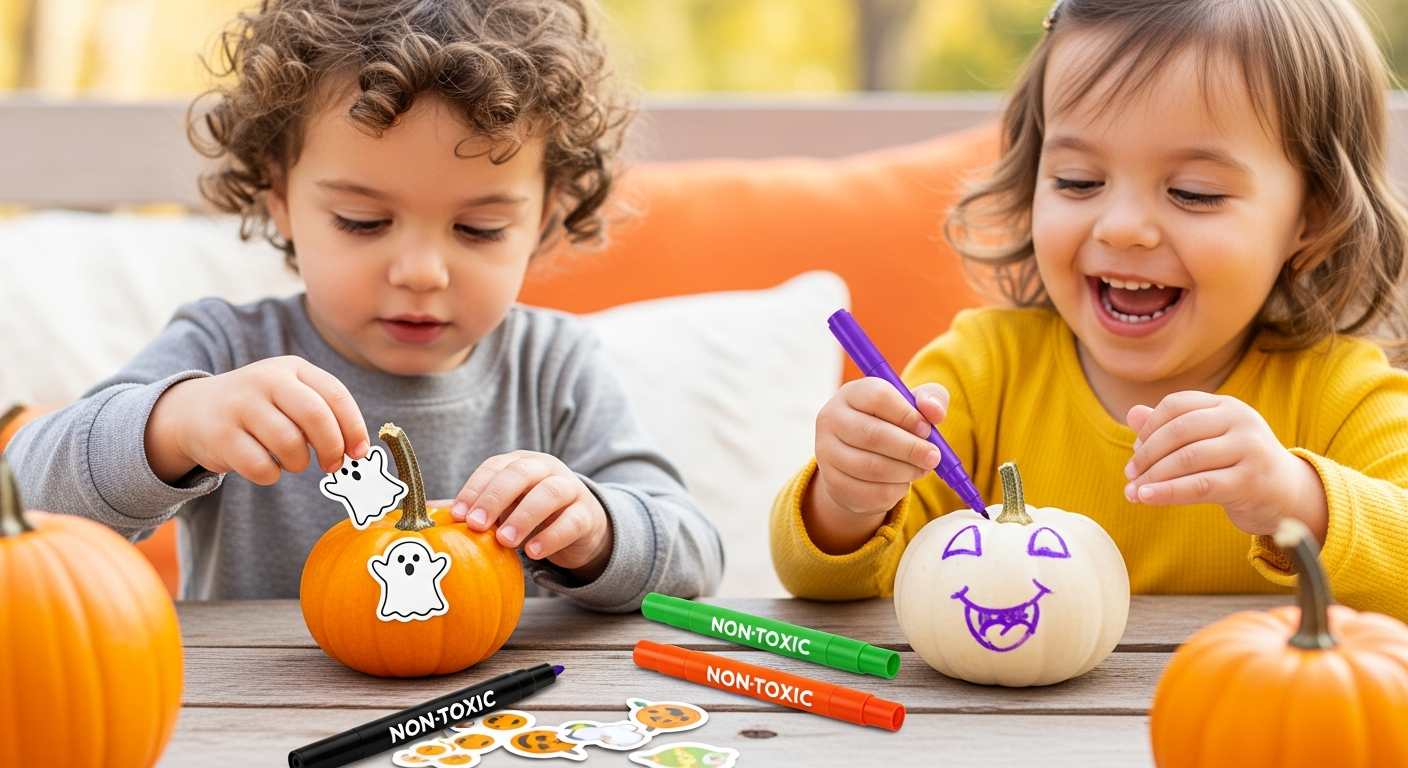
Table of Contents
- Introduction
- The Magic of Seasonal Learning
- Sensory Play: Exploring the Textures of Autumn
- Fine Motor Skills and Halloween Crafts
- Literacy and Language-Rich Activities
- Movement Games: Gross Motor Fun
- Creative Play and Imagination
- Healthy and Fun Halloween Snacks
- Integrating Smart Screen Time with Speech Blubs
- Why the Yearly Plan is the Best Choice for Families
- Building Confidence and Reducing Frustration
- Summary of Activities and Benefits
- Frequently Asked Questions
- Conclusion
Introduction
Do you remember the wide-eyed wonder of your first Halloween? To a toddler, the world is already a place of mystery, but when you add glowing pumpkins, fuzzy spiders, and the chance to dress up as a favorite animal, that wonder turns into a massive opportunity for learning. While the holiday is often associated with candy and costumes, for parents and caregivers, it’s a seasonal goldmine for developmental milestones.
In this post, we are going to explore a variety of Halloween toddler activities that go far beyond simple entertainment. We will dive into sensory play that builds fine motor skills, movement games that burn off "spooky" energy, and literacy activities that help your little one find their voice. Our mission at Speech Blubs is to empower children to speak their minds and hearts, and we believe that play is the most powerful tool to make that happen.

Whether you are looking for a way to keep a busy three-year-old occupied while you prep dinner or you want to actively support a "late talker" through themed engagement, this guide provides practical, joyful solutions. By the end of this article, you will have a full toolkit of ideas to create a memorable and educational October for your family.
The Magic of Seasonal Learning
Children learn best when they are engaged and excited. Seasonal themes like Halloween provide a natural "hook" for new vocabulary and concepts. Think about the words a child encounters this time of year: orange, pumpkin, bumpy, cold, sticky, ghost, light, dark. These aren't just words; they are sensory experiences.
At Speech Blubs, we focus on "smart screen time," which is a screen-free alternative to passive viewing. Our methodology is built on scientific principles, specifically video modeling. This is where children watch their peers perform certain actions or say specific words, which triggers their mirror neurons and encourages imitation. When you pair this kind of intentional digital learning with hands-on Halloween toddler activities, you create a holistic environment where your child can thrive.
If you’re curious about where your child stands in their communication journey, we recommend taking our quick 3-minute preliminary screener. It consists of 9 simple questions and provides an assessment and a next-steps plan, along with a free 7-day trial of our app.
Sensory Play: Exploring the Textures of Autumn
Sensory play is a cornerstone of early childhood development. It helps build nerve connections in the brain’s pathways, which lead to the child’s ability to complete more complex learning tasks.
1. The "Midnight" Bean Bin
Sensory bins are a parent's best friend. For a Halloween twist, use uncooked black beans as your base.
- What you’ll need: A shallow plastic bin, dried black beans, googly eyes, plastic spider rings, and small scoops.
- The Goal: Encourage your child to find the "hidden" spiders.
- Developmental Tip: Use this time to practice spatial words like under, on top, inside, and hidden. For a child working on specific sounds, every time they find a spider, they can practice a "Sssss" sound.
2. Spooky Playdough Tray
Playdough is excellent for strengthening the tiny muscles in a toddler's hands—muscles they will later use to hold a pencil or use a fork.

- What you’ll need: Black and orange playdough, pipe cleaners (for spider legs), googly eyes, and plastic cookie cutters.
- The Activity: Invite your child to create "silly monsters." There is no right or wrong way to do this.
- Speech Connection: For a parent whose 3-year-old "late talker" loves making things, the act of describing their monster—"Big eyes!" or "Long legs!"—is a low-pressure way to encourage spontaneous speech.
3. Witch’s Stew Water Play
If your toddler loves the bathtub, they will love this.
- What you’ll need: A large bowl or water table, green food coloring, plastic insects, and a large ladle.
- The Activity: Let them stir the "stew" and scoop out the ingredients.
- Why it works: It’s a great way to practice verbs like stir, pour, splash, and drop.
Fine Motor Skills and Halloween Crafts
Fine motor skills involve the coordination of small muscle movements. Halloween crafts are a perfect way to work on these without it feeling like "work."
4. Velcro Pumpkin Face-Off
Instead of carving pumpkins (which can be messy and dangerous for tiny hands), try a Velcro version.
- What you’ll need: A craft pumpkin (plastic) and various felt shapes (circles, triangles, crescents) with Velcro dots on the back.
- The Activity: Your toddler can "design" the pumpkin’s face over and over.
- Educational Value: This is a fantastic way to teach shapes and facial features. You can ask, "Where does the nose go?" or "Should he have a happy mouth or a sad mouth?"
5. Chalkboard Pumpkins
Many craft stores sell pumpkins pre-painted with chalkboard paint.
- The Activity: Give your child a piece of chalk and let them scribble.
- The Benefit: Scribbling is the first step toward writing. It’s a creative outlet that requires focus and grip control.
6. Sticky Spider Web
Tape a "web" of painter’s tape across a doorway with the sticky side facing the toddler.
- The Activity: Give them light "flies" (cotton balls or crumpled paper) to throw at the web to see if they stick.
- The Benefit: This works on hand-eye coordination and provides a satisfying tactile "pulling" sensation when they remove the items.
Literacy and Language-Rich Activities
At Speech Blubs, we want to help your child "speak their minds and hearts." This starts with building a rich vocabulary and a love for storytelling.
7. Bat Letter Match
Draw a few bats on a large piece of paper and write a single uppercase letter on each. Then, write the matching lowercase letters on circle stickers.
- The Activity: Have your child match the sticker to the correct bat.
- The Benefit: This introduces letter recognition in a fun, non-academic way.
8. The Halloween Morning Basket
A morning basket is a collection of themed books and quiet toys.
- What to include: Halloween-themed board books, a small stuffed bat, and some pumpkin-shaped flashcards.
- How we use it: Spend 10 minutes each morning looking through the basket together. Reading together is one of the most effective ways to boost language development.
9. "Spooky" Sound Imitation
In our app, we have sections dedicated to fun sounds. You can mirror this at home.
- The Activity: Practice making "scary" (but fun) noises. An owl’s "Whoo-whoo," a ghost’s "Boooo," or a cat’s "Meow."
- The Science: This is a form of oral motor exercise. Imitating these sounds helps children learn to control their breath and mouth movements. If you want to see this in action, download Speech Blubs on the App Store or Google Play to begin.
Movement Games: Gross Motor Fun
Toddlers have a lot of energy. Instead of fighting it, channel it into "spooky" movement games that help develop their gross motor skills—the big movements of the arms, legs, and torso.
10. Ghost Shape Walk
Cut large ghost shapes out of white paper and draw a different shape (square, circle, triangle) on each ghost. Tape them to the floor in a path.
- The Activity: Call out a shape, and have your toddler jump to the corresponding ghost.
- The Benefit: This combines physical activity with cognitive processing and shape recognition.
11. Pumpkin Patch Hop
Place orange "pumpkin" cutouts (or even orange pillows) around the room.
- The Activity: Your child must "hop" from one pumpkin to the next without touching the "mud" (the floor).
- The Benefit: Hopping and balancing are key physical milestones for two and three-year-olds.
12. The Ghost Tossing Game
Take old dryer sheets or white rags, ball them up, and tie a string around the "neck" to make a ghost.
- The Activity: Use a laundry basket as a target and see how many ghosts your child can toss inside.
- The Benefit: Great for developing depth perception and aim.
Creative Play and Imagination
Imagination is where a child practices being a social being. Through pretend play, they learn empathy and problem-solving.
13. The Trick-or-Treat Rehearsal
For many toddlers, the actual night of Halloween can be overwhelming. The costumes are itchy, the masks are scary, and the routine is different.
- The Activity: Set up a "practice" trick-or-treat session inside your house. Have them knock on the bedroom door, say "Trick or treat," and receive a small sticker or toy.
- Why it helps: This reduces anxiety and gives them the script they need to feel confident on the big night. It’s the perfect time to practice the phrase "Thank you!"
14. Costume Parade
You don’t need an official costume for this. A simple sheet, a hat, or even a pair of funny glasses will do.
- The Activity: Put on some festive music and have a parade through the living room.
- Developmental Tip: Encourage them to "act" like their character. If they are a dinosaur, how do they walk? How do they roar?
Healthy and Fun Halloween Snacks
Food can also be an activity! Involving toddlers in the "assembly" of their snacks is a great way to encourage picky eaters to try new textures.
15. Clementine "Pumpkins"
Peel a clementine and stick a tiny piece of celery in the top to look like a stem.
- The Benefit: Peeling orange segments is a fantastic fine motor task.
16. Jack-O-Lantern Fruit Cups
Use a black marker to draw a face on the outside of a clear plastic cup filled with orange fruit (like cantaloupe or peaches).
- The Benefit: It makes healthy eating feel like a celebration.
Integrating Smart Screen Time with Speech Blubs
While hands-on play is vital, we also know that parents need a break or a tool to help bridge the gap when they aren't sure how to prompt their child's next word. This is where Speech Blubs comes in. Our app isn't just another cartoon; it’s a powerful tool for family connection.
Our methodology is rooted in the idea of children teaching children. When a toddler sees another child on the screen making a "Moo" sound or saying "Pumpkin," they are much more likely to try it themselves than if an adult asks them to do it. This is the core of our "video modeling" approach, which is backed by research and has placed us in the top tier of speech apps globally.
For a child who is particularly captivated by the magic of Halloween, our "Spooky" and "Animal Kingdom" sections provide a motivating way to practice foundational communication skills. Instead of just watching a character on a screen, your child is invited to be part of the action, using the camera to see themselves with "fun filters" that mirror the peers they are watching.
Why the Yearly Plan is the Best Choice for Families
We believe in being transparent with our community. While we offer different ways to access our tools, we always recommend our Yearly Plan as the gold standard for families.
Here is why:
- Cost Efficiency: At $59.99 per year, it breaks down to just $4.99 per month. Compare this to the Monthly Plan at $14.99 per month, and you’re looking at a 66% savings.
- 7-Day Free Trial: The Yearly plan allows you to explore everything we offer risk-free for a full week.
- Reading Blubs Included: You get access to our sister app, Reading Blubs, which is designed to take those early speech skills and transition them into literacy and reading readiness.
- Priority Support: Our Yearly members get early access to new updates and a 24-hour support response time.
Ready to see the difference for yourself? Ready to get started? Create your account and begin your 7-day free trial today.
Building Confidence and Reducing Frustration
One of the biggest challenges for parents of toddlers with speech delays is the frustration—both for the parent and the child. When a child can't express what they want, it often leads to tantrums. By engaging in these Halloween toddler activities, you are giving your child multiple "languages" to communicate with: touch, movement, art, and eventually, words.
At Speech Blubs, we don't promise that your child will be giving public speeches in a month. Every child develops at their own pace. However, we do focus on fostering a love for communication and building the foundational skills necessary for a lifetime of talking. We want to create joyful family learning moments, where the focus is on the "connection" rather than the "correction."
Don't just take our word for it; see what other parents are saying about their child’s success with Speech Blubs. Many of our users find that the app serves as a powerful supplement to their overall development plan and professional therapy.
Summary of Activities and Benefits
To help you plan your spooky month, here is a quick recap of how these activities support your toddler:
- Sensory Bins: Build brain connections and vocabulary (prepositions).
- Art & Crafts: Strengthen fine motor skills for future writing.
- Movement Games: Develop gross motor skills, balance, and coordination.
- Literacy Games: Introduce letter recognition and phonetic awareness.
- Speech Blubs App: Provides "smart screen time" that encourages imitation through peer modeling.
By mixing and matching these ideas, you can ensure that your toddler’s October is filled with more than just ghosts—it’s filled with growth.
Frequently Asked Questions
1. Are these Halloween activities safe for a 2-year-old?
Yes, most of these activities are designed with toddlers in mind. However, always supervise sensory play involving small items like dried beans or plastic spiders to prevent choking hazards. For crafts, use non-toxic materials and child-safe scissors (or do the cutting for them).
2. My child isn't talking yet. Will these activities help?
Absolutely. Language development starts with engagement and sensory input. Activities that encourage imitation (like making animal sounds or "Booo" sounds) and physical movement help build the cognitive foundation for speech. Using the Speech Blubs app alongside these activities provides the "peer modeling" that often triggers a child's first words.
3. How much time should we spend on these activities?
Toddlers have short attention spans! Aim for 10–15 minutes of focused play. The goal isn't to complete a perfect craft but to enjoy the process of exploration together. You can spread different activities throughout the week to keep things fresh.
4. What is the best way to use the Speech Blubs app with these activities?
We recommend "co-play." Sit with your child while they use the app. If they see a child on the screen making a pumpkin face, you do it too! Use the app for 10–15 minutes of "smart screen time" after you’ve done a physical activity like the sensory bin or the pumpkin hop to reinforce the vocabulary they just learned.
Conclusion
Halloween is a magical time for toddlers, offering a unique blend of sensory, physical, and cognitive challenges that are perfect for their developing brains. From the squish of playdough to the thrill of a ghost-tossing game, every moment is an opportunity to build confidence and foster a love for learning.
At Speech Blubs, we are honored to be a part of your child’s journey. Our founders created this tool because they grew up with speech problems themselves and wanted to provide the joyful, effective solution they wished they’d had. We invite you to join our community and see how play-based learning can help your child find their voice.
Take the first step toward a more communicative future today. Download Speech Blubs on the Google Play Store or the Apple App Store. For the best value, be sure to select the Yearly Plan, which includes a 7-day free trial, the Reading Blubs app, and exclusive features to support your child’s growth all year long. Happy haunting and happy talking!
Sobre el autor