
21 Fun Thanksgiving Toddler Learning Activities
 Por Speech Blubs Team•18 mar 2026•15 min.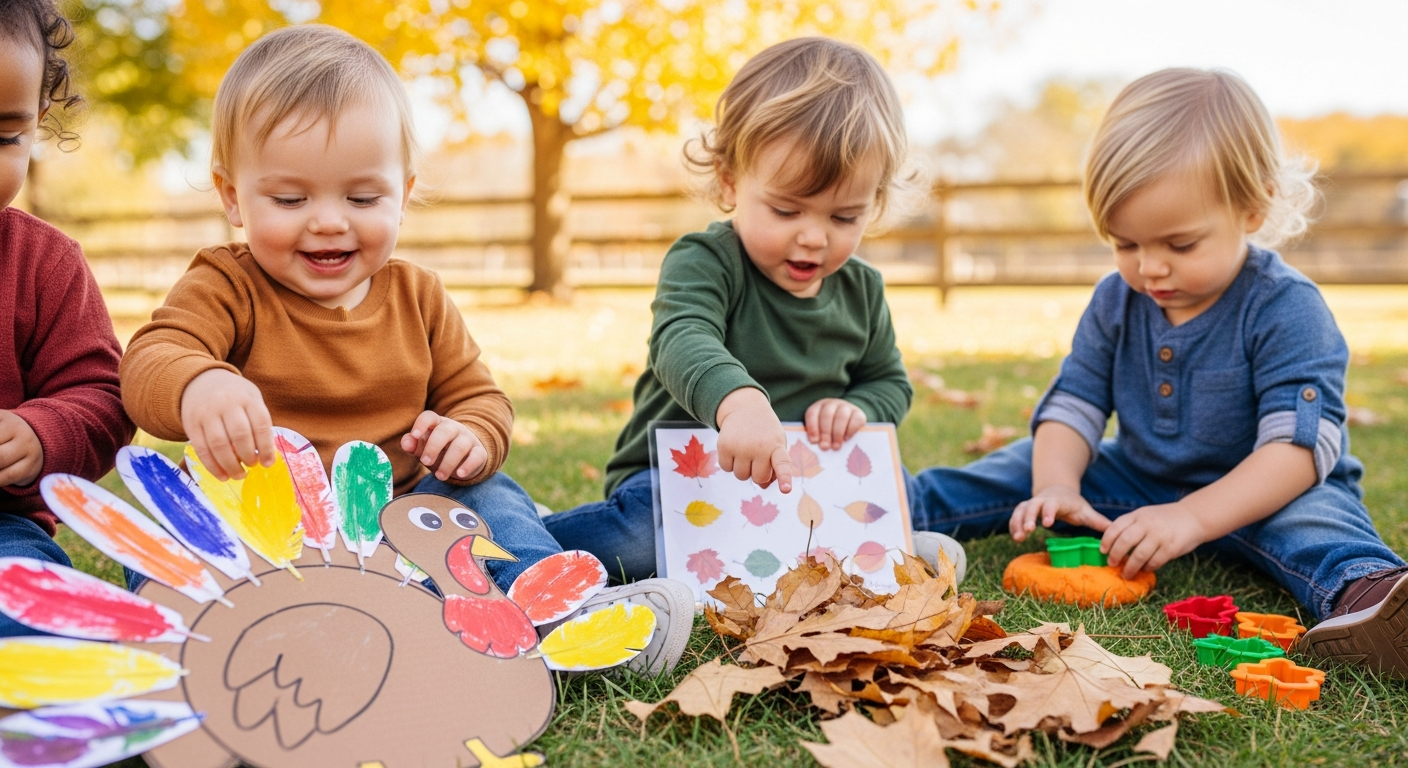
Table of Contents
- Introduction
- The Developmental Magic of Thanksgiving
- Sensory Thanksgiving Toddler Learning Activities
- Creative Crafts for Fine Motor Skills
- Language-Building Games and Activities
- Nurturing Gratitude in Early Childhood
- Integrating Smart Screen Time with Speech Blubs
- Practical Tips for Stress-Free Holiday Learning
- Why Our Yearly Plan is the Best Choice for Families
- More Thanksgiving Activities to Try
- Building Confidence Through Peer Imitation
- Creating Joyful Family Learning Moments
- How to Get Started with Speech Blubs Today
- Conclusion
- Frequently Asked Questions
Introduction
Have you ever noticed how a toddler’s eyes light up when the house begins to smell like cinnamon and toasted pecans? Thanksgiving is often seen through the lens of frantic kitchen prep and long travel days, but for a child, it is a sensory wonderland. From the crinkle of dry autumn leaves to the vibrant orange of a pumpkin, every tradition offers a unique window for development. At Speech Blubs, we believe that these holiday moments aren't just for making memories; they are prime opportunities for your child to "speak their minds and hearts."
In this guide, we will explore a wide variety of thanksgiving toddler learning activities that blend the spirit of gratitude with essential developmental milestones. We’ll cover sensory bins that stimulate tactile exploration, fine motor crafts that strengthen little hands, and language-building games designed to expand your child’s vocabulary. Our goal is to provide you with a toolkit of "smart" play ideas that foster confidence and reduce frustration during the holiday bustle. By the end of this post, you’ll have a clear plan to transform your Thanksgiving celebration into a joyful, educational experience for your little one.

The essence of the holiday season is connection, and by engaging in these purposeful activities, you are building the foundational communication skills your child needs to thrive in a world full of wonder.
The Developmental Magic of Thanksgiving
Thanksgiving is a goldmine for early childhood development. Unlike typical days, the holidays introduce new objects, sounds, and social scenarios that challenge a child’s cognitive and linguistic abilities. When we involve toddlers in seasonal tasks, we aren't just keeping them busy; we are practicing "functional communication."
At Speech Blubs, our mission is rooted in the personal experiences of our founders, who grew up navigating speech challenges themselves. They created the tool they wished they had—a solution that turns screen time into an active, joyful learning process. We know that 1 in 4 children will face speech or language delays, and holidays can sometimes feel overwhelming for "late talkers." That is why we focus on science-backed play.
By utilizing techniques like video modeling—where children learn by watching and imitating their peers—we help kids bridge the gap between seeing a word and saying it. You can see how this works by visiting our research page, which highlights how our methodology engages mirror neurons to spark imitation.
Sensory Thanksgiving Toddler Learning Activities
Sensory play is the "work" of a toddler. It allows them to process information about the world through touch, smell, and sight. Here are some of our favorite ways to bring the holiday to life through sensory exploration.
1. The Pumpkin Pie Sensory Bin
Fill a large plastic container with orange-colored rice or dried chickpeas. Add a few drops of pumpkin spice extract or cinnamon to the mix. Provide your child with measuring cups, small pie tins, and wooden spoons. As they "bake," narrate their actions using descriptive words like pour, stir, spicy, and smooth. This is a perfect time to practice "S" sounds or "P" sounds in a natural environment.

2. Cranberry Water Play
Cranberries are one of the few fruits that float, making them fascinating for toddlers. Fill a shallow basin with water and dump in a bag of fresh cranberries. Give your child a slotted spoon or a whisk. They can practice scooping and pouring, which builds hand-eye coordination. Ask them, "Is it red? Does it splash?" to encourage simple one-word or two-word responses.
3. Corn Shaker Music
Fill empty plastic water bottles with dried corn kernels. Secure the lids tightly with tape. Encourage your child to shake the bottles to the beat of a song. This simple activity helps with auditory processing and rhythm, which are foundational skills for speech. You can even sing a "Thanksgiving Song" together, reinforcing the cadence of language.
Creative Crafts for Fine Motor Skills
Fine motor development is closely linked to speech development. The same neural pathways used for finger dexterity are often involved in the precise movements of the tongue and lips. These thanksgiving toddler learning activities focus on strengthening those small muscles.
4. The Thankful Handprint Turkey
This is a classic for a reason. Trace your child’s hand on a piece of paper. The palm becomes the turkey’s body, and the fingers are the feathers. Inside each "feather," write one thing your child is thankful for. If they aren't speaking yet, you can offer choices: "Are you thankful for Nana or your dog?" This fosters a sense of agency and helps them understand the abstract concept of gratitude.
5. Feather Sorting and Sticking
Purchase a bag of brightly colored craft feathers. Provide your child with a colander turned upside down. Show them how to poke the stems of the feathers into the holes. This requires immense focus and pincer grasp strength. While they work, you can label the colors: yellow, red, orange. For a child who loves animals, this mimics the "Animal Kingdom" section of our app, where they can see peers mimicking bird sounds. Download Speech Blubs on the App Store to see these peer-to-peer videos in action.
6. Contact Paper Leaf Art
Tape a piece of clear contact paper (sticky side out) to a window at your child’s eye level. Provide a basket of silk leaves or real dried leaves. Let your child press the leaves onto the sticky surface. This "screen-free" alternative to passive viewing encourages them to move their bodies and explore textures while creating a beautiful piece of fall decor.
Language-Building Games and Activities
Language thrives in the context of play. These activities are specifically designed to encourage vocalization and vocabulary expansion.
7. "Feed the Turkey" Box
Take an old cereal box and wrap it in brown paper. Cut a large hole for the "mouth" and draw a turkey face around it. Give your child "acorns" (large pom-poms or actual acorns if they are past the mouthing stage). Every time they feed the turkey, have them say a target word or sound. For example, "Ah!" for a big bite or "In!" as the acorn disappears.
8. Thanksgiving Scavenger Hunt
Create a simple visual list of items for your child to find around the house or yard: a red leaf, a pumpkin, a wooden spoon, a candle. As you find each item, talk about it. "You found the pumpkin! It’s big and heavy." This builds "object permanence" and labels for their everyday environment.
9. The "Turkey Trot" Action Game
Toddlers need to move! Call out different actions: "Waddle like a turkey!" "Crunch through the leaves!" "Fly like a bird!" Use big, exaggerated movements and wait for your child to imitate you. This imitation is the precursor to verbal imitation. If you’re unsure about your child’s current developmental stage, take our quick 3-minute preliminary screener to get a customized assessment and a next-steps plan.
Nurturing Gratitude in Early Childhood
While a two-year-old might not grasp the historical complexities of Thanksgiving, they can certainly understand the feeling of being loved and appreciated. Teaching gratitude early sets the stage for emotional intelligence.
10. The Gratitude Tree
Create a tree trunk out of brown paper and tape it to a wall. Every morning in November, help your child add a leaf (paper cutout) to the tree. Discuss people and things that make them happy. This ritual creates a joyful family learning moment, shifting the focus from "wanting" to "having."
11. Sharing Snack Time
Thanksgiving is about the communal meal. Use snack time to practice social communication. Encourage your child to "pass" a cracker or say "please" and "thank you." We aren't looking for perfection; we are looking for the attempt to communicate. These small social wins build the confidence needed for bigger conversations later on.
Integrating Smart Screen Time with Speech Blubs
We understand that during the holidays, you might need a few minutes to finish the gravy or set the table. Instead of turning on passive cartoons, which offer little educational value, this is where "smart screen time" comes in.
Our app is designed as a powerful supplement to your child's development. By using our video modeling methodology, your child isn't just watching a screen; they are interacting with a "peer" who is encouraging them to make sounds, say words, and even try facial expressions. This is the "video modeling" science that makes Speech Blubs a leader in the field.
For a parent whose 2-year-old is just starting to mimic sounds, the "Early Sounds" section of Speech Blubs provides a fun, motivating way to practice. Your child sees another child making a "gobble-gobble" sound, and their brain naturally wants to join in. To get started, you can create your account and begin your 7-day free trial today.
Practical Tips for Stress-Free Holiday Learning
The key to successful thanksgiving toddler learning activities is to keep them low-pressure. Here is how to ensure the holiday remains joyful:
- Follow Their Lead: If your child wants to dump the cranberries on the floor instead of scooping them, let them (within reason!). Follow their interest to keep them engaged.
- Narrate Everything: You are your child’s best teacher. Simply talking about what you are doing—"I am mashing the potatoes. Squish, squish, squish!"—provides a rich language environment.
- Limit Distractions: When doing a specific activity, try to turn off the TV and background noise so your child can focus on your voice and the sounds they are making.
- Set Realistic Expectations: Your child might only engage for five minutes, and that’s okay! Short, frequent bursts of play are more effective for learning than one long, forced session.
Why Our Yearly Plan is the Best Choice for Families
As you navigate the busy holiday season and look toward the new year, consistency is the key to seeing progress in your child's communication skills. While we offer a monthly subscription, our Yearly Plan is designed to provide the best long-term value for your family’s journey.
Pricing Transparency:
- Monthly Plan: $14.99 per month.
- Yearly Plan: $59.99 per year.
When you break it down, the Yearly Plan costs just $4.99 per month, which is a 66% saving over the monthly option. But the value goes beyond the price tag.
Exclusive Yearly Plan Features:
- 7-Day Free Trial: Try all the features risk-free before committing.
- Reading Blubs App: You get full access to our companion app, Reading Blubs, which focuses on early literacy and phonics—the perfect next step after mastering basic speech.
- Priority Support: Enjoy a 24-hour support response time for any questions you have.
- Early Access: Be the first to try new updates and themes before they are released to the general public.
The Monthly plan does not include the Reading Blubs app or the extended trial period. To give your child the full suite of tools they need to "speak their minds and hearts," we highly recommend choosing the Yearly Plan. You can find more information on our main homepage.
More Thanksgiving Activities to Try
If you find yourself with extra time during the holiday week, here are a few more quick ideas:
12. Spice Painting
Mix a little water with fall spices like cinnamon, nutmeg, or ginger. Let your child use a paintbrush to "paint" on thick paper. The scent is incredible and provides a unique olfactory sensory experience.
13. Leaf Rubbings
Place a leaf under a piece of paper and show your child how to rub a crayon over the top. Watch the "magic" of the leaf pattern appearing. This is a great way to talk about veins, stems, and shapes.
14. Vegetable Washing Station
Give your child a bowl of water and a scrub brush. Let them wash the potatoes or carrots you’ll be using for dinner. This involves them in the holiday prep in a safe, productive way.
15. The "I Spy" Thanksgiving Table
Once the table is set, play a game of "I Spy." "I spy something round and orange." "I spy a fork." This helps with vocabulary and visual discrimination.
16. Turkey Feather Math
If your child is starting to count, use your craft feathers. "Can you give the turkey one red feather? Now two blue feathers?" This introduces early numeracy concepts through play.
Building Confidence Through Peer Imitation
One of the most powerful aspects of our app is seeing the transformation in a child’s confidence. When a toddler sees a peer on a screen—not a cartoon, but a real child—performing a task, it reduces the "intimidation factor" of learning. This is why thousands of parents have shared their success stories with us. You can read our testimonials to see how families have used Speech Blubs to reduce frustration and foster a love for communication.
For example, a parent of a 3-year-old "late talker" who was obsessed with the holiday parade found that the "Move My Mouth" section of the app helped their child finally attempt the "B" and "P" sounds they had been struggling with. The app became a bridge between their child's world and the world of spoken language.
Creating Joyful Family Learning Moments
At the end of the day, Thanksgiving isn't about the perfect turkey or the most elaborate craft. It’s about the "joyful family learning moments" that happen in the quiet spaces between the chaos. Whether you are splashing in cranberry water, waddling like a turkey, or exploring the "Smart Screen Time" of Speech Blubs, you are providing your child with the building blocks of a bright future.
Our founders' journey from speech struggles to creating a global platform is a testament to the fact that with the right tools and a lot of love, every child can find their voice. We are honored to be a part of your family’s journey this holiday season.
How to Get Started with Speech Blubs Today
Ready to add a "smart" element to your toddler's learning routine? Getting started is simple and designed to fit into your busy life.
- Download the App: Find us on the Google Play Store or the Apple App Store.
- Take the Screener: Spend 3 minutes answering a few questions about your child's current skills.
- Start Your Trial: Choose the Yearly Plan to get your 7-day free trial and unlock the Reading Blubs app.
- Play Together: Sit with your child, watch the peer videos, and celebrate every sound, smile, and word!
Conclusion
Thanksgiving is a beautiful time to slow down and appreciate the rapid growth of your toddler. By incorporating these thanksgiving toddler learning activities, you are doing so much more than keeping them entertained. You are stimulating their senses, strengthening their motor skills, and opening the door to a world of communication.
Remember that every child develops at their own pace. Our goal at Speech Blubs is not to provide a "quick fix," but to foster a lifelong love for learning and a deep sense of confidence. Whether you are using our app as a supplement to professional therapy or as a way to enhance your daily play, the most important ingredient is your presence and support.
We invite you to join our community of over 5 million parents who are dedicated to helping their children "speak their minds and hearts." This Thanksgiving, let’s celebrate every "gobble," every gesture, and every word.
"The best way to teach a child is to join them in their world of play."
Start your journey today. Download Speech Blubs on the App Store or Google Play to begin. Don’t forget to choose the Yearly plan to get the best value, including the Reading Blubs app and your 7-day free trial!
Frequently Asked Questions
What are the best Thanksgiving activities for a toddler with a speech delay?
The best activities are those that encourage imitation and sensory engagement. Focus on activities like the "Feed the Turkey" box where you can model simple sounds (like "nom nom" or "in"), or use the Speech Blubs app's video modeling to let your child watch other children make festive sounds. Sensory bins are also excellent as they provide a low-pressure environment for descriptive language.
Is the Speech Blubs app considered "passive" screen time?
No, we specifically design Speech Blubs to be "smart screen time." Unlike cartoons where a child simply watches, our app uses video modeling to prompt active participation. It encourages children to vocalize, use facial expressions, and interact with the content. We always recommend "co-play," where an adult interacts with the child while using the app to maximize the learning benefits.
How do I teach my toddler about "thankfulness"?
At a toddler level, thankfulness is best taught through concrete examples. Use a "Thankful Tree" or "Gratitude Wall" to point out things they like—their favorite toy, a pet, or a family member. By labeling these things as "special" or saying "We are happy to have this," you are laying the groundwork for the abstract concept of gratitude.
Why should I choose the Yearly Plan over the Monthly Plan?
The Yearly Plan is our best value option, offering a 66% discount (breaking down to just $4.99/month). Most importantly, the Yearly Plan includes access to the Reading Blubs app, which supports early literacy, and provides a 7-day free trial so you can explore all features before committing. The Monthly plan lacks these extra resources and the trial period.
Sobre el autor