
24 Best Toddler Party Games Activities for Stress-Free Fun
 Por Speech Blubs Team•18 mar 2026•14 min.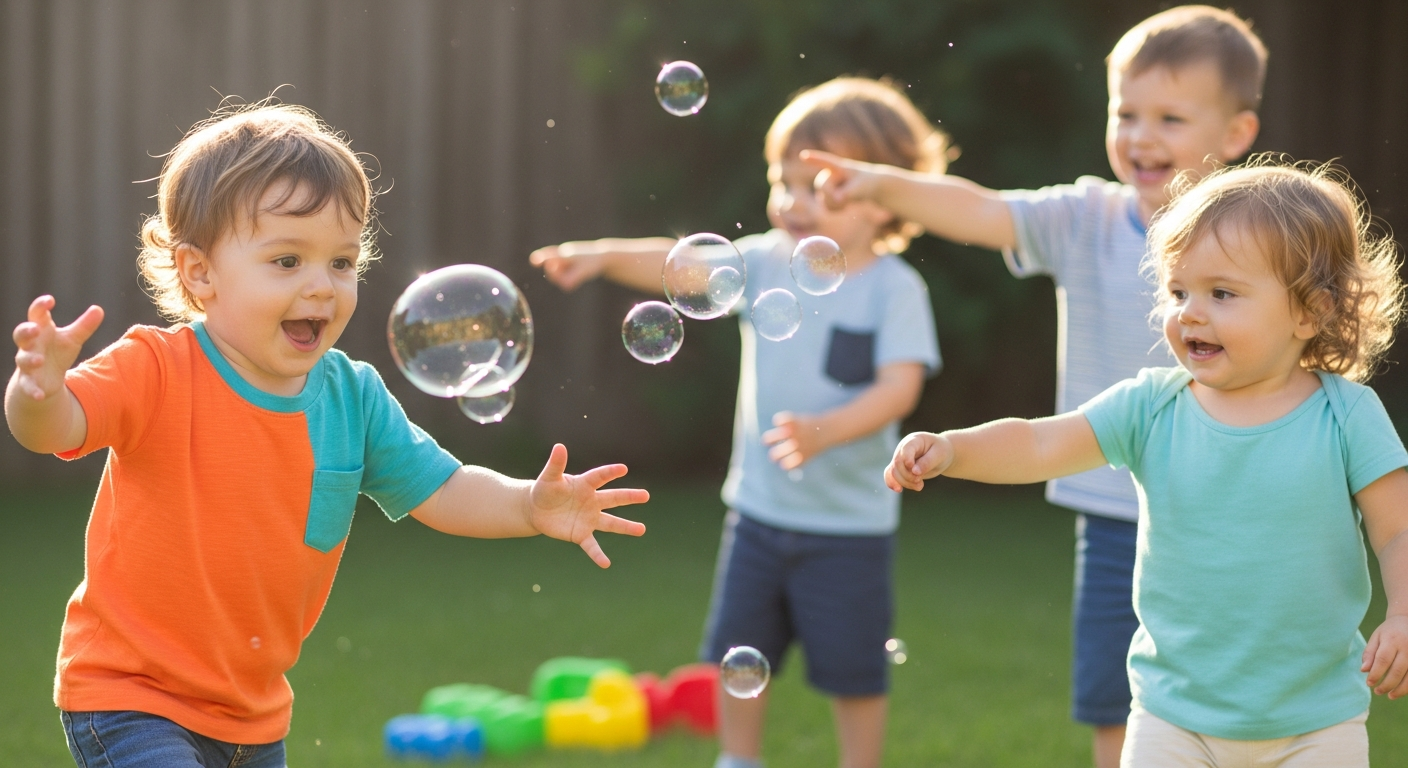
Table of Contents
- Introduction
- Understanding the Toddler Party Vibe
- Active Energy Burners
- Language-Boosting Games
- Sensory and Creative Activities
- Classic Games with a Toddler Makeover
- The Role of "Smart Screen Time" in Toddler Parties
- Practical Scenarios: Connecting Play to Progress
- Planning for Success: Tips for the Host
- Why Speech Blubs is the Ultimate Party Guest
- Conclusion
- Frequently Asked Questions
Introduction
Is there anything more unpredictable—and yet more heartwarming—than a room full of toddlers gathered for a birthday party? If you have ever tried to lead a group of two-year-olds in a structured activity, you know it can sometimes feel like herding kittens who have just discovered the joy of running in opposite directions. Toddlers are at a magical stage of development where they are bursting with energy, curiosity, and a growing desire to communicate, yet they are still learning the complex social skills of turn-taking and emotional regulation.
At Speech Blubs, we believe that every moment is an opportunity for connection and growth. Our mission is to empower children to "speak their minds and hearts," and there is no better place to foster that confidence than in a joyful, play-filled environment. This blog post is designed to take the stress out of planning your next celebration. We will cover a comprehensive list of 24 toddler party games and activities that are inclusive, developmentally appropriate, and, most importantly, fun for everyone involved.

We’ll explore everything from high-energy "balloon stomps" to quiet, language-rich "story sacks," while providing tips on how to adapt these games for children who might need a little extra support. Our goal is to help you create a celebration where every child feels successful and every parent feels relaxed. By focusing on process over "winning," we can turn a simple birthday party into a powerful moment of social and emotional learning.
Understanding the Toddler Party Vibe
Before we dive into the specific games, it’s important to set the stage. Unlike older children, toddlers don’t quite "get" the concept of competition yet. A "loser" in a game doesn't see a lesson in sportsmanship; they often just see a reason for a meltdown. That’s why the best toddler party games and activities focus on collaborative play and participation.
We advocate for "smart screen time" and interactive play because we know that children learn best when they are engaged and having fun. Our company was born from the personal experiences of our founders, who all grew up with speech challenges and created the tool they wished they had. We apply that same empathy to party planning. Keep things simple, stay flexible, and remember that if the kids just want to run in circles with a balloon, that is a perfectly successful party activity!
Active Energy Burners
Toddlers have an almost infinite supply of energy. Providing outlets for physical movement helps prevent the restlessness that can lead to tantrums.
1. Collaborative Musical Chairs
The traditional version of musical chairs can be heartbreaking for a three-year-old who is told they are "out." Instead, try our win-win version. Set up a circle of chairs or cushions. When the music stops, everyone finds a seat. Each time the music restarts, remove one chair, but everyone stays in the game. As the chairs disappear, the children have to help each other, sitting on laps or squeezing together. By the end, everyone is giggling while trying to fit on a single chair. It’s a wonderful way to teach cooperation.

2. The Great Balloon Stomp
This is a high-energy favorite that works best in a large, open space. Before the party, tuck a small, soft treat or a sticker inside several balloons before inflating them. Scatter the balloons across the floor. On the count of three, let the toddlers loose to "stomp" and pop the balloons to find the surprises.
Safety Tip: Always have an adult quickly pick up the popped rubber pieces, as they can be a choking hazard for little ones.
3. Follow the Leader (With a Twist)
Take the children on a journey through the backyard or living room. The "leader" (start with an adult) can hop like a frog, stomp like a dinosaur, or crawl like a bear. Make sure every child gets a turn to lead the line. If you notice a child is particularly fond of animals, you can mirror the "Animal Kingdom" section of our app, where kids learn to imitate peer models making animal sounds.
4. Bubble Pop Extravaganza
Never underestimate the power of bubbles. Use a bubble machine or several wands to create a "bubble cloud." Ask the children to see how many they can pop using only their elbows, their noses, or their toes. This is great for gross motor development and body awareness.
5. Duck, Duck, Goose (Modified)
For very young toddlers, the "chase" aspect can be confusing. Instead, play "Duck, Duck, Hug." When the "Goose" is chosen, they get a gentle hug or a high-five instead of a race. It keeps the atmosphere calm and affectionate.
Language-Boosting Games
Parties are a fantastic time to practice communication skills. Many of the activities we suggest align with our methodology of teaching through play and peer imitation.
6. The Mystery Story Sack
Fill a colorful bag with various toys, household objects, or themed items (like a plastic cow, a small mirror, or a toy car). Have the children sit in a circle. Each child pulls an item from the bag, and together, you build a silly story. For a parent whose 3-year-old "late talker" loves animals, seeing a toy lion come out of the sack might motivate them to practice their "roar," just like the children they see in our video modeling exercises.
7. Hot and Cold: The Sound Edition
Hide a noisy toy (like a ticking kitchen timer or a toy that plays music) somewhere in the room. Have the children use their "listening ears" to find it. As they get closer, encourage the other children to clap louder; as they move away, clap softer. This helps with auditory processing and following directions.
8. Funny Faces Mirror Game
Toddlers are fascinated by faces. Pair the children up and have them sit across from one another. One child makes a silly face (tongue out, wide eyes, puffed cheeks), and the other has to copy it. This is a live-action version of what we do at Speech Blubs, where we use "mirror neurons" to help children learn speech sounds by watching their peers. If you want to see how your child’s facial mimicry and speech are progressing, you can take our quick 3-minute preliminary screener for a full assessment.
9. Animal Sound Charades
Whisper an animal to a child and have them make the sound. The other kids have to guess what it is. For toddlers who aren't talking much yet, you can use picture cards. When they guess "Cow," everyone shouts "Moo!" together. This reduces the pressure on the individual child and makes speech practice a group celebration.
Sensory and Creative Activities
Sometimes, toddlers need a "break" from the noise. Having a dedicated station for quieter activities can help prevent sensory overload.
10. The Edible Finger Paint Station
Using yogurt tinted with food coloring or smashed berries, let the toddlers "paint" on large sheets of butcher paper spread on the floor. It’s a safe, sensory-rich experience that allows them to explore textures and colors without the worry of "messing up" a structured craft.
11. DIY Terracotta Pots
Give each child a small flower pot and some non-toxic acrylic paint. Once they have decorated their masterpiece, help them scoop in some soil and plant a "magic" seed (like a sunflower or a bean). They get to take home a living souvenir that they helped create.
12. Water Balloon Toss (Outdoor Fun)
On a warm day, a bucket of water balloons is pure gold. Instead of a competitive toss, have the children try to "land" the balloons into a large bucket or a hula hoop on the ground. It’s about the splash and the sensory feel of the water, not who has the best aim.
13. T-Shirt Masterpieces
Provide plain white cotton shirts and fabric markers or stamps. Let the toddlers go to town. This is a great alternative to traditional "goodie bags." Instead of plastic toys that might break, they leave with a piece of art they can actually wear.
14. Sensory Bin Scavenger Hunt
Fill a large plastic bin with rice, dried beans, or kinetic sand. Hide small "treasures" like plastic dinosaurs or shiny coins inside. Toddlers love the tactile experience of digging, and it’s a very calming activity for children who might find the party environment a bit too loud.
Classic Games with a Toddler Makeover
You don't have to reinvent the wheel. Many classic party games just need a few tweaks to make them toddler-friendly.
15. Pin the Tail on the... (Anything!)
Instead of using a blindfold (which can be scary for a 2-year-old) and a sharp pin, use a large poster and Velcro or stickers. Let the kids walk right up to the poster and place the "tail" wherever they want. The "winner" is whoever had the most fun doing it!
16. Simon Says (Simple Version)
Keep the instructions very basic: "Simon says touch your nose," "Simon says jump." Don't try to "trick" them out of the game. The goal is to build their confidence in following multi-step directions.
17. Parachute Play
If you can get your hands on a play parachute (or even a large bedsheet), this is a guaranteed hit. Have the children hold the edges and make "waves," or put light plastic balls in the middle and try to make them "pop" like popcorn. It’s a beautiful visual and physical team-building activity.
18. Freeze Dance
Play some upbeat music and encourage the kids to dance their hearts out. When the music stops, everyone has to "freeze" like a statue. This is excellent for developing inhibitory control—the ability to stop an action on cue.
19. Bean Bag Toss
Set up a few colorful buckets at varying distances. Give the toddlers soft bean bags to toss. For children working on their coordination, this is a low-stress way to practice "hand-eye" skills.
The Role of "Smart Screen Time" in Toddler Parties
While we are huge advocates for physical play and screen-free alternatives to passive viewing like cartoons, we also know that "smart screen time" can be a powerful tool for family connection. During a party, you might find a moment where the energy gets a bit too high and the children need to wind down.
This is where Speech Blubs can be a "helper." You can gather the children for a few minutes to watch peer models on the app. Because our app uses video modeling—where children see other kids their age performing actions and making sounds—it naturally encourages them to participate. It’s not a passive experience; it’s an invitation to join in.
"Our method is backed by science, placing us in the top tier of speech apps worldwide." — Check out our research page to see why 1 in 4 children can benefit from this unique approach.
Practical Scenarios: Connecting Play to Progress
Consider a child like "Leo." Leo is 28 months old and has a handful of words, but he often gets frustrated at parties because he can't quite tell the other kids what he wants. For a parent in this situation, a game like Animal Sound Charades is more than just a game; it’s a bridge. By using the "Animal Kingdom" section of Speech Blubs before the party, Leo’s parents can help him practice the "Oink" and "Moo" sounds in a low-pressure environment. When the party starts and the kids are playing, Leo feels a surge of confidence because he knows these sounds. He isn't just a bystander; he is a participant.
This is the heart of what we do. We aren't just an app; we are a supplement to your child's overall development plan. Whether your child is a "late talker" or just starting to find their voice, these games provide the joyful family learning moments that build the foundation for lifelong communication.
Planning for Success: Tips for the Host
To ensure your toddler party games and activities go off without a hitch, keep these expert tips in mind:
- Keep it Short: A toddler's attention span is roughly 5-10 minutes per activity. If a game is failing, move on!
- Prizes for All: Avoid having one single winner. Have a basket of small stickers or bubbles so that every child who participates gets a "prize."
- Adult Co-Play: Toddlers need a "social bridge." Have the parents get on the floor and play too! It builds the child's sense of security.
- Flexibility is Key: If the kids are having the time of their lives playing with the cardboard box the gift came in, let them! The goal is joy, not a perfect itinerary.
Why Speech Blubs is the Ultimate Party Guest
We know that parenting a toddler comes with questions. "Is my child hitting their milestones?" "Are they communicating effectively with their peers?" We are here to support you through those questions. Our app is designed to be an immediate, effective, and joyful solution for families.
If you are looking for a way to support your child's development beyond the party, we highly recommend our Yearly Plan. While our monthly subscription is $14.99, the Yearly Plan is just $59.99 (which breaks down to only $4.99/month).
Choosing the Yearly Plan offers the best value and includes:
- A 7-day free trial to explore all features.
- The Reading Blubs app to help transition from speech to literacy.
- Early access to new updates.
- 24-hour support response time.
The monthly plan does not include these exclusive benefits, so we always encourage parents to sign up for the yearly option to get the full suite of features and the best possible start for their child.
Conclusion
Planning toddler party games and activities doesn't have to be a source of anxiety. By focusing on inclusive, non-competitive, and sensory-rich play, you can create an environment where every child feels like the star of the show. Whether you are popping balloons, telling stories from a sack, or mimicking funny faces, the real "win" is the connection you are building with your child and their friends.
At Speech Blubs, we are honored to be part of your child's journey. We don't promise that your child will be giving public speeches in a month, but we do promise a tool that fosters a love for communication, builds confidence, and reduces the frustration that often comes with learning to speak. We invite you to see what other parents are saying about their success and the joy our app has brought to their homes.
Ready to take the next step in your child's communication journey? Download Speech Blubs on the App Store or Google Play today to begin. Don’t forget to select the Yearly Plan during your sign-up to unlock your 7-day free trial and the Reading Blubs app. Let’s help your little one speak their mind and heart, one joyful "smart screen time" moment at a time.
Frequently Asked Questions
1. What are the best games for a mixed-age toddler party?
For a party with children ranging from 13 months to 4 years old, focus on "open-ended" activities like bubble popping, parachute play, or a sensory bin. These activities allow older toddlers to be more active while younger ones can observe and participate at their own pace without needing to understand complex rules.
2. How can I handle a toddler who refuses to participate in party games?
Never force participation. Some children are "observers" who learn by watching. Allow them to stay close to a parent and watch the fun. Often, seeing their peers enjoy themselves—much like the video modeling in Speech Blubs—will eventually encourage them to join in when they feel safe and ready.
3. Should I give out prizes for winning toddler games?
In this age group, it is better to avoid "winners" and "losers." Instead of prizes for winning, give "participation stickers" or small treats to everyone who joins in. This keeps the atmosphere positive and prevents the tears that often follow a perceived "loss."
4. How long should a toddler birthday party last?
For children under the age of four, a 90-minute to 2-hour party is usually the "sweet spot." This is long enough for a few games, some snacks, and cake, but short enough to end before the dreaded "overstimulated meltdown" occurs. Plan your most active games for the first 30 minutes when energy is high!
Sobre el autor