
25 Best Busy Toddler Halloween Activities and Games
 Por Speech Blubs Team•18 mar 2026•15 min.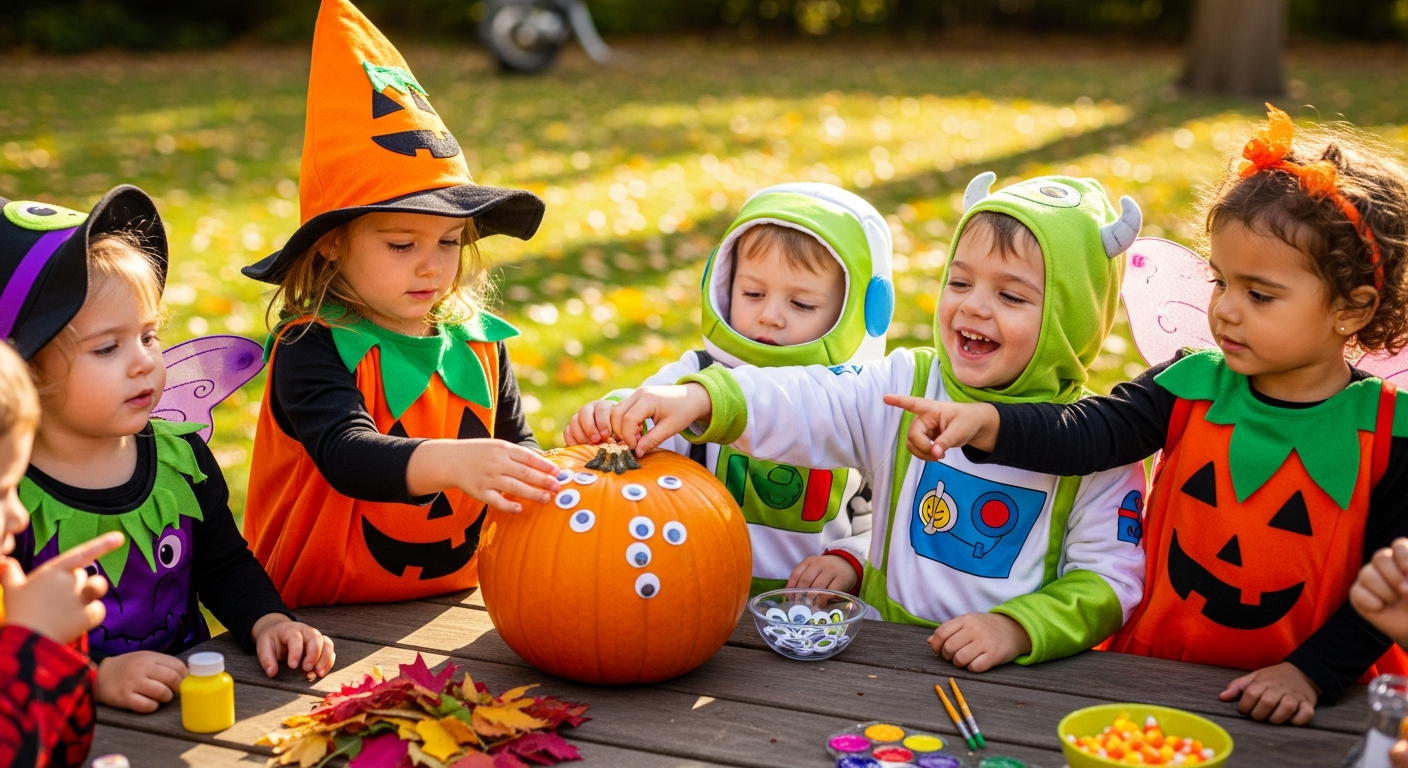
Table of Contents
- Introduction
- The Power of Sensory Play in Toddler Development
- Encouraging Movement with Active Halloween Games
- Fine Motor Skills and "Spooky" Crafts
- Integrating "Smart Screen Time" into Your Halloween Routine
- Making Halloween Stress-Free and Affordable
- Building Confidence and Reducing Frustration
- Choosing the Right Plan for Your Family
- Frequently Asked Questions
- Conclusion
Introduction
Did you know that by the age of three, a child’s brain is twice as active as an adult’s brain? This incredible period of growth is why toddlers seem to be in constant motion, driven by an insatiable curiosity to touch, taste, and explore everything in their path. When you add the excitement of a holiday like Halloween into the mix—with its vibrant colors, spooky sounds, and change in routine—it can feel like your little one is operating on a high-voltage battery. As parents and caregivers, we often find ourselves searching for ways to channel that boundless energy into something meaningful. Are you looking for ways to keep your little goblin engaged without feeling overwhelmed by complex setups or expensive store-bought kits?
The purpose of this blog post is to provide you with a comprehensive list of busy toddler Halloween activities that are not only fun but also deeply rooted in developmental science. We will explore sensory bins, fine motor crafts, and active games that encourage language development, cognitive growth, and emotional regulation. At Speech Blubs, we believe that every moment is an opportunity for a child to "speak their minds and hearts." Whether you are navigating a speech delay or simply want to boost your child's communication skills, these activities provide the perfect foundation.

Our mission is born from the personal experiences of our founders, who all grew up with speech struggles and created the tool they wished they had. We are dedicated to providing an immediate, effective, and joyful solution for the 1 in 4 children who need speech support. By blending scientific principles with play, we offer a "smart screen time" experience that acts as a powerful supplement to your child's overall development. This guide will show you how to pair physical, hands-on play with our unique video modeling methodology, where children learn by watching and imitating their peers.
The Power of Sensory Play in Toddler Development
Sensory play is a cornerstone of early childhood education because it engages multiple senses simultaneously, creating stronger neural pathways in the brain. For a busy toddler, Halloween offers a treasure trove of textures—sticky pumpkin guts, crunchy dried leaves, and smooth plastic spiders.
1. The Classic Halloween Sensory Bin
A sensory bin is the "holy grail" of busy toddler activities. To create a Halloween-themed bin, start with a base of dyed rice.
- How to Dye Rice: Mix 1 cup of white rice with 1 tablespoon of white vinegar and several drops of orange or black food coloring in a sealed bag. Shake it up, spread it on a cookie sheet, and let it dry for about 30 minutes.
- The Add-ins: Toss in plastic spiders, skeleton hands, and small pumpkins. As your child scoops and pours, they are practicing fine motor control and learning spatial awareness. You can encourage language by using "positional" words. Ask, "Is the spider on the rice or under the rice?"
2. Pumpkin Gak or Slime
Toddlers love the resistance of slime. You can make a taste-safe version using chia seeds or a standard version with clear glue and liquid starch. Adding orange glitter and small plastic bats makes it a "spooky" experience. This tactile feedback is excellent for children who may be sensory-seeking, helping them ground themselves through touch.
3. Pumpkin Fizz Science
This is a fantastic way to introduce basic chemistry. Carve a small pumpkin (or use a plastic one) and fill it with baking soda. Give your toddler a dropper or a small pitcher of vinegar dyed with food coloring. When they pour the vinegar in, the "volcano" effect will keep them mesmerized. This activity is perfect for practicing "action" words like "pour," "bubble," and "pop."

4. Spider Ice Rescue
Freeze plastic spiders in a large block of ice or individual ice cubes. Give your toddler warm water and a squirt bottle or a small hammer (under supervision). Their mission is to "rescue" the spiders. This activity builds persistence and problem-solving skills, all while keeping their busy hands occupied for a significant amount of time.
5. Pumpkin Washing Station
Sometimes the simplest activities are the most effective. Fill a large plastic tub with soapy water and give your child a few real or plastic pumpkins and a scrub brush. Toddlers love "functional" play—mimicking the chores they see adults do. For a parent whose 3-year-old "late talker" loves playing with water, this station offers a fun, motivating way to practice words like "scrub," "bubbles," "wet," and "clean."
Encouraging Movement with Active Halloween Games
Busy toddlers need to move their large muscles to develop gross motor skills and core strength. These activities turn Halloween themes into physical challenges.
6. The Halloween Toy Parade
Create a "parade route" using painter's tape on your floor. Draw a winding path or a zigzag line. Give your toddler their favorite Halloween figurines or even just their regular toys wearing little "costumes" made of scraps of fabric. Encourage them to line the toys up along the path. This requires focus and delicate motor planning.
7. Pumpkin Toss
Use a large cardboard box and draw a Jack-O'-Lantern face on it with a wide, open mouth. Cut out the mouth to create a hole. Give your toddler orange beanbags or small plastic pumpkins and encourage them to "feed" the pumpkin. This improves hand-eye coordination and provides a great opportunity to practice turn-taking.
8. Ghost Hunter Scavenger Hunt
Cut out small ghost shapes from white paper and hide them around your living room or yard. Give your toddler a "ghost bag" and have them hunt for all the ghosts. You can even number the ghosts to sneak in some early math skills.
9. Spider Web Jumble
Wrap black yarn or streamers across a hallway at various heights and angles to create a "spider web." Place small prizes or toys on the other side. Your toddler has to crawl under, step over, and navigate through the web without touching the "sticky" strands. This is an incredible workout for their core muscles and spatial reasoning.
10. Ring Around the Pumpkin
Place a few large pumpkins on the ground and use glowing necklaces or plastic rings to play a game of ring toss. It’s a simple tradition that can be repeated year after year.
At Speech Blubs, we know that active play is when children are most likely to vocalize their excitement. When your child successfully tosses a ring onto a pumpkin, it's the perfect time to celebrate with a loud "Yay!" or "I did it!" These joyful family learning moments are where confidence is built.
Fine Motor Skills and "Spooky" Crafts
Fine motor skills involve the small muscles in the hands and wrists. Developing these is crucial for later tasks like writing and using utensils.
11. Spider Web Tape Resist Art
Place strips of painter's tape in a web pattern on a piece of white cardstock. Let your toddler paint over the entire page with watercolors or finger paints. Once the paint is dry, peel off the tape to reveal a crisp, white spider web underneath. This "reveal" is magical for toddlers and encourages them to stay engaged with the task.
12. Dot Sticker Pumpkins
Dot stickers are a parent's best friend. Draw a large pumpkin outline on a piece of paper and give your toddler a sheet of orange and black dot stickers. Have them "trace" the outline or fill in the pumpkin with the stickers. This is a quiet, focused activity that builds the "pincer grasp" needed for writing.
13. Monster Collage
Provide your child with various "parts"—googly eyes, felt teeth, yarn hair, and paper shapes. Let them glue these onto a paper plate to create their own monster. There is no right or wrong way to make a monster, which reduces frustration and fosters a love for creative expression.
14. Torn Paper Witches’ Hats
Instead of using scissors, have your toddler tear pieces of black construction paper into small bits. They can then glue these pieces onto a triangle shape to make a textured witch's hat. Tearing paper is an excellent way to strengthen hand muscles.
15. Halloween Leaf Ghosts
Go for a walk and collect large leaves. Paint them white, and once dry, draw two black eyes. This connects nature play with holiday crafting and is a budget-friendly way to decorate your home.
Integrating "Smart Screen Time" into Your Halloween Routine
While hands-on activities are essential, we live in a world where digital tools can provide additional support. However, not all screen time is created equal. Passive viewing, like watching mindless cartoons, doesn't challenge a child's brain. At Speech Blubs, we provide a screen-free alternative to passive viewing through our interactive app.
Our approach uses video modeling, a scientifically proven method where children watch videos of other children—their peers—performing speech exercises. This triggers "mirror neurons" in the brain, making the toddler want to imitate what they see.
For example, if you are doing the "Animal Kingdom" activities in the app, your child will see another child making a "moo" or a "baa" sound. Because it’s a peer and not an adult, the task feels achievable and fun. This builds the foundational communication skills that your child can then use during their physical Halloween play.
If you are curious about where your child stands in their development, you can take our quick 3-minute preliminary screener. It involves 9 simple questions and provides an assessment and a next-steps plan. Plus, completing the screener gives you access to a free 7-day trial of the app!
Making Halloween Stress-Free and Affordable
You don't need a huge budget to make Halloween special. In fact, some of the best supplies can be found at the dollar store or even in your recycling bin.
16. The Dollar Store Scavenger Hunt
Before you start your activities, take your toddler to the dollar store. Give them a small list (with pictures) of things to find: "orange bucket," "plastic spider," "white cotton balls." This turns a chore into a language-building game.
17. Cardboard Box Haunted House
Never underestimate the power of a large cardboard box. Cut out windows and a door, and let your toddler decorate the "haunted house" with crayons and stickers. This becomes a safe space for imaginative play where they can "hide" and play peek-a-boo.
18. Halloween Potion Bin
Fill a bin with water, add some "spooky" elements like plastic eyeballs and glitter, and give your child different sized containers to pour and mix. This "potion making" is a wonderful way to use household items like old spice jars or measuring cups.
19. Ghost Handprints
Using non-toxic white paint, press your child's hand onto black paper. Turn it upside down, and the fingers look like the bottom of a ghost! Add eyes and a mouth. This is a classic keepsake that captures how small their hands were during this specific Halloween.
20. Sticky Spider Web
Turn a doorway into a sticky web by placing contact paper (sticky side out) or strips of tape across the frame. Give your toddler "flies" (cotton balls) to throw at the web. Seeing what sticks and what doesn't is a great lesson in cause and effect.
Building Confidence and Reducing Frustration
The goal of these activities isn't perfection; it's participation. For a busy toddler, the process of trying is more important than the final product. If a craft doesn't look like the picture on Pinterest, that's okay! We want to foster a love for communication and exploration.
When a child struggles to express themselves, it often leads to "tantrums" or frustration. By engaging in these shared activities, you are providing them with the vocabulary and the confidence to tell you what they need. Our users often share how much this has changed their family dynamics. You can read some of these parent success stories to see how other families have used our tools to bridge the communication gap.
21. Halloween Storytime
Incorporate Halloween-themed books into your bedtime routine. Books with repetitive phrases or "lift-the-flap" features are excellent for toddlers. Encourage them to finish the sentences or point to the characters.
22. Pumpkin Hammering
For a toddler who needs to release some energy, give them a real pumpkin and some plastic golf tees. Show them how to "hammer" the tees into the pumpkin using a toy mallet. This is incredibly satisfying and great for hand-eye coordination.
23. Mask Play
Toddlers are often afraid of masks. You can reduce this fear by letting them decorate their own simple paper plate masks. Playing "Who am I?" helps them understand the concept of costumes in a non-threatening way.
24. Sort the Candy (or Toys)
If your toddler is too young for a lot of candy, you can use colorful Halloween toys. Have them sort items by color (all the orange ones here, all the black ones there) or by size. Sorting is an early math skill that also helps with categorization in language.
25. Halloween Bath Time
Drop a few drops of orange food coloring into the bathwater and add some plastic spiders or pumpkins. It’s a sensory experience that helps wind them down at the end of a busy day.
Choosing the Right Plan for Your Family
At Speech Blubs, we want to be transparent about our pricing so you can make the best choice for your child's development. We offer two main plans designed to fit different needs:
- Monthly Plan: $14.99 per month. This is a great way to test the waters and see how your child responds to the video modeling sessions.
- Yearly Plan: $59.99 per year. This is our best value choice, breaking down to just $4.99 per month—a 66% savings compared to the monthly rate.
When you choose the Yearly Plan, you don't just get a better price; you also unlock exclusive features:
- 7-Day Free Trial: Try everything risk-free before you commit.
- Reading Blubs App: You get full access to our secondary app designed to jumpstart early reading skills.
- Priority Support: Enjoy a 24-hour support response time and early access to all new updates and content.
The Monthly plan does not include the free trial or the Reading Blubs app, which is why we highly recommend the Yearly Plan for families looking for a comprehensive, long-term solution. Ready to see the difference peer-led learning can make? You can sign up and create your account today.
Frequently Asked Questions
1. What are the best Halloween activities for toddlers with short attention spans? For very busy toddlers, sensory bins and "active" games like the Pumpkin Toss are usually the most successful. These activities provide immediate feedback and allow for movement, which helps keep their interest longer than a stationary craft might.
2. How can I use Halloween activities to help my late talker? Focus on "narrating" the play. Instead of asking your child questions (which can feel like a test), simply describe what they are doing. "You are scooping the orange rice!" or "Look, the spider is jumping!" This models language in a low-pressure way. Pairing this with the Speech Blubs app on the App Store can help them see other children using those same words.
3. Are these activities safe for 1 and 2-year-olds? Most of these activities can be adapted for younger toddlers. For example, use edible "mud" (chocolate pudding) for a sensory bin if your child is still putting things in their mouth. Always supervise your child during play, especially when using small items like plastic spiders or googly eyes.
4. Do I need to buy a lot of supplies? Not at all! Many of these activities use items you already have at home, like rice, vinegar, cardboard boxes, and tape. The Dollar Store is also a fantastic resource for inexpensive seasonal items.
Conclusion
Halloween is a season of wonder, and for a busy toddler, it is an invitation to explore the world in new and exciting ways. By engaging in these 25 activities, you are doing so much more than just filling the time; you are building your child’s brain, strengthening their muscles, and helping them find their voice. Whether they are "rescuing" spiders from ice or imitating their peers in the Speech Blubs app, every moment of play is a step toward confident communication.
We invite you to make this Halloween a milestone in your child's developmental journey. Our mission at Speech Blubs is to empower you with the tools to help your child thrive. Don't wait to start building those "joyful family learning moments."
Ready to get started? Download Speech Blubs on the App Store or get it on Google Play today. To get the absolute best value, including the 7-day free trial and the bonus Reading Blubs app, be sure to select our Yearly Plan. Let’s help your little one speak their mind and heart this holiday season!
Sobre el autor