
25 Creative and Low-Prep Toddler Fun Activities for Home
 Por Speech Blubs Team•25 mar 2026•15 min.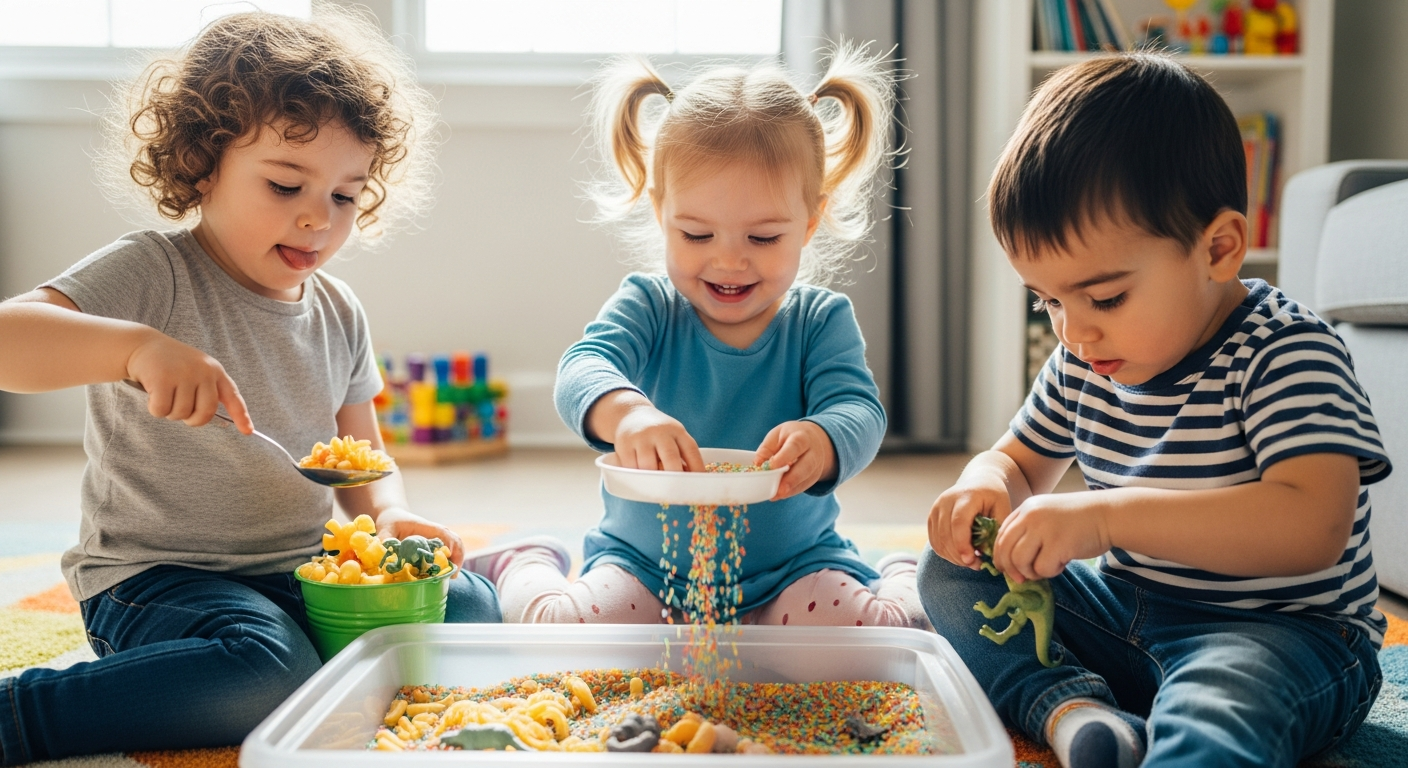
Table of Contents
- Introduction
- Why Play is the Primary Driver of Development
- 25 Low-Prep Toddler Fun Activities
- Transforming Screen Time into "Smart Screen Time"
- The Speech Blubs Story: Born from Experience
- Realistic Expectations and Parent Co-Play
- Understanding the Value of Speech Blubs
- FAQ
- Conclusion
Introduction
Did you know that by the time a child turns three, their brain has already reached roughly 80% of its adult volume? This explosive period of growth is fueled by one thing more than any other: play. For a toddler, play isn’t just a way to pass the time; it is their "work." It is how they decode the world, build muscle memory, and find the courage to utter those first life-changing words. At Speech Blubs, our mission is to empower every child to speak their minds and hearts, and we believe that the best way to do that is through joyful, interactive experiences.
We know that being a parent to a toddler is often a beautiful, chaotic whirlwind. There are days when your "on-the-spot" brain power is depleted, and you just need a simple way to keep those little hands busy while fostering their development. This post is designed to be your go-to resource for toddler fun activities that are low-prep, high-engagement, and deeply rooted in developmental science. We will explore sensory bins, fine motor challenges, and movement-based games, while also showing you how to integrate "smart screen time" to support your child’s communication journey. Our goal is to help you move away from the "zombie-like" passive viewing of cartoons and toward activities that create genuine family connection and confidence.

Why Play is the Primary Driver of Development
Before we dive into our list of activities, it is helpful to understand why these specific types of play matter so much. When your toddler is squishing a handful of cooked noodles or trying to peel a piece of tape off the floor, they aren’t just "making a mess." They are engaging in complex cognitive processes.
The Power of Sensory Exploration
Sensory play involves any activity that stimulates a child’s senses: touch, smell, sight, hearing, and even taste. This type of play builds nerve connections in the brain’s pathways, which lead to the child’s ability to complete more complex learning tasks. It supports language development, cognitive growth, fine and gross motor skills, and social interaction.
Building Fine and Gross Motor Skills
Fine motor skills involve the small muscles in the fingers and hands. These are the muscles your child will eventually use to hold a pencil, use scissors, and button their own coat. Activities like "The Sticker Wall" or "Pom Pom Push" are perfect for this. Gross motor skills, on the other hand, involve larger movements like crawling, jumping, and running. Both are essential for a child's physical independence and confidence.
The Connection to Language
Play and language are inextricably linked. When you narrate what your child is doing—"Look at that blue car go fast!"—you are building their vocabulary in real-time. This is why we focus so heavily on video modeling within our app. By watching other children perform actions and make sounds, toddlers tap into their "mirror neurons," which are the brain cells that fire both when we perform an action and when we see someone else doing it. It’s nature’s way of teaching us how to communicate.
25 Low-Prep Toddler Fun Activities
Here is a curated list of activities that require minimal setup but offer maximum developmental value.
1. The Noodle Sensory Bin
This is a classic for a reason. Simply cook some pasta (any shape will do), let it cool, and toss it into a large plastic tub. You can add a few drops of food coloring to make it visually stimulating.

- Why it works: The squishy, slippery texture is a total sensory delight.
- Speech Blubs Tip: For a parent whose 2-year-old is just starting to mimic animal sounds, try hiding plastic farm animals in the noodles. As they find a cow, encourage them to say "Moo!" You can supplement this by using the "Animal Kingdom" section in the Speech Blubs app to watch other kids make those same animal sounds.
2. Painter’s Tape Car Track
Use blue painter's tape to create a network of "roads" across your living room floor. You can include "stop signs" (red paper) or "tunnels" (cardboard boxes).
- Why it works: It encourages gross motor movement as they crawl along the tracks and imaginative play.
3. The "Sticker Wall"
Tape a long piece of butcher paper or the back of some wrapping paper to the wall at your toddler’s eye level. Give them a sheet of stickers and let them go to town.
- Why it works: Peeling stickers is one of the best ways to build the "pincer grasp" (using the thumb and index finger), which is a vital fine motor milestone.
4. Soapy Toy Wash
Fill a plastic bin with water and a little bit of tear-free dish soap. Give your child a scrub brush or a washcloth and a pile of their plastic toys—trucks, animals, or blocks.
- Why it works: It’s a great way to cool down on a hot day and teaches a simple sequence of actions (dip, scrub, rinse).
5. Cardboard Box Tunnel
Don’t throw away those delivery boxes! Open both ends of a few large boxes and tape them together to create a long tunnel.
- Why it works: It encourages "proprioception"—the sense of where one’s body is in space—as they navigate the dark, narrow tunnel.
6. Pom Pom Push
Take an old oatmeal container or a plastic Tupperware lid and cut a small hole in it. Give your child a bag of colorful craft pom poms and show them how to push the poms through the hole.
- Why it works: It provides a satisfying "pop" sensation and helps with hand-eye coordination.
7. Fizzy Drips (Baking Soda and Vinegar)
Put a layer of baking soda on a baking sheet. Give your child a small cup of vinegar (add food coloring for extra fun) and a plastic dropper or a spoon.
- Why it works: The chemical reaction creates an immediate, exciting "fizz" that teaches cause and effect.
8. The "Cereal" Sensory Bin
When you need a 10-minute break to make a phone call or do the dishes, fill a bin with dry cereal (like O-shaped oats) and add some scoops and measuring cups.
- Why it works: It’s edible-safe, so you don’t have to worry if they take a nibble, and it keeps them focused on the task of pouring and scooping.
9. Water Wow! Books
These reusable books use a water-filled pen to reveal colors on the page. Once the water dries, the color disappears, and they can do it again.
- Why it works: It’s mess-free "smart play" that is perfect for car rides or restaurants.
10. Pipe Cleaner Colander
Turn a kitchen colander upside down and give your child a handful of colorful pipe cleaners. Show them how to poke the pipe cleaners through the holes.
- Why it works: This is a high-concentration task that builds incredible fine motor control.
11. Edible Finger Paint
Mix plain Greek yogurt with a few drops of food coloring. Let your child "paint" on a high-chair tray or a piece of paper.
- Why it works: It removes the stress of the child putting paint in their mouth and allows for total creative freedom.
12. "Wash" the Windows
Give your toddler a spray bottle with just water and a microfiber cloth. Let them "clean" the glass doors or windows.
- Why it works: Toddlers love to imitate adults. This builds their sense of autonomy and works those arm muscles.
13. Balloon Tennis
Blow up a balloon and use fly swatters or even just your hands to keep the balloon in the air.
- Why it works: Because balloons move slowly, it gives toddlers enough time to track the object visually and react, building their confidence in physical play.
14. Nature Hunt
Take a walk in the backyard or a local park with a small bucket. Ask your child to find "something crunchy" (a leaf), "something smooth" (a rock), or "something green" (grass).
- Why it works: It builds vocabulary and encourages observation of the natural world.
15. The "Mystery Bag"
Put 5-6 familiar objects (a spoon, a ball, a toy car, a block) in a cloth bag. Have your child reach in, feel an object without looking, and try to guess what it is.
- Why it works: This develops "stereognosis"—the ability to perceive and recognize the form of an object through touch.
16. Muffin Tin Sorting
Give your child a muffin tin and a bowl of various items (large buttons, colorful blocks, or different types of pasta). Ask them to sort the items into the different cups.
- Why it works: It introduces early math concepts like categorization and counting.
17. Ice Cube Treasure Hunt
Freeze small plastic toys inside large ice cubes. Give your child a small cup of warm water and a spoon to "rescue" the toys.
- Why it works: It’s a fascinating lesson in temperature and states of matter.
18. Painter’s Tape "Web"
Across a hallway, create a "web" of painter's tape at various heights. Stick some light plastic balls or paper scraps to the tape and have your child try to "save" them without getting stuck in the web.
- Why it works: It’s a fantastic way to burn off energy on a rainy day.
19. Contact Paper Collage
Tape a piece of clear contact paper to the wall, sticky side out. Give your child scraps of tissue paper, feathers, or yarn to press onto the surface.
- Why it works: It’s an easy, low-mess way to create art that can be displayed immediately.
20. Stacking Pantry Cans
Clear out a low shelf in your pantry and let your child stack sealed cans of soup or beans.
- Why it works: The weight of the cans provides "heavy work" for the joints, which can be very calming for some children.
21. Toy Animal "Vet Clinic"
Gather stuffed animals and some "medical supplies" like Band-Aids, a toy stethoscope, or just small blankets.
- Why it works: This encourages empathy and complex pretend play sequences.
22. Bubble Wrap "Road"
Tape a long strip of bubble wrap to the floor. Let your child walk, jump, or drive their toy cars over it to hear the "pops."
- Why it works: It provides intense auditory and tactile feedback.
23. Shadow Puppets
In a dark room, use a flashlight to make shapes on the wall with your hands.
- Why it works: It encourages your child to use their hands in new ways and fosters creative storytelling.
24. Flashlight "Spotlight"
Turn off the lights and use a flashlight to "spotlight" different objects in the room. Ask your child, "Can the light find the teddy bear?"
- Why it works: This is excellent for building "joint attention"—the shared focus of two individuals on an object.
25. High-Value Interactive Reading
Read a familiar book but stop before the last word of a sentence to see if your child can fill it in.
- Why it works: It builds phonological awareness and helps children realize they have the power to contribute to the story.
Transforming Screen Time into "Smart Screen Time"
In an ideal world, we’d spend every minute engaged in hands-on play. But in reality, parents need to cook dinner, answer emails, or just breathe for five minutes. This is where the distinction between "passive" and "active" screen time becomes vital.
Traditional cartoons are often "passive"—the child sits and watches images flicker by without any requirement for interaction. At Speech Blubs, we’ve created a "smart screen time" experience. Our app is a powerful tool for family connection, meant to be used alongside a parent to bridge the gap between digital learning and real-world application.
Our unique approach is based on video modeling. When a child sees a peer on the screen—not a cartoon character, but a real child—making a sound or saying a word, they are much more likely to imitate it. This is the heart of our methodology. We provide a joyful solution for the 1 in 4 children who need speech support, making it an effective supplement to professional therapy or a stand-alone tool for building confidence.
If you are unsure where your child stands in their development, we recommend taking our 3-minute preliminary screener. It consists of 9 simple questions and provides you with a personalized assessment and a next-steps plan.
The Speech Blubs Story: Born from Experience
Speech Blubs wasn’t created in a corporate boardroom. It was born from the personal experiences of our founders, all of whom grew up with speech problems. They created the tool they wished they had as children—something that makes learning to speak feel like a game rather than a chore.
Our mission is to help children "speak their minds and hearts." We believe every child has something important to say, and we want to give them the tools to say it. Whether it's through our "Animal Kingdom" section to practice early sounds or our more advanced "Reading Blubs" features, we are committed to providing a scientifically-backed, playful environment. You can read many success stories from other parents who have seen their children’s frustration melt away as their communication skills grew.
Realistic Expectations and Parent Co-Play
While we are incredibly proud of our app, it’s important to set realistic expectations. Speech development is a marathon, not a sprint. You won't see a child giving public speeches in a month, but you will see a foster love for communication, a boost in confidence, and a reduction in the frustration that often leads to tantrums.
The "secret sauce" for success with any toddler activity—including Speech Blubs—is adult co-play. Your involvement is the bridge. When the app asks your child to make a "Baa" sound like a sheep, and you make the sound along with them, the learning is amplified. Use the app as a springboard for the offline toddler fun activities listed above. If you spend 10 minutes on the "Beep Beep" section of the app, follow it up with 10 minutes of playing with the Painter's Tape Car Track. This reinforces the vocabulary in a physical, tangible way.
Understanding the Value of Speech Blubs
We believe in being transparent with parents about our pricing so you can make the best decision for your family. We offer two main plans:
- Monthly Plan: $14.99 per month. This is a great way to test the waters and see how your child responds to the video modeling methodology.
- Yearly Plan: $59.99 per year. This is our clear best-value option, breaking down to just $4.99 per month—a 66% savings compared to the monthly rate.
When you choose the Yearly plan, you aren’t just getting a lower price. You also receive:
- A 7-day free trial to ensure it’s the right fit for your child.
- Access to the Reading Blubs app, which helps transition speech skills into early literacy.
- Early access to new updates and features.
- Priority 24-hour support response time.
The Monthly plan does not include these additional benefits, which is why we highly recommend the Yearly plan as the most comprehensive support system for your child’s development.
FAQ
1. How much screen time is okay for a toddler?
The American Academy of Pediatrics suggests limiting screen time for children ages 2 to 5 to one hour per day of high-quality programming. At Speech Blubs, we focus on "quality over quantity." Our app is designed for short, interactive bursts (10-15 minutes) of "smart screen time" that encourage vocalization and physical imitation, rather than passive sitting.
2. My child isn't talking yet; can these activities help?
Yes! Many of the toddler fun activities listed here, like sensory bins and "The Mystery Bag," focus on pre-linguistic skills like joint attention, imitation, and cause-and-effect. These are the foundational blocks that must be in place before words emerge. Using our app's video modeling alongside these activities can provide the extra push many late talkers need.
3. Do I need expensive toys for these activities?
Not at all. Most of the activities we recommend use items you already have: tape, cardboard boxes, pasta, and water. The value is in the interaction and the exploration, not the price tag of the materials.
4. Is Speech Blubs a replacement for speech therapy?
Speech Blubs is a powerful supplement to professional therapy, but it is not a replacement for a clinical diagnosis or one-on-one sessions with a Speech-Language Pathologist (SLP) if your child has a significant delay. We often hear from SLPs who use our app in their sessions because it is so engaging for children!
Conclusion
The journey of toddlerhood is paved with discovery, and as a parent, you are the primary guide. By incorporating these toddler fun activities into your daily routine, you are doing more than just keeping your child busy; you are building the neural pathways that will support their learning for a lifetime. From the tactile squish of a noodle bin to the interactive joy of "smart screen time," every moment is an opportunity for growth.
Remember that you don't have to do it alone. We are here to support you with a tool created by people who understand the challenges of speech delays firsthand. Our methodology is backed by science and designed to bring a sense of play back into communication.
Ready to see the difference for yourself? You can download Speech Blubs on the App Store or get it on Google Play to begin your journey. For those who prefer working on a desktop, you can also create your account and sign up online.
We strongly encourage you to choose our Yearly plan to take advantage of the 7-day free trial and the full suite of features, including the Reading Blubs app. Give your child the gift of confidence and help them speak their mind and heart today.
Sobre el autor