
25 Creative Toddler Activity Ideas for Fun and Learning
 Por Speech Blubs Team•25 mar 2026•14 min.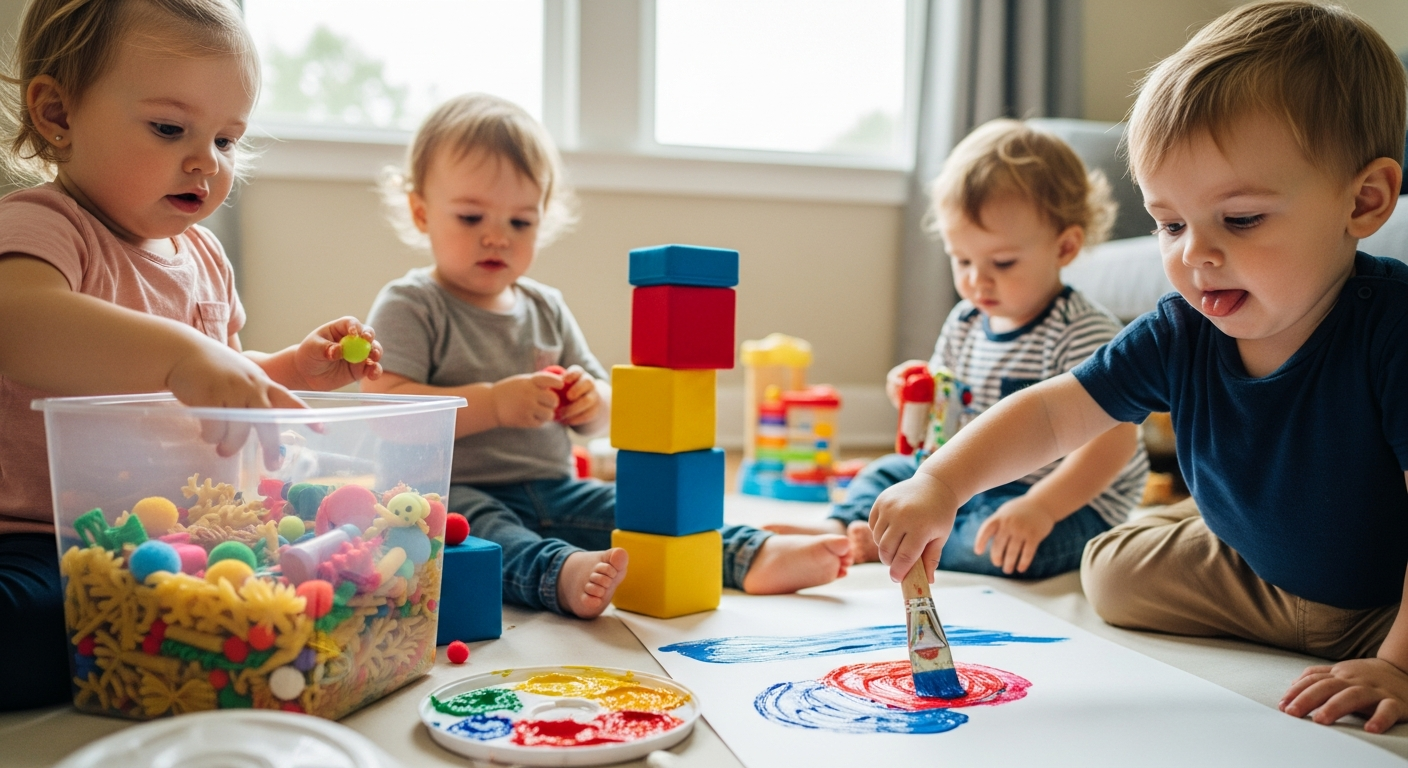
Table of Contents
- Introduction
- The Power of Sensory Exploration
- Fine Motor Mastery Through Play
- Moving and Grooving: Gross Motor Activities
- Arts and Creativity
- Why Play is the Foundation of Speech
- Choosing the Right Path for Your Child
- Conclusion
- Frequently Asked Questions
Introduction
Did you know that by the age of three, a child’s brain has already reached 80% of its adult volume? This window of development is perhaps the most critical period for language acquisition, emotional regulation, and motor skill refinement. As parents, we often find ourselves in the middle of a busy afternoon, looking for ways to engage our little ones that are more than just "filler" activities. We want moments that spark joy while building the foundational skills they need to navigate the world.
In this post, we are sharing 25 of our favorite toddler activity ideas that are low-prep, high-impact, and designed to support your child's growth. We will cover sensory play, fine and gross motor challenges, and creative arts, all while showing you how these physical activities pair perfectly with the digital learning tools we provide at Speech Blubs. Our mission is to empower children to "speak their minds and hearts," and we believe that purposeful play is the best way to make that happen.

Whether you are looking to boost your child’s vocabulary or simply need twenty minutes of peace to finish a cup of coffee, these toddler activity ideas provide a roadmap for meaningful connection.
The Power of Sensory Exploration
Sensory play is a toddler’s primary way of gathering information about their environment. By engaging the senses—touch, sight, smell, sound, and even taste—children build new neural pathways in the brain.
1. The Noodle Sensory Bin
Dry pasta is one of the most versatile materials for toddler activity ideas. Simply fill a plastic tub with dry noodles of various shapes—rotini, penne, or bow-tie work well. Add scoops, small toy animals, or cups for pouring.
- Why it works: It builds fine motor skills through grasping and pouring.
- Speech Blubs Connection: While your child plays with toy animals in the bin, use the "Animal Kingdom" section of our app to practice the sounds those animals make. Seeing a peer make a "moo" sound on screen while holding a toy cow helps bridge the gap between play and communication.
2. The Popsicle Bath
Sometimes the best toddler activity ideas involve things you already have. Give your toddler a popsicle and put them in a lukewarm bath.
- Why it works: It is a multisensory experience involving temperature (cold popsicle vs. warm water) and taste. It also makes cleanup for sticky faces incredibly easy!
- Pro Tip: This is a great "reset" activity for a grumpy toddler or a rainy afternoon.
3. Fizzy Drips (Baking Soda and Vinegar)
This classic science experiment is a hit for a reason. Place a tray of baking soda in front of your child. Give them small cups of vinegar tinted with food coloring and a plastic dropper or spoon.
- Why it works: The "fizz" provides immediate cause-and-effect feedback, which is vital for cognitive development.
- Communication Boost: Encourage words like "bubbles," "pop," "fizz," and "more."
4. The Bean Construction Site
Fill a bin with dried pinto or black beans and add small construction vehicles. Toddlers love the "crunchy" feel of the beans and the sound they make when hitting the plastic bin.

- Safety Note: Always supervise toddlers with small items like beans to prevent choking.
- The Science: Our approach at Speech Blubs is rooted in "smart screen time," where we encourage parents to engage in co-play. You can narrate the construction play by saying, "The truck is scooping!" or "Dump the beans!"
5. Soapy Toy Wash
Fill your kitchen sink or a bin with soapy water and gather plastic toys—cars, dinosaurs, or dolls. Give your child a scrub brush or a washcloth.
- Why it works: It teaches functional life skills and keeps them occupied for a significant amount of time.
- Empowering Speech: Use this time to label body parts (if washing dolls) or car parts (wheels, windows).
6. Cereal Snacking Bin
For younger toddlers who still put everything in their mouths, a "safe" sensory bin is a must. Fill a container with Cheerios or puffed rice and hide small toys inside.
- Why it works: It allows for exploration without the worry of non-edible items being swallowed.
- Developmental Milestone: This activity encourages the "pincer grasp," which is essential for later writing skills.
7. Color Mixing Water Play
Fill several clear cups with water and add primary food colors (red, blue, yellow). Provide an empty ice cube tray and a dropper, and let your child mix the colors.
- The "Wow" Factor: Watching yellow and blue turn into green is pure magic for a two-year-old.
Fine Motor Mastery Through Play
Fine motor skills involve the small muscles in the hands and fingers. These skills are the building blocks for self-feeding, dressing, and eventually, writing.
8. The Pom Pom Push
Take an old cardboard box or a plastic container with a lid. Poke holes in the top just large enough for a pom pom to fit through. Give your child a bowl of colorful pom poms and watch them focus.
- Why it works: It requires precision and concentration.
- Speech Connection: Practice color names as they push each one in: "Red pom pom! Blue pom pom!"
9. Sticker Walls
Take a long roll of craft paper and tape it to the wall at your child’s eye level. Give them a sheet of stickers and let them go to town.
- Why it works: Peeling stickers is a fantastic workout for tiny finger muscles. Working on a vertical surface also builds shoulder and core strength.
- Testimonials: Many parents in our community have shared how simple "sticker sessions" helped their children settle into a focused state. You can read more about parent experiences on our testimonials page.
10. Pasta Threading
Use a piece of playdough as a base and stick a few dry spaghetti noodles upright in it. Give your child large tube pasta (like rigatoni) to thread onto the spaghetti.
- Challenge Level: For older toddlers, use yarn or a shoelace to string the pasta into a necklace.
11. Playdough Monsters
Provide playdough along with "loose parts" like googly eyes, pipe cleaners, and beads.
- Creative Expression: This is an open-ended activity where there is no right or wrong way to play.
- Narrative Skills: Ask your child, "Is your monster happy or sad?" or "What is your monster's name?"
12. Reusable Stickers on Windows
Reusable vinyl stickers work perfectly on glass doors or windows.
- Why it works: It changes the environment. Sometimes just moving the activity from the floor to the window makes it feel brand new.
13. Toy Matching Puzzles
Trace the outlines of several common household objects (a spoon, a toy car, a block) on a piece of paper. Have your child match the physical object to the drawing.
- Cognitive Skill: This builds spatial awareness and visual discrimination.
14. Tube and Pom Pom Drop
Tape empty toilet paper or paper towel tubes to the wall in a vertical or diagonal line. Place a basket at the bottom and let your child drop pom poms or small balls through the tubes.
- Physics for Toddlers: They learn about gravity and speed through simple observation.
Moving and Grooving: Gross Motor Activities
Active toddlers need to burn energy. These toddler activity ideas focus on large muscle groups and coordination.
15. Painter’s Tape Car Track
Use blue painter’s tape to create a series of "roads" and "parking lots" on your carpet or hardwood floors.
- Why it works: It encourages crawling or squatting, both of which are great for physical development.
- Smart Screen Time integration: If your child is obsessed with things that go, they will love the "Transportation" section in the Speech Blubs app. After they practice saying "Beep Beep" or "Choo Choo" with our peer models, they can take their toy cars onto the tape track to "drive" like the kids they saw on the screen.
16. Paper Tunnels and Ball Rolls
Fold pieces of stiff paper into "U" shapes and tape them to the floor to create tunnels. Give your child a soft ball or a toy car to roll through the obstacles.
- Movement Goal: Encourage them to crawl through the "course" themselves if the tunnels are big enough (using cardboard boxes).
17. The Indoor Scavenger Hunt
Hide five of your child’s favorite stuffed animals around the living room and ask them to find them.
- Language Boost: Use positional words like "under the chair," "on top of the table," or "behind the curtain."
- Next Steps: If you are unsure where your child stands with these types of milestones, you can take our quick 3-minute preliminary screener. It involves 9 simple questions and provides a personalized assessment.
18. Soft Ball Toss
Place a laundry basket or a large box a few feet away from your child. Use soft plush balls or even rolled-up socks for them to practice throwing.
- Why it works: It develops hand-eye coordination and gross motor control.
19. Tape Lines Challenge
Place several strips of tape on the floor at varying distances. Ask your child to "jump like a frog" to each line or "walk like a tightrope walker" along the tape.
- Energy Burn: This is perfect for those days when you can't get outside to the park.
20. Glow Bath
Crack a few glow sticks and toss them into a bubble bath with the lights dimmed.
- Sensory Magic: It turns a routine task into an extraordinary event. It also helps children who might have a fear of the bath feel more excited about the experience.
Arts and Creativity
Nurturing a child's creativity helps them develop problem-solving skills and a sense of self-expression.
21. Bath Tub Painting
You can buy bath paint or make your own using shaving cream and a few drops of food coloring. Let your child "paint" the walls of the tub.
- Zero Mess: When they are done, simply turn on the shower or use a cup of water to rinse the walls (and the toddler) clean.
22. Bubble Wrap Stomp
Tape a large piece of bubble wrap to the floor. Let your toddler walk, jump, or crawl across it.
- Why it works: The tactile feedback and the popping sound are highly engaging.
- Variation: Put dollops of paint on a piece of paper, cover it with bubble wrap, and let them stomp to "paint" without the mess.
23. Ice Painting
Freeze water with food coloring in an ice cube tray, sticking a popsicle stick in each one before they harden. Once frozen, use the colored ice blocks to "paint" on thick craft paper.
- Why it works: As the ice melts, the colors blend and change, providing a lesson in science and art simultaneously.
24. Giant Paper Roll Coloring
Instead of a small coloring book, tape a massive piece of paper to the floor. Give your child jumbo crayons or washable markers.
- Why it works: It allows them to use their whole body to reach and color, rather than being confined to a small space.
25. Feeding the Monster
Take an old tissue box or a shoe box and draw a "monster" face on it, with the opening acting as the mouth. Have your child "feed" the monster pom poms, plastic letters, or even "snacks" made of paper.
- Social Interaction: You can make the monster say "Mmm, thank you!" or "I'm still hungry!" to encourage turn-taking and social cues.
Why Play is the Foundation of Speech
At Speech Blubs, we believe that every child deserves to find their voice. Our company was born from the personal experiences of our founders, who grew up with speech challenges themselves. They created the tool they wished they had—one that turns speech therapy into a joyful, play-based experience.
We use a unique "video modeling" methodology. This isn't just passive viewing like watching a cartoon. Instead, children watch videos of other children performing speech exercises. This triggers "mirror neurons" in the brain—the same neurons that fire when a child imitates their parents. By watching a peer, your child feels more confident and motivated to try those sounds themselves. This scientific principle is at the heart of everything we do. You can learn more about the research behind our method here.
For a parent whose 3-year-old "late talker" loves animals, the "Animal Kingdom" section of our app offers a fun, motivating way to practice "moo" and "baa" sounds. Instead of feeling like a "lesson," it feels like another fun toddler activity idea.
Choosing the Right Path for Your Child
We know that every child’s journey is unique. Some children hit milestones early, while others need a little extra nudge. Our app is designed to be a powerful supplement to a child’s overall development plan. It’s a way to provide an immediate, effective solution for the 1 in 4 children who need speech support.
We are transparent about our pricing because we want to build a relationship of trust with you. We offer two main plans to fit your family's needs:
- Monthly Plan: $14.99 per month.
- Yearly Plan: $59.99 per year (which breaks down to just $4.99/month).
The Yearly plan is the clear best choice for families looking for long-term value. When you choose the Yearly plan, you save 66% compared to the monthly rate. More importantly, the Yearly plan includes exclusive features that help your child grow even faster:
- A 7-day free trial so you can explore the app risk-free.
- Access to the Reading Blubs app, helping your child transition from speech to literacy.
- Early access to all new updates and content.
- Priority 24-hour support response time.
The Monthly plan does not include these additional benefits. We encourage parents to start with the Yearly plan to get the full suite of features and the most comprehensive support for their child’s development.
Conclusion
Parenting a toddler is a beautiful, chaotic, and rewarding adventure. By incorporating these 25 toddler activity ideas into your daily routine, you are doing more than just keeping your child busy; you are building their brain, strengthening your bond, and fostering a lifelong love for learning. Remember that you don't need expensive toys or a degree in education to be your child's best teacher. All you need is a little bit of painter's tape, some dry noodles, and a lot of heart.
We invite you to join our global community of parents who are helping their children "speak their minds and hearts." Ready to take the next step? Sign up on our website to begin your journey.
The best way to experience the power of video modeling is to try it for yourself. Download Speech Blubs on the App Store or get it on Google Play today. Don’t forget to select the Yearly plan to unlock your 7-day free trial and all the exclusive features like Reading Blubs. Let's make every moment of screen time "smart screen time" together!
Frequently Asked Questions
1. How much daily screen time is recommended for toddlers?
While the American Academy of Pediatrics recommends limiting passive screen time, "smart screen time" that involves interactive play and co-viewing is different. We recommend using Speech Blubs for 10–15 minutes a day alongside physical toddler activity ideas to create a balanced developmental routine.
2. Can these activities help with speech delays?
Yes! Many of these toddler activity ideas focus on sensory input and fine motor skills, which are closely linked to the parts of the brain responsible for speech. Using these activities in conjunction with the Speech Blubs app provides a holistic approach to language development.
3. What if my child isn't interested in a specific activity?
That is completely normal! Toddlers have short attention spans and distinct preferences. If they don't like a bean bin today, they might love it next week. The key is to offer variety and follow their lead.
4. Is the Yearly plan really worth it compared to the Monthly plan?
Absolutely. The Yearly plan offers a 66% discount, making it only $4.99 per month. It also includes the Reading Blubs app and a 7-day free trial, which the Monthly plan does not offer. It’s the best way to ensure your child has consistent, long-term support.
Sobre el autor