
25 Engaging Color Toddler Activities for Early Learning
 Por Speech Blubs Team•18 mar 2026•14 min.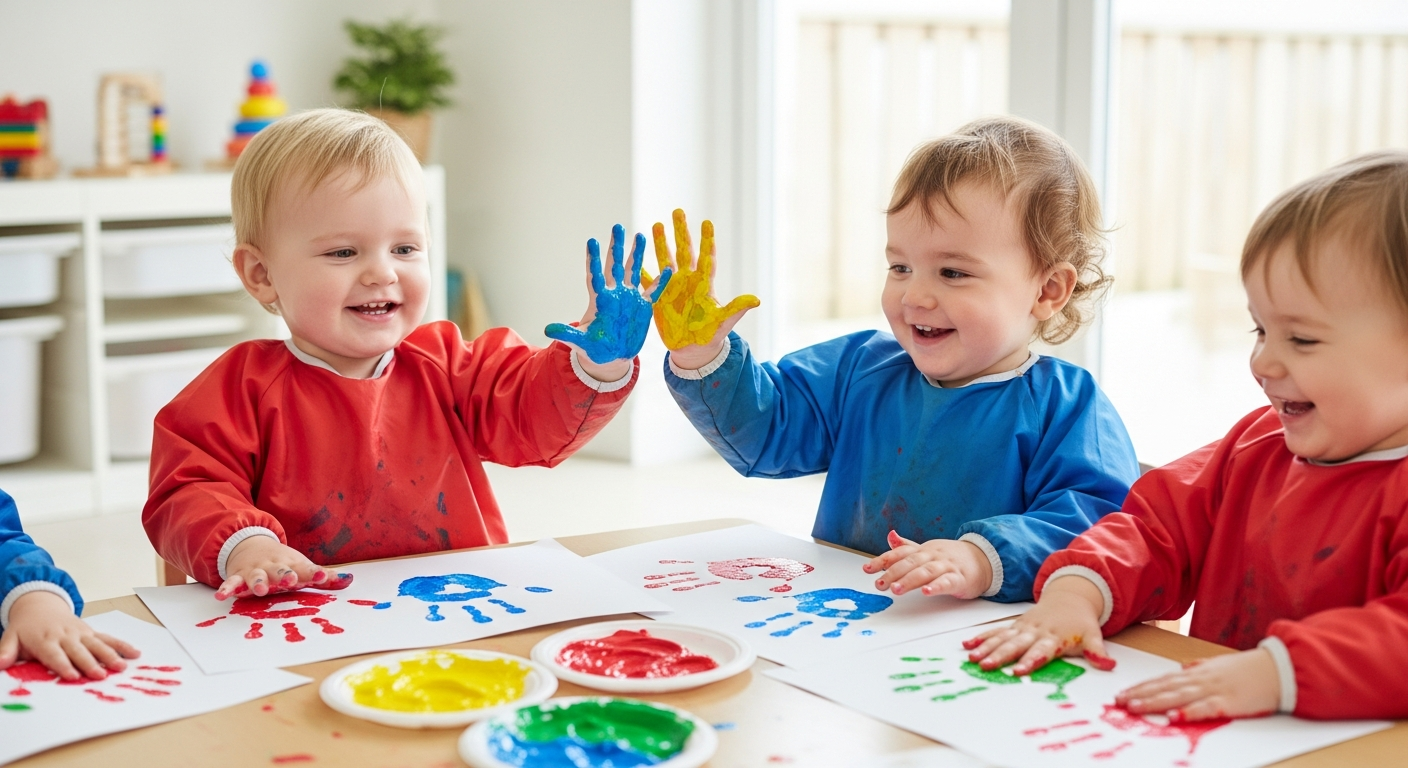
Table of Contents
- Introduction
- The Science of Color Recognition and Speech
- Hands-On Sensory Color Activities
- Gross Motor Color Games
- Fine Motor and Artistic Color Activities
- Everyday Color Learning Opportunities
- Leveling Up with Smart Screen Time
- Why Choose the Yearly Plan?
- Setting Realistic Expectations
- Frequently Asked Questions
- Conclusion
Introduction
Imagine you are sitting on the floor with your two-year-old, holding up a bright red apple. You ask, "What color is this, honey?" and with a beaming smile, they proudly shout, "Boo!" You try a yellow banana. "Boo!" A green leaf? "Boo!" For many parents, this "all-is-blue" phase is a familiar rite of passage. While it might feel like your child is seeing the world through a single-color lens, this is actually a vital stage in cognitive development. Learning to categorize, name, and differentiate colors is a complex mental leap that lays the foundation for advanced language, math, and logic skills.
At Speech Blubs, we understand that these early milestones are about more than just vocabulary; they are about empowering children to "speak their minds and hearts." Our founders started this journey because they grew up with speech challenges themselves, and they wanted to create the joyful, effective tool they wish they’d had. We believe that learning should never be a chore. Instead, it should be a series of "smart screen time" moments and hands-on play that bring families closer together.

In this guide, we will explore 25 creative and effective color toddler activities designed to move your child past the "everything is blue" phase. We’ll cover sensory play, gross motor games, and how to integrate these lessons into your daily routine. By the end of this post, you'll have a toolkit of activities that foster a love for communication and build the confidence your child needs to express themselves fully.
The Science of Color Recognition and Speech
Before we dive into the activities, it’s helpful to understand why color is such a big deal for a developing brain. Color recognition is a visual perceptual skill. It requires the brain to process what the eyes see, categorize that information, and then retrieve the specific linguistic label (the word "red" or "yellow") to describe it.
For many toddlers, the struggle isn't seeing the color; it's the bridge between the visual input and the verbal output. This is where our science behind our method comes into play. We utilize "video modeling," where children watch their peers perform actions or say words. This triggers mirror neurons in the brain, making the child more likely to imitate what they see. When a child sees another child joyfully shouting "Yellow!", it creates a social and neurological spark that traditional flashcards simply can't replicate.
If you are ever concerned that your child’s color naming or general speech is lagging behind, you can take our preliminary screener. It’s a quick 3-minute assessment with 9 simple questions that provides you with a next-steps plan to support your little one’s journey.
Hands-On Sensory Color Activities
Sensory play is the "gold standard" for toddlers. When children use their hands to squish, pour, and sort, they are forming stronger neural connections.
1. The Classic Rainbow Rice Bin
Sensory bins are a staple for a reason. To make rainbow rice, simply mix dry white rice with a few drops of food coloring and a teaspoon of white vinegar in a baggie, shake it up, and let it dry.

- The Activity: Give your child scoops, cups, and small toys hidden in the rice.
- Language Tip: Ask them to find the "red dinosaur" or "blue spoon." This helps them practice receptive language (understanding the word) before they have to produce it.
2. Shaving Cream Color Mixing
This is messy, but it’s a brilliant way to teach secondary colors.
- The Activity: Put two dollops of white shaving cream on a tray. Add a drop of red food coloring to one and blue to the other. Let your toddler swirl them together to create "magical" purple.
- The Speech Connection: Use "action words" like squish, swirl, mix, and wow! to expand their functional vocabulary.
3. Colored Ice Cube Exploration
- The Activity: Freeze water dyed with food coloring into ice cubes. Place them in a bowl of warm water.
- Why it works: As the colors melt and bleed into the water, toddlers see the transition of hues in real-time. It’s a science experiment and a color lesson in one.
4. Color-Themed Bath Time
Turn bath time into a "Green Night" or "Blue Night."
- The Activity: Use bath drops to dye the water a specific color and provide only toys that match that color.
- Speech Blubs Insight: For a child who is a "late talker" but loves water, this focused environment reduces the "noise" of too many choices, allowing them to focus on one specific label.
5. Playdough Color "Surprise" Balls
- The Activity: Make balls of white playdough and hide a small piece of colored playdough inside. When your child squishes the ball, the color "emerges."
- The Goal: This builds hand strength (fine motor skills) while keeping the child engaged through the element of surprise.
Gross Motor Color Games
Toddlers learn best when their whole bodies are moving. Incorporating physical activity helps cement concepts into their long-term memory.
6. Color Hop
- The Activity: Use colored construction paper or sidewalk chalk to make large circles on the ground. Call out a color: "Jump to Red!"
- The Benefit: This links auditory processing with physical movement. If your child struggles with the word, show them a red object first to help them make the connection.
7. The Indoor Color Scavenger Hunt
- The Activity: Give your child a basket and say, "Can you find three things that are yellow?"
- Scenario: For a child who loves vehicles, you might find a yellow school bus, a yellow block, and a yellow sock. Bringing these items back to a "base" encourages movement and categorization.
8. Color Flashlight Tag
- The Activity: In a slightly darkened room, tape colored paper to the walls. Shine a flashlight on a color and have your child run to touch it.
- Why it’s fun: It feels like a game of tag, reducing the pressure of "learning" and replacing it with pure joy.
9. Mismatched Sock Match
- The Activity: Dump out the clean laundry (we know you have a mountain of it!) and have your toddler find the matching colored socks.
- Speech Tip: Practice "same" and "different." "Are these the same? No, this is blue and this is red!"
10. "Red Light, Green Light" with a Twist
- The Activity: Use a green paper for "Go" and a red paper for "Stop."
- The Connection: This teaches the functional meaning of colors in the real world (safety and signals) while practicing impulse control.
Fine Motor and Artistic Color Activities
Art is a natural way for children to express what they can't yet say with words.
11. Sticker Sorting Wall
- The Activity: Tape large pieces of colored paper to the wall at toddler height. Give them a sheet of colored dot stickers.
- The Challenge: They must peel the red sticker and put it on the red paper.
- The Value: Peeling stickers is incredible for developing the pincer grasp, which is essential for later writing skills.
12. DIY Color Wheel Collage
- The Activity: Draw a large circle and divide it into sections. Have your child glue scraps of paper, buttons, or fabric onto the matching color section.
- Social Proof: Many parents in our parent success stories mention that open-ended art projects helped their children feel more confident in expressing their preferences.
13. Tissue Paper Window Art
- The Activity: Use clear contact paper on a window and let your child stick squares of colored tissue paper to it.
- The Magic: When the sun shines through, the colors overlap and create new shades, providing a beautiful visual lesson in color theory.
14. Finger Painting with a Focus
- The Activity: Instead of all the colors at once, provide only two (like yellow and red).
- The Goal: By limiting the palette, you prevent the "brown mud" effect and keep the focus on the specific colors being learned.
15. Magnetic Letter Color Sort
- The Activity: If you have those classic colorful refrigerator letters, have your child sort them by color into bowls rather than by the letter itself.
- Language Tip: Even if they don't know the letters yet, they are learning that objects have multiple attributes (shape and color).
Everyday Color Learning Opportunities
You don't always need a "setup" to teach colors. The best color toddler activities happen during the mundane moments of the day.
16. The Grocery Store Challenge
While shopping, ask your child to help you find the "green grapes" or the "purple box of cereal." This turns a chore into a collaborative learning experience.
17. Nature Color Walk
Take a walk outside and look for specific colors in nature. "Look at that brown bark!" or "See the grey pebble?" Nature offers a much wider variety of "shades" and "tints" than a box of crayons.
18. Rainbow Snack Plate
Create a snack with a variety of colors: red strawberries, orange carrots, yellow cheese, and green cucumbers.
- The Activity: Ask your child, "Which color do you want to eat first?"
- Speech Blubs Methodology: This gives the child a sense of autonomy and a reason to use their words to make a choice.
19. "I Spy" Color Edition
This is the perfect car-ride game. "I spy with my little eye, something that is... Blue!"
- Scenario: If they can't guess, give clues. "It's the sky!" or "It's that car!"
20. Dressing for Success
Give your child two choices for their outfit. "Do you want the red shirt or the yellow shirt today?"
- The Value: This builds confidence and helps them associate color words with their own personal identity and choices.
Leveling Up with Smart Screen Time
While hands-on play is vital, we live in a digital world. At Speech Blubs, we’ve created a way to make screen time "smart" rather than passive. Instead of your child zoning out to a cartoon, they can engage with our app to practice these very skills.
In the Speech Blubs app, we have specific sections dedicated to colors and shapes. Your child won't just see a color; they will see a real child saying the word, making a silly face, and encouraging them to join in.
21. Peer Video Modeling
Our app uses the "Color" section where children learn through imitation. When your child sees a peer successfully naming a color, it reduces the frustration of learning a new skill. You can Download Speech Blubs on the App Store or Google Play to see this in action.
22. The "Reading Blubs" Connection
For those on our Yearly plan, you also get access to the Reading Blubs app. This is a fantastic companion for toddlers who are starting to recognize that colors aren't just things we see, but words we read. Seeing the word "RED" printed in red ink helps bridge the gap between visual recognition and early literacy.
23. Interactive Color Filters
Kids love seeing themselves on camera. Our app includes fun, interactive filters that turn your child's face into different colored characters. This "mirror" effect is highly engaging and keeps them motivated to keep practicing their sounds.
24. Building a Daily Routine
Consistency is key. We recommend using the app for about 10-15 minutes a day alongside an adult. This co-play approach ensures that the "smart screen time" translates into real-world communication.
25. Tracking Progress
Our app allows you to see how your child is progressing. Seeing those small wins—like moving from "Boo" to "Blue"—is incredibly rewarding for both the parent and the child.
Why Choose the Yearly Plan?
We want to be transparent about how to get the most value for your family. While we offer a monthly subscription for $14.99 per month, the Yearly plan is our clear recommendation at $59.99 per year.
When you break it down, the Yearly plan costs just $4.99 per month—which is a 66% saving compared to the monthly option. But it’s not just about the price. The Yearly plan includes:
- A 7-day free trial so you can test it out risk-free.
- The Reading Blubs app (not included in the monthly plan).
- Early access to new updates and content.
- 24-hour support response time from our dedicated team.
Ready to dive in? You can create your account and begin your 7-day free trial today on our web portal.
Setting Realistic Expectations
As a parent, it’s easy to compare your child to the "star student" at daycare. However, it’s important to remember that every child’s developmental timeline is unique. Our goal at Speech Blubs isn't to promise that your child will be a master orator in thirty days. Instead, we aim to:
- Foster a genuine love for learning and communication.
- Build the confidence needed to try new words.
- Reduce the frustration that comes with being misunderstood.
- Create joyful "learning moments" that strengthen the parent-child bond.
If you are seeing consistent progress, no matter how small, you are on the right track! Celebrating the transition from "Boo" to "B-lue" is just as important as the eventual "I want the blue ball, please."
Frequently Asked Questions
Which colors should I teach my toddler first?
Most experts suggest starting with the primary colors: Red, Blue, and Yellow. These are the most distinct and are often found in basic toys and snacks. Once your child can consistently identify these three, move on to Green, Orange, and Purple. Don't worry about shades like "magenta" or "teal" until they have the basics down!
How long does it take for a toddler to learn their colors?
There is a wide range of "normal." Some toddlers begin identifying colors as early as 18 months, while others don't fully master the concept until they are 3 or 4 years old. If your child is struggling with color naming but understands the concept of sorting (e.g., they can put all the red blocks in one pile even if they can't say the word "red"), they are likely doing just fine.
My child calls everything "blue." Is this normal?
Yes! This is often called "overextension." Toddlers frequently pick a favorite word and apply it to everything in that category. It shows they understand that the object has a color; they just haven't memorized the specific label for each one yet. Keep modeling the correct words without "correcting" them harshly. Simply say, "That's a red car! It looks fast!"
Can an app really help with speech and color recognition?
When used as a "smart screen time" tool with adult interaction, yes! Our video modeling approach is based on established scientific principles. By watching other children speak, your child's brain is naturally encouraged to imitate those sounds. It's a powerful supplement to hands-on play and, if needed, professional speech therapy.
Conclusion
Teaching colors to your toddler is one of the most vibrant parts of early parenthood. From the messy joy of shaving cream swirls to the focused pride of a sticker sorting wall, these activities do more than teach "red" and "green"—they teach your child that their voice has power and that learning is a fun, shared adventure.
At Speech Blubs, we are honored to be a part of your family’s journey. Whether you are using our sensory bin ideas or engaging with our peer-modeling videos, remember that your support and encouragement are the most important ingredients.
To get the full suite of tools to support your child’s development, we encourage you to start your journey today. Download Speech Blubs on the Apple App Store or Google Play Store to begin.
For the best value and access to all features—including our 7-day free trial, the Reading Blubs app, and priority support—be sure to select the Yearly plan. It’s the most effective way to ensure your child has the consistent support they need to finally speak their mind and heart.
Sobre el autor