
25 Engaging Toddler Beach Activities for Family Fun
 Por Speech Blubs Team•18 mar 2026•13 min.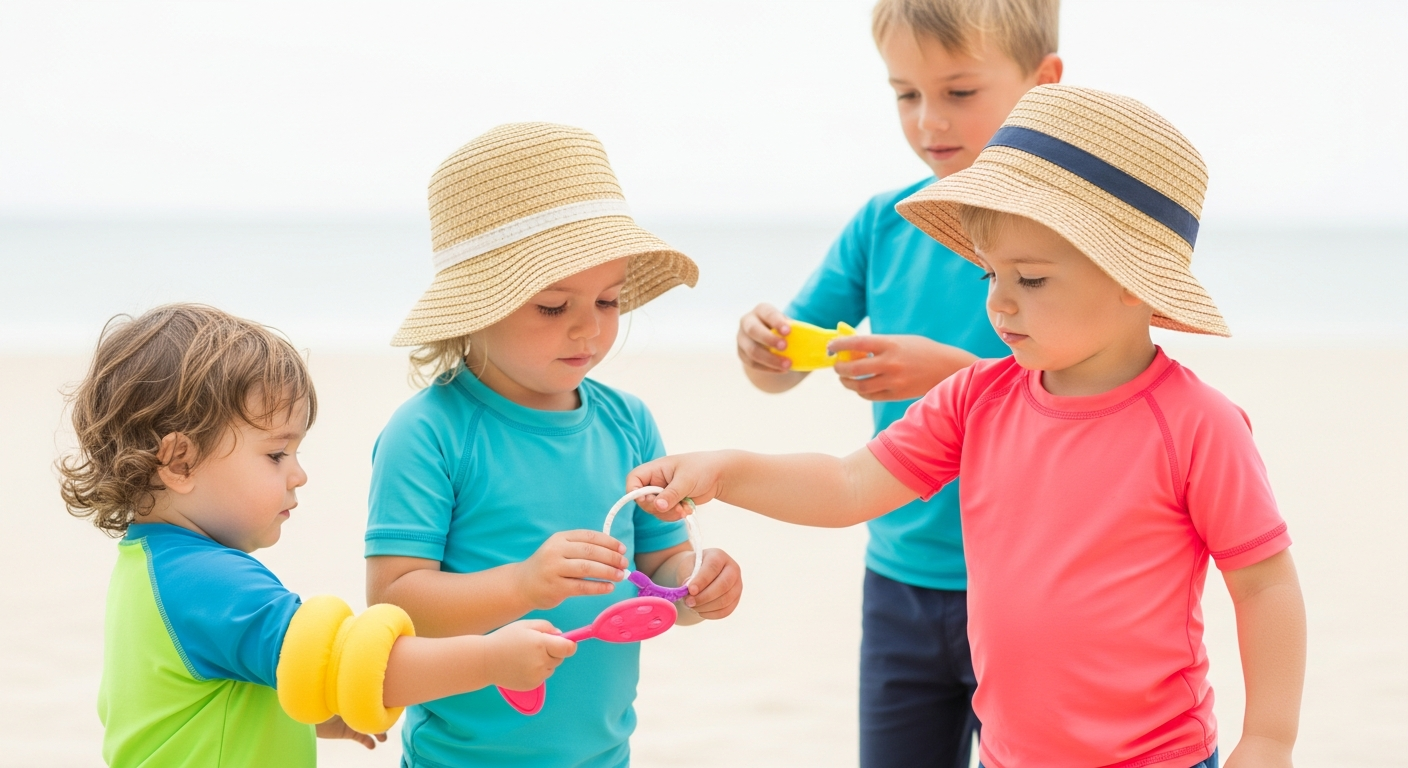
Table of Contents
- Introduction
- The Sensory Wonders of the Shore
- Active Toddler Beach Activities for Movement
- Creative and Artistic Sand Play
- Educational Activities for Language Development
- Safe Water Play for Little Splashes
- The Practical Beach Bag: Essentials for Success
- Why We Focus on "Smart Screen Time"
- Pricing and Value: Choosing the Right Plan for Your Family
- Integrating Smart Screen Time into Your Vacation
- Frequently Asked Questions
- Conclusion
Introduction
Have you ever watched a toddler experience the beach for the very first time? Their eyes widen at the vastness of the ocean, their tiny toes curl as they feel the cold rush of a receding wave, and they might even try to take a curious (though ill-advised) bite of the sand. For a young child, the beach isn't just a vacation spot; it is a massive, open-air laboratory for sensory exploration and language development. However, for parents, the prospect of a beach day with a two-year-old can feel like a tactical operation requiring military-grade planning. We often worry about sun safety, nap schedules, and the dreaded "meltdown" that occurs when the novelty wears off.
At Speech Blubs, our mission is to empower children to "speak their minds and hearts." We know that the best learning happens through joyful, shared experiences. Our company was founded by individuals who grew up with speech challenges themselves, and we created the tool we wished we had as children. We believe that every environment—from your living room to the sandy shoreline—is an opportunity for "smart screen time" and real-world connection to intersect.

The purpose of this post is to provide you with a comprehensive list of toddler beach activities that are not only fun but also foster physical coordination, sensory processing, and communication skills. We will cover everything from creative sand art to educational games that turn nature into a classroom. By the end of this article, you will have a clear roadmap for a tear-free, high-value beach day that builds your child’s confidence and creates lasting family memories.
The Sensory Wonders of the Shore
The beach provides a sensory-rich environment that is nearly impossible to replicate elsewhere. Sensory play is crucial because it helps build nerve connections in the brain’s pathways, which lead to a child’s ability to complete more complex learning tasks.
1. The Wet vs. Dry Sand Experiment
One of the simplest toddler beach activities involves exploring the difference between wet and dry sand. Fill one small bucket with dry, powdery sand and another with damp, packable sand. Encourage your child to run their fingers through both.
- Why it works: It introduces descriptive vocabulary like "gritty," "smooth," "heavy," and "light."
- Language Tip: Ask your child, "Does this feel soft or crunchy?"
2. A Sensory "Touch and Feel" Pile
Create a small pile of found objects: a smooth pebble, a piece of dried seaweed, a jagged shell, and a cool splash of water. Let your toddler explore these textures one by one. If you are unsure how your child is progressing with their sensory or language milestones, you can take our quick 3-minute preliminary screener to get an assessment and a personalized next-steps plan.
3. Digging for "Buried Treasure"
Bury a few of your toddler's favorite plastic toys (like a dinosaur or a car) just beneath the surface of the sand. Leave a tiny part of the toy visible as a "clue." This activity encourages persistence and problem-solving.
- Speech Blubs Connection: For a parent whose 3-year-old "late talker" loves animals, the "Animal Kingdom" section of our app offers a fun, motivating way to practice sounds like "moo" or "roar" after you "rescue" a toy cow or lion from the sand.
Active Toddler Beach Activities for Movement
Toddlers are bundles of energy, and the beach offers a safe, wide-open space for them to develop their gross motor skills. Moving on sand requires more effort and balance than walking on flat pavement, making it excellent exercise.

4. Chasing the Waves
Stand in the very shallow area where the water laps at the shore. Encourage your toddler to "run away" from the incoming water and then "chase" it as it recedes.
- Safety Note: Always stay within arm’s reach. This game builds confidence around the water while improving agility.
5. Beach Ball "Bounce and Roll"
A lightweight beach ball is a must-have. Because beach balls move slowly in the wind, they are easier for toddlers to track with their eyes and catch with their hands.
- The Activity: Practice rolling the ball back and forth. Use the words "push," "roll," and "my turn" to build foundational social communication skills.
6. Follow the Leader in the Sand
Walk in a straight line, then hop, then crawl. Encourage your toddler to mimic your movements.
- Scientific Methodology: This mimics our video modeling methodology, where children learn by watching and imitating. In the app, they watch their peers perform speech exercises; on the beach, they watch you to learn how to navigate the world.
7. Beach Bowling
Line up empty water bottles or sturdy plastic cups as pins. Use your beach ball to knock them down. Toddlers love the "crash" and the cause-and-effect nature of this game.
Creative and Artistic Sand Play
The sand is nature’s ultimate blank canvas. Artistic activities at the beach allow toddlers to express themselves without the mess of traditional paint or glitter (though sand has its own brand of mess!).
8. Sandcastle "Construction Site"
Building a sandcastle is a classic for a reason. Instead of aiming for a masterpiece, focus on the process of filling and dumping.
- Practical Tip: Bring along small toy dump trucks and diggers.
- Language Learning: Use verbs like "scoop," "pour," "dump," and "smash."
9. Painting with Water
Give your child a large paintbrush and a cup of ocean water. Let them "paint" designs on dry rocks or the side of a plastic cooler. They will be fascinated as their artwork "magically" disappears as the water evaporates in the sun.
10. Sand Angels and Footprints
Just like snow angels, sand angels are a hit. Have your toddler lie down and move their arms and legs. Then, stand up and look at the "wings." You can also make a trail of footprints and talk about the difference between "big feet" (yours) and "little feet" (theirs).
11. Decorating with Nature
Once you’ve built a simple mound of sand, encourage your toddler to find "decorations." They can search for shells, seaweed, or smooth stones to make their sand structure unique.
"At Speech Blubs, we believe that play is the work of childhood. Every sandcastle built and every shell collected is a step toward better communication and self-confidence."
Educational Activities for Language Development
You don’t need flashcards to teach your toddler new words. The beach provides a living classroom where vocabulary comes to life through experience.
12. "I Spy" at the Shore
Play a simplified version of "I Spy." Instead of colors, focus on objects. "I spy something blue" (the sky or an umbrella). "I spy something that flies" (a seagull or a kite).
- Speech Blubs Integration: If your child is working on the "Living Colors" section in the app, the beach is the perfect place to generalize those skills. Finding a "yellow" bucket or a "red" shovel in the real world reinforces what they’ve seen on the screen.
13. The Beach Scavenger Hunt
Create a simple list (with pictures if possible) of things to find:
- A white shell.
- A feather.
- A smooth rock.
- A piece of seaweed.
- Why it works: It encourages categorization and following multi-step directions.
14. Drawing Letters and Shapes in Damp Sand
Use a stick or your finger to draw large shapes in the damp sand near the water. For older toddlers, you can practice the first letter of their name. The best part? The ocean acts as a "reset button," washing the slate clean for the next drawing.
15. Seaside Storytime
When it’s time for a break from the sun, retreat under the umbrella for a story. Choose books about the ocean or pirates to keep the theme going. Reading aloud in a new environment helps children associate books with fun and relaxation.
Safe Water Play for Little Splashes
Water safety is the highest priority when planning toddler beach activities. However, the ocean can be intimidating for some little ones. Creating a "bridge" to the big water can help.
16. The "Baby Pool" on the Sand
If the waves are too strong or the water is too cold, dig a shallow hole in the sand and fill it with ocean water using a bucket. This creates a mini "tide pool" that stays warm and allows your toddler to splash safely away from the surf.
17. Floating and Splashing
If the water is calm, use a U.S. Coast Guard-approved life jacket or high-quality flotation device. Hold your child firmly and let them feel the buoyancy of the water.
- Expectation Setting: Don't expect your toddler to become a swimmer in one day. Focus on reducing water anxiety and fostering a love for the "big blue."
18. Chasing Bubbles
Bring a bottle of bubbles to the beach. The sea breeze will carry them far, and your toddler will have a blast chasing them across the sand. This is also a great exercise for oral motor skills—learning to blow through the bubble wand requires lip rounding and breath control.
The Practical Beach Bag: Essentials for Success
To ensure these activities stay "joyful" and don't turn into a struggle, you need the right gear. A well-prepared parent is a relaxed parent.
- Sun Protection: Mineral-based sunscreen, a wide-brimmed hat, and a UPF 50+ rash guard.
- The "Sand Eraser": Bring a small container of baby powder or cornstarch. Rubbing it on sandy skin makes the sand fall off instantly—magic for diaper changes or the car ride home!
- Hydration and Snacks: Toddlers get dehydrated quickly. Bring water and "sand-proof" snacks like pouches or closed containers of fruit.
- The "Speech Blubs" Break: During the heat of the day (11 AM to 3 PM), head to the shade. This is the perfect time for 10-15 minutes of "smart screen time." You can download the app on the App Store or the Google Play Store to have it ready.
Why We Focus on "Smart Screen Time"
You might wonder why a speech app is recommending outdoor beach activities. At Speech Blubs, we don't view technology as a replacement for real-world play; we view it as a supplement.
Our founders created Speech Blubs because they knew that traditional therapy could sometimes feel like "work" for a child. By blending scientific principles with play, we provide a screen-free alternative to passive viewing like cartoons. When your child uses Speech Blubs, they aren't just watching a screen; they are interacting, imitating, and learning to "speak their minds and hearts."
Our methodology is backed by science and has earned high ratings on the MARS scale for app quality. We have helped over 5 million families worldwide. You can read what other parents are saying about how our app has helped their children find their voices.
Pricing and Value: Choosing the Right Plan for Your Family
We want to be transparent about how you can access our full suite of tools. While we offer a variety of free resources, our premium plans provide the most comprehensive support for your child's development.
- Monthly Plan: For $14.99 per month, you get full access to the Speech Blubs app and its library of over 1,500 activities.
- Yearly Plan (Best Value): At $59.99 per year, the cost breaks down to just $4.99 per month.
The Yearly plan is our most popular choice because it includes exclusive features that the monthly plan does not:
- A 7-day free trial to explore everything risk-free.
- The Reading Blubs app, which focuses on early literacy and phonics.
- Early access to new updates and features.
- 24-hour support response time from our dedicated team.
We encourage families to start with the Yearly plan to ensure they have all the tools necessary for a successful developmental journey. Ready to get started? You can create your account and begin your 7-day free trial today.
Integrating Smart Screen Time into Your Vacation
Vacations are wonderful, but they also disrupt routines. This disruption can sometimes lead to frustration for toddlers who thrive on predictability. Using Speech Blubs for a few minutes a day provides a familiar, "safe" activity that travels with you.
Imagine you are at a beachside restaurant waiting for your food. Instead of a passive cartoon, you open the "Mouth Gym" section of Speech Blubs. Your child practices sticking out their tongue or blowing raspberries along with the children on the screen. It turns a potentially stressful waiting period into a joyful learning moment that reduces frustration and builds foundational communication skills.
Frequently Asked Questions
1. How long should a toddler play at the beach? For most toddlers, 2 to 3 hours is the "sweet spot." Start early in the morning to avoid the midday heat, and plan to head back for a nap before they become overstimulated.
2. What if my toddler is afraid of the waves? This is very common! Never force a child into the water. Instead, focus on "dry" toddler beach activities like sandcastles or searching for shells. Often, watching other children play (a form of real-life video modeling) will eventually encourage them to try the water on their own terms.
3. Is Speech Blubs a replacement for speech therapy? No. Speech Blubs is a powerful supplement to a child’s overall development plan and professional therapy. If you have concerns about a significant delay, we always recommend consulting with a certified Speech-Language Pathologist (SLP).
4. Can I use the app without an internet connection at the beach? Many features of Speech Blubs are accessible offline once the content is downloaded. We recommend downloading your child's favorite sections before you leave your hotel or home to ensure uninterrupted play.
Conclusion
A day at the beach is more than just an opportunity for a nice photo—it is a vital chance for your toddler to grow, learn, and connect with the world around them. From the sensory input of the sand to the language-rich environment of a scavenger hunt, these toddler beach activities are designed to foster confidence and joy.
At Speech Blubs, we are honored to be a part of your parenting journey. Whether you are using our app under a beach umbrella or practicing animal sounds while building a sand-zoo, our goal is the same: to help your child "speak their minds and hearts."
Don't wait to start building these foundational skills. Choose the Yearly plan today to receive your 7-day free trial, the Reading Blubs app, and full access to our scientific, play-based methodology.
Download Speech Blubs on the App Store or Google Play to begin your journey today! Together, we can make every moment—even a sandy one—a "smart" one.
Sobre el autor