
25 Fun and Educational Valentine’s Toddler Activities
 Por Speech Blubs Team•18 mar 2026•14 min.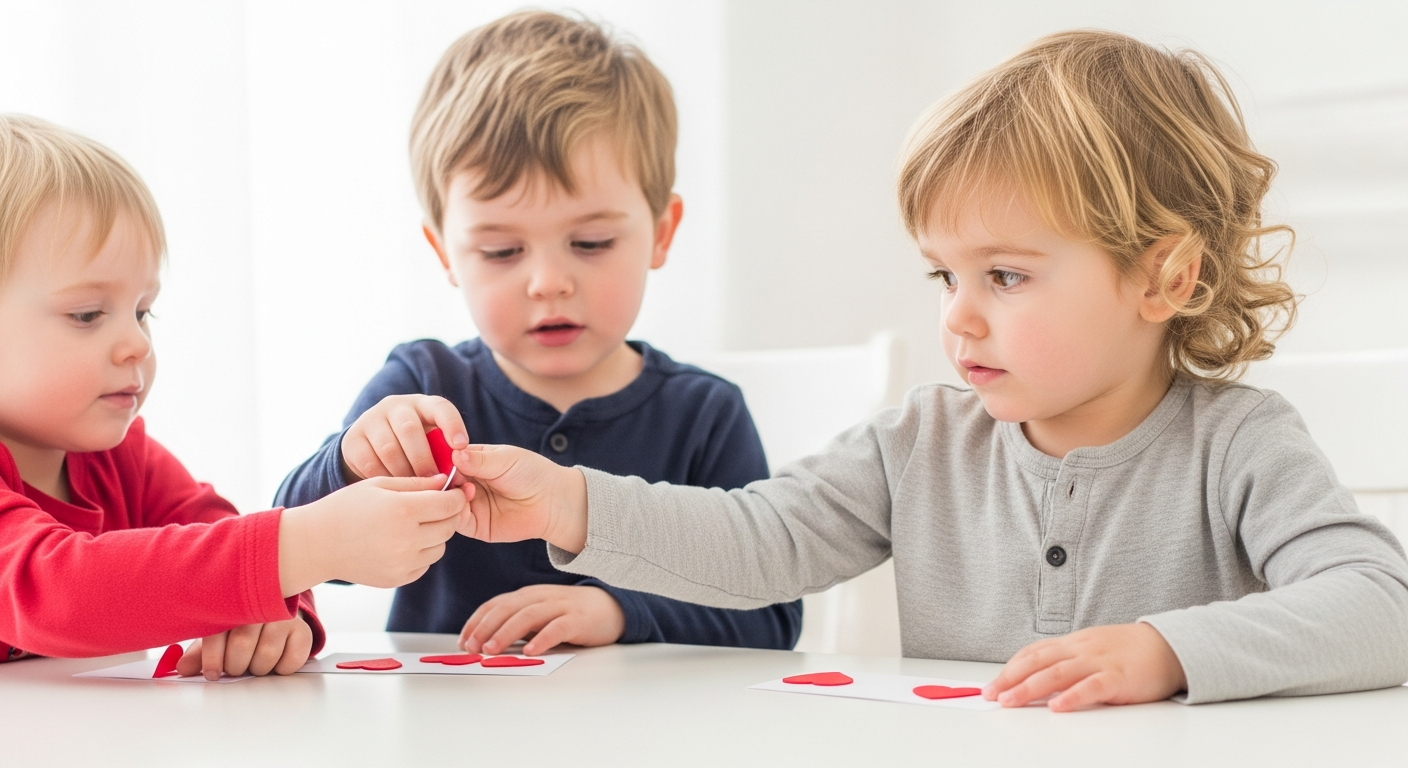
Table of Contents
- Introduction
- The Power of Sensory Play for Language Development
- Fine Motor Activities: Building Strength and Coordination
- Gross Motor Fun: Getting the Wiggles Out
- Communication and Connection: Speaking from the Heart
- Why Speech Blubs is Your Valentine’s Secret Weapon
- Practical Valentine's Scenarios with Speech Blubs
- More Valentine's Learning Activities
- Building Realistic Expectations
- Summary of Valentine's Toddler Activities
- Conclusion
- FAQs
Introduction
Have you ever wondered what goes through a toddler’s mind when they see red hearts and pink decorations popping up everywhere in February? For a two-year-old, Valentine’s Day isn't about romantic dinners or fancy boxes of chocolates; it’s a colorful, abstract concept that can feel a bit confusing after the high-energy excitement of the winter holidays. However, at Speech Blubs, we believe this "holiday of love" is the perfect opportunity to help children "speak their minds and hearts."
Valentine's Day provides a unique, heart-filled backdrop for practicing kindness, developing fine motor skills, and building the foundational communication blocks every child needs. Whether your little one is a "late talker" or simply a curious explorer, engaging in themed play can turn a "ho-hum" Tuesday into a breakthrough moment for their development. In this post, we will explore a variety of valentines toddler activities—ranging from sensory bins and gross motor games to science experiments and "smart screen time" exercises—all designed to foster joy and connection within your family.

Our mission is to empower the 1 in 4 children who need speech support through a blend of scientific principles and play. By the end of this guide, you’ll have a toolbox of activities that don’t just fill the day but actually help your child grow.
The Power of Sensory Play for Language Development
Sensory play is often the "bread and butter" of toddlerhood. When children touch, smell, and see new textures, their brains are working overtime to process that information. This is a prime time for language mapping.
Valentine’s Day Sensory Bins
A sensory bin is more than just a box of rice; it’s a world of discovery. To create a classic Valentine’s bin, dye some white rice red or pink using a bit of food coloring and vinegar. Toss in some heart-shaped measuring cups, small shovels, and perhaps some silk rose petals.
As your child scoops and pours, you can narrate their actions: “You are pouring the red rice!” or “Look, you found a small heart.” This simple narration builds their receptive vocabulary. Our founders, who grew up with speech challenges themselves, created Speech Blubs to be the tool they wished they had—one that turns these everyday moments of play into powerful learning opportunities.
Candy Heart Oobleck
Oobleck is a fascinating non-Newtonian fluid (made from cornstarch and water) that acts like both a solid and a liquid. For a Valentine’s twist, dye the mixture purple and add traditional candy conversation hearts.
For a parent whose 3-year-old loves tactile experiences but struggles to stay focused, this "gooey" activity is incredibly motivating. While your child reaches for a candy heart, you can practice simple sounds together. This mimics the video modeling methodology we use in our app, where children learn by watching and imitating their peers in a fun, low-pressure environment.
Love Potion Bubble Foam
Bubble foam is a sensory superstar. Mix two parts water with one part tear-free bubble bath (and a drop of red food coloring), then whip it with a hand mixer until stiff peaks form. Place it in a large bin with some plastic "potions" bottles or heart-shaped whisks. This activity is excellent for building the "action words" (verbs) in a toddler's vocabulary, such as stir, bubble, pop, and wash.

Fine Motor Activities: Building Strength and Coordination
Fine motor skills—the coordination of small muscles in the hands and fingers—are essential for everything from buttoning a coat to eventually holding a pencil. Valentine's Day crafts are a fantastic way to sneak in this "finger gym" workout.
Heart Sticker Matching
This is one of the easiest valentines toddler activities to set up. Draw several large hearts on a piece of paper and use different colors for the outlines (red, pink, purple). Give your toddler a sheet of heart-shaped dot stickers and ask them to place the stickers along the lines.
Peeling stickers is a high-level fine motor task. If your child finds it frustrating, you can peel the edge of the sticker sheet off first to make the individual stickers easier to grab. This builds confidence and reduces the "I can't do it" meltdowns that often happen during the toddler years.
Paper Heart Threading
Take some stiff construction paper and cut out several large hearts. Use a hole punch to create holes around the perimeter. Give your child a piece of yarn or a colorful shoelace and show them how to "thread" the string through the holes.
This activity requires hand-eye coordination and bilateral integration (using both sides of the body together). If you find your child is struggling with the spatial awareness needed for this, it might be a great time to check their developmental milestones. You can take our quick 3-minute preliminary screener to get a simple assessment and a personalized next-steps plan.
Love Bugs Craft
Using cardboard tubes (like toilet paper rolls), some googly eyes, and pipe cleaners, you can create "Love Bugs." Wrapping the tube in construction paper and gluing on heart-shaped wings is a multi-step process that helps toddlers learn to follow directions.
For a child who is a "late talker" but loves animals, you can pair this craft with the "Animal Kingdom" section of the Speech Blubs app. While they build their bug, they can watch a peer make the "bzzzz" sound, encouraging them to imitate the sound in a joyful, natural way. You can download Speech Blubs on the App Store to explore these interactive sections together.
Gross Motor Fun: Getting the Wiggles Out
February often means spending more time indoors, which can lead to cabin fever. Gross motor activities help toddlers burn energy while working on balance and core strength.
Heart Hopscotch
Tape several large paper hearts to the floor in a hopscotch pattern. Instead of numbers, you can use colors or even simple pictures. Encourage your child to jump from heart to heart.
- Pro Tip: If your toddler isn't jumping with both feet yet, have them "stomp" like a dinosaur on each heart.
This activity is perfect for practicing "prepositions." You can say, "Jump on the red heart!" or "Step over the pink one!" Using physical movement to teach language is a proven way to help "stick" new concepts in a child's mind.
Valentine’s Day Stair Walk
If you have stairs in your home, tape colored foam hearts to each step. This is a great way to encourage "alternating feet" when climbing. Tell your child, "Step on the red heart with your left foot, and the purple heart with your right foot." This cross-lateral movement is vital for brain development and eventual reading and writing skills.
Communication and Connection: Speaking from the Heart
At the core of Valentine's Day is the concept of love and friendship. For a toddler, this is a great time to start labeling emotions.
Reading and Storytelling
Books like "In My Heart" or "Love Is" are wonderful for toddlers because they use vivid descriptions of feelings. Reading together is a screen-free alternative to passive viewing and a powerful tool for family connection.
While you read, focus on the "video modeling" aspect of human interaction. Let your child see your face and mouth as you pronounce words. At Speech Blubs, we’ve taken this scientific principle—where children learn by watching their peers—and turned it into a "smart screen time" experience. It’s not about just watching a screen; it’s about an interactive loop where the child sees a peer, tries the sound, and gets rewarded with fun filters and encouragement.
"Who Do We Love?" Posters
Create a simple poster where you and your child glue photos of family members, pets, and friends. This helps with "social-emotional" development. Point to a photo and say, "This is Grandma. We love Grandma!" Encourage your child to say the names or blow a kiss to the photo. This fosters a love for communication and builds the confidence needed for social interactions.
Why Speech Blubs is Your Valentine’s Secret Weapon
While crafts and sensory bins are fantastic, sometimes parents need a structured tool to support their child's language journey. This is where we come in. We provide an immediate, effective, and joyful solution for families, blending scientific principles with play.
The Science of "Smart Screen Time"
Unlike cartoons, which are passive, Speech Blubs is designed for "co-play." We encourage parents to sit with their children, mirroring the peer models on the screen. Our method is backed by science and has earned high ratings on the MARS scale, placing us in the top tier of educational apps. You can read more about our research to see how we use mirror neurons to spark speech.
"Our mission is to provide children with a tool that makes them feel capable and heard. We don't just want them to say words; we want them to speak their hearts."
Choosing the Right Plan for Your Family
We want to be transparent about our pricing so you can make the best choice for your child's development. We offer two main plans:
- Monthly Plan: $14.99 per month. This is a great way to test the waters.
- Yearly Plan: $59.99 per year.
The Yearly plan is our best value. It breaks down to just $4.99 per month—a 66% savings compared to the monthly rate. But the value goes beyond the price. The Yearly plan includes:
- A 7-day free trial so you can explore everything risk-free.
- The Reading Blubs app, which helps transition your child from speaking to early literacy.
- Early access to all new updates and features.
- Priority support with a 24-hour response time.
The monthly plan does not include the free trial or the extra Reading Blubs app. To give your child the full suite of features and the best start, we highly recommend choosing the yearly option. You can create your account and start your trial today.
Practical Valentine's Scenarios with Speech Blubs
Let’s look at how you can integrate our app into your Valentine's celebrations:
- Scenario A: You are making "Love Bugs" and your toddler is struggling to say the word "Bug." You can open the "Animal Kingdom" section of Speech Blubs, find the bee or beetle, and let them watch a peer say the word. The visual of another child's mouth movements often "clicks" in a way that an adult's might not.
- Scenario B: You’re playing with the Valentine’s sensory bin and want to practice colors. Open the "Color" section of the app. As your child sees a peer say "Red," they can dip their hand into the red rice, creating a multi-sensory learning loop.
- Scenario C: You’re winding down after a day of valentines toddler activities. Use the "Early Woods" section to practice calming sounds and simple vocabulary before bed, turning screen time into a bonding moment rather than a distraction.
For more inspiration, you can see what other parents are saying about their success stories with Speech Blubs.
More Valentine's Learning Activities
If you’re looking for even more ways to celebrate, here are a few additional ideas that focus on different developmental areas:
Heart Sorting by Size
Cut out hearts of three different sizes: small, medium, and large. Use painters tape to create three "houses" on the floor or a table. Ask your child to help the hearts "find their home" by sorting them into the correct houses. This builds early math skills and vocabulary like big and little.
Coffee Filter Hearts (Science/Art)
This is a classic "process art" activity. Cut coffee filters into heart shapes. Let your child draw on them with washable markers. Then, use a dropper or a spray bottle to add water. Watch as the colors bleed and mix!
- Communication Goal: This is perfect for practicing the word "More!" Every time they want more water, encourage them to use the word or the sign for "more."
Valentine’s Day "Soup"
This is a variation of a water bin. Fill a container with water, a drop of red food coloring, and plastic hearts, spoons, and bowls. Toddlers love "cooking." As they "make soup," talk about who they are making it for. "Are you making soup for Daddy? That is so kind!" This reinforces the theme of the holiday—thinking of others.
Building Realistic Expectations
As a parent, it’s easy to look at social media and feel like your child should be doing more. It’s important to remember that every child develops on their own timeline. Using Speech Blubs or doing these activities isn't about "fixing" a child; it’s about fostering a love for communication and building foundational skills.
We don't promise that your child will be giving public speeches in a month. Instead, we focus on the small, joyful wins: a new sound, a reduced level of frustration, a shared laugh over a silly face filter, and the confidence that comes from being understood. Whether you use our app as a supplement to professional therapy or as a powerful tool for general development, the goal is always the same: creating joyful family learning moments.
You can learn more about our approach on our main homepage.
Summary of Valentine's Toddler Activities
To help you plan your week, here is a quick checklist of the activities we've covered:
- Sensory: Red rice bin, Candy heart oobleck, Bubble foam.
- Fine Motor: Sticker matching, Paper threading, Love bug crafts.
- Gross Motor: Heart hopscotch, Stair walk.
- Communication: Reading together, "Who Do We Love?" posters, Speech Blubs peer modeling.
- Science/Art: Coffee filter "bleeding" hearts, Heart sorting.
Conclusion
Valentine’s Day is a wonderful season to slow down and focus on the connection you have with your little one. By engaging in these valentines toddler activities, you aren't just celebrating a holiday—you are actively participating in your child's growth and helping them find their voice.
At Speech Blubs, we are honored to be a part of that journey. From our founders' personal experiences to our scientifically-backed video modeling, everything we do is designed to make language learning a joyful, stress-free experience for the whole family. We provide "smart screen time" that encourages interaction, reduces frustration, and builds the confidence your child needs to "speak their mind and heart."
Ready to start this journey? Download Speech Blubs on Google Play or the App Store today. For the best value, be sure to select our Yearly Plan. You'll receive a 7-day free trial, full access to the Reading Blubs app, and the peace of mind that comes with knowing you’re using a world-class educational tool. Let's make this Valentine's Day the start of something beautiful for your child's communication skills!
FAQs
Are these Valentine's activities messy?
Some can be! Activities like the bubble foam or the candy heart oobleck are definitely on the "messy" side. We recommend doing these on a large tray or even in the bathtub for easy cleanup. However, many activities, like the sticker matching or the "Who Do We Love?" poster, are very low-mess and easy to set up in a living room.
At what age can my child start using Speech Blubs?
Speech Blubs is designed for children in the early stages of language development, typically starting around 18 months to 2 years old. However, because we use peer-to-peer video modeling, even younger children can benefit from watching the facial movements, while older children (up to 5 or 6) enjoy the more complex sections and the Reading Blubs features.
Do I need to do a Valentine's activity every day?
Absolutely not! These are meant to be fun options for when you have the time and energy. Your child's development is a long-term journey, not a sprint. Even one focused activity a week, paired with 10-15 minutes of Speech Blubs, can make a significant difference in fostering a love for learning and communication.
Why is the Yearly plan better than the Monthly plan?
The Yearly plan offers a 66% discount, making it much more affordable in the long run ($4.99/mo vs $14.99/mo). Most importantly, the Yearly plan includes a 7-day free trial and the Reading Blubs app, which are not available on the monthly plan. This provides a more comprehensive developmental experience for your child.
Sobre el autor