
Festivas Manualidades de Adornos Navideños para Niños
Tabla de Contenidos La Magia y los Beneficios del Desarrollo de las Manualidades Nuestras Manualidades de Adornos Navideños Favoritas para Niños: Guía por Edades Consejos para una Sesión de Manualidades Exitosa que Potencie el Habla...
 Por Speech Blubs Team•22 dic 2025•18 min.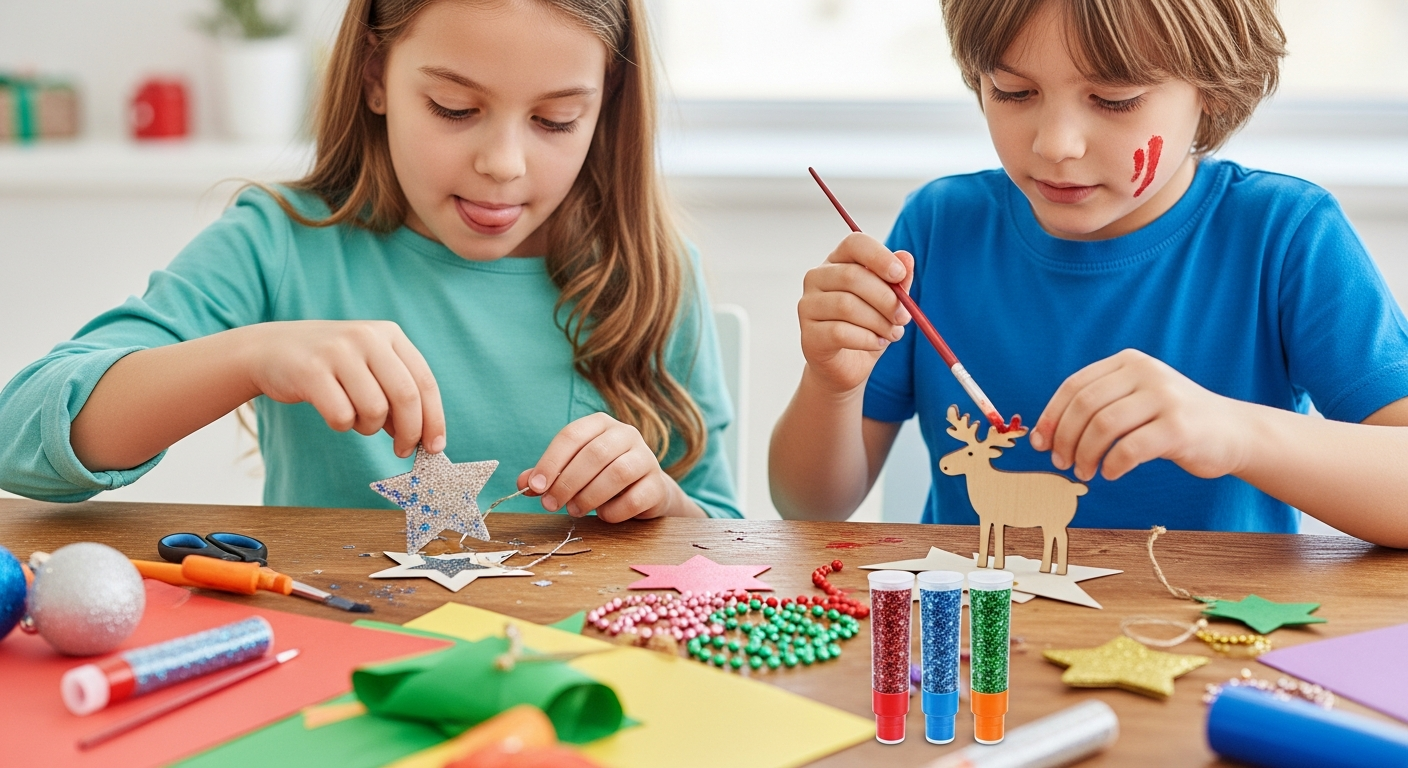
Table of Contents
- The Magic and Developmental Benefits of Crafting
- Our Favorite Christmas Ornament Crafts for Kids: An Age-by-Age Guide
- Tips for a Successful Crafting Session That Boosts Speech
- Integrating Speech Blubs into Your Child's Communication Journey
- Conclusion
- FAQ
The scent of pine fills the air, twinkling lights pop up everywhere, and the happy songs of the season whisper promises of warmth and wonder. For many of us, this magical time of year is wrapped up in family traditions, and few traditions are as fun and creative as making Christmas ornaments with our kids. Imagine their eyes lighting up as they proudly hang their handmade creation on the tree, a sweet memory of laughter and art. But beyond the glitter and glue, these craft times are a powerful, and often overlooked, way to help your child develop, especially their communication skills.
This isn't just a post with fun [christmas ornament craft for kids] ideas; it's about looking at all the amazing things these simple activities can do. We’ll share lots of ornament crafts for different ages, from easy projects for toddlers to more detailed ones for older kids. More importantly, we'll show you how these projects help with fine motor skills, boost creativity, and build a strong base for speech and language. We'll also show you how using helpful tools like Speech Blubs can make these benefits even bigger, helping your child find their voice and share their thoughts and feelings during this special time of year.

The Magic and Developmental Benefits of Crafting
There's something truly magical about crafting, especially for kids. It’s a fun mix of senses, creativity, and challenge. When children are making a [christmas ornament craft for kids], they're not just making something pretty; they're building lots of important skills. These skills help them grow mentally, physically, and emotionally, and they play a surprisingly big part in helping them communicate confidently.
Fine Motor Skill Development
Think about all the little movements in crafting: holding a small bead, carefully cutting paper with scissors, squeezing glitter glue, or painting a tiny detail. These all take good control, skill, and hand-eye coordination – all parts of fine motor skills. Strong fine motor skills aren't just important for writing and taking care of ourselves, but also for the small movements of the mouth and tongue needed for clear speech. The better control a child has over their hands and fingers, the better they'll be able to make the small movements needed for speech sounds.
Boosting Creativity and Imagination
Crafting is a chance for kids to really use their imaginations. There's no one "right" way to decorate a snowman ornament or make a glittery star. This freedom helps them think in new ways, solve problems, and imagine something and then make it real. When children can be creative, they also feel better about using language to talk about their ideas, what they're doing, and what they made.
Fostering Communication and Language Skills
This is where the real magic connects with what we do at Speech Blubs. Craft times are great for starting conversations. As children pick out materials, follow instructions, and talk about what they're doing, they're always using language.
- Vocabulary Expansion:Naming colors, shapes, textures (fuzzy, sparkly, smooth), actions (cut, glue, paint, stick), and things (star, tree, bell, snowflake).
- Following Directions:"First, we glue the cotton ball, then we add the googly eyes." This helps with listening and understanding steps, which is important for understanding and giving instructions and telling stories.
- Descriptive Language:"My ornament is red and sparkly, and it feels a little bumpy." Encouraging children to describe what they're making helps them practice using describing words and words for how things feel.
- Questioning and Explaining:"What should I do next?" "Why is this glue sticky?" "I made it like this because..." These talks help them think and share their ideas.
- Narrative Skills:"First I got the paper, then I cut the shape, and then I put the glitter on it. Now it's a beautiful star!" Telling the steps of their craft helps them learn to tell stories.
For parents whose children are having trouble with speech, these craft times are like mini therapy sessions. For example, if a child loves making animal ornaments, a parent can ask them about the animal sounds ("What sound does a reindeer make?") or name the animal's body parts ("Where are the antlers?"). Then, after craft time, they can go to Speech Blubs and use the "Animal Kingdom" section. There, children can watch and copy other kids making animal sounds and saying animal words, which helps them learn the sounds and words they used during crafting. This mix of hands-on play and our "video modeling" approach makes learning fun and helps kids grow. We want to provide "smart screen time" that's active, fun, and helps families connect, unlike just watching TV.

Enhancing Problem-Solving Abilities
What happens if the glue doesn't stick, or the glitter spills? Crafting often has small "problems" that children can learn to solve. They might need to find a different material, change how they're doing it, or ask for help. This process of trying, failing, and changing helps them learn to handle problems, which is important for getting along with others and doing well in school.
Building Confidence and Self-Esteem
Every child feels proud when they finish a project. Seeing their creation hanging on the Christmas tree is a great way to show them how good they are. This feeling of success helps them feel better about themselves and try new things, including talking. A child who feels good about making things is more likely to feel good about talking.
Our Favorite Christmas Ornament Crafts for Kids: An Age-by-Age Guide
Starting a [christmas ornament craft for kids] doesn't have to be hard. We've found some great ideas for different ages that are lots of fun and help children learn. Remember, the goal is to have fun, not to make something perfect!
For Our Littlest Elves (Toddlers: 1-3 Years Old)
Crafts for toddlers should be about exploring senses, doing simple actions, and using safe materials. Adults should always be watching and helping!
1. Salt Dough Ornaments
- Why we love them:This classic craft is great for the senses! Mixing, squishing, rolling, and cutting the dough helps their hand muscles and gives them a lot to feel. Painting them later helps them learn colors and control their hands.
- How to make them:
- Mix 2 cups flour, 1 cup salt, and 1 cup water until it forms a dough. Squish it for 5-10 minutes until it's smooth.
- Roll out the dough until it's about 1/4 inch thick.
- Use cookie cutters (stars, circles, trees) to cut out shapes. Remember to make a hole at the top with a straw so you can hang it!
- Bake at 250°F (120°C) for 2-3 hours until it's hard.
- Once it's cool, let your toddler paint it with paints that are safe for kids.
- Speech Connection:"Roll," "cut," "paint," "smooth," "hard," "star," "tree." Practice "more" dough, "all done" baking, describing colors.
2. Handprint/Footprint Ornaments
- Why we love them:These are sweet keepsakes and are fun to make.
- How to make them:
- Use air-dry clay or the salt dough from above.
- Help your child gently press their hand or foot into the material to make a print.
- Cut around the print, smooth the edges, and make a hole for hanging.
- Let it dry completely (or bake salt dough).
- Decorate with paint, glitter, or just write their name and the year.
- Speech Connection:"Hand," "foot," "press," "print," "soft," "squishy." Talk about "big hand," "little foot."
3. Pom-Pom and Pipe Cleaner Ornaments
- Why we love them:Great for learning to pick up small objects, learning colors, and using their hands and eyes together when gluing.
- How to make them:
- Get different sizes of pom-poms, pipe cleaners, and a shape to put them on (like a cardboard star or circle).
- Let your toddler glue pom-poms onto the shape. They can also put large beads onto pipe cleaners to make loops or spirals.
- Twist pipe cleaners into simple shapes and glue them on.
- Speech Connection:"Pom-pom," "glue," "stick," "soft," "fluffy," naming colors, "more," "finished."
For Growing Explorers (Preschoolers: 3-5 Years Old)
Preschoolers can follow slightly more instructions, use kid-safe scissors (with help), and do more detailed decorating.
1. Popsicle Stick Ornaments (Trees, Stars, Snowflakes)
- Why we love them:These help with understanding space, following patterns, and gluing carefully.
- How to make them:
- Glue 3-4 popsicle sticks into a triangle for a tree, or an X shape for a star/snowflake. Let it dry.
- Paint the shapes green for a tree, or white/blue for a snowflake.
- Decorate with glitter, sequins, small buttons, or mini pom-poms. Add a string for hanging.
- Speech Connection:"Popsicle stick," "triangle," "star," "snowflake," "glue," "paint," "sparkle." Practice "first, second, third" as you put it together.
2. Paper Plate Wreath Ornaments
- Why we love them:Great for cutting skills, decorating, and understanding shapes.
- How to make them:
- Help your child cut out the center of a paper plate to make a wreath shape.
- Get green construction paper strips, glitter, small festive cut-outs, and glue.
- Children can glue the green strips to look like leaves, then add decorations.
- Speech Connection:"Paper plate," "wreath," "cut," "round," "green," "decorate," "sticky." Talk about "inside" and "outside" the wreath.
3. Photo Frame Ornaments
- Why we love them:These are personal and sweet, and they help children recognize faces and make gifts.
- How to make them:
- Cut out cardboard shapes (circle, square, star) with a smaller opening in the center for a photo.
- Let your child decorate the frame with markers, glitter, stickers, or small beads.
- Glue a favorite photo of your child or family behind the opening. Add a ribbon to hang it.
- Speech Connection:"Photo," "frame," "decorate," "smile," "family," naming family members. "Who is this?" "What are they doing?"
4. Cinnamon Stick Ornaments
- Why we love them:These use the sense of smell, making it even more fun.
- How to make them:
- Tie a few cinnamon sticks together with twine or ribbon.
- Add a decorative bow or glue on small craft berries, leaves, or even dried orange slices.
- Make sure there's a loop for hanging.
- Speech Connection:"Cinnamon," "smell," "sweet," "spicy," "tie," "ribbon," "stick." Describe the smell and how it looks.
For Creative Commanders (School-Aged Kids: 5+ Years Old)
Older children can follow more instructions, use more detailed materials, and work on their own more, leading to cooler designs.
1. Beaded Pipe Cleaner Ornaments
- Why we love them:Great for using fine motor skills, recognizing patterns, and staying focused.
- How to make them:
- Bend a pipe cleaner into a shape (like a star, candy cane, or spiral).
- Put small beads onto the pipe cleaner, filling the shape.
- Twist the ends to keep the beads on.
- Add a ribbon for hanging.
- Speech Connection:"Bead," "thread," "pattern," "star," "colorful," "small," "big." Talk about the order: "What color bead comes next?"
2. Yarn-Wrapped Ornaments
- Why we love them:A calming activity that helps with patience and finger strength.
- How to make them:
- Take a styrofoam ball or a cardboard shape.
- Put on a thin layer of glue, then start wrapping yarn tightly around the shape, using more glue to keep the end in place.
- Keep wrapping, adding glue as needed, until the shape is covered.
- Decorate with small felt pieces, buttons, or sequins.
- Speech Connection:"Yarn," "wrap," "soft," "fuzzy," "round," "cover," naming colors. "Keep wrapping," "almost done."
3. DIY Glitter Ornaments
- Why we love them:They look amazing and let you learn about liquids and solids.
- How to make them:
- Use clear plastic or glass ornaments (plastic is safer for kids).
- Put a little bit of liquid floor polish or Mod Podge inside the ornament. Swirl it around to cover the inside.
- Pour out any extra liquid.
- Immediately pour glitter inside the ornament. Swirl and shake until the glitter sticks to the wet surface.
- Turn it upside down to dry, letting extra glitter fall out.
- Speech Connection:"Glitter," "sparkle," "shake," "swirl," "inside," "empty," "full." Describe what's happening and what it looks like.
4. Felt Ornaments with Simple Stitching
- Why we love them:They teach basic sewing skills, help with precision, and create cute, soft creations.
- How to make them:
- Cut out two felt shapes that are the same (like a stocking, star, or heart).
- Using a blunt needle and thick yarn, help your child do a simple stitch around the edges, leaving a small opening.
- Fill it with cotton balls or polyfill, then stitch the opening closed.
- Decorate with small felt cut-outs, buttons, or embroidery. Add a loop for hanging.
- Speech Connection:"Felt," "soft," "stitch," "needle," "yarn," "stuff," "stocking," "star." "Up and down," "push and pull."
Tips for a Successful Crafting Session That Boosts Speech
Making a [christmas ornament craft for kids] should be fun and easy for everyone. Here are some tips to make it more fun and help your child learn:
- Prepare Your Space:Put down newspaper or a plastic tablecloth. Have all your materials ready before you start. This makes it easier and less frustrating.
- Embrace the Mess:Crafting can be messy, and that's okay! Focus on learning and having fun, not keeping everything clean.
- Focus on the Process, Not Perfection:The goal is not to make something that belongs in a museum. It's about your child having fun, being creative, and building skills. Celebrate their hard work and their unique ideas.
- Talk, Talk, Talk!Say what you're doing ("Now I'm cutting the paper"), ask questions ("What color glitter should we use next?"), and encourage your child to talk about what they're doing and why. Use lots of describing words.
- Follow Their Lead (Within Reason):If they want to glue a pom-pom where a star should go, let them! It’s their creation. This helps them be creative and independent.
- Break Down Instructions:For younger children or those who have trouble with speech, give instructions one step at a time. Show them what to do and use pictures. "First, glue. Then, stick."
- Connect to Real-World Objects:Point out shapes, colors, or textures that are the same in their surroundings or in books.
- Incorporate Music:Play Christmas music to make it fun. Singing along can also be a fun way to practice speech sounds and rhythm.
- Use Tools Like Speech Blubs to Reinforce Learning:After making a [christmas ornament craft for kids], if your child liked naming colors or talking about textures, open Speech Blubs. For example, if they used a lot of red and green, you can use the "Colors" section. Or if they made an animal ornament, go to the "Animal Kingdom." Our "video modeling" method, where children learn by copying other kids, makes learning sounds and words really fun. At Speech Blubs, we want to help children share their thoughts and feelings, and we offer a fun, easy, and effective way to help the 1 in 4 children who need speech support, mixing science and play. This makes Speech Blubs a great tool to use with crafting. You can read more about how it works and the science behind it on ourresearch page.
Integrating Speech Blubs into Your Child's Communication Journey
At Speech Blubs, we know how important play and connection are for a child's growth. Our founders, who had speech challenges growing up, created the tool they wish they had – a fun app that uses science to help children communicate. We want to provide "smart screen time" that keeps children active and helps families connect, making it a good choice instead of just watching TV.
When you see your child interested in certain words or sounds during craft time, that's a good time to switch to Speech Blubs.
- For a child making a star ornament:You can use Speech Blubs to practice the 's' sound with words like "star," "sparkle," or "see."
- If your child is excited to name colors while painting:Go to our "Colors" section where they can copy children saying "red," "green," "blue," which helps them learn those words.
- For a parent whose 3-year-old is a 'late talker' and loves making reindeer ornaments:The "Animal Kingdom" section of Speech Blubs is a fun way to practice sounds and words like "deer," "run," or "ho-ho." It's a structured and fun place where they can copy and repeat, which helps them feel less frustrated and more confident.
- If your child is practicing following instructions for a craft:Speech Blubs activities often involve following steps and instructions, which can help them get better at listening and understanding.
We want to be realistic; Speech Blubs helps with a child's overall growth and, when needed, therapy. It's about helping them love to communicate, feel confident, and have fun learning together. See what other parents say about their child's success and confidence on ourtestimonials page.
Not sure if your child needs speech support? Take ourquick 3-minute screenerto get a quick idea and a plan for what to do next. It has just 9 questions and can give you some good information.
Conclusion
Making a [christmas ornament craft for kids] is more than just a holiday activity; it's a great way to help a child grow. From improving fine motor skills and creativity to building confidence and, most importantly, helping them learn to talk, these projects offer great learning opportunities. By talking, saying what you're doing, and encouraging them to describe things during craft time, parents can naturally help them learn to communicate.
And when you add Speech Blubs to these activities, the potential for growth is even bigger. Our goal is to help children "speak their minds and hearts," and by mixing fun play with our video modeling method, we offer a great tool for families to connect and help their children communicate.
Ready to help your child feel more confident, happy, and able to communicate this holiday season? See all the activities and features that can help your child grow. We encourage you to start with a 7-day free trial and see what Speech Blubs can do.
For the best value and access to all our features, choose our Yearly plan. For just $59.99 per year (which is only $4.99/month), you save 66% compared to the monthly plan. The Yearly plan also has a 7-day free trial, the extra Reading Blubs app, early access to new things, and support that answers within 24 hours. The Monthly plan is $14.99 per month and doesn't have these extras.
Download Speech Blubs today on theApple App StoreorGoogle Play Storeto start your 7-day free trial. You can alsocreate your account on our websiteand get started right away. Give the gift of communication this Christmas!
FAQ
Q1: Why are Christmas ornament crafts so good for children's development?
Christmas ornament crafts mix fun and learning. They're great for improving fine motor skills (cutting, gluing, painting), boosting creativity, and helping with problem-solving. They also create chances to talk, letting children practice words, follow instructions, describe what they're doing, and share their ideas, all of which are important for learning to talk.
Q2: What ages are these Christmas ornament crafts for?
The crafts listed are for different age groups. Toddlers (1-3 years) can do simple activities like salt dough or handprint ornaments. Preschoolers (3-5 years) can do crafts like popsicle stick or paper plate wreaths, with help. Older children (5+ years) can do more detailed projects like beaded or felt ornaments, which helps them be more independent. Always make sure the craft is right for your child's abilities and watch them carefully.
Q3: How can making Christmas crafts help my child's speech?
Crafting gives a fun way to practice language. As children make a [christmas ornament craft for kids], they learn new words (colors, shapes, textures, actions), practice following instructions, and learn to describe things when they talk about what they're making. These activities help them ask questions, explain things, and tell stories, all of which are important for learning to communicate. Using an app like Speech Blubs afterward can help them practice these skills.
Q4: How can Speech Blubs help my child's communication during the holidays and after?
Speech Blubs is a great tool that makes learning fun. After crafting, you can use the app to practice specific words, sounds, or ideas your child learned (like colors, animal names, describing words). Our "video modeling" method, where children learn by copying other kids, makes speech practice fun and effective. We want to provide "smart screen time" that helps build communication skills, reduces frustration, and helps your child share their thoughts and feelings all year long. You canlearn more about Speech Blubson our homepage.
Sobre el autor