
¡A Crear Alegría! Divertidas Manualidades Navideñas para Niños
Índice Introducción La Magia de Crear: Por qué las Manualidades Navideñas son Más que Solo Diversión Conexiones Creativas: Oportunidades de Lenguaje y Habla en Cada Adorno Nuestras Manualidades Navideñas Favoritas para Niños...
 Por Speech Blubs Team•22 dic 2025•21 min.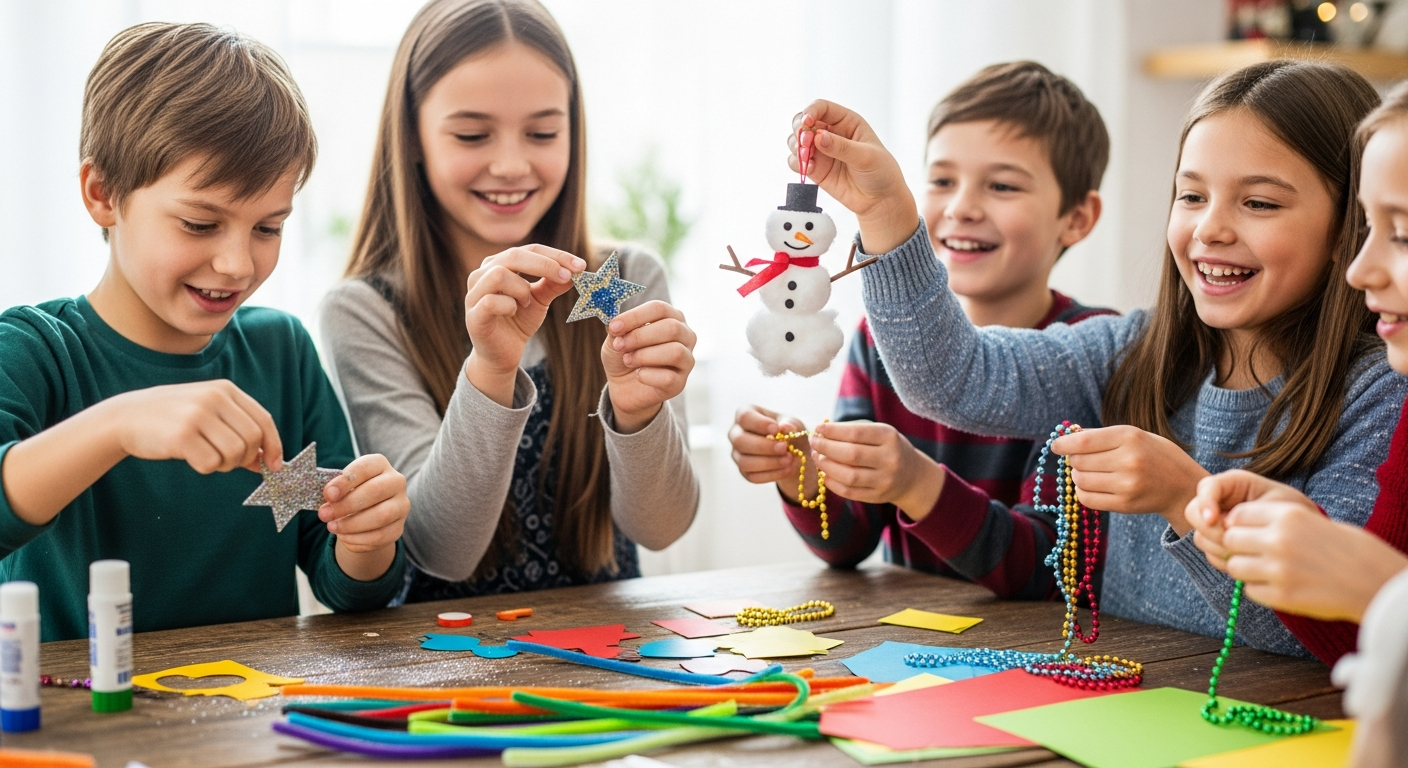
Table of Contents
- Introduction
- The Magic of Making: Why Christmas Crafts are More Than Just Fun
- Crafting Connections: Speech & Language Opportunities in Every Ornament
- Our Favorite Kids Christmas Ornament Crafts for Speech Development
- Maximizing Speech & Language During Craft Time
- When to Seek Additional Support for Speech Development
- How Speech Blubs Supports Your Child's Communication Journey
- Our Flexible Plans for Every Family
- Conclusion
- Frequently Asked Questions (FAQs)
Introduction
The holiday season sparkles with magic, especially through a child's eyes. What's more fun than little hands making special ornaments to hang on the tree every year? These aren't just decorations; they're little memories, made with love and hard work. Besides the glitter and glue, doing Christmas crafts is a great way for kids to build important skills, like using their hands, solving problems, and most importantly, talking! Craft time becomes special time to connect, laugh together, and explore new words.
This blog post will share some fun Christmas ornament crafts for kids of all ages and abilities. We'll show how each craft helps kids grow, especially when it comes to talking and understanding. From squishing salt dough to hanging a pinecone they made themselves, we'll guide you through activities that spark creativity and boost communication. You'll see how simple holiday projects can be amazing learning experiences. Remember, these crafts aren't just about making pretty decorations, they're about building confidence, learning new words, and having fun with communication during the holidays!

The Magic of Making: Why Christmas Crafts are More Than Just Fun
Doing holiday crafts with your kids is more than just keeping them busy or decorating the house. It's a wonderful way to help them grow in many different ways. When kids sit down with art supplies, they start a journey of learning and building skills.
Sensory Exploration and Engagement
Crafting is a party for the senses! Kids get to touch different things – sticky glue, smooth paper, prickly pinecones, soft cotton balls. They see bright colors, smell the sweet scent of cinnamon from dried oranges, and hear the sound of jingle bells. All this sensory input is great for their brains. It helps them learn about the world and make strong connections in their minds. It's also calming and helps them focus, which is a nice change from watching TV.
Boosting Fine Motor Skills
The small movements involved in crafting are perfect for building fine motor skills. Things like cutting with kid-safe scissors, stringing beads, peeling stickers, squeezing glue, painting details, or even crumbling paper help strengthen the little muscles in their hands and fingers. These skills are important for things like writing, buttoning clothes, and feeding themselves. They help kids become more independent and do well in school.
Cultivating Cognitive Growth and Creativity
Every craft project is like a little puzzle. Kids learn to follow steps, figure out problems when things go wrong, and choose colors, materials, and designs. This helps their brains grow, improves their thinking skills, and helps them plan. Crafting also lets kids be creative. There's no "right" way to decorate an ornament. They can use their own ideas and feel good about their artwork.
Fostering Emotional and Social Development
Crafting can make kids feel really good. They feel proud of what they make. Sharing their ornament with family or giving it as a gift makes them feel good about themselves and teaches them to be generous. When kids craft together, they learn to share, be patient, and work together. It's a great way to make memories and build family traditions that last.

Laying the Groundwork for Language
One of the best things about crafting, that people often forget, is how much it helps kids learn to talk. The whole process is full of chances to talk, learn new words, and practice communicating. At Speech Blubs, our goal is to help kids "speak their minds and hearts." We think hands-on activities like crafting are a great way to do that. Our founders grew up with speech problems and created a tool they wish they had. We believe in using science and play to help every child communicate. Craft time becomes a time for great conversations.
Crafting Connections: Speech & Language Opportunities in Every Ornament
Holiday crafting is a fun and easy way to practice talking and understanding. As parents, we can use some simple tricks to help kids build their communication skills. This turns a fun activity into a powerful learning experience.
Expanding Vocabulary with Festive Words
Every new material, color, shape, and action word you use while crafting is a chance to teach your child new words. Think of all the holiday words: "sparkle," "jingle," "garland," "pinecone," "ribbon," "glitter," "festive," "ornament," "decorate." As you craft, point to things and name them, describing them. "Look at thisshinyredstar!" or "Feel theroughpinecone." Showing them these words over and over helps them remember them. For a child who is learning to talk and loves to touch different things, using words like "sticky glue" or "bumpy glitter" while making a paper ornament can be really exciting.
Mastering Multi-Step Instructions
Following directions is important for understanding language and learning in general. Craft projects have steps: "First, we cut the paper. Then, we glue it here. Next, we add glitter." Help your child through these steps and encourage them to say the instructions or guess what comes next. This helps them understand and remember steps, especially if they are learning to understand longer sentences.
Developing Descriptive Language
Crafting gives kids lots of chances to describe what they see, feel, and make. Encourage them to talk about their choices and what they see: "Tell me about your shiny, red, sparkly star!" or "What color paint do you want to use next?" Ask questions that need more than a "yes" or "no" answer. Ask them to compare their ornament to yours, or to describe how it feels. This helps them use richer, more descriptive language.
Practicing Sequencing and Storytelling
After they finish an ornament, ask your child to tell you the steps they took to make it. "What did you do first? What happened next? And then?" This helps them practice putting events in order, which is important for telling stories and later, reading. They can tell a story about their ornament, give it a name, or imagine where it will hang. This kind of play is a great way to help them express themselves.
Targeting Specific Articulation Sounds
If your child is working on certain sounds, crafting can be a fun way to practice. If your child is working on the "s" sound, point out "stars" and "sparkles." For "r" sounds, say "red ribbon" or "round ornament." Say the words clearly and encourage them to repeat them, but keep it light and fun. If you need more help with this, our app is a fun way to help the 1 in 4 kids who need speech support. It mixes science and play into "smart screen time." Many of our activities focus on specific sounds and words, making them a great addition to craft time.Discover more about our research-backed methodology here.
Enhancing Social Communication
Crafting together naturally involves talking to each other. Kids learn to ask for things politely, say what they want ("I want the blue glitter!"), share tools, and talk about each other's work. These are important social skills that help them play with others and build friendships.
If your 3-year-old has trouble asking for things or using short phrases, making a beaded ornament is a great chance to practice. Instead of just pointing, you can hold up two colors of beads and ask, "Red or green?" and help them say "Red bead!" or "Green, please!" This makes learning to talk easy and meaningful.
Our Favorite Kids Christmas Ornament Crafts for Speech Development
Here are some fun Christmas ornament crafts that kids will love to make. Each one is a great way to help them learn to talk.
Easy & Classic: Salt Dough Ornaments
Salt dough ornaments are a classic tradition. They're fun to touch and can be used in many ways.
- Materials:1 cup flour, 1/2 cup salt, 1/2 cup water. Cookie cutters, rolling pin, straw (for making a hole), acrylic paints, paintbrushes, glitter, string or ribbon.
- How to Make:Mix flour, salt, and water until it forms a dough. Knead it on a floured surface for a few minutes. Roll the dough flat (about 1/4 inch thick). Use cookie cutters to make shapes. Use a straw to poke a hole at the top of each ornament. Bake at 250°F (120°C) for 2-3 hours or until hard. After they cool, decorate them with paint and glitter.
- Speech Focus:
- Vocabulary:"dough," "flour," "salt," "water," "mix," "knead," "roll," "flat," "cookie cutter," "star," "tree," "bell," "bake," "paint," "dry," "glitter," "shiny," "string," "hang."
- Action Words:"pour," "stir," "press," "cut," "lift," "poke," "spread," "sprinkle."
- Sensory Descriptions:"sticky," "soft," "smooth," "cold," "warm," "rough" (after baking), "smelly" (of paint).
- Following Instructions:"First, we mix the flour and salt. Then, we add the water." "Roll the dough, then cut the shapes."
- Descriptive Phrases:"Big green tree," "little red star," "sparkly blue bell."
- Practical Scenario:If your child is working on using short phrases, you can hold up the flour and ask, "What is this?" to encourage them to say "white flour." When rolling, say "Roll, roll, roll the dough!" and help them copy the action and words. This helps them remember the sounds and words, like how the "Animal Kingdom" section of Speech Blubs helps kids practice animal sounds and names.
Personalized Treasures: Photo & Handprint/Footprint Ornaments
These crafts become special memories, capturing a moment in time and starting fun conversations.
- Materials (Photo Ornaments):Clear plastic or glass ornaments (unbreakable for kids!), small photos (printed on thin paper), glitter, fake snow, ribbon.
- How to Make (Photo Ornaments):Roll up a small photo and carefully put it into the clear ornament. Add glitter or fake snow if you want. Put the top back on and tie a ribbon.
- Materials (Handprint/Footprint Ornaments):Air-dry clay or salt dough, paint, paintbrushes, clear glaze or sealant.
- How to Make (Handprint/Footprint Ornaments):Roll out clay or salt dough. Press your child's hand or foot into it firmly. Cut around the print if you want. Poke a hole for hanging. Let it air-dry completely (or bake salt dough). Paint, decorate, and seal it.
- Speech Focus:
- Naming & Identifying:Naming family members in photos. "Who is this?" "That's Grandma!"
- Describing Emotions:"Look, Daddy issmiling!" "You lookhappy!"
- Recalling Memories:"Remember when we took this picture at the beach?"
- Body Parts:"hand," "finger," "thumb," "foot," "toes."
- Comparisons:"My hand isbiggerthan your hand." "My foot issmaller."
- Action Verbs:"Press," "squeeze," "print," "paint."
- Practical Scenario:If your child is focusing on "my" and "mine," making a handprint ornament is a great way to show that. "Whose hand is this?" you can ask and help them say, "My hand!" These crafts help start conversations about people, feelings, and memories, connecting to the social communication skills taught inSpeech Blubs’ video modeling method, where kids learn by watching and copying other kids. It's a great way to connect with family and find screen-free alternatives to watching TV.
Nature's Beauty: Pinecone & Dried Orange Ornaments
Bring the outdoors inside with these natural and sweet-smelling ornaments.
- Materials:Pinecones (from outside or the store), dried orange slices, cinnamon sticks, small twigs, ribbon, twine, glue, glitter, small pom-poms or beads.
- How to Make (Pinecone):Tie a ribbon around the top of a pinecone for hanging. Kids can glue small pom-poms, beads, or glitter onto the pinecone.
- How to Make (Dried Orange):Slice oranges thinly and bake at a low temperature until dry (or buy them already dried). Thread ribbon or twine through a slice for hanging, and add a cinnamon stick or evergreen sprig if you want.
- Speech Focus:
- Nature Vocabulary:"pinecone," "tree," "orange," "cinnamon," "twig," "branch," "leaf."
- Sensory Words:"spiky," "rough," "smooth," "smelly," "sweet," "citrus," "woody," "fragrant."
- Concepts:"big/small," "light/heavy," "natural."
- Action Words:"gather," "find," "glue," "tie," "decorate."
- Practical Scenario:If your child loves to play outside but doesn't know many words, gathering things from nature for these crafts gives them real things to name and describe. You can talk about "finding abigpinecone" and "gluingsmallgreen pom-poms." This helps them learn language by touching and feeling things, like how Speech Blubs uses real-world situations to help kids learn. If you want to know how else you can help your child learn to communicate,take our quick 3-minute preliminary screener. It has just 9 simple questions and gives you an assessment and a plan for what to do next.
Sparkly & Simple: Bead & Pipe Cleaner Ornaments
Great for practicing using hands and recognizing patterns.
- Materials:Pipe cleaners (different colors), pony beads (different colors and shapes), jingle bells, small elastic bands or string.
- How to Make:Kids thread pony beads onto a pipe cleaner, making patterns or just filling it up. Then they can bend the pipe cleaner into shapes like a candy cane, star, or circle, and twist the ends together to hold it. Adding a jingle bell at the bottom makes it even more fun.
- Speech Focus:
- Colors:Naming beads of different colors ("red," "green," "blue," "yellow").
- Counting:"How many beads do you have?" "One, two, three beads."
- Shapes:"round" bead, "long" pipe cleaner, "bend" into a star.
- Action Words:"thread," "slide," "bend," "twist," "add."
- Patterns:"Red, green, red, green... what comes next?"
- Practical Scenario:This activity naturally encourages talking back and forth. You can say, "I'm threading aredbead. Now I thread agreenbead. Your turn! What color bead will you thread?" This helps kids practice words and understand how to take turns talking. It shows how "smart screen time" withSpeech Blubsis meant to help them talk in real life, not just be a replacement for it.
Paper Wonderland: 3D Paper Ornaments
Simple paper can become beautiful, interesting ornaments.
- Materials:Construction paper (different colors), kid-safe scissors, glue stick, glitter, markers, hole punch, string.
- How to Make (Paper Chain Star):Cut strips of paper. Make one into a circle and glue the ends. Put another strip through it and glue. Keep going until you have a chain. You can make the chain into a star by gluing the points together.
- How to Make (Layered Paper Shapes):Cut out many of the same shape (like circles or stars) from different colored paper. Fold each shape in half. Glue the halves together, one after another, to make it 3D.
- Speech Focus:
- Shapes:"circle," "star," "square," "triangle," "strip."
- Spatial Concepts:"on top," "under," "next to," "inside," "outside," "together."
- Action Words:"cut," "fold," "glue," "decorate," "overlap," "punch."
- Directional Words:"up," "down," "across."
- Practical Scenario:While making a 3D paper ornament, you can give clear instructions with spatial concepts: "Glue thebluecircleon top oftheredcircle." or "Cutalongthe line." This helps kids understand and use these important words. Our app has many categories that focus on actions and concepts to help build these skills, making it a great addition to helping them learn language.Download Speech Blubs on Google Playto see our many activities.
Maximizing Speech & Language During Craft Time
To really help your child learn to talk during craft time, remember these tips:
- Narrate Everything:Talk about what you're doing, what your child is doing, and what's happening. "I'm cutting the paper now." "You're gluing the star." "The glitter is falling down!" This gives them a lot of language to listen to.
- Ask Open-Ended Questions:Instead of questions that can be answered with "yes" or "no," ask "What do you want to do next?" "Tell me about your ornament." "How does it feel?" This encourages them to give longer answers and think more.
- Expand on Their Words:If your child says "red," you can say, "Yes, that's abeautiful, shiny redcircle!" This shows them how to use longer sentences and more words without correcting them.
- Provide Choices:"Do you want blue or green paint?" "Should we use big or small beads?" Giving them choices encourages them to communicate and makes them feel like they have control.
- Encourage Imitation:If your child is working on certain sounds or words, say them clearly and then encourage them to try. "Can you say 'sparkle'?" or "Let's say 'jingle bell' together."
- Be Patient and Positive:Focus on the process and the effort, not just the perfect result. Celebrate every try at talking, no matter how small. A happy and encouraging environment is important for building confidence.
These tips fit perfectly with how we use "smart screen time" at Speech Blubs – using our app as a way to start real-life talking and practice language. Ourvideo modeling methodencourages copying and makes it fun for kids, helping them speak their minds and hearts.
When to Seek Additional Support for Speech Development
While these crafts are great for helping your child grow, it's also important to know what's normal for speech and language at different ages. Every child grows at their own pace, but there are general guidelines. If you see ongoing problems, like not knowing many words for their age, trouble understanding simple instructions, getting frustrated when trying to talk, or if others have trouble understanding your child, it might be time to get extra help.
If you're wondering if your child could use some extra help with their communication, our quick3-minute preliminary screenercan give you some quick answers. It has just 9 simple questions and gives you an assessment and a plan for what to do next. It's a good way to start if you're looking for answers and guidance.
How Speech Blubs Supports Your Child's Communication Journey
At Speech Blubs, our goal is very personal and important to us: to help kids "speak their minds and hearts." Our company was started by people who grew up with speech problems and created the tool they wish they had. We want to give a quick, helpful, and fun solution to the 1 in 4 kids who need speech support, and make a real difference in families' lives.
We do this by mixing science and play, creating unique "smart screen time." We know that parents want to use screen time in a good way, and Speech Blubs is a fun, interactive way to learn, instead of just watching cartoons. Kids get to be part of it, learn, and grow. Our app also helps families connect, encouraging parents and kids to do activities together, talk to each other, and learn together.
Our special method is called "video modeling," where kids learn by watching and copying other kids. This easy, natural method uses kids' natural ability to learn from others, especially kids their own age. This scientific method has been shown to be very helpful in building speech and language skills.
Using Speech Blubs helps with more than just saying words correctly. We help kids love to communicate, feel confident in their abilities, and feel less frustrated when they have trouble talking. Kids build important skills, from saying words clearly and learning new words to understanding ideas and talking to others. Most importantly, we help create fun family learning moments, where progress is celebrated and talking becomes a fun, rewarding adventure. We always say that the app is a good addition to a child's overall plan and, if they have one, their therapy, knowing that parents need to play and help them to make it work.
We're proud of the difference we've made, and many parents have shared their amazing stories with us.Read what other parents are saying about their child's success with Speech Blubs here.
Our Flexible Plans for Every Family
We believe that every child should have the chance to talk confidently, and we want to make Speech Blubs available to all families. We have two plans that fit your needs:
- Monthly Plan:For just $14.99 per month, you can use our main features and many fun activities that help your child's speech and language skills.
- Yearly Plan:Our most popular plan, the Yearly plan, is a great deal at just $59.99 per year. That's only $4.99 per month, which means yousave 66%compared to the monthly plan!
The Yearly plan is not only cheaper, but it also has some extra features that help your child learn even more:
- A 7-day free trial:Try Speech Blubs for free before you buy.
- The extra Reading Blubs app:Help your child learn to read and talk with this bonus app.
- Early access to new updates:Be the first to see our new features and content.
- 24-hour support response time:Get help quickly from our team whenever you need it.
The Monthly plan does not have these extra features. To get the best deal, the most features, and a chance to try it free for a week, we recommend the Yearly plan.
Conclusion
This holiday season, let's enjoy making Christmas ornaments with our kids. These fun projects are more than just decorations. They help kids learn about touch and feel, build their hand skills, grow their brains, and most importantly, learn to talk. From naming colors to following steps and telling stories, every sparkly handprint and pipe cleaner star is a chance to practice talking and connect as a family.
By adding language-building tricks to your craft time, you can turn these fun activities into great learning experiences that help your child love to communicate and build confidence. And by using tools like Speech Blubs, which gives you "smart screen time" based on science and fun videos of other kids, you can help your child learn language in a complete way. These special moments, both crafting and connecting with Speech Blubs, help build skills that will let your child speak their minds and hearts for years to come.
Ready to help your child communicate better and make this holiday season extra special?Create your Speech Blubs account todayand start your 7-day free trial! Remember to choose the Yearly plan to get extra features like the Reading Blubs app and faster support, and save 66%. Give the gift of confident communication this Christmas!
Frequently Asked Questions (FAQs)
What age are these Christmas ornament crafts suitable for?
These crafts can be changed to fit kids of different ages, from toddlers to school-aged children. For toddlers and preschoolers, focus on easy tasks like sticking things, painting with fingers, or stringing big beads. Older kids can do harder things like cutting, painting details, and following steps on their own. Always watch young kids, especially with small parts or scissors, and make the crafts easy enough for your child's age and attention span.
How can I make these crafts more engaging for a child who struggles with attention?
If your child has a short attention span, keep craft time short and focused. Break the crafts into very small steps. Give them choices (like "Do you want red or green paint?"), use things they can touch and feel, and make it hands-on to keep them involved. Using their favorite characters or colors can also help. Remember to praise their effort and progress, not just the finished craft.
My child is a late talker. How exactly do these crafts help with speech?
Crafts make it easy and fun to use language. If your child is a late talker, you can use the things you're crafting with to say single words ("glue," "star," "red"), then two-word phrases ("more glue," "red star"). Ask simple questions like "What do you want?" while holding up different things. The way they can touch and feel things helps them learn new words and ideas. It's a fun, easy way to encourage them to copy you and talk without pressure, making language real.
Are the Speech Blubs activities similar to these crafts in terms of developmental benefits?
Yes, definitely! Even though Speech Blubs is a digital tool, our activities are designed to help kids grow in the same ways as crafts. Our "video modeling" method encourages them to copy us, just like when they copy a step in a craft. We use fun pictures and things they can touch to help them learn new words, ideas, and say words correctly in a fun way. Just like crafts help them use their hands, our app helps them learn to talk. We believe in using "smart screen time" that goes with real-life experiences, creating a great learning experience for your child's communication.
Sobre el autor