
Adoráveis Presentes de Natal Feitos Pelos Filhos Para Mamãe e Papai
Índice A Magia do Feito à Mão: Por que Artesanato é Mais do que Apenas Presentes Ideias Inspiradoras de Artesanato de Natal para Crianças Fazerem para os Pais Maximizando os Benefícios da Comunicação Investindo no Seu...
 Por Speech Blubs Team•22 dic 2025•18 min.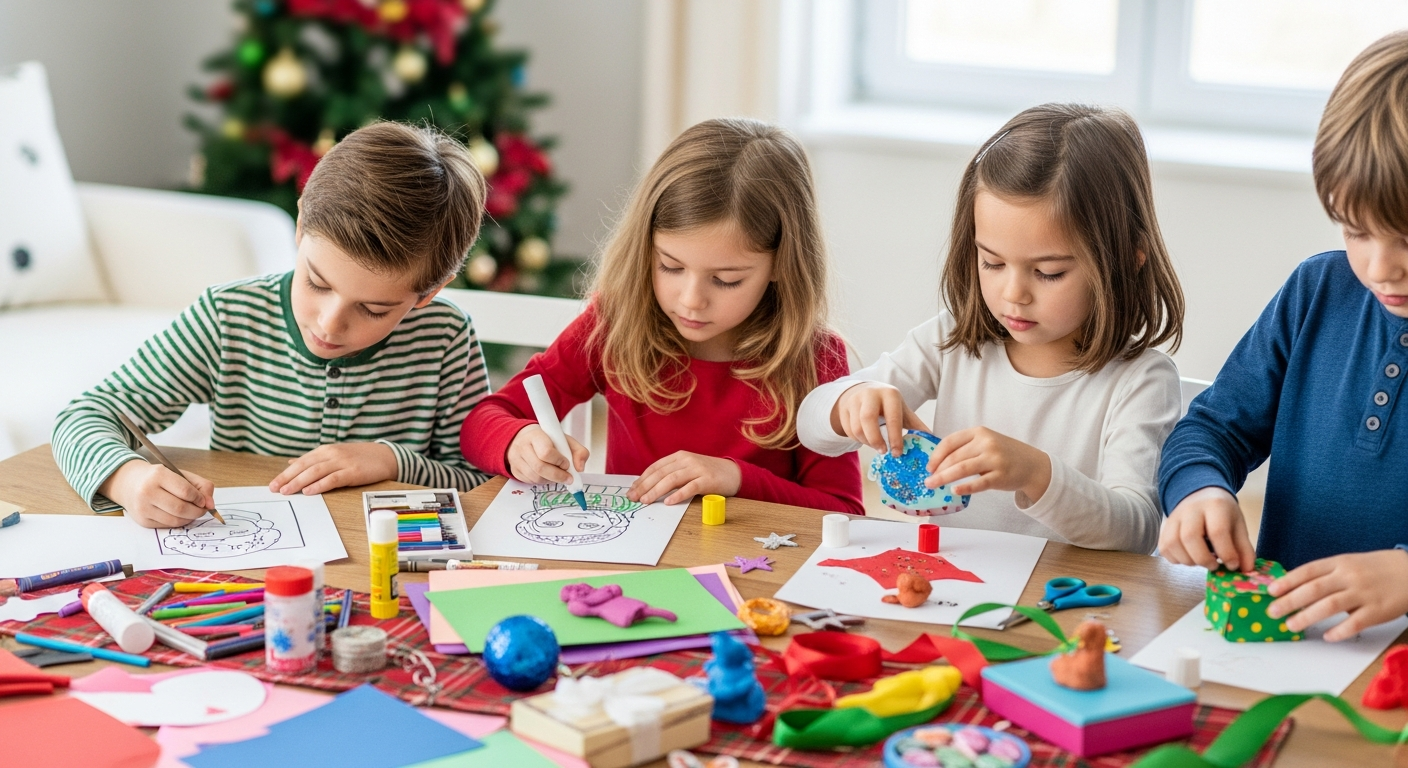
Table of Contents
- Handmade Magic: Why Crafts Are More Than Just Gifts
- Christmas Craft Ideas to Inspire Your Kids to Make Gifts for You
- Getting the Most Communication Benefits
- Investing in Your Child's Future: The Value of Speech Blubs
- Conclusion
- FAQ
There's a special magic in the air during the holidays, isn't there? The twinkling lights, the get-togethers, and the excitement. But the most precious moments are often the quiet, personal ones, especially when they involve handmade gifts from little hands. Imagine your child's proud smile as they give you something they made just for you – a piece of their love, effort, and growing personality. These aren't just gifts; they're memories in the making, little treasures that show how much they care, how creative they are, and how well their communication skills are developing.
At Speech Blubs, we believe in helping kids speak their minds and hearts. We know how powerful communication is, because our company was started by people who grew up with speech challenges and wanted to create the tool they wish they'd had. We know every activity is a chance to learn. So, this isn't just about sharing fun Christmas craft ideas for your kids to make for you; it's about showing how these projects can help your child's language development, social skills, and family bonding. We'll share craft ideas for different ages, talk about how they help communication, and show you how to make the most of these moments to help your child grow, while also making keepsakes you'll cherish for years.

Handmade Magic: Why Crafts Are More Than Just Gifts
In a world full of things from stores, a handmade gift is special. It shows the person's thought, effort, and love. For kids, making a craft for their parents is more than just making something. It's a way to discover, a lesson in trying hard, and a great way to show they care.
Building Connection and Expression
When your child makes something for you, they're using their mind and heart. They're thinking about what you like, what would make you smile, and how to show their feelings. This naturally leads to talking. "Mommy, do you like blue or red?" "Daddy, what's your favorite animal?" These simple questions, from making crafts, are great chances to practice words, put thoughts together, and have conversations.
If your child is a "late talker" or has trouble expressing themselves, crafts can be really helpful. It gives them something to talk about, so they don't have to start a conversation from nothing. They can point, use gestures, and say new words to show what they're doing or ask for help, which builds their confidence.
Developing Important Skills Through Play
Crafts are fun and help build skills. Think about using scissors, gluing, or coloring inside the lines. These things help with fine motor skills, which are important for writing and even for speaking clearly. As kids use different materials, they also improve their hand-eye coordination, problem-solving, and understanding of space.
Also, following craft instructions helps kids learn to put things in order and pay attention. "First, we paint the ornament red. Then, we add glitter." This is like how our Speech Blubs app teaches communication skills, by having kids watch and copy other kids in videos. They see something, understand it, and then do it themselves, which helps them learn.
How Speech Blubs Helps: Smart Screen Time and Communication
Crafts are great for physical and social skills, but we also know "smart screen time" can help a lot. Our Speech Blubs app is a better choice than just watching cartoons. It helps families connect and makes screen time a fun learning experience. Just like your child follows steps to make a craft, they can follow along with real kids in our app, copying sounds, words, and phrases, which helps them communicate. It's about using science and play to make screen time a great way to help the 1 in 4 kids who need speech support. Ready to see how we can help your child speak their mind and heart? Start your free 7-day trial and try our app by signing up on our website today!Create your account and start your 7-day free trial today!

Christmas Craft Ideas to Inspire Your Kids to Make Gifts for You
Here are some fun Christmas craft ideas that can help your children communicate better. Remember, it's not about being perfect, but about having fun, learning, and connecting.
1. Personalized Photo Ornaments or Frames
Nothing is better than a photo that brings back warm memories. Kids can make pretty photo ornaments or frames with a special picture.
Materials:Clear plastic or glass ornaments (use shatterproof ones for younger kids), small photos, glitter, small beads, paint pens, ribbon, clear glue, or plain wooden frames, paints, markers, things from nature (twigs, small pinecones).
Steps:
- For Ornaments:Help your child pick a favorite family photo. Print it small enough to fit inside the ornament or cut it into a shape. They can put glitter or beads inside before or after the photo. Use paint pens to write a message or the year on the outside. Add a ribbon to hang it.
- For Frames:Give your child a plain wooden frame. Let them paint it or use markers to draw designs. They can glue on buttons, sequins, or things they found outside. When it's dry, help them put in a favorite family photo.
Language Opportunities:
- Naming & Identifying:"Who's in this picture?" "What are we doing here?" "This is Mommy, this is Daddy, this is you!"
- Descriptive Language:"The blue glitter is so sparkly!" "This photo makes me feel happy." "The frame feels bumpy because of the pinecone."
- Recalling Memories:"Do you remember when we took this picture at the park?" "What was your favorite part of that day?"
- Sequencing:"First, we choose the photo. Next, we put it in the ornament."
Relatable Scenario:If your child is learning to show emotions, making a photo craft can really help. If they pick a photo where they're laughing, you can ask, "Why did you choose this picture? How does it make you feel?" This helps them connect their feelings to a memory, which helps them learn emotion words. Our app also helps kids understand and show emotions with facial expressions and questions.
2. Salt Dough Handprint Ornaments
Salt dough handprint ornaments are a classic way to remember how small your child's hand was, making a special keepsake.
Materials:1 cup salt, 2 cups flour, 1 cup warm water, mixing bowl, baking sheet, parchment paper, straw (to make a hole), paints, clear glaze or sealant, ribbon.
Steps:
- Mix Dough:In a large bowl, mix the salt and flour. Slowly add warm water, mixing until it forms a dough. Knead for 5-10 minutes until it's smooth.
- Make Prints:Roll out the dough to about 1/4 inch thick. Help your child press their hand into the dough. Use a cookie cutter to cut around the handprint or just cut the edges to make an ornament shape. Use a straw to make a hole at the top to hang it.
- Bake/Dry:Bake at 200°F (93°C) for 2-3 hours, or until it's hard. You can also let it air dry for a few days, turning it over sometimes.
- Decorate:After it's cooled and dry, your child can paint the ornament. When the paint is dry, put on a clear glaze or sealant to protect it. Thread a ribbon through the hole.
Language Opportunities:
- Action Verbs:"We are mixing the flour. Now, we're kneading the dough. Press your hand down!"
- Sensory Vocabulary:"The dough is soft/smooth/sticky." "It feels warm." "The paint is wet."
- Following Directions:"Can you get the salt? Now, put your hand here."
- Prediction:"What do you think will happen when we bake it?"
Relatable Scenario:If your child is practicing multi-step instructions or prepositions, the salt dough craft is perfect. "Put your handonthe dough," "Pressdown," "Take your handoff." The tactile nature makes the instructions easier to understand, which helps with the sequencing and receptive language skills we focus on at Speech Blubs. You can find more interactive learning experiences that help these skills by downloading Speech Blubs on theApple App StoreorGoogle Play Store.
3. "Reasons Why I Love You" Jar or Coupon Book
This craft is a great way to show love and encourage positive feelings.
Materials:A clean glass jar or small notebook, colored paper, markers, stickers, glitter glue, ribbon.
Steps:
- For the Jar:Decorate the jar with paint, stickers, or ribbon. On small strips of colored paper, help your child write or draw reasons why they love their parent (e.g., "I love when you read to me," "I love your hugs," "You make me laugh"). Fold the strips and put them in the jar.
- For the Coupon Book:Decorate the cover of a small notebook. On each page, help your child create a "coupon" for their parent (e.g., "Coupon for One Big Hug," "Coupon for Helping with Chores," "Coupon for a Back Rub"). They can draw pictures for each coupon.
Language Opportunities:
- Expressing Feelings:"Why do you love Mommy?" "How does that make you feel?" "What makes you happy?"
- Sentence Formulation:Practicing full sentences like, "I love when you play with me because it's fun."
- Vocabulary Building:Learning words for emotions, actions, and good things.
- Turn-Taking in Conversation:Asking questions and listening to answers, then talking back.
Relatable Scenario:If your child has trouble saying complex thoughts or feelings, this activity helps them practice. Instead of just asking "What do you want to say?", you can ask things like "What's something Daddy does that you really like?" or "Tell me about a time Mommy made you smile." This helps children feel confident in expressing themselves, which is what Speech Blubs is all about – giving every child a voice. Learn more about how we help children on ourResearch page.
4. Painted Rock Paperweights or Magnets
Nature gives us the canvas for this easy and cute craft. Rocks can become pretty, personalized gifts.
Materials:Smooth, flat rocks (cleaned), acrylic paints, paintbrushes, clear sealant spray, strong glue, magnets (optional).
Steps:
- Prepare Rocks:Go for a walk to find smooth, flat rocks. Wash and dry them.
- Paint:Let your child paint designs, patterns, or pictures on the rocks. They can make art, paint a favorite animal, or write a parent's name.
- Seal:When the paint is dry, put on a clear sealant spray to protect the artwork.
- Add Magnet (Optional):For a magnet, glue a strong magnet to the back of the rock.
Language Opportunities:
- Colors & Shapes:"What color are you using?" "Can you draw a circle?"
- Descriptive Words:"This rock is bumpy/smooth." "My paint is shiny." "It's a big rock."
- Imaginative Play:"What story does your rock tell?" "Is this rock a magical creature?"
- Following Instructions:"Paint the whole rock blue first." "Now, add some dots."
Relatable Scenario:A child who is learning descriptive words can do great with this craft. As they pick colors and shapes, ask them to use more words: "Tell me about the design you're making." "Why did you choose yellow and green?" This helps them use more adjectives, which is like the different words in the Speech Blubs app.
5. Homemade Playdough or Sensory Kits with a Festive Twist
Homemade playdough is not a permanent gift, but it encourages play, which is a great gift for parents.
Materials:For playdough: Flour, salt, cream of tartar, water, cooking oil, food coloring, essential oils (peppermint, cinnamon for Christmas scent), glitter. For sensory kit: Small container, playdough, small cookie cutters, googly eyes, pipe cleaners, sequins, plastic beads.
Steps:
- Make Playdough:(Adults should help with cooking) Mix flour, salt, and cream of tartar in a pot. Add water and oil. Stir over medium heat until it forms a dough ball. Take it off the heat, let it cool a little, then add food coloring, glitter, and essential oils.
- Assemble Kit:When the playdough is cool, put it in a small container. Add cookie cutters (stars, trees), pipe cleaners, sequins, and other small, safe craft items to decorate the playdough.
- Decorate Box/Bag:Help your child decorate a gift box or bag for the playdough kit.
Language Opportunities:
- Sensory Vocabulary:"The playdough is squishy/soft/smells like peppermint!" "These beads are smooth."
- Action Verbs:"Roll the dough. Squish it. Cut out a star."
- Problem-Solving & Pretend Play:"What can we build with this?" "Let's make a Christmas tree and decorate it."
- Following Multi-Step Directions:The playdough recipe helps with following instructions.
Relatable Scenario:If your child is starting to say two or three words together, sensory play is great. As they use the playdough, you can say things like "Green dough," "Squishy, squishy," "Roll ball." Then ask them to copy you: "Can you say 'green'?" The feeling of the playdough makes learning fun. This is like how Speech Blubs helps kids learn by copying, which experts say is very effective. Our app is highly rated for how good it is! You can read what other parents say about their children's progress on ourTestimonials page.
6. "All About My Parents" Interview Book
This is a fun way for kids to learn about their parents (and for parents to see what their kidsthinkthey know!), while practicing asking and answering questions.
Materials:Small notebook or paper stapled together, markers, crayons.
Steps:
- Prepare Book:Help your child decorate the cover of their "All About My Parents" book.
- Interview:Sit with your child and ask them questions about you and your partner. Examples: "What's my favorite color?" "What's my favorite food?" "What's my job?" "What makes me laugh?" "What do I love doing with you?" "How old am I?" (The answers are often funny!).
- Record Answers:Write down their answers (exactly how they say them!) on each page, and ask them to draw a picture of their answer.
- Present:On Christmas morning, they can "read" their book to you.
Language Opportunities:
- Question-Answer Practice:This activity is all about asking and answering questions, which is important for conversations.
- Narrative Development:Children tell little stories when they explain their answers.
- Vocabulary Expansion:Learning words for jobs, hobbies, and things they like.
- Humor & Social Pragmatics:Understanding funny answers and laughing together.
Relatable Scenario:If your child is working on saying sentences or understanding question words (who, what, where, why), this is a fun way to practice. If they can't answer "What's my favorite food?", you can give them choices or easier questions. This helps them say what they think and understand conversations, which is what Speech Blubs helps with through fun activities.
Getting the Most Communication Benefits
Here are some tips to make these crafts help with speech:
- Be Present and Engaged:Put your phone away and join in the activity with your child. Your attention is the best gift.
- Narrate Your Actions:Talk about what you're doing, even if your child isn't talking much yet. "I'm cutting the paper. Snip, snip!" "You're gluing the button. Squish!"
- Ask Open-Ended Questions:Instead of "Do you like this?" ask "What do you like about this?" or "Tell me about your design."
- Model Language:If your child points to the paint, say "You want the red paint? Here's the red paint." Give them the words they might need.
- Praise Effort, Not Perfection:Focus on their work, creativity, and fun. "I love how hard you worked on this!" is better than "That's a perfect star."
- Use Visuals:Point to colors, shapes, and actions as you talk about them. This helps them understand, especially if they learn by seeing.
- Connect to Speech Blubs:The same way you learn by copying and doing in these crafts, you can learn in our "smart screen time" activities. Our videos show kids learning by watching and copying each other, which is a fun and scientific way to help with communication skills. You can learn more about our app on ourhomepage.
When to Seek Extra Support: Recognizing Communication Milestones
Crafts are great for learning, but it's also important to know what communication skills kids should have at certain ages. If you're worried about your child's speech, remember that getting help early can make a big difference.
At Speech Blubs, we want to give kids a fun and effective way to get speech support. We have a free, quick screening tool for parents who aren't sure if their child needs extra help. It has 9 easy questions and gives you an instant assessment and plan. It's a good way to find out more and feel better. Take ourquick 3-minute preliminary screenerto get a simple assessment and a free 7-day trial.
Investing in Your Child's Future: The Value of Speech Blubs
As a parent, you want the best for your child, and that means giving them every chance to grow. Speech Blubs helps your child's overall development and can be used with professional therapy. It makes them love communication, builds confidence, helps them feel less frustrated, and makes learning fun for the whole family. We're happy to offer a fast and effective way to help, using science and play.
We want you to know how our app works so you can get the most out of it. Here's a look at our subscription plans:
- Monthly Plan:For $14.99 per month, you can use the Speech Blubs app.
- Yearly Plan:We recommend this plan because it saves you money at just $59.99 per year. That's only $4.99 per month – a66% savingscompared to the monthly plan!
Why choose the Yearly Plan?It's not just about saving money; it's about getting the most out of Speech Blubs:
- 7-Day Free Trial:The Yearly plan has a 7-day free trial, so you and your child can try it out before you pay. (The Monthly plan doesn't have a free trial).
- Extra Reading Blubs App:You'll also get our Reading Blubs app, which helps with reading skills.
- Early Access & Priority Support:You'll get new updates early and faster support, so you always have the best experience.
We hope you choose the Yearly plan to get the free trial and all the features that will help your child communicate. It's a way to help them speak their mind and heart, and it sets them up for learning and connecting with others.
Conclusion
This Christmas, as you're with your family, remember the joy and learning that comes from simple acts of love. Doing Christmas crafts with your kids isn't just about making gifts for parents; it's about helping them communicate, building relationships, and learning important skills that will help them in life. Every brushstroke, every drop of glue, and every word you say during these activities helps your child feel confident, learn new words, and express themselves.
These moments, full of fun and learning, are valuable. And when you want another way to help your child's communication skills, Speech Blubs is here. Our app makes screen time "smart screen time," with fun activities that help with speech.
Ready to help your child learn and communicate this holiday season? Start your free 7-day trial and see all the ways they can express themselves. Choose the Yearly plan to get the free trial and all the features, including the Reading Blubs app and priority support. Your child is ready to be heard!Download Speech Blubs on the App StoreorGoogle Play Storetoday!
FAQ
Q1: What ages are these Christmas crafts for?A1: These crafts can be changed to fit different ages, from toddlers to older elementary school kids. Younger kids will need more help with cutting, gluing, and following instructions, and they'll focus more on feeling and copying. Older kids can design more, write, and add details. Always make the crafts easier or harder based on your child's age and make sure all the materials are safe for them.
Q2: How can I get my child to talk more while doing crafts if they don't usually talk much?A2: Make it a relaxed time. Instead of telling them to talk, you can talk about what you're doing ("I'm picking the green paint now!"). Ask questions like "What are you thinking of making next?" and give them time to answer. Show that you understand them even if they use gestures or sounds. Just keep trying and encouraging them. Crafts give them something to focus on, which can make it easier to talk.
Q3: My child has trouble with fine motor skills. Are there crafts that are easier for them?A3: Yes! Choose crafts that use bigger movements and less detail. Finger painting on big paper, making playdough and squishing it, or making handprint/footprint art are good choices. Using thick crayons or markers instead of thin paintbrushes, or tearing paper instead of cutting, can also help. The goal is to have fun and join in, not to be perfect, and these activities still help with language.
Q4: How does Speech Blubs help with communication skills for kids who like crafts?A4: Speech Blubs helps with crafts by giving kids fun "smart screen time" activities that help with communication skills. Our videos show kids learning by watching and copying each other, like how they learn to do crafts by watching you. The app helps with words, talking clearly, social skills, and saying sentences through games and activities, making learning fun. It's a great way to add to what they learn from doing crafts.
Sobre el autor