
Autism Speech Delay in a 4 Year Old: Signs and Strategies
 Por Speech Blubs Team•12 mar 2026•13 min.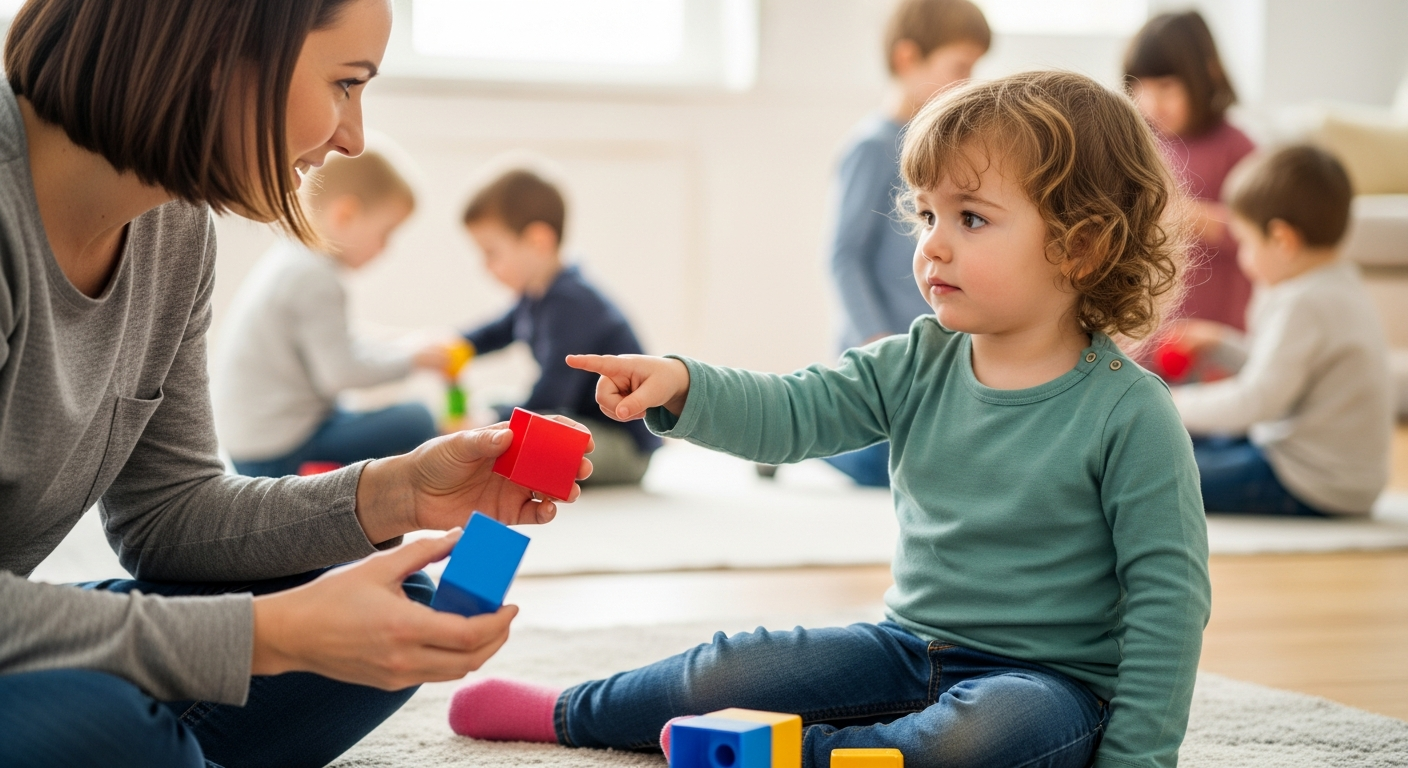
Table of Contents
- Introduction
- Understanding the Autism Speech Delay in a 4 Year Old
- Common Red Flags at Age Four
- The Power of Video Modeling: A Scientific Approach
- Practical Strategies for Home Learning
- Navigating the "Intermediate Learner" Phase
- Why Early Intervention Matters
- Transparent Pricing: Choosing the Right Plan for Your Family
- Setting Realistic Expectations
- Frequently Asked Questions
- Conclusion
Introduction
Did you know that approximately one in four children will require some form of speech and language support during their early developmental years? For many parents, the age of four marks a critical turning point. This is the age when children typically transition from simple sentences to complex storytelling, making friends at preschool, and expressing their unique personalities. However, when a child isn't reaching these milestones, the "wait and see" approach often turns into a search for answers. If you are navigating an autism speech delay in a 4 year old, you may feel overwhelmed, but you are certainly not alone.
At Speech Blubs, our mission is to empower children to "speak their minds and hearts." Our company was founded by a team who personally experienced speech challenges as children, and we created the tool we wished we had back then. We understand that behind every statistic is a real family looking for a way to connect. The purpose of this post is to provide you with a comprehensive understanding of what speech delay looks like in the context of autism at age four, how it differs from other delays, and how you can use "smart screen time" to foster joyful learning moments at home.

By the end of this article, you will have a clear roadmap for identifying red flags, understanding the science of peer-led learning, and implementing practical strategies that build your child’s confidence. We believe that with the right tools and a playful approach, every child can find their voice.
Understanding the Autism Speech Delay in a 4 Year Old
By the time a child turns four, the expectations for communication shift. At this stage, most children are expected to use sentences of four or more words, follow multi-step directions, and engage in simple back-and-forth conversations. When a child is on the autism spectrum, their speech delay often carries distinct characteristics that differentiate it from a global developmental delay or a simple "late talker" scenario.
In children with autism, the delay isn't just about the number of words they know; it's about how they use those words to interact with the world. You might notice that your child has a robust vocabulary for their favorite topics—like dinosaurs or trains—but struggles to ask for a glass of water or tell you how they feel. This is the core of social communication challenges. At Speech Blubs, we focus on bridging this gap by making communication feel like a game rather than a chore.
The Difference Between Speech Delay and Autism
It is a common question: "Is my child just a late talker, or is it autism?" While only a professional evaluation can provide a definitive answer, there are clear behavioral markers. A "late talker" without autism will often use non-verbal communication to bridge the gap. They will point, pull your hand toward what they want, use expressive facial gestures, and maintain eye contact to ensure you understand them.
In contrast, a 4-year-old with an autism-related speech delay may show a lack of "joint attention." This means they might not point to a bird in the sky to show you, or they might not look at you to see your reaction when they find a cool toy. They may also exhibit echolalia—repeating phrases from a favorite movie or song—without using those words to communicate a specific need. Recognizing these nuances is the first step in getting the right support. If you are unsure where your child stands, we recommend taking our preliminary screener. This quick 3-minute tool involves 9 simple questions and provides a personalized assessment and next-steps plan to help you move forward with clarity.

Common Red Flags at Age Four
At age four, the "gap" between a child with a delay and their neurotypical peers often becomes more visible in social settings like preschool or playdates. Here are the specific signs to look for regarding an autism speech delay in a 4 year old:
Communication Red Flags
- Lack of "I" and "You": Many 4-year-olds with autism struggle with pronouns, often referring to themselves by their own name or getting "me" and "you" reversed.
- Limited Conversational Repair: If you don't understand them, they may become frustrated or simply stop trying, rather than attempting to explain themselves in a different way.
- Atypical Tone: Their speech might sound "robotic," very high-pitched, or have a sing-song quality that doesn't match the context of the conversation.
Social and Behavioral Red Flags
- Preference for Solitary Play: While other kids are playing "house" or "superheroes," your child might prefer to line up cars or spin the wheels of a truck.
- Difficulty with Transitions: A sudden change in the daily routine can lead to intense meltdowns, as predictability provides a sense of safety for autistic children.
- Sensory Sensitivities: They might cover their ears at the sound of a vacuum cleaner or refuse to wear certain fabrics, which can further distract them from practicing speech.
The Power of Video Modeling: A Scientific Approach
One of the most effective ways to support a 4-year-old with autism is through a technique called video modeling. This is the scientific heartbeat of the Speech Blubs experience. Research shows that children, especially those on the spectrum, often learn best by watching and imitating their peers. This is linked to "mirror neurons"—cells in the brain that fire both when an individual performs an action and when they observe someone else performing that same action.
In the Speech Blubs app, we use hundreds of videos of real children (not cartoons) performing speech exercises. When your child sees another child their age making a "moo" sound or sticking out their tongue, those mirror neurons are activated. It creates a "monkey see, monkey do" effect that is far more engaging than traditional flashcards. Our scientific methodology is designed to turn screen time into an active, brain-building experience. Unlike passive cartoons that "zone kids out," our app requires active participation, making it a powerful form of "smart screen time."
Practical Strategies for Home Learning
Supporting a child with an autism speech delay in a 4 year old doesn't have to feel like "therapy" all the time. In fact, the best progress often happens during moments of play. Here are some ways to integrate Speech Blubs and other strategies into your daily life.
Creating a "Speech-Rich" Environment
Your home is the ultimate classroom. Use "narration" to describe what you are doing throughout the day. Instead of just giving your child a snack, say, "I am opening the fridge. I see red apples. Do you want the big apple or the small apple?" This models the structure of language without putting pressure on the child to perform.
Using the App for Targeted Practice
For a parent whose 4-year-old "late talker" loves animals, the 'Animal Kingdom' section in Speech Blubs offers a fun, motivating way to practice 'moo' and 'baa' sounds. Many children with autism find animal sounds easier to imitate because they are repetitive and predictable. By starting with these foundational sounds, you build the muscle memory and confidence needed for more complex words later.
Co-Play and Connection
We always frame our activities with the understanding that adult co-play is essential. Sit with your child while they use the app. If the child in the video makes a funny face, you make it too! This creates a shared joyful moment, which is the foundation of communication. You can download Speech Blubs on the App Store to start these sessions today.
Navigating the "Intermediate Learner" Phase
As many parents of 4-year-olds find, their child might be an "intermediate learner." This means the child has a vocabulary of 50 to 100 words but cannot yet string them together into a conversation. They might know the names of all the colors and shapes but can't tell you they are hungry.
In these cases, the focus shifts from "naming things" (tacting) to "using words for social connection" (intraverbals). This is where many families see the biggest breakthroughs. By using peer-led video modeling, children learn the rhythm and flow of human interaction. They see the "action-reaction" of communication in a safe, digital environment before they have to try it out in the high-pressure environment of a classroom. Seeing the success of others can be a huge motivator. You can read many parent success stories on our website to see how families have navigated this exact stage.
Why Early Intervention Matters
The window between ages two and five is a period of incredible brain plasticity. While it is never too late to start, providing support for an autism speech delay in a 4 year old can significantly reduce frustration. When a child cannot communicate their needs, they often resort to "problem behaviors"—tantrums, hitting, or withdrawal—simply because they have no other way to be heard.
By providing a joyful, effective solution, we help reduce that frustration. Our goal isn't just to teach words; it's to foster a love for communication and build the foundational skills that will serve them for a lifetime. Whether your child is working on basic sounds or starting to form short sentences, every small win is a cause for celebration.
Ready to take the next step? Create your account and begin your 7-day free trial today.
Transparent Pricing: Choosing the Right Plan for Your Family
We believe in being transparent about our pricing because we want to build a relationship of trust with our community. We offer two main paths for families to access our "smart screen time" tools.
The Monthly Plan
Our Monthly plan is priced at $14.99 per month. This is a great option for families who want to test the waters and see how their child responds to the video modeling exercises. However, please note that the Monthly plan does not include the 7-day free trial or access to our bonus apps.
The Yearly Plan: The Superior Value
The Yearly plan is our most popular and effective choice, priced at $59.99 per year. When you break it down, this is only $4.99 per month—a saving of 66% compared to the monthly rate.
Choosing the Yearly plan provides your child with a more comprehensive learning experience, including:
- A 7-day free trial: Test all the features risk-free before your subscription begins.
- Reading Blubs App: An extra app included at no additional cost to help transition from speech to early literacy skills.
- Priority Support: Enjoy 24-hour support response times to ensure your journey is smooth.
- Early Access: Be the first to try new updates and features as we continue to grow our library of activities.
We encourage families to choose the Yearly plan to get the full suite of features and the best possible value for their investment in their child's future. You can find the app on the Google Play Store to get started with your trial.
Setting Realistic Expectations
It is important to remember that every child's journey is unique. While we provide a powerful tool for development, we avoid making over-hyped claims. We do not suggest that your child will be giving public speeches in a month. Instead, we focus on the meaningful benefits of the process: fostering a love for communication, building confidence, and creating joyful family learning moments.
Speech Blubs is a powerful supplement to your child’s overall development plan. It works beautifully alongside professional speech therapy, providing a way to keep the momentum going between office visits. Think of it as a bridge between the clinical setting and the comfort of your living room.
Frequently Asked Questions
1. How can I tell if my 4-year-old’s speech delay is definitely autism?
While only a licensed professional (like a pediatrician or speech-language pathologist) can provide a diagnosis, autism-related delays often include a lack of social gesturing, limited eye contact, and repetitive behaviors. If your child is not using words to socially connect or share interest with you, it is important to seek an evaluation. Our screener can help you prepare for that conversation.
2. Can a 4-year-old with an autism speech delay ever "catch up"?
Many children make incredible progress with early, consistent support. The goal of intervention is to help each child reach their full potential, reduce frustration, and give them the tools to express themselves. While "catching up" looks different for everyone, many children on the spectrum become fully conversational and thrive in mainstream environments.
3. Is screen time bad for a child with an autism speech delay?
Not all screen time is created equal. "Passive" screen time, like watching cartoons, can sometimes lead to "zoning out." However, "smart screen time"—which is interactive, educational, and based on scientific principles like video modeling—is a powerful tool. Speech Blubs is designed to be an active experience where the child must mimic, speak, and engage with the content.
4. How long should my child use the app each day?
Consistency is more important than duration. We recommend short, frequent sessions of 10 to 15 minutes, ideally with a parent or caregiver present. This keeps the experience fun and prevents the child from becoming overwhelmed, ensuring that they associate speech practice with joy and connection.
Conclusion
Navigating an autism speech delay in a 4 year old is a journey filled with both challenges and profound rewards. At this age, your child is on the cusp of so many new experiences, and helping them find their voice is the greatest gift you can provide. Whether it’s learning to say their first animal sound in the 'Animal Kingdom' section or finally using a pronoun correctly, every step forward is a victory for your family.
At Speech Blubs, we are honored to be a part of your story. Our peer-led video modeling methodology is built on empathy, science, and the personal experiences of our founders. We believe that communication should be a source of joy, not a source of stress. By blending "smart screen time" with active play, we provide a powerful supplement to professional therapy that fits right into your daily routine.
Take the first step today toward helping your child "speak their mind and heart." We invite you to start your journey with us and see the difference that peer-led learning can make.
Ready to get started?
Download Speech Blubs on the App Store or Google Play to begin. For the best value and access to all our premium features—including the Reading Blubs app and the 7-day free trial—be sure to select our Yearly Plan. Your child's voice is waiting to be heard, and we are here to help them find it.
Sobre el autor