
Best Fourth of July Toddler Activities for Holiday Fun
 Por Speech Blubs Team•18 mar 2026•14 min.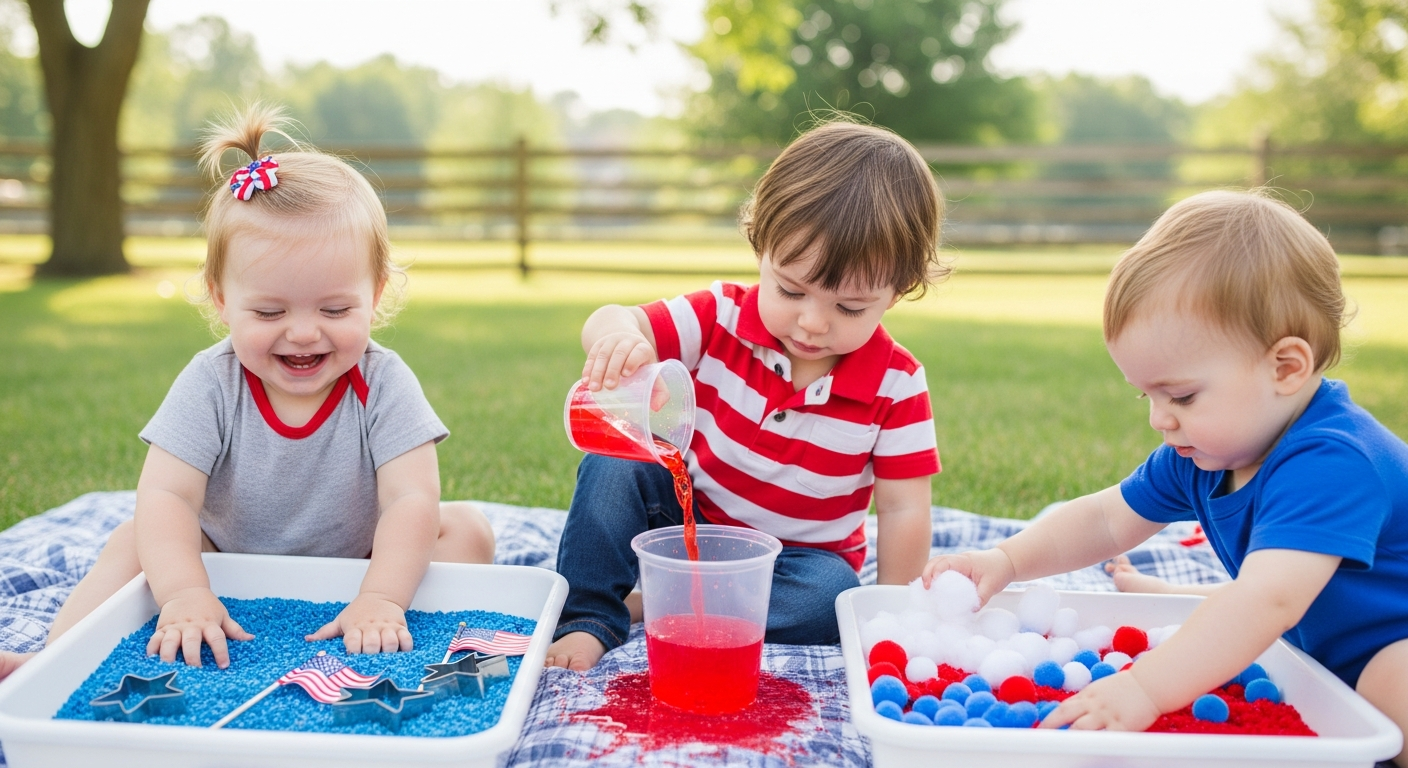
Table of Contents
- Introduction
- Why Holiday Activities Matter for Development
- Patriotic Sensory Play Ideas
- Fine Motor Masterpieces
- Independence Day Crafts
- Red, White, and Blue in the Kitchen
- Outdoor Adventures and Gross Motor Fun
- Connecting Activities to Communication
- The Speech Blubs Methodology and Value
- Conclusion
- FAQ
Introduction
Did you know that by the time a child reaches age three, their brain has reached 80% of its adult volume? This incredible window of growth is fueled by every interaction, every new texture they touch, and every word they hear. As the Fourth of July approaches, we see more than just a holiday filled with fireworks and parades; we see a massive opportunity for developmental milestones. For a toddler, a simple red, white, and blue sensory bin isn't just a way to pass the time—it is a laboratory for language, fine motor skills, and sensory processing.
At Speech Blubs, our mission is to empower children to "speak their minds and hearts." This mission is deeply personal for us because our founders all grew up with speech challenges themselves. They created the very tool they wished they had as children, blending scientific principles with the magic of play. We believe in "smart screen time," a joyful alternative to passive cartoon-watching that encourages children to interact, imitate, and ultimately communicate.

In this post, we are going to dive deep into a variety of patriotic activities designed specifically for the littlest members of your family. We will cover sensory-rich play, fine motor crafts, and even festive treats that turn snack time into a learning moment. More importantly, we’ll show you how to weave language development into these celebrations, ensuring your holiday is as educational as it is fun. By the end of this article, you will have a complete toolkit of Fourth of July toddler activities to help your child thrive while celebrating Independence Day.
Why Holiday Activities Matter for Development
The Fourth of July is a sensory-heavy holiday. From the bright bursts of light in the sky to the smell of a backyard barbecue, it’s a feast for a toddler’s senses. While these experiences can sometimes be overwhelming, they also provide the perfect backdrop for "scaffolded learning." This is where you, as the parent, provide just enough support to help your child reach a new skill level.
Language and Vocabulary Building
Every holiday comes with its own unique set of words. "Fireworks," "patriotism," "sparklers," and "parade" are all complex concepts that you can begin introducing. By pairing these words with physical activities—like making a "sparkler" out of pipe cleaners—you help your child map the word to a concrete experience. This is the foundation of cognitive development.
Fine Motor Coordination
Many of the activities we suggest, such as threading beads or using a glue stick, target the small muscles in the hands and fingers. These skills are essential for later milestones like writing, buttoning a shirt, or even using a fork. When we engage in these Fourth of July toddler activities, we are literally building the physical strength and dexterity your child will need for life.
Sensory Processing
Toddlers learn about the world through their senses. Sensory play helps build nerve connections in the brain’s pathways, which lead to the child’s ability to complete more complex learning tasks. It also supports cognitive growth, language development, and social interaction.

Patriotic Sensory Play Ideas
Sensory play is the "gold standard" for early childhood development. It allows children to explore at their own pace and helps them self-regulate. Here are some of our favorite ways to bring the red, white, and blue to life through touch.
The Patriotic Rice Bin
A sensory bin filled with colored rice is a classic for a reason. It’s calming, tactile, and endlessly versatile.
- Materials: White rice, red and blue food coloring, vinegar, and a large shallow bin.
- The "How-To": To color the rice, mix a few drops of food coloring with a teaspoon of vinegar in a baggie, add the rice, and shake. Spread it out to dry overnight. Once dry, layer the red, white (plain rice), and blue in your bin.
- The Learning Connection: Add small scoops, funnels, and star-shaped cookie cutters. As your child plays, narrate their actions. "You are pouring the red rice!" "Look at the big star."
- Speech Blubs Tip: For a child who is just starting to name colors, try using the "Living Colors" section of our app before playing. Seeing other children identify "red" and "blue" through our video modeling methodology can provide the perfect spark of inspiration for their playtime.
Red, White, and Blue Ice Play
On a hot July day, nothing beats playing with ice. It introduces concepts of temperature and states of matter (solid to liquid) in a way a toddler can understand.
- The Activity: Freeze water with red and blue food coloring in various trays. Put the colored cubes in a large bin of plain water.
- The Benefit: Watching the colors melt and swirl together is mesmerizing. It’s also a great time to practice descriptive words like "cold," "wet," "melting," and "shiver."
Pom Pom Water Rescue
Pom poms are a staple in our activity kits because they are soft, colorful, and change texture when wet.
- The Setup: Fill a tub with water and dump in a bag of red, white, and blue pom poms. Give your toddler a slotted spoon or a pair of kitchen tongs.
- The Mission: Ask them to "rescue" the pom poms and sort them into different bowls by color. This builds hand-eye coordination and introduces early math skills like sorting and categorization.
Fine Motor Masterpieces
Focusing on the "small stuff" helps your child prepare for the "big stuff" later on. These activities are designed to keep tiny hands busy and engaged.
Play-Dough Star Trays
Play-dough is a phenomenal tool for building hand strength. Creating a "invitation to play" with a patriotic theme is a sure-fire way to capture a toddler's attention.
- The Setup: Provide red and blue play-dough along with silver glitter, star-shaped cutters, and blue gems or buttons.
- The Activity: Encourage your child to roll "snakes," flatten "pancakes," and press the gems into the dough.
- Communication Connection: Use this time to work on action words. "Squish," "push," "roll," and "cut" are all excellent words to emphasize. If your child is struggling with certain sounds, you might find that the "Early Sounds" section of Speech Blubs helps them find the confidence to vocalize while they play.
Patriotic Beading
Threading is one of the best ways to develop the "pincer grasp" (using the thumb and index finger), which is vital for holding a pencil.
- Materials: Blue pipe cleaners and red and white pony beads. (Note: Always supervise closely with beads as they can be a choking hazard).
- The Activity: Show your child how to slide the bead onto the pipe cleaner. You can encourage them to make a pattern (red, white, red, white) or just fill the pipe cleaner to make a festive bracelet.
- Success Story: We’ve heard from many parents using the Speech Blubs preliminary screener that their children often struggle with following multi-step directions. An activity like beading is a great way to practice "First put the bead on, then slide it down."
Independence Day Crafts
Crafting with toddlers isn't about the final product; it's about the process. Don't worry if the flag they paint doesn't have 50 stars—what matters is their pride in creating something.
Straw Firework Painting
This is a favorite because it produces beautiful results with very little "artistic" skill required.
- Materials: Plastic straws, rubber bands, red and blue paint, and black construction paper.
- The Setup: Take about five or six straws and bundle them together with a rubber band. Bend the tops of the straws outward so they fan out like a star.
- The Activity: Dip the fanned-out straws into the paint and "stamp" them onto the black paper. The result looks exactly like a firework bursting in the night sky!
- The "Smart Screen Time" Link: Before you start, watch the "Exclamations" section in our app. You can practice saying "Boom!" and "Pop!" just like the kids in the video. This helps your child associate sounds with the visual of the fireworks they are painting.
Handprint Flag Art
There is something so special about capturing a child's handprint. It’s a literal snapshot of their development.
- How-To: Paint your child's palm blue and their fingers red and white (alternating stripes). Press their hand onto a piece of white cardstock.
- The Value: This is a high-sensory experience. Some kids love the feeling of the cold paint on their skin, while others might be hesitant. Respect their boundaries—if they don't want paint on their hand, let them use a sponge or a brush instead.
Patriotic Windsocks
These are wonderful for hanging on the porch and watching the wind move them.
- Materials: Empty toilet paper rolls, blue paint, red and white streamers (or tissue paper), and glue.
- The Process: Have your toddler paint the roll blue. Once dry, they can help you glue long strips of red and white streamers to the bottom.
- Language Tip: Use the finished windsock to talk about "fast" and "slow." "Look how fast the streamers move in the wind!"
Red, White, and Blue in the Kitchen
Cooking with toddlers is a fantastic way to teach them about following instructions and observing changes (chemistry in action!).
Graham Cracker Flags
This is a low-stress, "no-bake" snack that toddlers can almost entirely make themselves.
- Ingredients: Graham crackers, whipped cream or Greek yogurt, blueberries, and sliced strawberries.
- The Activity: Let your child spread the "white" (yogurt) onto the cracker. Then, help them place a few blueberries in the top corner and line up the strawberry "stripes."
- Scenario: For a parent whose 3-year-old is a "late talker," an activity like this provides a natural setting for "mand training"—encouraging the child to ask for what they need. "Do you want a berry?" "More white?" It turns snack time into a functional communication session.
Patriotic Fruit Pops
A healthy alternative to store-bought popsicles that keeps everyone cool.
- The Blend: Puree strawberries for a red layer, use coconut milk or yogurt for a white layer, and pureed blueberries for a blue layer.
- The Wait: Pour them into molds and wait for them to freeze. This is a great lesson in patience!
Outdoor Adventures and Gross Motor Fun
Sometimes, toddlers just need to move. Gross motor activities involve the large muscles of the body and are essential for overall physical health.
Fizzing Chalk Firework Art
This combines art, science, and outdoor play.
- The Secret Sauce: Use sidewalk chalk to draw fireworks on the driveway. Then, give your child a spray bottle filled with vinegar and a few drops of food coloring.
- The Fizz: When the vinegar hits the chalk (which contains baking soda), it fizzes and bubbles.
- The Benefit: Using a spray bottle is excellent for strengthening the muscles in the hand, which is another hidden fine motor workout!
Neighborhood Parade
If your town doesn't have a parade, start your own! Decorate a tricycle or a wagon with streamers and bells. This encourages "imaginative play," where your child takes on a role and follows a theme.
Connecting Activities to Communication
At Speech Blubs, we know that play is the work of childhood. But we also know that for the 1 in 4 children who face speech and language challenges, play can sometimes be frustrating if they can't express their needs.
That is why we designed our app to be a powerful supplement to these real-world activities. Our unique approach uses video modeling. Science shows that children are more likely to imitate other children than they are to imitate adults. When your child sees a peer on the screen making a sound or saying a word, their "mirror neurons" fire, making it easier for them to copy that behavior.
We aren't just about screen time; we are about creating joyful family learning moments. Whether you are using our app to prepare for a day of Fourth of July toddler activities or using it to wind down after the fireworks, you are giving your child a "smart screen time" experience that is backed by science and filled with heart.
If you are unsure where your child stands in their development, we invite you to take our quick 3-minute preliminary screener. It consists of 9 simple questions and provides you with a personalized assessment and a next-steps plan. It’s a great way to gain peace of mind or identify areas where your child might need a little extra support.
The Speech Blubs Methodology and Value
We believe that every child deserves the chance to speak their mind. Our app is used by over 5 million families and is highly rated on the MARS scale for its educational value and engagement. You can read some of our parent testimonials to see how we've helped families reduce frustration and build confidence in their little ones.
We want to be transparent about our pricing because we value the trust you place in us. We offer two main plans to fit your family's needs:
- Monthly Plan: $14.99 per month. This is a great way to test the waters.
- Yearly Plan: $59.99 per year. This is our best value plan, breaking down to just $4.99 per month (a 66% savings!).
The Yearly plan is designed for families who are committed to their child's long-term progress. When you choose the Yearly plan, you receive:
- A 7-day free trial to explore everything we have to offer.
- Access to the Reading Blubs app, which helps transition those speech skills into early literacy.
- Early access to all our new updates and features.
- Priority 24-hour support response time from our dedicated team.
By choosing the yearly option, you are investing in a comprehensive tool that grows with your child, from their first babbles to their first sentences. Our scientific methodology ensures that every minute spent in the app is a minute spent building foundational communication skills.
Conclusion
The Fourth of July is a time for celebration, family, and making memories that last a lifetime. By incorporating these Fourth of July toddler activities into your holiday plans, you are doing so much more than just keeping your little one entertained. You are fostering a love for communication, building their confidence, and helping them reach vital developmental milestones through the power of play.
Whether you are "painting" with ice, threading red and white beads, or enjoying a festive graham cracker flag, remember that the most important ingredient is your presence. Co-playing and engaging with your child is the ultimate catalyst for their growth.
Ready to take your child's communication journey to the next level? Join the millions of parents who have turned to Speech Blubs for an effective, joyful, and smart solution to speech support.
Download Speech Blubs on the App Store or Google Play today to begin your journey. For the best value and access to all our exclusive features, including the Reading Blubs app and priority support, be sure to select our Yearly Plan and start your 7-day free trial. You can also create your account on our website to get started right away. Let's help your child speak their mind and heart this holiday season!
FAQ
1. Are these activities safe for toddlers who still put things in their mouths?
Safety is our top priority! For toddlers who are in the "mouthing" phase, we recommend avoiding small beads or pom poms. Instead, focus on "taste-safe" activities like the Graham Cracker Flags or the Rice Sensory Bin (provided the rice is uncooked and you supervise closely). Always use non-toxic, washable paints and glue.
2. My child is easily overwhelmed by loud noises. How can we still enjoy the Fourth?
Many toddlers find fireworks scary. You can focus on the "quieter" side of the holiday by doing crafts like the straw firework painting or the patriotic windsocks indoors. Providing noise-canceling headphones or watching a "silent" firework display on a screen can also help them feel included without the sensory overload.
3. How can I encourage my toddler to talk during these activities?
The best way is through "narration" and "expectant pausing." Instead of asking a lot of questions (e.g., "What color is this?"), try describing what they are doing ("You have the blue paint!"). Then, stop and wait for a few seconds. This silence gives your child the space to vocalize or try a word themselves.
4. Can Speech Blubs replace professional speech therapy?
Speech Blubs is a powerful tool designed to supplement a child's overall development and, when applicable, professional therapy. It’s an excellent way to practice at home and keep the momentum going between therapy sessions. However, if you have significant concerns about your child's development, we always recommend consulting with a licensed Speech-Language Pathologist.
Sobre el autor