
Best Toys to Help With Speech Delay: A Parent’s Guide
 Por Speech Blubs Team•9 mar 2026•15 min.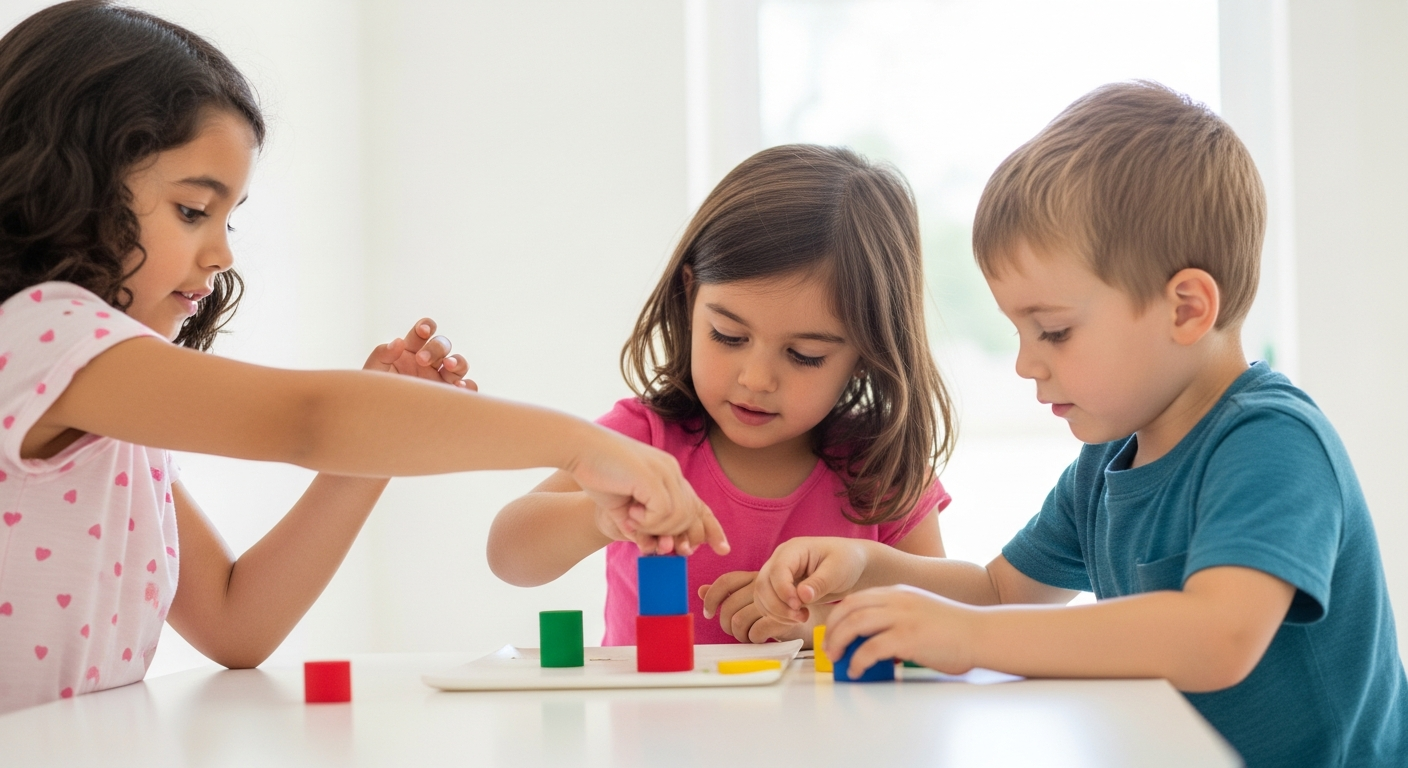
Table of Contents
- Introduction
- The Science of Play and Language Development
- The "Less is More" Philosophy: Why Batteries Aren't Always Best
- Top Toys for Cause and Effect
- Igniting Imagination: Pretend Play Toys
- Building Blocks of Language: Construction Toys
- Sensory Play: Tapping into the Senses
- The Best "Free" Toys: Household Items
- Supplementing Play with "Smart Screen Time"
- How to Play to Encourage Speech
- Creating Joyful Family Moments
- FAQ
- Conclusion
Introduction
Did you know that approximately 1 in 4 children will experience some form of speech or language delay during their early development? For many parents, hearing that their child is a "late talker" can spark a whirlwind of emotions—from concern and confusion to a fierce determination to help. At Speech Blubs, we understand this journey intimately. Our founders all grew up with speech problems themselves, and they created the tools they wished they had as children. Our mission is simple but profound: we want to empower every child to "speak their minds and hearts."
When it comes to supporting a child’s communication, the most powerful tool in your arsenal isn't a complex clinical device; it's play. Play is the natural "work" of childhood. It is through play that children first learn to interact with the world, understand cause and effect, and begin the journey of naming the things they see. Choosing the best toys to help with speech delay is about more than just entertainment; it’s about selecting items that act as a bridge between a child’s inner thoughts and their spoken words.

In this article, we will explore the developmental science behind play-based learning and provide a curated list of the best toys to help with speech delay across various categories. We will also discuss the philosophy of "less is more," how to turn everyday household items into language-building tools, and how to integrate "smart screen time" via the Speech Blubs app to supplement your child's progress. By the end of this post, you will have a comprehensive roadmap for creating a language-rich environment at home that fosters confidence and joy.
The Science of Play and Language Development
Before diving into specific toys, it is essential to understand why certain toys work better than others for speech development. Communication isn't just about vocalizing sounds; it’s about the foundational skills that come before words. These include joint attention (the ability to focus on an object with another person), turn-taking, and symbolic play.
The Power of Peer Modeling
One of the most effective ways children learn is by watching others. At Speech Blubs, we utilize a unique "video modeling" methodology. Scientific research shows that children are more likely to imitate their peers than adults. When a child sees another child making a "moo" sound or a "vroom" sound, their mirror neurons fire, making it easier for them to replicate that behavior. This is why our app features hundreds of videos of children demonstrating sounds and words—it creates a bridge of relatability and encouragement. You can learn more about how this works by visiting our research page.
Cause and Effect: The Foundation of Communication
Communication is, at its core, a cause-and-effect relationship. "I say a word, and something happens." Toys that teach this concept are vital for early talkers. When a child pushes a button and a jack-in-the-box pops up, they are learning that their actions have consequences. This cognitive milestone is a direct precursor to understanding that their voice also has the power to change their environment.

Symbolic Play and Vocabulary
As children grow, they begin to engage in symbolic play—using one object to represent another. A block becomes a phone; a doll becomes a baby that needs to eat. This shift from literal to symbolic thinking is exactly what happens when a child learns that a series of sounds (the word "apple") represents a round, red fruit. The best toys to help with speech delay are those that encourage this type of imaginative "heavy lifting."
The "Less is More" Philosophy: Why Batteries Aren't Always Best
It might be tempting to buy the flashiest, loudest toys on the shelf, but many speech-language pathologists (SLPs) recommend the opposite. If a toy does all the "talking" for the child—singing songs, reciting numbers, and flashing lights—the child often becomes a passive observer rather than an active participant.
When a toy is too busy, it can actually distract from language modeling. For example, if a plastic bus is constantly shouting "I'm a yellow bus! Let's go!" while playing loud music, the child may focus entirely on the sensory input of the lights and sounds. This leaves little room for you to model simple words like "go," "stop," or "beep beep."
By choosing simpler, "open-ended" toys, you create a vacuum that language can fill. When you play with a wooden block, the block doesn't do anything on its own. It needs the child and the caregiver to give it a voice. You can model "up, up, up" as you build, and "uh-oh!" or "boom!" when it falls. This interaction is where the real magic of speech development happens.
Key Takeaway: Choose toys that require the child to be the "engine" of the play. If the toy does everything, the child has nothing left to say!
Top Toys for Cause and Effect
For children functioning at a 9 to 18-month developmental level, cause-and-effect toys are the gold standard. These toys help build the cognitive foundation necessary for requesting and labeling.
Pop-Up Toys
The classic pop-up toy, where you slide, push, or turn a switch to make an animal appear, is a speech therapy staple.
- How to play: Use the toy to work on "anticipatory sets." Close all the doors and say, "Ready... set..." and wait for your child to look at you or make a sound before you say "Go!" and pop the animal up.
- Target words: Open, shut, pop, animal names (lion, bear), and "more."
Bubbles
Bubbles are arguably one of the most effective "toys" in existence for speech delay. They are mesmerizing and naturally encourage "requesting."
- How to play: Blow a few bubbles, then close the lid tightly. Wait for your child to gesture or make a sound. You can model the word "bubble" or the sign for "more." If they are just starting, even a simple "b-b-b" sound is a huge win.
- Target words: Bubble, pop, blow, more, big, little, up, and "all gone."
Ball Drops and Hammer Toys
Toys that involve dropping a ball through a hole or hammering a peg through a slot are excellent for maintaining attention.
- How to play: Hold the ball near your mouth before you drop it. This draws the child’s eyes toward your face, allowing them to see how your lips move when you say "ball" or "go."
- Target words: Down, go, boom, my turn, your turn.
If you are unsure where your child currently stands in their development, we highly recommend taking our quick 3-minute preliminary screener. It involves 9 simple questions and provides you with a personalized assessment and next-steps plan to help you choose the right activities for your little one.
Igniting Imagination: Pretend Play Toys
Once a child begins to understand that objects can represent real-life things, pretend play becomes the ultimate playground for language.
Farm Sets and Animal Figurines
Farm sets are incredibly versatile. They allow for the practice of animal sounds, which are often the first "words" a child masters because they are fun to say and phonetically simple.
- Speech Blubs Connection: For a parent whose 3-year-old "late talker" loves animals, the "Animal Kingdom" section of the Speech Blubs app offers a fun, motivating way to practice "moo" and "baa" sounds alongside other children. You can download Speech Blubs on the App Store to explore this section together.
- Target words: Moo, baa, neigh, in, out, barn, eating, sleeping.
Dollhouses and Action Figures
Using a dollhouse or a set of small figures allows you to act out daily routines. This is helpful because it uses vocabulary the child hears every day.
- How to play: Mimic a morning routine. "The girl is sleeping. Wake up! Time to eat. Mmm, yummy."
- Target words: Sleep, eat, sit, wash, hi, bye-bye, and pronouns like "he" and "she."
Play Kitchens and Food Sets
Cooking together (even with plastic food) is a rich sensory and linguistic experience.
- How to play: "Cook" a meal for your child. Ask them, "Do you want the apple or the banana?" Giving choices is a powerful way to reduce frustration and encourage specific vocalizations.
- Target words: Hot, cold, cut, stir, eat, yummy, yucky, and specific food names.
Building Blocks of Language: Construction Toys
Construction toys are fantastic for practicing prepositions and "core vocabulary"—the high-frequency words that make up about 80% of what we say.
Wooden Blocks or Magnet Tiles
The simplicity of blocks is their greatest strength.
- How to play: Practice "turn-taking." Say, "My turn," as you place a block, then point to your child and say, "Your turn." This builds the social foundation of conversation.
- Target words: Up, on, more, tall, fall, crash, and colors.
Mr. Potato Head
This classic toy is a favorite among SLPs for a reason. It is the perfect tool for teaching body parts and following directions.
- How to play: Keep the pieces in the "butt" compartment or a separate bag so the child has to request each piece. "I want the eyes," or just "Eyes."
- Target words: Eyes, nose, mouth, hands, shoes, on, off, and "help."
Sensory Play: Tapping into the Senses
Sometimes, children with speech delays also have sensory processing needs. Engaging their sense of touch can help them "ground" themselves and focus on communication.
Play-Doh and Kinetic Sand
Manipulating these materials provides great "heavy work" for the hands, which can be very calming.
- How to play: Use cookie cutters to make shapes and "hide" small objects inside the dough for the child to find.
- Target words: Squeeze, roll, cut, hide, find, and "where is it?"
Water Play
Whether it’s in the bathtub or a water table, water is a high-interest motivator.
- How to play: Use cups to pour water and talk about the concepts of "full" and "empty."
- Target words: Wet, splash, pour, sink, float, and "all gone."
The Best "Free" Toys: Household Items
You don't need a huge budget to provide your child with the best toys to help with speech delay. In fact, many household items are more engaging than anything found in a toy store.
- Cardboard Boxes: A large box can be a car, a house, or a cave. It encourages gross motor play and imaginative language ("Get in!", "Drive!", "Fast!").
- Plastic Tupperware and Wooden Spoons: These make a great drum set. Use them to practice rhythms, which is a foundational skill for the cadence of speech.
- Laundry Baskets: A laundry basket can be a "boat." Push your child across the floor while saying "Row, row, row!"
- Old Magazines or Sale Flyers: Cutting out pictures of food or toys and "gluing" them to paper is a great way to work on labeling and categories.
Supplementing Play with "Smart Screen Time"
In today’s world, screens are inevitable, but they don't have to be passive. At Speech Blubs, we believe in "smart screen time"—experiences that are interactive, educational, and designed to get your child off the screen and interacting with you.
Our app is built on the foundation of peer-to-peer learning. Instead of watching a cartoon character, your child watches a real peer. This creates a powerful "I can do that too!" moment. It is a screen-free alternative to passive viewing because it requires the child to actively participate, mimic sounds, and engage with the caregiver.
Choosing the Right Plan
We want to be transparent about how you can access these tools. We offer two main paths:
- Monthly Plan: $14.99 per month. This is a great way to test the waters.
- Yearly Plan: This is our clear best-value choice at $59.99 per year (which breaks down to just $4.99/month).
The Yearly plan isn't just a 66% savings; it also includes exclusive high-value features that the Monthly plan lacks. When you choose the Yearly plan, you get:
- A 7-day free trial to ensure it’s the right fit for your family.
- The Reading Blubs app, which helps transition your child from speaking to early literacy.
- Early access to new content updates and a 24-hour support response time.
To get the full suite of features and the free trial, we encourage you to sign up for the Yearly plan on our website.
How to Play to Encourage Speech
Choosing the right toys is only half the battle; how you play with them matters just as much. Here are some expert strategies to use during your next play session:
1. Follow the Child’s Lead
Instead of telling your child how to play with a toy, watch what they are doing and join in. If they are banging two blocks together, you bang two blocks together. This creates a shared experience and shows them that their actions are meaningful.
2. Parallel Talk and Self-Talk
- Parallel Talk: Narrate what your child is doing. "You are pushing the car. Vroom, vroom! The car is going fast!"
- Self-Talk: Narrate what you are doing. "I am building a tower. One block, two blocks. Look, it's big!"
3. Use the "One-Up" Rule
If your child is not yet speaking, model single words. If they are using single words, model two-word phrases. For example, if they say "ball," you say "big ball" or "roll ball." This helps them see the next step without feeling overwhelmed.
4. Create "Communication Temptations"
Sometimes, we are so good at anticipating our children’s needs that they don't need to talk. Try putting a favorite toy in a clear container that they can't open. This creates a natural "temptation" for them to come to you and request "help" or "open."
5. Embrace the Power of "Uh-Oh"
Exclamatory words like "uh-oh," "wow," "boom," and "yay" are often the first words children with speech delays acquire. They are emotionally charged and easy to imitate. Make a mistake on purpose—drop a spoon, or put a hat on your foot—and say "Uh-oh!" with a big smile.
Creating Joyful Family Moments
At the heart of everything we do is the desire to reduce frustration and create joyful learning moments. A speech delay can be stressful for both the child and the parents. When a child can't express their needs, it often leads to tantrums and withdrawal. By using the best toys to help with speech delay and incorporating tools like Speech Blubs, you are giving your child the "keys" to unlock their world.
We have seen thousands of success stories from parents who were once exactly where you are. You can read some of their inspiring journeys on our testimonials page. These parents found that by blending physical play with our digital tools, their children didn't just start talking—they started thriving and building confidence.
FAQ
1. How long should I play with my child each day to help with their speech delay? Consistency is more important than duration. Aim for 15–20 minutes of dedicated, distraction-free "floor time" each day. During this time, put your phone away and focus entirely on following your child’s lead. You can supplement this with "smart screen time" on Speech Blubs for another 10–15 minutes.
2. My child only wants to play with toys that have lights and music. Is that okay? It’s perfectly fine to use those toys to get their attention, but try to use them as a "bridge." Once they are engaged, try to transition to a similar toy that is more open-ended. For example, if they love a light-up musical car, try introducing a simple wooden car and see if you can get them to make the "vroom" sounds themselves.
3. When should I seek professional help from a Speech-Language Pathologist? While toys and apps are powerful supplements, they do not replace professional therapy. If your child is 18 months old and has no words, or 2 years old and has fewer than 50 words, it is a good idea to seek an evaluation. Our preliminary screener can help you decide if it’s time to take that next step.
4. Can an app really help with a speech delay? Yes, when used correctly. Speech Blubs is designed based on the principle of video modeling, which is a scientifically proven method for encouraging imitation. It isn't meant for the child to use alone; it's a tool for you and your child to use together to practice sounds and words in a fun, low-pressure way.
Conclusion
Choosing the best toys to help with speech delay is an investment in your child’s future. Whether it’s a simple set of wooden blocks, a bottle of bubbles, or a cardboard box turned into a spaceship, the "best" toy is ultimately the one that gets you and your child interacting, laughing, and communicating.
Remember, you are your child’s favorite toy and their best teacher. Your voice, your facial expressions, and your presence are the most important elements of their development. Tools like Speech Blubs are here to support you, providing a fun, science-backed way to keep the momentum going.
Are you ready to start this journey with us? We invite you to join our community of over 5 million families. Download Speech Blubs on Google Play or the App Store today to begin your 7-day free trial. We highly recommend choosing our Yearly plan to unlock the full potential of our tools—including the Reading Blubs app and priority support—at the very best value of just $4.99 per month. Let’s help your child speak their mind and heart, one joyful word at a time.
Sobre el autor