
Boost Skills with Toddler Pom Pom Activities
 Por Speech Blubs Team•25 mar 2026•16 min.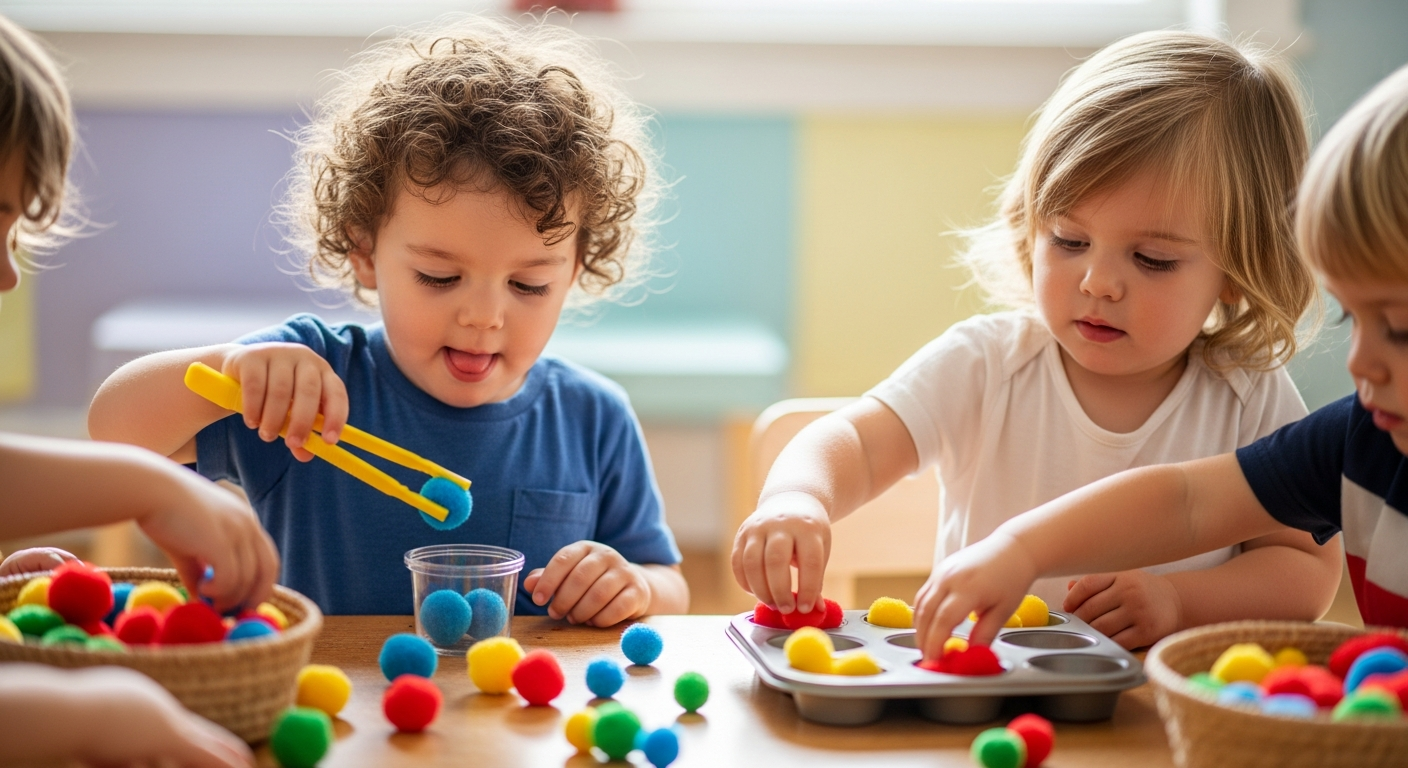
Table of Contents
- Introduction
- Why Pom Poms are a Developmental Goldmine
- Sorting and Cognitive Activities
- Fine Motor Mastery and "The Bridge" to Independence
- Movement and Oral Motor Games
- Creative Arts and Sensory Exploration
- Maximizing the Value of Play with Speech Blubs
- Practical Scenarios: Bringing it All Together
- Safety First: A Note on Pom Pom Play
- A List of 30 Quick Pom Pom Activity Ideas
- The Science of Peer Imitation
- FAQ
- Conclusion
Introduction
Have you ever noticed how a simple bag of colorful, fuzzy pom poms can capture a toddler’s attention faster than the most expensive electronic toy on the shelf? There is something almost magnetic about these soft little spheres. Whether they are being squished between tiny fingers, dropped down a tube, or sorted into a muffin tin, pom poms are a powerhouse tool for development. At Speech Blubs, we believe that the most profound learning happens through the joy of play. Our mission is to empower children to speak their minds and hearts, and often, that journey begins with simple, hands-on engagement right at the kitchen table.
In this post, we are going to dive deep into the world of toddler pom pom activities. We will explore how these fuzzy crafts can build fine motor skills, encourage color recognition, and—most importantly for our community—spark meaningful language development. We’ll provide you with a massive list of DIY ideas, explain the science of why they work, and show you how to pair these physical games with our "smart screen time" to create a holistic learning environment. By the end of this article, you will have a toolkit of activities to help your child build confidence and reduce communication frustration.

The core message here is simple: you don't need a PhD or a massive budget to support your child’s growth. With a bag of pom poms and a little bit of guidance, you can create joyful family learning moments that lay the foundation for a lifetime of communication.
Why Pom Poms are a Developmental Goldmine
Before we get into the "how," let’s talk about the "why." For the 1 in 4 children who need speech support, activities that combine tactile sensory input with verbal interaction are essential. Our founders, who grew up with speech challenges themselves, designed Speech Blubs to be the tool they wished they had—one that blends scientific principles with pure, unadulterated fun.
Fine Motor and Speech Connection
It might seem strange to link finger movements to talking, but the brain's motor cortex areas for hand control and mouth control are neighbors. When a toddler practices the "pincer grasp" (using the thumb and forefinger) to pick up a tiny pom pom, they are firing up neural pathways that also support the fine motor movements required for speech.
Sensory Integration
Toddlers learn through their senses. The soft texture of a pom pom provides a gentle tactile experience that is calming for many children. When a child is calm and engaged, they are in the "optimal learning zone." This is the same philosophy we use in our app; by providing a joyful, low-pressure environment, children feel safe to experiment with new sounds and words.
Low Barrier to Entry
We know that parents are busy. Most of these toddler pom pom activities require less than five minutes of setup and use items you likely already have, such as egg cartons, empty water bottles, or painter's tape. This makes it easy to integrate learning into your daily routine without feeling overwhelmed.
Sorting and Cognitive Activities
Cognitive skills like categorization and pattern recognition are the building blocks of logical thinking. Using pom poms to teach these concepts is intuitive for toddlers.
1. The Classic Muffin Tin Sort
This is a staple for a reason. Grab a muffin tin and place a piece of colored paper (or use a marker to draw a dot) at the bottom of each well. Give your child a bowl of mixed pom poms and watch them work.

- The Speech Blubs Connection: As your child drops a red pom pom into the red slot, narrate the action. "Red! You found the red one!" If they are using our app, they might have already seen a peer say the word "Red" in our "Colors" section. This physical activity reinforces the digital learning.
2. Egg Carton Color Match
Similar to the muffin tin, turn an egg carton upside down. Poke holes in each bump and color the area around the hole. Have your child push the matching pom pom through the hole.
- Why it works: The "pushing" action provides excellent resistance, helping to build hand strength.
3. Size Sorting
If you have a variety pack of pom poms, encourage your child to sort them into "big" and "small" piles.
- Language Tip: Use descriptive words like "tiny," "huge," "fuzzy," and "soft" to expand their vocabulary.
4. Pattern Making
For older toddlers, start a simple pattern (Red, Blue, Red, Blue) and ask them what comes next. This builds the foundational skills needed for math and reading later on.
If you are curious about where your child stands in their developmental journey, we invite you to take our quick 3-minute preliminary screener. It involves 9 simple questions and provides you with a personalized assessment and next-steps plan.
Fine Motor Mastery and "The Bridge" to Independence
Many parents find that their children crave constant interaction. While co-play is vital, fostering independent play is a gift to both the parent and the child. These activities act as a "bridge" to help toddlers achieve a "flow state"—that magical moment where they are fully absorbed in a task.
5. The Whisk Challenge
Stuff a handful of pom poms inside a kitchen whisk. Your toddler’s job is to pull them out. It sounds simple, but for a two-year-old, navigating the wires of the whisk requires significant concentration and dexterity.
6. Pom Pom "Feeding"
Grab a stuffed animal or a toy dinosaur. Tell your child, "The Dino is hungry! He wants to eat the green berries!" Have your child use tongs or a spoon to "feed" the pom poms to the toy.
- Scenario: For a parent whose 3-year-old "late talker" loves animals, the "Animal Kingdom" section of our app offers a fun, motivating way to practice "moo" and "baa" sounds. You can bring that to life by having the child "feed" the pom poms to the animals they just saw on the screen.
7. The Wipes Box Pull
Empty baby wipes boxes are perfect for toddler pom pom activities. Shove a bunch of pom poms inside and let your child pull them out one by one. The clicking sound of the lid adds a sensory "reward" that toddlers love.
8. Poking through Bottles
An empty water bottle or a milk carton with a small spout is a great tool. Poking pom poms through the narrow opening is a high-focus activity. To make it a "forever" toy, cut a flap at the bottom of the bottle so the pom poms can be retrieved and the game can start over.
To see the methodology behind how we encourage these developmental milestones, you can explore our research page. Our approach is backed by science, utilizing video modeling to trigger "mirror neurons" in the brain.
Movement and Oral Motor Games
Speech is a physical act that requires breath control and muscle coordination. Some of the most effective toddler pom pom activities involve moving the pom poms without using hands at all.
9. Pom Pom Racing (The Blow Game)
Line up a few pom poms on a flat surface like a hardwood floor or a table. Give your child a straw (or just have them use their mouth) and see who can blow their pom pom to the finish line first.
- The Benefit: Blowing helps strengthen the muscles of the mouth and teaches breath control, both of which are essential for clear speech.
10. The Pom Pom Drop
Tape empty toilet paper or paper towel tubes to the wall at various angles using painter's tape. Place a bowl at the bottom. Your child can drop the pom poms through the tubes and watch them "zip" down.
- Level Up: Ask your child to predict where the pom pom will land. "Will it go in the bowl? Uh oh! It missed!"
11. Parachute Play
Grab a small blanket or a silk scarf. Pile the pom poms in the middle. You and your child each hold an end and shake it until the "popcorn" (pom poms) flies everywhere.
- The Goal: This is high-energy and encourages "shared joy," which is a key component of social communication.
12. Hidden Treasure
Hide pom poms in a bin of dried rice or beans. Give your child a set of "claws" (tongs) to find the hidden treasures. This adds a layer of tactile exploration that keeps the activity fresh.
If you’re ready to jump into more structured learning, we recommend you download Speech Blubs on the App Store or Google Play to begin your journey today.
Creative Arts and Sensory Exploration
Sometimes, the best play has no end goal. Process art allows children to explore materials without the pressure of "doing it right."
13. Pom Pom Painting
Instead of a paintbrush, use a clothespin to pinch a pom pom. Dip it in paint and use it to "stamp" colors onto paper. It creates a beautiful texture and is much easier for small hands to grip than a thin brush.
14. Sticky Wall
Apply a piece of contact paper (sticky side out) to a wall or window. Give your child a bowl of pom poms and let them stick them on and pull them off.
- The Language Benefit: This is a great time to practice "Up," "Down," "On," and "Off."
15. Pom Pom Water Play
Did you know pom poms can go in the water? They act like little sponges! Put them in the bath or a sensory bin with water and some ladles. Your child can make "Pom Pom Soup."
- Pro Tip: To reuse them, just put them in a mesh laundry bag and toss them in the dryer, or lay them out on a towel.
16. Sensory Bottles
Fill an old plastic bottle with water, glitter, and a few bright pom poms. Glue the lid shut. These "calm-down bottles" are mesmerizing for toddlers to watch as the fuzzy balls slowly drift through the water.
Maximizing the Value of Play with Speech Blubs
While physical activities like these are essential, we live in a digital world. At Speech Blubs, we advocate for "smart screen time"—the kind that isn't a passive experience like watching cartoons. Instead, our app uses video modeling, where children watch their peers perform speech exercises. This is a powerful tool because children are naturally more interested in watching other children than adults.
Our app is designed to be a powerful supplement to your child's overall development plan. It isn't a "set it and forget it" tool; it’s an invitation for family connection. We encourage you to sit with your child, mimic the sounds they hear in the app, and then transition those sounds into your pom pom play.
Transparent Pricing for Families
We want to be clear about how you can join our community. We offer two main paths:
- Monthly Plan: For $14.99 per month, you get access to our core speech tools.
- Yearly Plan: This is our clear best-choice value at $59.99 per year (which breaks down to just $4.99/month).
Choosing the Yearly Plan doesn't just save you 66%; it also includes:
- A 7-day free trial to make sure it's the right fit for your family.
- Access to our Reading Blubs app to support literacy.
- Early access to all new updates.
- A 24-hour support response time.
The Monthly plan does not include these extra features, so we highly recommend the Yearly option to get the full suite of benefits. You can create your account and begin your 7-day free trial today.
Practical Scenarios: Bringing it All Together
Let's look at how these activities solve real-world challenges.
The "Late Talker" Challenge: Imagine a toddler who has a few words but is frustrated because they can't express their needs. They love the "Animal Kingdom" section of Speech Blubs but haven't started mimicking the sounds yet.
- The Activity: You set up a "Pom Pom Feeding" station for their toy cow. As the child picks up a pom pom, you say, "The cow says 'Moo!' Can you give the 'Moo' food?"
- The Result: By taking the pressure off the child and putting it on the play, you reduce frustration and create a joyful moment where the child feels safe to try a "Moo" sound.
The "Fine Motor" Struggle: Imagine a child who struggles with using their fingers and gets upset with puzzles.
- The Activity: The "Whisk Challenge." It's low-stakes and feels like a game rather than "work."
- The Result: As they successfully pull a pom pom out, they build the confidence needed to tackle more complex tasks. You can celebrate their success by checking out testimonials from other parents who have seen similar breakthroughs.
Safety First: A Note on Pom Pom Play
While toddler pom pom activities are wonderful, safety is our top priority.
- Supervision is Mandatory: Pom poms are small and can be a choking hazard. Always stay within arm's reach of your child during play.
- Check for Wear and Tear: Over time, pom poms can shed or fall apart. Discard any that are looking ragged.
- Size Matters: For younger toddlers who still put things in their mouths, stick to the extra-large "jumbo" pom poms.
A List of 30 Quick Pom Pom Activity Ideas
To make things easy, here is a "cheat sheet" of ideas you can try today:
- Muffin Tin Sorting: Sort by color.
- Tube Drop: Tape tubes to the wall for a gravity game.
- Whisk Pull: Stuff them in, pull them out.
- Pom Pom Soup: Add to a bowl of water with spoons.
- Blow Race: Use a straw to move them across the floor.
- Sticky Wall: Use contact paper on the window.
- Bottle Poke: Push them into a narrow water bottle.
- Wipes Box Fun: Pull them out of a flip-top box.
- Color Matching: Use an egg carton with colored holes.
- Feeding Toys: Use tongs to "feed" a stuffed animal.
- Size Sorting: Big vs. Small.
- Pattern Play: Red-Blue-Red-Blue.
- Parachute Shake: Use a scarf to pop them in the air.
- Sensory Bin: Hide them in a bin of dried beans.
- Clothespin Painting: Use a pom pom as a stamp.
- Threading: Use a large plastic needle and yarn (supervised!).
- Ice Cream Shop: Use construction paper cones and "scoop" pom poms.
- Dump Truck Load: Use a toy truck to transport "cargo."
- Balance Beam: Lay a line of tape on the floor and have them place pom poms along the line.
- Counting Practice: Count them as they fall into a bowl.
- Color Identification: "Find me a yellow one!"
- Body Awareness: Tap a pom pom on their "nose," "toes," and "elbow."
- Tweezers Transfer: Move from one bowl to another.
- Caterpillar Craft: Glue them in a line on a piece of paper.
- Holiday Themes: Use red and green for Christmas or orange for Halloween.
- Target Practice: Try to throw them into a laundry basket.
- Sensory Bottle: Add to water and glitter in a sealed bottle.
- Bath Time: Let them float in the tub.
- Nature Match: Take them outside and match colors to flowers or grass.
- Confetti Toss: Just throw them up and celebrate!
"The goal of play is not to 'finish' the activity, but to engage the child's mind and heart in the process of discovery."
The Science of Peer Imitation
At the heart of Speech Blubs is the principle of video modeling. When your child watches a peer on the screen performing a "lip trill" or saying "Mama," their brain reacts as if they are doing it themselves. This is thanks to mirror neurons. By following up a Speech Blubs session with a physical toddler pom pom activity, you are providing a "real-world" application for the skills they are observing.
For example, if the app is focusing on the letter "B," you can play a game of "Bouncing" pom poms. Every time the pom pom hits the floor, you both say "B-B-B-Bounce!" This multi-sensory approach—seeing it on the screen, hearing it, and feeling the physical movement—is what makes our methodology so effective. We are proud to be a top-tier choice for parents worldwide, with a high rating on the MARS scale for educational quality.
To learn more about our story and why we do what we do, visit our homepage.
FAQ
1. At what age can my child start toddler pom pom activities? Most children can begin basic pom pom play around 18 months, focusing on simple "in and out" tasks. However, because pom poms are a choking hazard, constant adult supervision is required. As children reach age 2 and 3, they can engage in more complex sorting and fine motor tasks.
2. How do these activities help with speech delay? Pom pom activities help by building oral motor strength (through blowing games), fine motor skills (which are linked to speech in the brain), and by providing a low-pressure environment for language narration. When you describe what your child is doing, you are "inputting" language that they will eventually "output."
3. Can I use Speech Blubs if my child is already in professional therapy? Absolutely! We frame our app as a powerful supplement to professional therapy. Many speech-language pathologists actually recommend Speech Blubs as a way to keep children engaged and practicing between their formal sessions. It’s a tool that makes "homework" feel like a reward.
4. What if my child keeps putting the pom poms in their mouth? If your child is in a heavy "mouthing" phase, it may be best to stick to jumbo-sized pom poms or wait a few months. You can also try sensory bottles where the pom poms are securely sealed inside a plastic bottle, providing the visual benefit without the choking risk.
Conclusion
We hope this guide has inspired you to grab a bag of fuzzy pom poms and start playing! Remember, the goal isn't to create a perfect masterpiece or to have your child master every color in one afternoon. The goal is to create joyful family learning moments that foster a love for communication and build your child's confidence.
At Speech Blubs, we are here to support you every step of the way. Whether it’s through our comprehensive app, our developmental screeners, or our community resources, we are committed to helping every child "speak their minds and hearts."
Don't wait to start this journey. Download Speech Blubs on the App Store or Google Play today. For the best experience and the most features—including the Reading Blubs app and early updates—be sure to select the Yearly Plan. It includes a 7-day free trial, so you can see the magic of peer modeling for yourself with zero risk. Let's make learning loud, fuzzy, and incredibly fun!
Sobre el autor