
Creative Messy Toddler Activities for Early Learning
 Por Speech Blubs Team•23 mar 2026•14 min.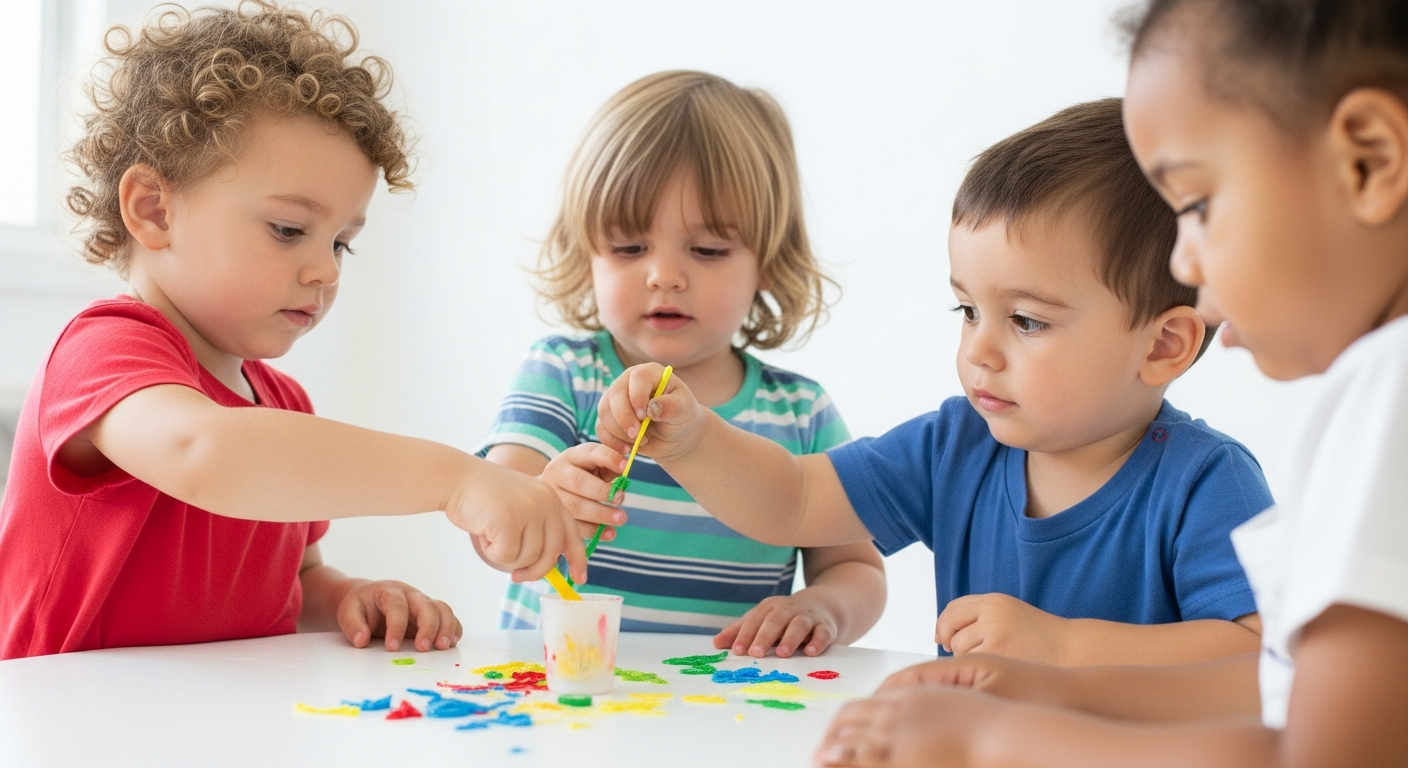
Table of Contents
- Introduction
- The Science Behind the Mess
- Why Parents Fear the Mess (And Why You Shouldn't)
- Creating a Messy Play Game Plan
- Top 10 Messy Toddler Activities for Sensory Growth
- Practical Scenarios: Connecting Play to Speech Blubs
- Dealing with "Tactile Defensiveness"
- Low-Prep, Low-Mess Alternatives
- Choosing the Right Plan for Your Family
- Summary of Benefits
- Conclusion
- FAQ
Introduction
Have you ever watched a toddler approach a bowl of spaghetti? At first, there is the cautious poke. Then, the realization that the sauce is squishy. Within minutes, the noodles are being draped over their head like a crown, and the sauce is being meticulously painted across the high chair tray. To a parent, this looks like a thirty-minute cleanup session. But to a child development expert, this is a masterclass in sensory exploration.
At Speech Blubs, we understand that "mess" is often just another word for "learning." Our mission is to empower children to speak their minds and hearts, and that journey often begins with the hands. Whether it’s squishing mud, splashing in puddles, or smearing pudding, messy play is a foundational pillar of early childhood development. This blog post will dive deep into why these activities are so vital, how to manage the chaos without losing your mind, and provide a comprehensive list of creative messy toddler activities that you can start today.

We’ll explore how getting your hands dirty translates to better communication skills, cognitive growth, and emotional regulation. Our goal is to transform your perspective on mess from something to be avoided into a joyful opportunity for connection and growth.
The Science Behind the Mess
When your child digs their hands into a sensory bin, their brain is lighting up like a Christmas tree. Millions of neural connections are forming every single second in the early years. Messy play is essentially a multi-sensory workout. While a cartoon offers only visual and auditory input, messy toddler activities engage touch, smell, and sometimes even taste.
Synaptic Connections and Sensory Input
Research shows that up until about eight months, babies process sensory input one sense at a time. As they enter the toddler years, their brains begin to link these inputs together. When they play with oobleck (a mixture of cornstarch and water), they are processing how the material looks (sight), how it sounds when it hits the tray (sound), and how it transitions from a solid to a liquid in their palms (touch). This integration is what helps them make sense of the world.
Our unique approach at Speech Blubs is backed by science and places us in the top tier of speech apps worldwide. Our methodology utilizes video modeling, where children learn by watching and imitating their peers. Just as they learn to speak by watching other children, they learn to explore their physical environment through imitation and play. You can learn more about the science behind our methods on our research page.
Building Language Through Senses
Messy play is a goldmine for language development. It provides a natural context for new vocabulary. Instead of looking at a picture of a "sticky" object, the child feels stickiness. This creates a concrete memory that they can then attach to the word.
Key Takeaway: Sensory experiences create "sticky" memories. When a child experiences a concept with their whole body, the language used to describe that concept becomes much easier to retain.
If you are curious about how your child is currently developing, we recommend taking our 3-minute preliminary screener. It involves nine simple questions and provides a professional assessment and a personalized next-steps plan.

Why Parents Fear the Mess (And Why You Shouldn't)
It’s completely normal to feel a pang of anxiety when you see a container of glitter or a bowl of chocolate pudding. Our lives are busy, and cleaning up a "tornado" of a toddler can feel like an impossible task. However, the benefits of messy toddler activities far outweigh the inconvenience.
Our founders at Speech Blubs all grew up with speech problems and created the tool they wished they had. They knew that play had to be joyful to be effective. The same applies to sensory play. If the environment is too rigid or clean, a child may feel stifled in their exploration.
The "Smart Screen Time" Balance
We advocate for "smart screen time"—experiences that are interactive and educational rather than passive. Using the Speech Blubs app together can be a wonderful precursor or follow-up to messy play. For example, if you are playing with a "farm" sensory bin, you can use the 'Animal Kingdom' section in the app to practice the "moo" and "baa" sounds of the animals your child is currently washing in their mud station.
This creates a powerful tool for family connection, moving away from passive viewing like cartoons and toward active, joyful learning. Ready to start your journey? Download Speech Blubs on the App Store or get it on Google Play to begin.
Creating a Messy Play Game Plan
The secret to enjoying messy toddler activities is preparation. You don’t have to let the mess take over your entire house. With a solid game plan, cleanup can take less than five minutes.
- Choose Your "Yes" Space: Pick a location that is easily "cleanable." Hardwood floors, the kitchen island, or outside on the grass are perfect. Avoid carpets and white couches at all costs!
- The Toddler Tarp: Invest in a cheap shower curtain liner or a dedicated "toddler tarp." Lay it down under the activity. When play is over, you can simply gather the corners and shake it outside or toss it in the wash.
- The Bathtub Strategy: Many of the best messy activities can actually happen in the bathtub. Shaving cream painting or colorful water play in the tub means that when the activity is done, you just turn on the shower and the mess disappears down the drain.
- Keep a "Clean Station" Nearby: Always have a bowl of warm water and a couple of washcloths within arm's reach. If your toddler decides they are done and wants to make a run for the living room, you can intercept them with a quick wipe.
- Exit Strategy: Know how the activity ends. For many parents, the "Activity 2.0" is a warm bubble bath immediately following the mess.
Top 10 Messy Toddler Activities for Sensory Growth
Here are ten tried-and-true activities that provide maximum sensory benefit.
1. Edible Pudding Slime
This is perfect for toddlers who still put everything in their mouths. Mix chocolate or vanilla pudding with a little bit of cornstarch until it reaches a dough-like consistency. It’s squishy, it smells amazing, and it’s completely safe to taste.
2. The Jell-O Treasure Hunt
Prepare a large tray of Jell-O and hide plastic animals or letters inside before it sets. Your toddler will have to "dig" through the sticky, cold substance to rescue their toys. This is great for fine motor skills and tactile exploration.
3. Shaving Cream Cloud Art
Spray shaving cream directly onto a tray or a window. Add a few drops of food coloring. Let your child swirl the colors together. If you’re worried about them eating it, you can substitute shaving cream with whipped topping.
4. Rainbow Spaghetti
Cook spaghetti and divide it into several bags. Add food coloring to each bag and shake. Once the noodles are colored, dump them into a bin. It’s a vibrant, slippery, and stretchy experience that kids absolutely love.
5. Oobleck (Magic Mud)
Mix two parts cornstarch to one part water. This "non-Newtonian fluid" acts like a solid when you squeeze it and a liquid when you let go. It’s a fascinating science experiment that keeps toddlers engaged for a surprisingly long time.
6. Mud Kitchen
If you have outdoor space, give your child a bin of dirt, a pitcher of water, and some old spoons and pots. Making "mud pies" is a classic childhood experience that builds creativity and gross motor skills.
7. Soap Foam Sculptures
Mix water, a little dish soap, and food coloring in a blender. The result is a stiff, colorful foam that can be scooped and stacked. It’s a much "cleaner" version of messy play because it’s basically just soap!
8. Cereal Sensory Bin
Fill a bin with different types of cereal—cheerios, cornflakes, and puffed rice. Provide scoops and cups. The different textures and the "crunch" sound they make when crushed provide excellent auditory and tactile feedback.
9. Frozen Ice Excavation
Freeze small toys in a large block of ice. Give your toddler a small spray bottle of warm water and a plastic hammer. They will love the challenge of "freezing" their friends and then working to get them out.
10. Homemade Finger Paint
Mix 1 cup of flour, ½ cup salt, and 1½ cups water. Add food coloring. This homemade version is thicker and more textured than store-bought paint, providing a more intense sensory experience.
Practical Scenarios: Connecting Play to Speech Blubs
Let’s look at how these activities can be paired with our app to maximize learning.
Imagine a parent whose 3-year-old "late talker" loves animals. During a Mud Kitchen activity, the parent can hide plastic farm animals in the mud. As the child finds the cow, the parent can pull up the 'Animal Kingdom' section of Speech Blubs. The child sees a real peer on the screen making the "Moo" sound. This peer-to-peer "video modeling" is incredibly effective. The child is motivated by the physical play and supported by the "smart screen time" of the app.
For a child who is struggling with fine motor skills and frustration, Soap Foam Sculptures can be a great way to build confidence. As they scoop the foam, you can use the 'Early Logics' or 'First Words' sections in the app to reinforce concepts like "up," "down," "big," and "small."
We don't just offer an app; we offer a way to foster a love for communication and create joyful family learning moments. You can see how this has worked for thousands of families by reading our testimonials.
Dealing with "Tactile Defensiveness"
Not every child likes to get messy. Some toddlers have what is known as tactile defensiveness—a sensory processing sensitivity where certain textures feel overwhelming or even painful.
If your child pulls away from mess, don't force it. Instead:
- Use Tools: Give them a paintbrush, a spoon, or a popsicle stick to interact with the mess so they don't have to touch it directly.
- Start Dry: Use dry beans or rice before moving on to wet substances like mud or paint.
- Model the Fun: Sit down and play with the mess yourself. Show them that it’s safe and enjoyable.
- Respect Boundaries: If they are done, they are done. Pushing a child past their sensory limit can create a negative association with play.
Low-Prep, Low-Mess Alternatives
If you are having a day where you just can't handle a "pudding disaster," there are still ways to engage your toddler’s senses without the cleanup.
- Painter's Tape Play: Give your child a roll of blue painter's tape. Let them stick pieces to the table and peel them off. It builds finger strength and provides great tactile feedback.
- Card Slot Drop: Cut a slit in the top of an oatmeal container and give them a deck of cards to drop inside.
- Window Clings: Cheap gel window clings can be moved around for hours. They are squishy and colorful but leave zero residue.
- Contact Paper Art: Tape a piece of contact paper to the wall, sticky side out. Give your child scraps of paper or pom-poms to stick to it.
These activities are perfect for when you are busy around the house but want to provide your toddler with "smart" engagement. You can always visit our homepage for more ideas on how to integrate play into your daily routine.
Choosing the Right Plan for Your Family
We believe that every child deserves the best start in life. That’s why we offer flexible options to fit your family’s needs.
- Monthly Plan: For $14.99 per month, you get full access to the Speech Blubs app.
- Yearly Plan: This is our best value at $59.99 per year, which breaks down to just $4.99 per month.
The Yearly plan is the clear choice for parents committed to their child's development. Not only do you save 66%, but the Yearly plan also includes:
- A 7-day free trial so you can explore all the features risk-free.
- The Reading Blubs app, our specialized tool for early literacy.
- Early access to all new updates and content.
- 24-hour support response time from our dedicated team.
The Monthly plan does not include these exclusive benefits, so we highly recommend the Yearly option to get the full suite of features and the best results. Ready to get started? Create your account and begin your 7-day free trial today.
Summary of Benefits
Messy toddler activities are more than just a way to pass the time. They are essential for:
- Motor Development: Developing the small muscles in the hands (fine motor) and the larger muscles in the arms and core (gross motor).
- Language Skills: Providing a rich sensory context for new words and concepts.
- Cognitive Growth: Learning about cause and effect, physics, and problem-solving.
- Emotional Well-being: Reducing frustration by providing a safe outlet for exploration and "freedom" from rules.
Conclusion
At the end of the day, the laundry will be washed, and the floors will be mopped. But the memories of squishing rainbow spaghetti or digging for treasure in a Jell-O pool will stay with your child forever. These messy toddler activities are the building blocks of a curious, confident, and communicative child.
At Speech Blubs, we are here to support you every step of the way. Our app is designed to be a powerful supplement to your child’s overall development plan, blending scientific principles with the pure joy of play. We provide the "smart screen time" that helps bridge the gap between physical exploration and verbal communication.
Don’t miss out on the opportunity to give your child the tools they need to speak their mind and heart. Download Speech Blubs today and choose the Yearly plan to unlock your 7-day free trial, the Reading Blubs app, and our full suite of expert-led features. It’s the best investment you can make in your child’s joyful learning journey.
FAQ
1. Why is messy play important for a child's speech development?
Messy play provides a "sensory hook" for language. When a child feels something cold, slimy, or crunchy, the word for that sensation becomes much more meaningful. It also encourages social communication as children describe what they are doing and share their discoveries with parents or peers.
2. My toddler hates getting their hands dirty. Is something wrong?
Not at all! Some children are more sensitive to tactile input than others. This is often called tactile defensiveness. You can help them by providing tools like spoons or brushes so they don't have to touch the mess directly, or by starting with dry sensory materials like rice or beans.
3. How do I manage the cleanup of these activities?
Preparation is key! Use a "toddler tarp" or an old shower curtain under the activity area. Have a bowl of soapy water and a towel nearby for quick cleanups, and consider doing the messiest activities in the bathtub where everything can be rinsed away easily.
4. Are these messy activities safe for babies who still mouth toys?
Yes, provided you choose "edible" or taste-safe materials. Using things like whipped cream, yogurt, pudding, or cereal bins ensures that if your little one takes a taste, they are perfectly safe. Always supervise play to ensure no small objects are swallowed.
Sobre el autor