
Alegria Festiva: Artesanías Navideñas para Niños ¡Para el Habla y las Sonrisas!
Tabla de Contenidos La Magia de las Manualidades Navideñas: Más que Simples Decoraciones Festivas Por qué las Manualidades Navideñas Son Potenciadores del Habla Manualidades Navideñas para Niños para Cada Etapa del Desarrollo Perfectamente...
 Por Speech Blubs Team•22 dic 2025•19 min.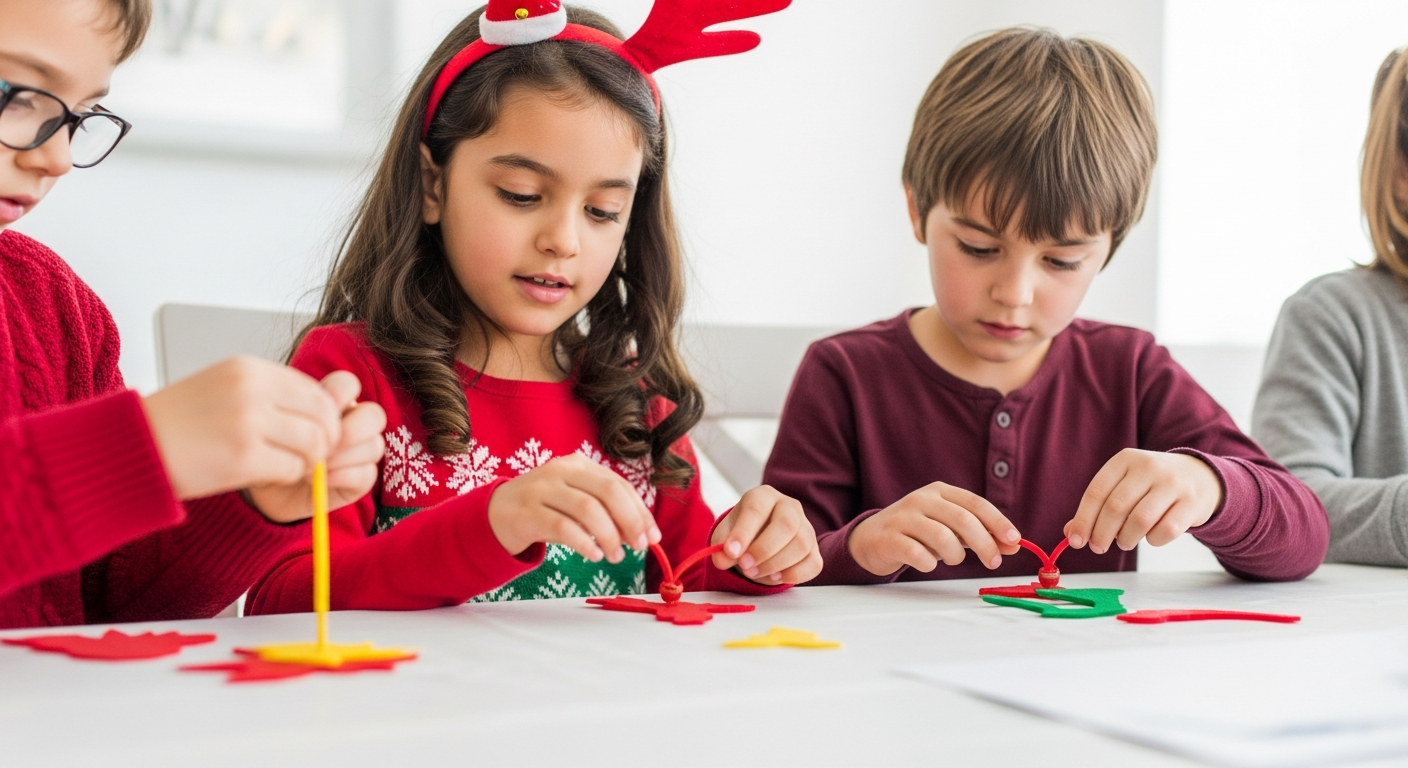
Contents
- The Magic of Christmas Crafts: More Than Just Decorations
- Why Christmas Crafts Are Speech Superstars
- Christmas Crafts for Kids at Every Stage
- Easily Add Speech Blubs to Your Crafting Time
- How to Pick the Best Plan for Your Family's Speech
- More Than Just the Holidays: Helping Your Child Communicate for Life
- Conclusion
- Frequently Asked Questions
The holidays are a magical time! Homes are filled with lights, songs, and the promise of special memories. As parents, we want to create traditions and fun activities for our kids. But what if these holiday traditions, like making Christmas crafts, could also help your child's speech and language development? Crafting isn't just about making pretty decorations; it's a fun way for kids to communicate, be creative, and connect with you.
At Speech Blubs, we know what it's like to help a child find their voice. Our company started because our founders had speech problems when they were kids, and they wanted to create the tool they wish they'd had. We believe every child should be able to speak their mind and heart, and we want to give you easy, helpful, and fun ways to blend playtime with learning. This holiday season, see how making Christmas crafts with your child can open up a world of language, build their confidence, and make amazing family memories, all while helping them communicate better in the future.

The Magic of Christmas Crafts: More Than Just Decorations
Christmas crafts are a favorite part of the holidays for families everywhere. We use them to decorate our homes, give them as gifts, and save them in scrapbooks. But they're more than just pretty things. They also give kids a fun, hands-on way to learn and grow. When kids use paper, glue, glitter, and paint, they're not just making something; they're learning lots of important skills.
Helping Your Child Grow Through Play
Crafting helps kids develop in lots of ways:
- Fine Motor Skills:Cutting with scissors, picking up beads, peeling stickers, and squeezing glue all help kids use the small muscles in their hands and fingers. This is important for writing and taking care of themselves later on.
- Cognitive Skills:Crafts help kids follow directions, solve problems ("How do I make this stay on?"), put steps in order, and understand how things work.
- Sensory Exploration:Craft materials have different textures, like soft cotton, bumpy pipe cleaners, smooth paper, and sticky glue. This helps kids learn about the world around them.
- Creativity and Imagination:Crafts let kids show who they are, make choices, and bring their ideas to life. This makes them feel good about themselves.
We Want to Help Your Child Communicate
At Speech Blubs, we know that kids learn through play. That's why our app turns screen time into a fun way to learn. We know that about 1 in 4 kids need help with their speech, and we think that combining fun activities like crafting with our engaging app can really help them grow.
Our app uses videos of other kids to help your child learn and copy new skills, instead of just watching cartoons. This helps families connect and learn together. When you do speech-focused crafts during the holidays, you're helping your child's language skills grow, building their confidence, and making it easier for them to communicate.
Why Christmas Crafts Are Speech Superstars
The best part about using Christmas crafts to help with speech is that it gives your child a relaxed way to practice their language skills. They'll be having so much fun creating, they won't even realize they're "working" on their speech. Here's how these festive activities can help your child's language development:

Vocabulary: A World of New Words
Crafting introduces lots of new words. As you work together, you can talk about:
- Colors:"What color is this glitter? Red! We need green for the tree."
- Shapes:"Let's cut out a circle for Santa's head, and triangles for the tree."
- Textures:"This cotton ball is soft, the pinecone is bumpy, and the ribbon is silky."
- Actions/Verbs:"Let's...cut,glue,paint,stick,decorate,sprinkle,twist,bend,tie."
- Adjectives:"Big, small, shiny, sparkly, sticky, wet, dry, long, short, pretty, ugly."
- Nouns:"Paper, glue, scissors, glitter, ribbon, button, pipe cleaner, reindeer, snowman, star, ornament."
If your child is learning new words, crafts give them a chance to see and feel what the words mean. For example, saying "sticky" while using glue helps them understand what "sticky" means.
Following Directions: Building Important Skills
Most crafts have steps, which makes them perfect for practicing following directions. This is an important skill for understanding language and getting ready for school. Start with simple directions and make them more complex over time:
- "First,getthe paper."
- "Next,putthe glue on."
- "Then,stickthe cotton ball."
- "Now,waitfor it to dry."
As your child gets better at following directions, you can give them more steps: "First, cut the circle, then glue it onto the paper." This helps them listen, remember, and understand information.
Descriptive Language: Painting Pictures with Words
Crafts are a great way to encourage your child to describe things. When they finish a craft, ask them questions like:
- "Tell me about your snowman. What does he look like?"
- "What color are his buttons? Is his scarf long or short?"
- "How does this glitter feel?"
These questions help children use more adjectives and adverbs, so they can explain things more clearly. This is a great way to help them use more complex sentences.
Storytelling: Crafting Tales
Instead of just describing the craft, ask your child to make up a story about it.
- "Where does your reindeer live? What does he do for Christmas?"
- "Imagine this gingerbread man came to life! What would he say?"
- "If this ornament could talk, what story would it tell?"
This helps them tell stories, put events in order, understand characters, and understand cause and effect. These are all important parts of communication. It also helps them use their imagination and feel confident in sharing their ideas.
Social Interaction: Connecting Hearts
Crafting is a social activity, especially when you do it with your child. This gives you chances to:
- Take turns:"My turn to glue, then your turn to sprinkle."
- Share:"Can I have some of your red paper?"
- Ask for help:"I need help opening this paint."
- Show emotions:"I'm so proud of my snowman!" or "Oh no, the glitter spilled!"
These moments are great for practicing talking to each other, understanding social cues, and learning how to share feelings. The joy of creating something together makes your family stronger and makes communication fun.
Christmas Crafts for Kids at Every Stage
No matter how old your child is or how well they speak, you can find a Christmas craft that fits their needs. This turns holiday fun into a learning experience. Remember, the goal isn't to make a perfect craft, but to have fun creating and talking together.
Toddler Crafts (Ages 1-3): Simple Fun, Big Sounds
For young children, focus on things they can feel, simple actions, and repeating sounds and words. You'll need to help them set up, guide them, and talk to them a lot.
- Cotton Ball Santa Beard:
- How to Make It:Draw or print a simple picture of Santa's face. Give your child cotton balls and a glue stick or liquid glue. Let them glue the cotton balls onto Santa's beard.
- Speech Focus:Practice words like "soft," "white," "glue," "on," "more," "all done." Talk about what you're doing: "We'regluingthesoftcotton." Encourage them to say "ho ho ho!" If your child is learning to talk and loves to touch and feel things, this is a great way to connect what they're feeling with new words.
- Speech Blubs Connection:After making Santa, try the "Actions" section in the Speech Blubs app. You can copy actions like "clap" or "jump," just like gluing the cotton. Download Speech Blubs on theApp StoreorGoogle Playto get started!
- Christmas Tree Sticker Sort:
- How to Make It:Draw a big Christmas tree on paper. Give your child Christmas stickers like stars, ornaments, and lights in different colors and sizes. Ask them to stick them on the tree, maybe sorting them by color or size.
- Speech Focus:This is great for learning colors ("Red star!"), shapes ("Circle ornament!"), and where things are ("Put itonthe tree," "stick itnext tothe light"). Practice verbs like "peel," "stick," "put."
- Speech Blubs Connection:Help your child learn colors by using the "Colors" section of our app. The videos help children connect words with what they see in a fun way.
- Paper Plate Reindeer Masks:
- How to Make It:Give your child a paper plate. Help them paint it brown. When it's dry, help them glue on googly eyes, a red pom-pom for a nose, and brown paper antlers.
- Speech Focus:This is great for animal sounds ("Rrrr-reindeer!"), body parts ("eyes," "nose," "antlers"), and sounds like "Wow!" Practice "my turn," "your turn."
- Speech Blubs Connection:Our "Animal Kingdom" section has real children making animal sounds, which is perfect for this craft. You can copy "moo" or "baa" in the app and then make reindeer sounds or pretend to be other animals while you're crafting.
Preschooler Crafts (Ages 3-5): Learning More Words
At this age, children can follow more directions, learn more words, and start telling simple stories. Help them describe things and tell stories.
- DIY Snow Globe Jars:
- How to Make It:Use clean, empty jars. Let your child pick small plastic holiday figures (mini trees, Santa, reindeer) to glue to the inside of the lid. Fill the jar with water, add glitter, and a few drops of glycerin (to make the glitter fall slower). Screw the lid on tightly.
- Speech Focus:Learn words like "glitter," "shake," "swirl," "slow," "fast," "float," "sink," "clear," "cloudy." Talk about size ("big tree, tiny Santa") and location ("Santa isinthe jar").
- Speech Blubs Connection:This craft is a great way to help your child describe things. If you think your child could use more help with their speech, take ourquick 3-minute quiz. It has 9 simple questions and gives you a free 7-day trial to help you decide what to do next.
- Pipe Cleaner Candy Canes:
- How to Make It:Give your child red and white pipe cleaners. Show them how to twist them together to make a candy cane stripe, then bend the top to make the hook.
- Speech Focus:Focus on colors, patterns ("red, white, red, white"), verbs ("twist," "bend," "make"), and comparing things ("Is this long or short?"). Talk about how candy canes taste ("sweet," "minty").
- Speech Blubs Connection:Our "We're Learning to Describe" section helps children use more descriptive words, which is perfect for this craft.
- Pinecone Critters:
- How to Make It:Collect pinecones. Give your child googly eyes, small pom-poms, felt scraps, and glue. Help them turn the pinecones into Christmas creatures like owls, hedgehogs, or miniature reindeer.
- Speech Focus:This is great for describing things ("spiky," "soft," "fuzzy," "brown"), learning animal names, and talking about what the creatures might do ("fly," "scamper"). Encourage them to play with the creatures when they're finished.
- Speech Blubs Connection:If your child needs help saying sounds like "p" for pinecone or "s" for spiky, our app has fun exercises that focus on those sounds using videos.
School-Aged Kids (Ages 5+): Creativity, Conversations
Older children can do more complex crafts, talk in more detail, and even help lead the crafting process. Focus on telling stories, solving problems, and sharing opinions.
- Homemade Ornament Storytellers:
- How to Make It:Buy plain clear ornaments (plastic or glass). Give your child small beads, sequins, glitter, tiny toys, and strips of paper where they can write or tell you short messages or stories. Fill the ornaments with these items.
- Speech Focus:This craft is great for telling stories. Ask your child to think about a character, setting, and plot for their ornament story. "Who lives in this ornament? What adventure will they have?" Talk about putting things in order ("first, then, next, finally").
- Speech Blubs Connection:Our "I Can Explain" activities are perfect for telling stories and explaining things. Children learn to put events in order and describe ideas, which they can use to create stories for their ornaments. Parents often say that Speech Blubs helps their children explain complex ideas.Read some testimonials here.
- Gingerbread House Decoration:
- How to Make It:Buy a pre-made gingerbread house kit or make one yourself. Give your child candies, icing, and sprinkles to decorate it.
- Speech Focus:Talk about where things are ("put the candyon top," "sprinklesaroundthe door"), planning ("what should we putfirst?"), and describing things ("This is atiny,sparklygumdrop roof!"). Children can describe their choices and explain why they put certain candies where they did.
- Speech Blubs Connection:This activity helps children describe things and plan. Our app's games and exercises encourage them to think and talk about their thoughts, which helps them in real life.
- Handprint/Footprint Keepsake Plate:
- How to Make It:Buy plain ceramic plates or oven-bake clay. Help your child make a handprint or footprint, then decorate it with festive paints or stamps. Bake or seal it according to the instructions.
- Speech Focus:This craft is great for talking about memories, feelings ("This reminds me of when you were little!"), and using past tense verbs ("Wemadethis," "Ipaintedit"). Talk about who the plate is for and why it's special.
- Speech Blubs Connection:Talking about past experiences and using the correct verb tenses is an important language skill. Our app helps children use different grammar structures, so they can talk about their experiences more clearly.
Easily Add Speech Blubs to Your Crafting Time
Christmas crafts are a great way to practice language skills, and Speech Blubs can help even more. Our app can help your child learn and practice those skills in a fun way. We think it's important to use screens in a smart way that helps your family, instead of taking over.
Before You Craft: Learning New Words
Before you get out the glue, spend a few minutes in the Speech Blubs app. For example, if you're making a colorful ornament, look at the "Colors" section. Or if you're making animal crafts, check out "Animal Kingdom." This helps your child learn the words and sounds they'll need for the craft. Our videos show children learning by watching and copying other kids, which helps them learn faster.Learn more about the science behind our method here.
While You Craft: Learning Together
Keep the app nearby. If your child is having trouble saying a word or sound related to the craft ("g-g-glue" or "r-r-red"), quickly check the app for a fun reminder. Use it as a break to practice a sound or action word you've been working on. This helps them use what they've learned right away.
After You Craft: Remembering What You Learned
When the craft is finished, talk about it! Use this time to review the words you used and tell the story of how you made it. You can even record a short video of your child describing their craft using the Speech Blubs app. This lets them see and hear themselves, which helps them feel more confident. It's a fun way to remember new words and practice talking in a meaningful way.
"Smart Screen Time": A Great Tool
At Speech Blubs, we've made our app to be fun and active, unlike just watching cartoons. We turn screen time into "smart screen time" by offering lots of activities that help children talk, copy, and understand speech. It's a great way to help your child communicate, build confidence, and learn important skills, while also having fun as a family. Remember, our app is meant to help your child's overall development and, if needed, work with their therapist. We always encourage you to play and help your child. Ready to bring this great tool into your home?Create your account and begin your 7-day free trial today!
How to Pick the Best Plan for Your Family's Speech
We want to make speech and language support available to all families. That's why we have different pricing options, so you can pick the one that works best for you.
Monthly vs. Yearly
We have two main plans:
- Monthly Plan:For just$14.99 per month, you can use our whole library of speech activities. This plan is good for families who want to pay month to month.
- Yearly Plan:Our most popular plan is the Yearly plan, which costs$59.99 per year. That's only$4.99 per month, which means yousave 66%compared to the monthly plan.
Our Recommendation: The Yearly Plan
Both plans let you use the Speech Blubs app, but the Yearly plan gives you the most benefits and is the best value for families who want to help their child in the long run. Here's why we recommend it:
- 7-Day Free Trial:Only the Yearly plan comes with a7-day free trial, so you and your child can try out all the features and see how great Speech Blubs is before you pay.
- Reading Blubs App:The Yearly plan also gives youaccess to our extra Reading Blubs app, which helps with early reading skills. This adds a lot of value, because it helps with both speech and reading.
- Early Access to New Updates:You'll be the first to see our new features and content. Yearly subscribers getearly access to new updates, so your child always has new and fun activities.
- 24-Hour Support:We help our Yearly subscribers first. You'll gethelp within 24 hoursif you have any questions or problems.
The Monthly plan doesn't include the free trial, the Reading Blubs app, early access, or fast support. The Yearly plan is the best choice for the best value and learning experience.
Ready to give your child the help they need with their speech this holiday season? Choose the Yearly plan to get your free 7-day trial and all the great features!Download Speech Blubs on the App StoreorGoogle Playtoday!
More Than Just the Holidays: Helping Your Child Communicate for Life
Doing activities like Christmas crafts to help with speech can help your child in many ways, not just during the holidays. The skills they learn, like vocabulary, following directions, describing things, telling stories, and talking to others, are important for communicating well throughout their life. By making speech and language practice fun and natural, you're giving your child the confidence and tools they need to express themselves in all areas of their life.
At Speech Blubs, we want to help you every step of the way. We want to help children "speak their minds and hearts," and that's why we do what we do. We use science and fun learning to create "smart screen time" that makes a real difference. Whether you're making a sparkly snowflake or learning new sounds in our app, you're helping your child become a stronger communicator. Learn more about what we do and how we help families by visiting ourhomepage.
Conclusion
This holiday season, turn your crafting table into a fun place for speech and language development. By doing Christmas crafts with your child and focusing on communication, you can make great memories and help your child express themselves. From toddlers learning new sounds with cotton balls to older children creating stories for their ornaments, every craft can help your child grow.
Remember, the most important thing is to be there and talk to your child. Speech Blubs can help make these moments even better by turning screen time into a fun learning experience that builds confidence.
Ready to start a fun journey that helps with both holiday cheer and speech skills? Get all the features of Speech Blubs today!Start your 7-day free trialby choosing our Yearly plan. You'll get the free trial, the Reading Blubs app, early access to updates, and fast support, all while saving 66%. Download the app on theApp StoreorGoogle Playand make this holiday season a time of joyful communication!
Frequently Asked Questions
Q1: How can I get my child to talk more during craft time if they're usually quiet?A1: Start by asking simple questions like "What color is that?" or "What are you making?" Talk about what you're doing ("I'm cutting the red paper"). Give them choices ("Do you want glue or tape?"). Don't pressure them; just talk to them and praise them for any effort they make to communicate. Speech Blubs can help by giving them a relaxed place to copy and repeat sounds, which can help them feel more confident when they talk to others.
Q2: My child has trouble with fine motor skills. Are there crafts that can still help with speech without being too hard to do?A2: Yes! Focus on crafts that involve bigger movements or don't require as much precision. Examples include tearing paper for collages, painting with big brushes or sponges, sticking big stickers, or squeezing glue bottles. The speech benefits come from talking to each other, not from how detailed the craft is. As their fine motor skills get better, they can try more detailed tasks.
Q3: How often should we do speech-focused crafts, and how long should each time be?A3: It's better to be consistent than to do it for a long time. Even 10-15 minutes of crafting and talking a few times a week can really help. Follow your child's lead. If they're having fun, keep going. If they're losing interest, stop. The goal is to make it a good experience, not a chore. Short, frequent sessions are often better than long ones.
Q4: How does Speech Blubs help with these crafting activities?A4: Speech Blubs helps to reinforce and expand what your child is learning. Before crafting, you can use the app to learn new words (colors, actions, animals). During crafting, it can give you quick reminders for sounds or words that are hard to say. Afterward, it helps your child remember what they learned by giving them a place to practice describing their crafts or telling stories. It turns screen time into "smart screen time" that helps with the language skills they're practicing. Remember, our Yearly plan even comes with a free 7-day trial and the Reading Blubs app to help even more!
Sobre el autor