
DIY Toddler Sensory Activities: Fun Learning at Home
 Por Speech Blubs Team•18 mar 2026•15 min.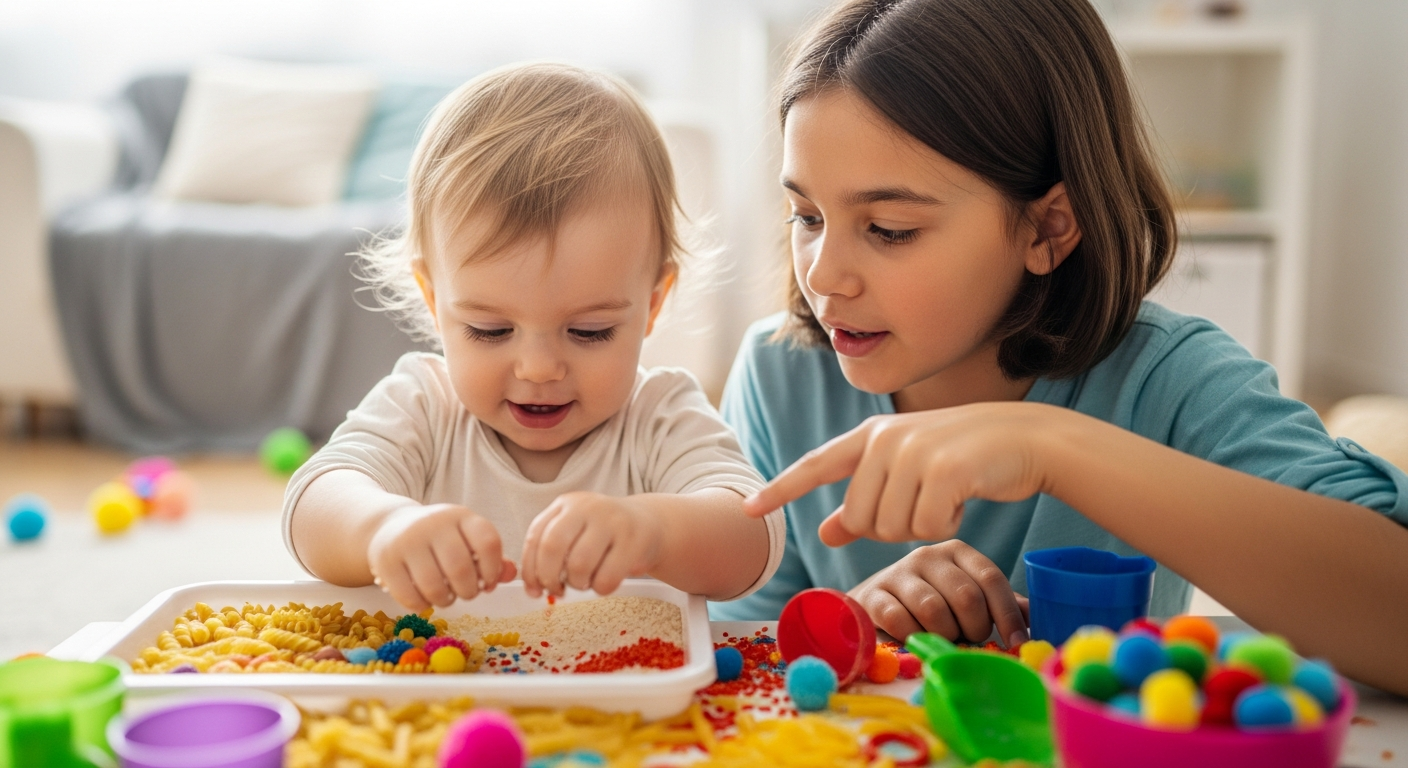
Table of Contents
- Introduction
- The Science Behind Sensory Play and Speech
- Setting Up Your Sensory Space
- Top DIY Toddler Sensory Activities
- Integrating Technology: Smart Screen Time
- Boosting Fine Motor and Cognitive Skills
- Real-Life Scenarios: Connecting Play to Speech Blubs
- Choosing the Right Plan for Your Family
- Practical Tips for Busy Parents
- Safety First: A Note on Supervision
- Fostering Emotional Connection
- Frequently Asked Questions
- Conclusion
Introduction
Did you know that by the time a child turns five, nearly 90% of their brain development is already complete? This staggering statistic highlights just how vital the toddler years are for building the foundational skills they will use for the rest of their lives. For many parents, the challenge isn't just finding things to do; it’s finding activities that actually support this rapid growth while keeping a busy toddler engaged.
We often see parents struggling to bridge the gap between play and learning, especially when a child is facing speech delays or sensory processing hurdles. At Speech Blubs, we understand this journey intimately because our founders grew up with speech challenges themselves. This personal history fuels our mission to empower every child to "speak their minds and hearts." We know that for the 1 in 4 children who require speech support, traditional methods can sometimes feel like a chore. That is why we advocate for joyful, play-based intervention.

The purpose of this blog post is to provide you with a comprehensive list of DIY toddler sensory activities that you can easily set up at home. We will explore the science behind sensory play, offer practical tips for managing the mess, and provide step-by-step instructions for activities ranging from "cloud dough" to "aquafaba foam." We will also show you how to pair these tactile experiences with our unique "smart screen time" to create a holistic learning environment. Sensory play is not just about making a mess; it is a vital tool for fostering communication, building confidence, and creating those joyful family moments that define childhood.
The Science Behind Sensory Play and Speech
Sensory play includes any activity that stimulates a child’s senses: touch, smell, taste, sight, and hearing. It also involves the less-talked-about senses like vestibular (balance) and proprioception (body awareness). But why is this so critical for language?
When toddlers engage in sensory-rich activities, they are building nerve connections in the brain's pathways. This leads to a child’s ability to complete more complex learning tasks and supports cognitive growth, language development, gross motor skills, social interaction, and problem-solving skills. For a child learning to talk, the physical sensation of "sticky," "cold," "crunchy," or "smooth" provides a concrete context for new vocabulary.
Our methodology at Speech Blubs is rooted in this same scientific foundation. We use a "video modeling" approach where children watch their peers perform speech exercises. This triggers mirror neurons in the brain—the same neurons that fire when a child watches someone else dig through a bin of rice or splash in a tub of bubbles. By combining these digital peer-to-peer observations with physical DIY toddler sensory activities, you are reinforcing the neural pathways required for communication. You can learn more about the evidence supporting our approach on our research page.
Setting Up Your Sensory Space
One of the biggest hurdles for parents when considering DIY toddler sensory activities is the fear of the "big mess." We hear you! It is important to set yourself up for success so that the experience is joyful for both you and your child.

Creating Boundaries
It helps to have some ground rules. We recommend using a large, shallow plastic bin to contain the materials. For even better results, place an old sheet or a waterproof tablecloth under the play area. This allows you to simply shake the "escaped" rice or sand back into the bin or the trash once play is over.
The "Stay in the Bin" Rule
Consistency is key. Teach your toddler that the materials must stay inside the container. If they start throwing the materials or intentionally dumping them, it’s okay to pause and say, "It looks like we are finished with this for today; we can try again later." This helps develop self-regulation and respect for the activity.
Choosing the Right Materials
For toddlers, especially those who still explore the world with their mouths, we prioritize "taste-safe" materials. This doesn't mean the activities are meant to be a snack, but it does mean they are non-toxic and won't cause harm if a small amount is ingested.
Top DIY Toddler Sensory Activities
Here are some of our favorite, easy-to-make sensory experiences that you can whip up in your kitchen.
1. The Magic of Cloud Dough
Cloud dough is a classic for a reason. It has a unique, silky texture that can be molded like wet sand but feels soft like flour. It is perfect for fine motor development as children squeeze and scoop.
- What you need: 8 cups of all-purpose flour and 1 cup of vegetable oil (or coconut oil).
- How to do it: Mix the two ingredients in a large bin. Use your hands to rub the oil into the flour until it feels like crumbly sand.
- Speech Connection: Use this time to practice descriptive words. Is it "soft"? Can you "squish" it? For a child working on their first sounds, the "s" in "soft" and "squish" is a great target.
2. Edible Aquafaba Foam
If you want the fun of bubbles without the stinging soap in the eyes, aquafaba is your best friend. It is made from the liquid found in a can of chickpeas!
- What you need: Liquid from one can of chickpeas and 1/2 teaspoon of cream of tartar.
- How to do it: Use a hand mixer to whip the liquid until stiff peaks form. It will look exactly like shaving cream.
- Activity Idea: Hide plastic letters or animal figurines inside the foam. If your child is using the "Animal Kingdom" section of our app, you can have them find the "cow" in the foam after they’ve practiced their "moo" sounds with their peers on screen.
3. Rainbow Rice Bins
Colored rice is visually stimulating and provides a wonderful auditory experience as it "pours" or "clinks" into metal bowls.
- What you need: Dry white rice, white vinegar, and food coloring.
- How to do it: Put 1 cup of rice in a baggie with 1 teaspoon of vinegar and several drops of food coloring. Shake it up and spread it on a tray to dry for an hour.
- Why it works: Rice bins are excellent for practicing "scooping" and "pouring," which are foundational fine motor skills.
4. Non-Newtonian Oobleck
Oobleck is a fascinating substance that acts like a liquid when poured but like a solid when you apply pressure. It is a fantastic way to introduce basic science concepts.
- What you need: 2 parts cornstarch to 1 part water.
- How to do it: Mix them together until you reach a gooey consistency.
- The Experience: Encourage your child to "punch" the surface to see it resist, then slowly sink their fingers in. This high-contrast sensory input is excellent for kids who are "sensory seekers."
5. Scented Homemade Playdough
While store-bought is fine, homemade playdough allows you to control the ingredients and add scents that provide an extra layer of sensory input.
- What you need: 2 cups flour, 1/2 cup salt, 2 tablespoons cream of tartar, 2 tablespoons oil, and 1.5 cups boiling water.
- The Secret Ingredient: Add cinnamon, nutmeg, or a drop of lavender essential oil to the mix.
- Learning Moment: Scents can trigger memories and help with word association. Ask your child, "Does this smell like a cookie?" or "Does this smell like a flower?"
Integrating Technology: Smart Screen Time
Many parents feel guilty about screen time, but we believe there is a significant difference between passive viewing (like watching cartoons) and "smart screen time." At Speech Blubs, we provide a tool for family connection, not a digital babysitter.
Our app is designed to be used alongside these physical activities. For example, if you are doing a "water play" sensory bin, you might use the "Underwater" section of Speech Blubs to learn about fish and bubbles. This dual approach—seeing the peer on screen say "bubble" and then feeling the physical bubbles in the tub—is incredibly powerful for language acquisition.
If you are unsure where to start with your child’s development, we recommend taking our quick 3-minute preliminary screener. It involves 9 simple questions and provides you with an assessment and a next-steps plan. Plus, it gives you access to a free trial of our platform.
Boosting Fine Motor and Cognitive Skills
DIY toddler sensory activities aren't just about the "feeling" of materials; they are also about the "doing."
Crushing and Hammering
Toddlers often have a lot of energy that needs a constructive outlet. Spreading chunks of baking soda on a tray and giving them a toy hammer is a satisfying way to build hand-eye coordination. It teaches them about cause and effect: "If I hit this, it turns to powder."
The "Magic" of Baking Soda and Vinegar
This is a classic kitchen experiment that never fails to delight. When you give a toddler a spray bottle filled with vinegar and have them spray a tray of baking soda, they witness an immediate chemical reaction.
- Why it helps speech: The "pop" and "fizz" of the bubbles are perfect "p" and "f" sounds to imitate. This kind of play reduces frustration and builds the confidence needed to try new vocalizations.
Color Recognition with Milk Explosions
Pour a thin layer of milk into a shallow dish, add drops of food coloring, and then touch the surface with a cotton swab dipped in dish soap. The colors will "explode" away from the swab. This visual wonder encourages a child to stay engaged for longer periods, increasing their "attention to task," which is a prerequisite for formal learning.
Real-Life Scenarios: Connecting Play to Speech Blubs
Let’s look at how these activities solve common parental challenges.
Scenario: The Late Talker Who Loves Vehicles If your 3-year-old is a "late talker" but is obsessed with trucks, you might worry that they aren't hitting their milestones. You can set up a "muddy car wash" using cocoa powder and water (creating chocolate "mud"). While they play, you can open the "Beep Beep" section of the Speech Blubs app. As they see a peer on the screen make a "Vroom" sound, they are highly motivated to mimic that sound while pushing their actual toy truck through the chocolate mud. This creates a joyful learning moment that feels like play, not therapy.
Scenario: The Child Who Is Overwhelmed by Texture Some children are "sensory avoidant" and don't like getting their hands dirty. For these kids, we suggest "mess-free" sensory play. Put paint or hair gel in a sealed Ziploc bag and tape it to a window. They can "squish" and move the material around without ever touching it. You can see how other parents have navigated these sensory preferences by reading our testimonials.
Choosing the Right Plan for Your Family
We want to be as transparent as possible about how you can access our resources. While we offer a wealth of free information on our homepage, our full suite of tools is available through two main subscription options:
- Monthly Plan: This costs $14.99 per month. It gives you full access to the Speech Blubs app's core features.
- Yearly Plan: This is our most popular and high-value choice. It costs $59.99 per year, which breaks down to just $4.99 per month.
Why the Yearly Plan is the Best Value: By choosing the Yearly plan, you aren't just saving 66% compared to the monthly rate. You also unlock exclusive benefits that are not available on the monthly plan:
- A 7-day free trial: You can explore everything we offer risk-free before committing.
- Reading Blubs App: You get full access to our secondary app designed to help toddlers transition from speech to reading.
- Early Access: You get to see our new updates and features before anyone else.
- Priority Support: Our team guarantees a 24-hour response time for any questions you might have.
To get started and give your child the tools they need to succeed, you can download Speech Blubs on the App Store or find us on Google Play.
Practical Tips for Busy Parents
We know your time is precious. Most of these DIY toddler sensory activities can be set up in under 10 minutes.
- Prep in Batches: You can make a large batch of colored rice or cloud dough on a Sunday, and it will keep for months in an airtight container.
- Use What You Have: You don’t need fancy toys. A kitchen whisk, a colander, and some plastic measuring cups are often more interesting to a toddler than expensive "sensory toys."
- Follow Their Lead: If your child wants to spend 45 minutes just pouring water from one cup to another, let them! This repetition is how they master the physical laws of their world and gain the confidence to communicate about it.
Safety First: A Note on Supervision
While we focus on taste-safe and non-toxic materials, adult supervision is always required for these activities. Small items like dried beans or certain toys can be choking hazards for children under three. Always stay within arm's reach and engage in the play with them. Your participation is what turns a simple bin of flour into a rich "early learning experience."
Fostering Emotional Connection
Beyond the developmental milestones, the real value of these activities is the connection they foster. In a world of digital distractions, sitting on the floor with your child and exploring the "gooeyness" of oobleck together tells them that their world is interesting and that you are a part of it. This emotional security is the bedrock upon which all communication is built.
When you use the peer-to-peer modeling in our app, you are showing your child that other kids are learning just like they are. It reduces the "performance pressure" often associated with speech therapy and replaces it with the joy of imitation. You can start this journey today by creating your account and signing up on our web page.
Frequently Asked Questions
1. At what age can I start sensory play with my toddler?
You can start as soon as they can sit up and interact with objects, usually around 6 to 9 months. For younger toddlers, stick exclusively to taste-safe materials like edible foams (aquafaba) or plain water play. As they grow and stop "mouthing" everything, you can introduce things like kinetic sand or colored rice.
2. My child hates getting their hands messy. Should I force them?
Absolutely not. Sensory sensitivity is very real. If a child finds a texture distressing, it can trigger a "fight or flight" response, which is the opposite of a learning state. Start with "dry" sensory play (like large pasta shapes) or use tools like spoons and scoops so they don't have to touch the material directly. Over time, they may become more curious and willing to explore.
3. How often should we do these activities?
There is no set rule, but consistency helps. Even 15 minutes of dedicated sensory play three times a week can make a difference. Many parents find it helpful to integrate it into their existing routine—for example, doing a "foam party" in the bathtub during the evening bath time.
4. Can sensory play actually help with speech delays?
While sensory play is not a replacement for professional speech therapy, it is a powerful supplement. It builds the foundational cognitive and motor skills necessary for speech. By providing a rich environment for vocabulary and reducing the frustration of communication, it helps create a child who is more willing and able to try to speak.
Conclusion
Creating a world of discovery for your child doesn't require a degree in childhood development or a massive budget. With a little flour, some water, and a bit of imagination, you can provide your toddler with the DIY toddler sensory activities they need to thrive. These moments of play are where the "magic" happens—where a first word is whispered, where a difficult sound is mastered, and where a child learns that their voice matters.
At Speech Blubs, we are honored to be a part of your family’s journey. Our goal is to provide you with the most effective, joyful, and scientifically backed tools to help your child "speak their minds and hearts." Whether you are using our video modeling to spark imitation or digging through a bin of rainbow rice, you are doing the important work of building your child's future.
Ready to take the next step? We invite you to download the Speech Blubs app on the App Store or Google Play today. For the best value and the full suite of features—including the Reading Blubs app and priority support—make sure to select our Yearly plan. Your 7-day free trial is waiting for you. Let's start playing, learning, and growing together!
Sobre el autor