
Engaging Busy Toddler Outdoor Activities for Growth
 Por Speech Blubs Team•18 mar 2026•15 min.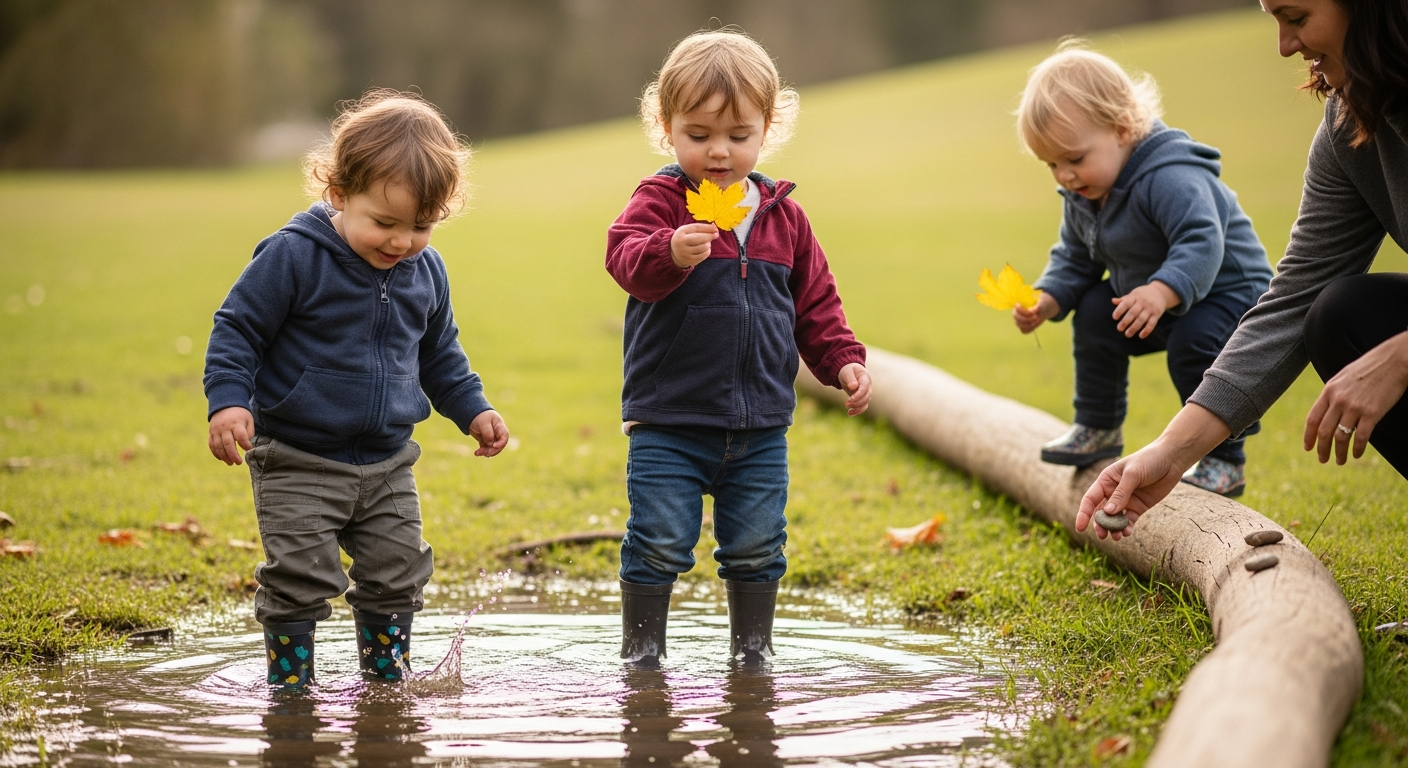
Table of Contents
- Introduction
- The Power of Outdoor Play for Toddler Development
- Sensory-Rich Outdoor Activities for Busy Toddlers
- Artistic Expression Under the Open Sky
- Water and Ice: Cool Summer Fun for Communication
- Quick and Easy Backyard Games for Busy Days
- Using Outdoor Time to Support Speech and Language
- Transitioning from Outdoor Play to "Smart Screen Time"
- Understanding the Value of Speech Blubs
- Creating Lasting Memories and Foundational Skills
- Frequently Asked Questions
- Conclusion
Introduction
Have you ever watched a toddler spot a dandelion in a crack in the sidewalk and treat it like the most magnificent treasure in the world? Or perhaps you’ve seen the pure, unadulterated joy on their face when they realize they can make a "splat" sound by throwing a wet sponge against a fence? At Speech Blubs, we live for these moments of discovery because we know that for a child, the world is one giant classroom. However, for many parents, the pressure to keep a "busy" toddler entertained while also supporting their developmental milestones can feel overwhelming. You want them to have fun, but you also want to ensure they are building the foundational skills they need to "speak their minds and hearts."
The purpose of this post is to provide you with a comprehensive roadmap of busy toddler outdoor activities that do more than just burn off energy. We will explore over 50 ideas ranging from messy sensory play and backyard STEM projects to creative art and water-based fun. More importantly, we’ll show you how to weave language development and communication skills into every "mud pie" and "chalk masterpiece."

Our mission at Speech Blubs is rooted in the personal experiences of our founders, who grew up with speech challenges themselves. We understand that play is the most powerful tool for learning. By the end of this article, you will have a toolkit of realistic, joyful activities that foster family connection and build your child's confidence, perfectly paired with our "smart screen time" approach to language learning.
The Power of Outdoor Play for Toddler Development
Before we dive into the specific activities, it is essential to understand why the outdoors is such a fertile ground for growth. When a child is outside, their senses are fully engaged. They feel the wind, hear the birds, smell the cut grass, and see the vibrant colors of nature. This multi-sensory input is like fuel for a developing brain.
From a speech and language perspective, the outdoors provides a never-ending supply of "natural narrations." When you are playing outside with your busy toddler, you aren't just supervisors; you are linguistic guides. You can name the colors of the flowers, describe the texture of the mud, and use action words like "jump," "run," "splash," and "pour." This rich vocabulary exposure happens naturally in the context of play, making it far more effective than rote memorization.
Furthermore, outdoor play supports gross motor development. Climbing, running, and balancing help children develop core strength and coordination, which are surprisingly linked to speech. The same neurological pathways that control complex physical movements are also involved in the fine motor control required for clear articulation. By supporting your child’s physical play, you are indirectly supporting their ability to form sounds and words.
Sensory-Rich Outdoor Activities for Busy Toddlers
Sensory play is often the most engaging type of activity for a toddler because it allows them to explore the physical properties of the world around them.
1. The Classic Mud Kitchen
You don't need an expensive wooden setup to create a mud kitchen. A few old pots, pans, and spoons, combined with a patch of dirt and a little water, will provide hours of entertainment. For a parent whose 3-year-old "late talker" loves animals, the "Animal Kingdom" section of our app offers a fun, motivating way to practice sounds like "moo" and "baa." You can bring those plastic farm animals into the mud kitchen, giving them a "mud bath" while practicing animal noises together.

2. Edible Sludge and Taste-Safe Foam
For younger toddlers who still explore everything with their mouths, taste-safe sensory bins are a must.
- Edible Sludge: Mix cornstarch, water, and a bit of cocoa powder to create a chocolate-scented "sludge" that is entirely safe if a curious toddler takes a lick.
- Chickpea Foam: Use the liquid from a can of chickpeas (aquafaba) and whip it with a hand mixer until it forms stiff peaks. Add a drop of food coloring for a vibrant, safe foam that feels incredible to squishy little hands.
3. Chocolate Oobleck Construction Site
Oobleck (a mixture of cornstarch and water) is a "non-Newtonian fluid" that acts like a solid when pressed and a liquid when released. Add cocoa powder to make it look like "dirt" and throw in some toy construction trucks. As your child moves the trucks through the goo, you can practice functional language like "stop," "go," "push," and "stuck."
4. Lemon and Herb Water Bin
Fill a large tub with water and add sliced lemons, limes, and fresh herbs like mint or rosemary. Give your child ladles and cups. This activity is a sensory delight that encourages descriptive language. Is the water "cold"? Are the lemons "sour"? Does the mint smell "good"?
Artistic Expression Under the Open Sky
Art doesn't have to be confined to a desk. In fact, taking art supplies outside removes the fear of messes and allows for "big" movements that toddlers love.
5. Graffiti Art with Squirt Bottles
Fill dollar-store squirt bottles with water and a few drops of washable paint or food coloring. Tape a large piece of butcher paper to a fence or lay it on the grass. This activity is fantastic for building hand strength. As they spray, you can model "action" words. If you find your child is struggling with specific hand movements, you can see how other parents have used our tools to improve coordination in our Testimonials section.
6. Puffy Sidewalk Chalk
Mix equal parts flour and water with a bit of dish soap and washable paint. Put the mixture into squeeze bottles. The "paint" dries into a raised, puffy texture on the sidewalk. This is a great way to practice drawing shapes or letters while talking about how the paint feels "soft" or "bumpy."
7. Giant Window Painting
If you have a glass sliding door or large windows, let your toddler paint directly on the glass using washable tempera paint. It’s a unique sensory experience and incredibly easy to clean with a garden hose. This vertical surface play is excellent for shoulder stability and gross motor development.
8. Fly Swatter Painting
This is exactly what it sounds like—and toddlers love it. Lay out a large sheet of paper, put some dollops of paint on it, and let your child "thwack" the paint with a clean fly swatter. It’s loud, it’s messy, and it’s a wonderful way to release energy while practicing "power words" like "bang," "splat," and "hit."
Water and Ice: Cool Summer Fun for Communication
Water is the ultimate "low-cost, high-engagement" toy. It is endlessly versatile and inherently calming for most children.
9. The Sponge Target Game
Draw a large bullseye on a fence or a hanging shower curtain liner using washable paint. Fill a bucket with water and sponges. The goal is to soak the sponge and hit the target. This game is perfect for practicing turn-taking and following simple directions. If your child is working on specific sounds, you can play a game where they have to say a "target word" from the Speech Blubs app before they get to throw their sponge.
10. Ice Smash and Treasure Hunt
Freeze small plastic toys (dinosaurs, cars, or letters) in a large block of ice. Give your toddler a toy hammer or a spray bottle filled with warm water to "rescue" the toys. This activity teaches patience and cause-and-effect. Our method is backed by science, focusing on peer-to-peer imitation, and you can read more about how this "video modeling" works on our Research page.
11. Pouring Stations
Sometimes the simplest activities are the best. A bin of water and various containers (measuring cups, funnels, recycled milk jugs) can keep a toddler occupied for a long time. Pouring helps with hand-eye coordination and spatial awareness. You can narrate the process: "The cup is full," "Now it's empty," "Drip, drip, drip!"
12. Colorful Ice Cube Melting
Freeze water with food coloring in ice cube trays. Put the colored cubes in a clear bin of water and watch them melt. This is a beautiful way to teach color mixing and the concept of temperature.
Quick and Easy Backyard Games for Busy Days
Not every outdoor activity requires a trip to the store for supplies. Some of the best "busy toddler" moments come from simple ideas using things you already have.
13. The Painter’s Tape Road
Take a roll of blue painter's tape and create a "road" or "maze" on your deck or patio. Bring out the toy cars and let your child follow the path. This is a great way to practice prepositions like "over," "under," "around," and "through."
14. Nature Scavenger Hunt
Create a simple visual list of things for your child to find: a green leaf, a round stone, a yellow flower, a stick. As they find each item, they bring it back to the "base." This builds vocabulary and encourages them to observe details in their environment.
15. The "Wash the Toys" Station
Fill a bin with soapy water and another with clean water. Bring out the plastic tricycles, cars, or dolls and let your child give them a "car wash." Toddlers love feeling helpful and mimicking adult chores. This activity is excellent for practicing "sequence" language: "First we scrub, then we rinse, then we dry."
16. Bubble Snake Blowers
Cut the bottom off a plastic water bottle and slip a clean sock over the end, securing it with a rubber band. Dip the sock end into a mixture of dish soap and water, then blow through the mouthpiece of the bottle. It creates a long "snake" of bubbles that fascinates children of all ages.
Key Takeaway: The goal of these activities isn't perfection or a finished product. It's about the process of exploration and the "joyful family learning moments" you create together.
Using Outdoor Time to Support Speech and Language
While your child is busy playing, you can use these moments to subtly boost their communication skills. At Speech Blubs, we emphasize "video modeling," where children learn by watching and imitating their peers. You can apply a similar principle outdoors through "parent modeling."
- Self-Talk: Narrate what you are doing. "I am filling the bucket with water. It's getting heavy!"
- Parallel Talk: Narrate what your child is doing. "You are jumping in the puddle! Splash! You are so fast."
- Expansion: If your child says a single word like "Car," you can expand it: "Yes, a red car! The red car is going fast."
- Wait Time: After you ask a question or model a sound, wait at least 5-10 seconds. Toddlers need extra time to process information and formulate a response.
Unsure if your child could benefit from extra support? Take our quick 3-minute preliminary screener to get a simple assessment and a free 7-day trial. It involves 9 simple questions and provides an assessment and next-steps plan tailored to your child’s needs.
Transitioning from Outdoor Play to "Smart Screen Time"
After a long session of physical outdoor play, it’s natural for both you and your toddler to need a "reset" period. This is where Speech Blubs fits perfectly into your daily routine. Instead of turning on passive cartoons, which provide little educational value, we offer a "smart screen time" experience.
Our app is designed to be a bridge between physical play and focused learning. While your child is resting their body, they can engage their mind by watching other children (their "peers") perform speech exercises. This peer-to-peer modeling is highly effective because toddlers are naturally inclined to imitate other kids.
We provide a screen-free alternative to passive viewing and a powerful tool for family connection. We encourage you to sit with your child, use the fun face filters in the app together, and celebrate every sound they make. It’s not about replacing outdoor play; it’s about supplementing it with high-quality, scientifically-backed tools.
Understanding the Value of Speech Blubs
We want to be transparent about how you can join our community. We offer two main paths to help your child find their voice:
- Monthly Plan: For $14.99 per month, you get full access to the Speech Blubs app and its library of over 1,500 activities.
- Yearly Plan (Best Value): For $59.99 per year, which breaks down to just $4.99 per month, you receive the most comprehensive support for your child's journey.
Why choose the Yearly Plan? It is the clear best choice for families committed to long-term growth. When you choose the yearly option, you get:
- A 7-day free trial to explore everything we offer.
- The extra Reading Blubs app, which helps transition speech skills into early literacy.
- Early access to all new updates and features.
- 24-hour support response time from our dedicated team.
The Monthly plan does not include these additional benefits, making the Yearly plan a 66% savings and a much more robust resource for your family. Ready to get started? Download Speech Blubs on the App Store or Google Play to begin.
Creating Lasting Memories and Foundational Skills
The beauty of these busy toddler outdoor activities is that they build more than just muscles or vocabulary; they build confidence. When a child successfully builds a "mud brick" house or hits a sponge target, they feel a sense of mastery. This confidence carries over into their communication. A child who feels capable in their physical world is more likely to take the risks necessary to try new sounds and words.
At Speech Blubs, we don't promise that your child will be giving public speeches in a month. Development is a journey, not a race. Instead, we focus on fostering a love for communication, reducing the frustration that comes with speech delays, and creating joyful family learning moments. Whether you are outside in the garden or inside using our app, every interaction is a building block for their future.
Frequently Asked Questions
1. How can I make outdoor activities safe for a toddler who puts everything in their mouth?
Stick to "taste-safe" sensory activities. Use food-based materials like whipped chickpea water (aquafaba), cornstarch and water (oobleck), or even plain water with large pieces of fruit. Always supervise play and ensure that small items like pebbles or small toys are kept out of reach if your child is in a heavy "mouthing" phase.
2. My child has a very short attention span. How do I keep them engaged?
Toddlers are naturally "busy," and their attention spans are typically only 3-5 minutes per year of age. Don't feel discouraged if they move quickly from one thing to another. The "set-up" should be fast. Focus on open-ended activities like a water bin or a pile of dirt where there is no "wrong" way to play. If they leave an activity, let them! They may come back to it later with a fresh perspective.
3. Can these outdoor activities really help with speech delays?
Yes! While they aren't a replacement for professional speech therapy when needed, they provide the "linguistic nutrition" a child needs. Outdoor play lowers stress and increases engagement, making the brain more receptive to learning. By narrating their play and using functional language (like "more," "up," "help"), you are creating a language-rich environment that supports their overall development.
4. Is the Speech Blubs app intended to be used alone by the child?
We always frame our activities with the understanding of adult co-play and support. While the app is engaging, its true power is unlocked when you use it with your child. It acts as a prompt for you to interact, imitate, and play together. It’s a tool for connection, not a digital babysitter.
Conclusion
Outdoor play is a vital part of a happy, healthy childhood. By providing your busy toddler with a variety of outdoor activities—from the messy delight of a mud kitchen to the focused challenge of a nature scavenger hunt—you are giving them the best possible start in life. These experiences build the sensory, motor, and linguistic foundations that will allow them to eventually "speak their minds and hearts."
Remember that you don't have to do this alone. At Speech Blubs, we are here to support you with "smart screen time" that complements your active lifestyle. We invite you to join the thousands of families who have found joy and progress through our unique approach.
Ready to jumpstart your child's communication journey? Create your account and begin your 7-day free trial today. We highly recommend choosing the Yearly Plan to take advantage of the 66% savings, the bonus Reading Blubs app, and the full suite of features designed to help your child thrive. Let’s make this summer a season of growth, laughter, and a whole lot of "splatting" sponges!
Sobre el autor