
Engaging Earth Day Toddler Activities for Home and Play
 Por Speech Blubs Team•25 mar 2026•14 min.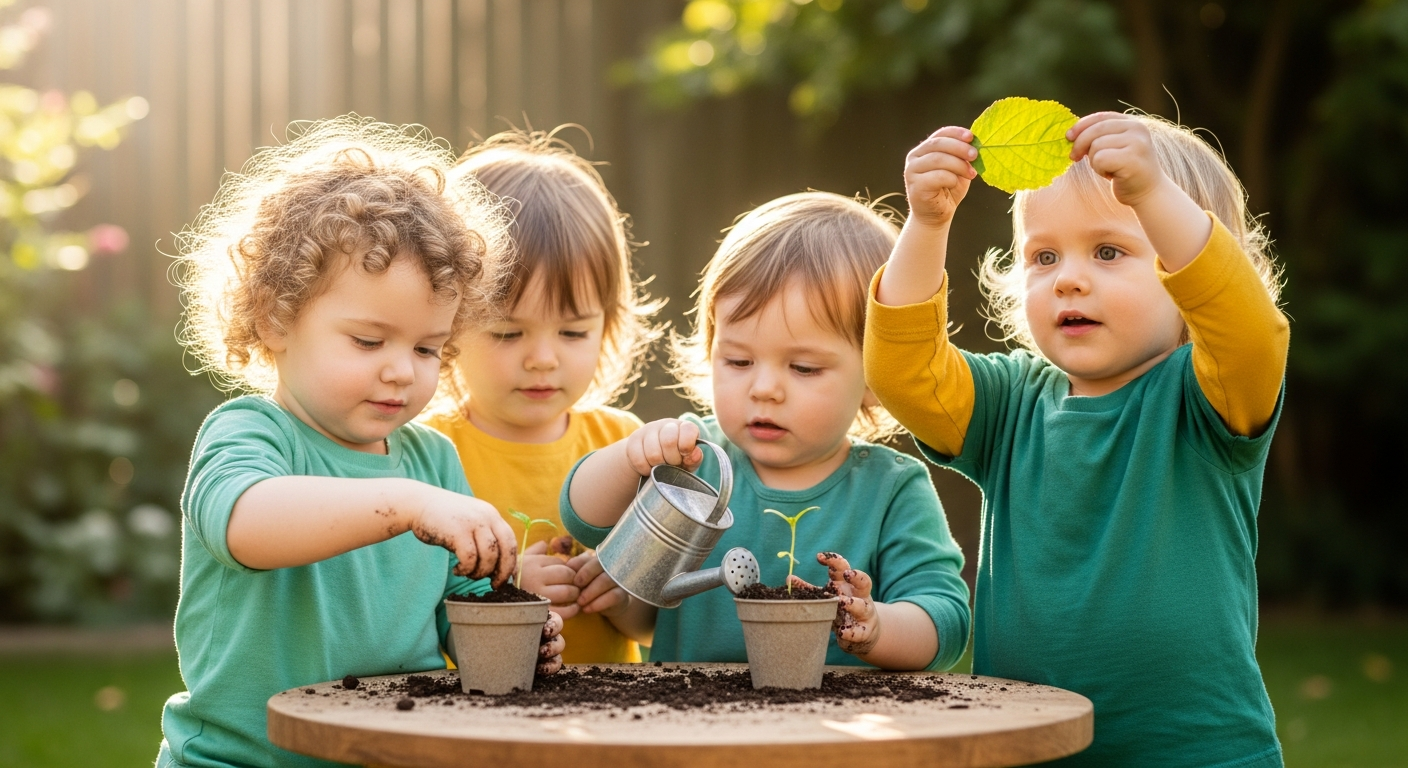
Table of Contents
- Introduction
- The Vital Link Between Nature and Speech Development
- Sensory Play: Earth-Themed Explorations
- Creative Arts: Painting the Planet
- Outdoor Adventures: Connecting with the Environment
- Building Communication Through Eco-Friendly Habits
- How Speech Blubs Supports Holistic Development
- Choosing the Right Plan for Your Family
- More Eco-Friendly Activity Ideas
- Realistic Expectations for Your Child's Progress
- Conclusion
- FAQ
Introduction
Have you ever stopped to watch a toddler discover a ladybug for the first time? The wide-eyed wonder, the tiny finger pointing in excitement, and the inevitable attempt to babble a name for their new spotted friend are more than just cute moments—they are foundational building blocks for communication. Nature provides a rich, multisensory classroom where every leaf, rock, and rain puddle becomes a catalyst for speech development. As we approach Earth Day, we have a unique opportunity to combine environmental stewardship with language-boosting play.
At Speech Blubs, we believe in empowering children to "speak their minds and hearts." This mission is deeply personal to us because our founders all grew up with speech challenges themselves. They created the very tool they wished they had: a way to blend scientific principles with joyful play. In this guide, we will explore a variety of Earth Day toddler activities that foster a love for our planet while simultaneously building the vocabulary, confidence, and motor skills your child needs to thrive. We will cover everything from sensory bins and nature-based crafts to practical ways you can use "smart screen time" to reinforce these real-world experiences. By the end of this article, you will have a comprehensive toolkit of activities that make every day Earth Day, all while supporting your child's journey toward expressive communication.

The Vital Link Between Nature and Speech Development
Before we dive into the activities, it is helpful to understand why the great outdoors is such a powerful ally for parents of toddlers, especially those who may be experiencing speech delays. Speech is not just about the mouth; it is a whole-body experience involving sensory processing, cognitive categorization, and social interaction. When a child is outside, they are bombarded with natural "language prompts." The crunch of a dry leaf, the whistling of the wind, and the vibrant green of new grass provide immediate, tangible things to talk about.
For a parent whose 3-year-old "late talker" loves animals, the "Animal Kingdom" section of our app offers a motivating way to practice "moo" and "baa" sounds before heading to a local farm or even just looking for birds in the backyard. This connection between a digital learning tool and physical reality is what we call "smart screen time." Unlike passive viewing—like sitting silently in front of a cartoon—active play and video modeling encourage children to participate. Our scientific methodology is rooted in the idea that children learn best by watching and imitating their peers. When they see a "peer model" in the app making a sound, and then they see a real bird making a similar sound outside, the brain makes a powerful connection.
Sensory Play: Earth-Themed Explorations
Sensory play is the "work" of a toddler. It allows them to explore textures, temperatures, and consistencies, which helps regulate their nervous systems and provides a platform for new vocabulary. Here are some Earth-themed sensory activities that are perfect for Earth Day.
Earth Day Oobleck
Oobleck is a fascinating non-Newtonian fluid that acts as both a solid and a liquid. It is a fantastic way to teach opposites like "hard" and "soft" or "fast" and "slow."
- Materials: 2 cups of cornstarch, 1 cup of water, and blue and green food coloring.
- The Activity: Mix the cornstarch and water in a large bin. Split the mixture into two bowls; tint one blue (for the oceans) and one green (for the land). Swirl them together in a large tray.
- Speech Connection: As your child squeezes the oobleck, use descriptive words. "Look, it’s melting!" or "It feels gooey." Encourage your child to repeat these expressive words. If you are curious about how your child is hitting these language milestones, you can take our 3-minute preliminary screener to get a quick assessment and a free 7-day trial.
Ocean Cleanup Sensory Bin
This activity introduces the concept of environmental care through a simple "rescue" mission.

- Materials: A bin of water, blue food coloring, plastic ocean animals, and "trash" (clean scraps of plastic, bottle caps, or ripped paper).
- The Activity: Place the animals and the "trash" in the water. Give your child a pair of tongs or a small net and ask them to "save the fish" by removing the trash.
- Speech Connection: Use action verbs like "scoop," "splash," "clean," and "help." This mimics the goal-oriented play found in the Speech Blubs app, where children are rewarded with joyful animations for their efforts.
Creative Arts: Painting the Planet
Art is a magnificent way for toddlers to express themselves before they have the full range of adult vocabulary. It builds fine motor skills—the same muscles needed for clear speech.
Mess-Free Paper Plate Earths
If you want the fun of painting without the cleanup, this is the activity for you.
- Materials: A paper plate, blue and green washable paint, and a large gallon-sized zip-lock bag.
- The Activity: Put a few dollops of blue and green paint on the paper plate. Carefully slide the plate into the zip-lock bag and seal it tightly. Let your child squish and push the paint around from the outside of the bag.
- Speech Connection: Talk about the colors. "Where is the blue?" "Can you find the green?" This helps with color recognition and following simple directions.
Balloon Stamping Fun
Balloons provide a unique texture and shape that toddlers find hilarious.
- Materials: Small balloons (slightly inflated), blue and green paint, and white construction paper.
- The Activity: Dip the bottom of the balloon into the paint and "stamp" it onto the paper to create round Earth shapes.
- Speech Connection: Every time the balloon hits the paper, say "Pop!" or "Stamp!" The repetitive "p" and "m" sounds are great for early lip-closure practice.
Expert Tip: Peer imitation is the strongest tool in a toddler’s kit. When you do the activity alongside them, and they see other children doing similar things in a "smart screen time" setting, their mirror neurons fire, making it easier for them to copy your sounds and movements.
Outdoor Adventures: Connecting with the Environment
Nothing beats the real thing. Taking your Earth Day activities outside allows for a larger range of motion and even more sensory input.
Nature Scavenger Hunts
A scavenger hunt is an excellent way to practice nouns and spatial awareness.
- Materials: An empty egg carton with pictures of items to find (a leaf, a rock, a yellow flower, a twig) taped to the inside of the lid.
- The Activity: Walk through a park or your backyard and help your child find each item. Once found, place it in a slot in the egg carton.
- Speech Connection: As you find each item, say the name clearly. "You found a rock! It is smooth." You can see how other families have used these types of interactive games to spark language growth by reading our parent testimonials.
Seed Balls and "Wild" Gardening
Teaching a child how to grow something is a lesson in patience and nurturing.
- Materials: Air-dry clay, soil, water, and wildflower seeds.
- The Activity: Mix the ingredients together and let your toddler roll them into small balls. Once dry, go on a walk and "toss" them into areas that need some flowers.
- Speech Connection: Focus on the "waiting" aspect. "The flower is sleeping," "Soon it will grow big." This introduces the concept of time and sequences (first we plant, then it grows).
Building Communication Through Eco-Friendly Habits
Earth Day isn't just about crafts; it's about building a lifestyle. Toddlers love to feel helpful and included in adult "work."
Sorting Trash and Recyclables
Categorization is a major cognitive milestone that precedes complex language.
- The Activity: Set up three bins: one for paper, one for plastic, and one for "landfill." Use pictures to label each bin. Let your child help you sort the daily recycling.
- Speech Connection: Use this time to practice the "k" and "p" sounds. "Plastic," "Paper," "Can." Sorting also helps them understand that different things have different names and "homes."
The Power of Family Connection
At Speech Blubs, we view our app as a powerful tool for family connection, not a replacement for it. Use the app together for 10–15 minutes, then put the device away and head outside to replicate what you saw. If your child watched a peer model "blowing bubbles" in the app, go outside and blow real bubbles. This reinforces the learning and creates a joyful family moment. You can Download Speech Blubs on the Apple App Store or Google Play Store to begin this journey.
How Speech Blubs Supports Holistic Development
We understand that the 1 in 4 children who need speech support require more than just occasional activities—they need a consistent, engaging environment. Our app is designed to be a "smart" alternative to the passive, overstimulating content often found online.
The Science of Video Modeling
Our unique approach centers on video modeling. When children watch their peers perform a task or say a word, they are more likely to attempt it themselves. This reduces the frustration often felt by "late talkers" because they don't feel "taught" in a clinical sense; they feel like they are playing with a friend. This methodology is a core part of how we help children "speak their minds and hearts."
Bridging Play and Speech Therapy
While our app is a powerful supplement, we always encourage parents to see it as part of a larger plan that may include professional therapy. The goal is to create a love for communication. Whether it’s through an Earth Day craft or an interactive session in our "Animal Kingdom," we want your child to feel the joy of being understood. For parents who are ready to dive in, you can create your account and start your 7-day free trial today.
Choosing the Right Plan for Your Family
We want to be transparent about how you can best access our resources to support your child's growth. We offer two main paths:
- Monthly Subscription: At $14.99 per month, this is a great way to test the waters.
- Yearly Subscription: This is our most popular and highest-value option. At $59.99 per year, the cost breaks down to just $4.99 per month—a 66% savings compared to the monthly plan.
The Yearly plan is designed to provide the most comprehensive support for your child's development. It includes:
- A 7-day free trial: Perfect for exploring the app with your child risk-free.
- The Reading Blubs app: An extra tool to help transition from speech to early literacy.
- Priority Support: 24-hour response times to help you with any questions.
- Early Access: Be the first to try our new updates and features.
To get the full suite of features and the best possible value, we highly recommend the Yearly plan. You can sign up on the web to get started immediately.
More Eco-Friendly Activity Ideas
If you have already finished your scavenger hunt and made your seed balls, here are a few more quick ideas to keep the Earth Day spirit alive throughout the month of April:
- Nature Shakers: Fill an old, clean plastic bottle with small pebbles or dried beans. Seal the lid tightly (we recommend a bit of hot glue for safety). Use it to make music and practice rhythm!
- Flower Pressing: Pick a few fallen flowers and place them between the pages of a heavy book. Check on them in a week. This is a great way to practice the word "dry" and "flat."
- Litter Picking (Safety First!): Give your toddler a pair of "grabbers" (child-sized tongs) and help them pick up paper scraps in your local park. Always wear gloves and supervise closely.
- Water Painting: Give your child a cup of water and a paintbrush. Let them "paint" the sidewalk or a fence. As the water evaporates, talk about how it "disappeared."
Realistic Expectations for Your Child's Progress
As experts in child development, we want to ensure you have a positive and realistic experience. Development is not a race, and every child follows their own timeline. You won't see your child giving public speeches in a month, but you will see the benefits of the process.
By engaging in these Earth Day toddler activities, you are fostering a love for communication, building their confidence, and reducing the frustration that comes with speech delays. You are creating foundational skills—like imitation, turn-taking, and vocabulary building—that will serve them for a lifetime. Think of these activities and the Speech Blubs app as tools to create joyful family learning moments.
Conclusion
Earth Day is more than just a date on the calendar; it is an invitation to slow down and connect with our children and the world around them. By engaging in simple, sensory-rich activities like making oobleck, sorting recycling, or going on a nature scavenger hunt, you are providing your toddler with the "raw materials" for language. You are teaching them that their voice matters and that the world is a place worth talking about.
At Speech Blubs, we are honored to be a part of your family’s journey. Our mission to help every child "speak their minds and hearts" drives everything we do, from our scientific research to the joyful peer models in our app. We encourage you to take the next step in your child's development.
Ready to get started? Download Speech Blubs on the App Store or Google Play today and begin your 7-day free trial. For the best value, including access to Reading Blubs and early updates, be sure to select our Yearly plan. Let’s make this Earth Day the start of a wonderful new chapter in your child’s communication journey!
FAQ
1. Are these Earth Day activities suitable for a toddler with a significant speech delay?
Yes, absolutely! These activities are designed to be sensory-focused, which is ideal for children with speech delays. They provide non-verbal ways to engage (like squishing oobleck or sorting plastic) while giving you, the parent, many opportunities to model simple, repetitive words. Combining these with the video modeling in the Speech Blubs app can help bridge the gap between observation and vocalization.
2. How much time should my toddler spend on the Speech Blubs app each day?
We recommend "smart screen time," which means short, focused bursts of 10 to 15 minutes a day. The goal is for the app to spark interest that you then follow up on with real-world activities, like the Earth Day projects mentioned above. Co-playing with your child while using the app is the best way to ensure they are learning and stay engaged.
3. Do I need special materials for these Earth Day activities?
Most of these activities use common household items like paper plates, cornstarch, water, and food coloring. For the outdoor activities, nature provides the materials! Our goal is to make learning accessible and fun without requiring expensive kits. We emphasize upcycling and using what you already have to stay true to the Earth Day spirit.
4. What is the difference between the monthly and yearly Speech Blubs plans?
The monthly plan is $14.99 and provides full access to the core Speech Blubs features. The yearly plan is $59.99 (only $4.99/month), which saves you 66%. Crucially, the yearly plan also includes a 7-day free trial, the Reading Blubs app, 24-hour support response times, and early access to all new app updates. It is the most comprehensive and cost-effective way to support your child's long-term progress.
Sobre el autor