
Engaging Rainy Day Activity Toddler Ideas for Home Play
 Por Speech Blubs Team•18 mar 2026•14 min.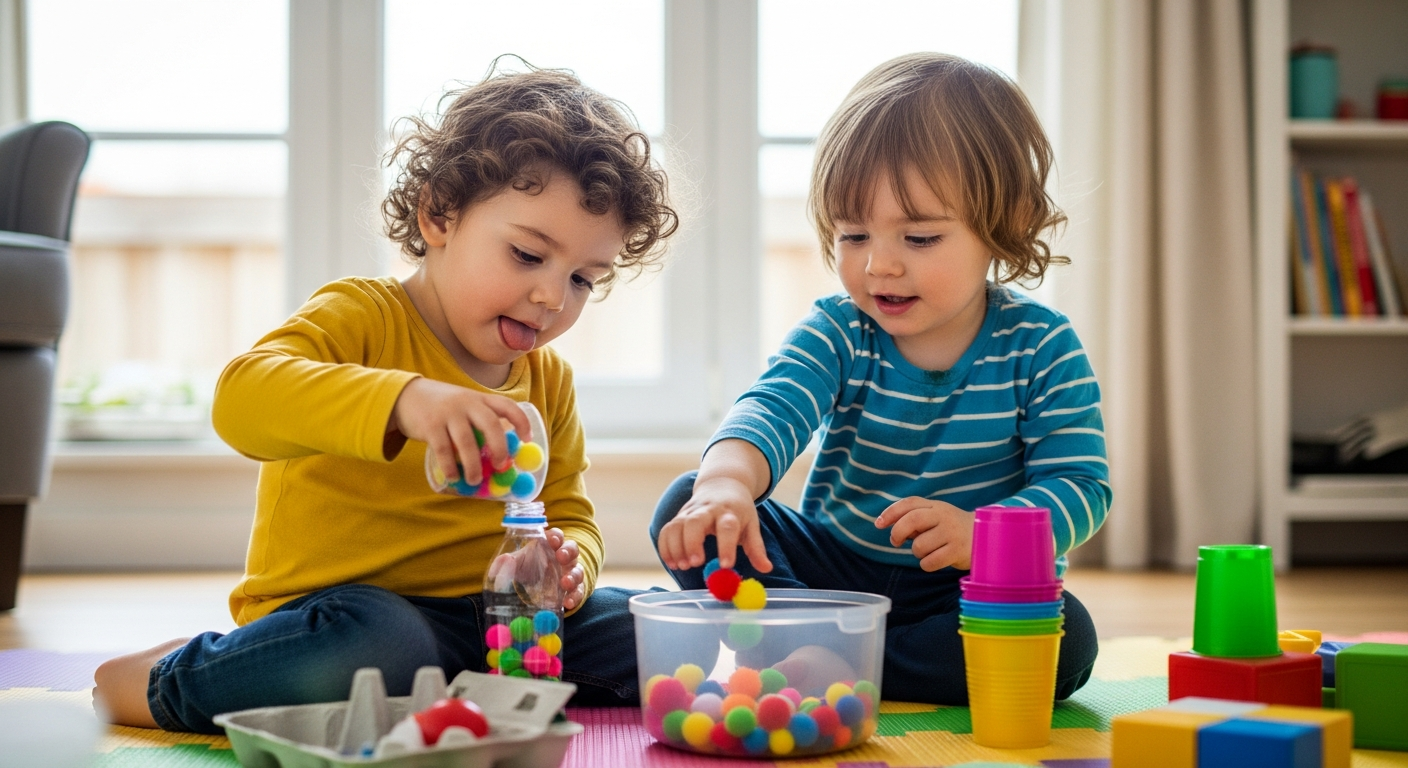
Table of Contents
- Introduction
- Why Rainy Days Are Perfect for Language Development
- High-Energy "Energy Busters" for Active Toddlers
- Fine Motor Skills and Focus-Based Activities
- Creative and Imaginative Play Ideas
- Sensory Play for Rainy Days
- The Role of "Smart Screen Time" on Rainy Days
- Making Rainy Day Activities Educational and Fun
- Practical Considerations: Space and Safety
- Choosing the Right Plan for Your Family
- Conclusion
- Frequently Asked Questions
Introduction
It starts with a single pitter-patter against the windowpane, and before you know it, the sky has opened up, turning your backyard into a no-go zone. For a parent of a toddler, a rainy day can feel like a marathon with no finish line. You look at your energetic little one, then at the gray clouds, and realize that the next eight hours will require every ounce of your creativity. We’ve all been there—that moment when the toy box has been emptied for the third time, the living room is a sea of plastic blocks, and you’re wondering how to keep your child engaged without resorting to hours of passive screen time.
The good news is that being "stuck" inside is actually a hidden opportunity. At Speech Blubs, we believe that every environment—even a rainy living room—is a laboratory for language and discovery. Our mission is to empower children to speak their minds and hearts, and we know that the best learning happens through joyful, active play. We were founded by a team who grew up with speech challenges themselves, and we’ve dedicated ourselves to creating the tools we wish we had as kids. We want to help you turn those gloomy afternoons into "smart screen time" and high-energy bonding sessions.

In this post, we’re going to explore a wide range of rainy day activity toddler ideas that do more than just pass the time. We’ll dive into high-energy burners to get the "wiggles" out, fine motor tasks that build focus, and imaginative games that spark new vocabulary. Whether you have a "late talker" who needs a little extra encouragement or a chatterbox looking for new words, these activities are designed to support your child's developmental journey. By the end of this article, you’ll have a toolkit of realistic, fun, and educational strategies to make the most of every indoor day.
Why Rainy Days Are Perfect for Language Development
While it might seem like a rainy day is just a hurdle to overcome, it’s actually a fantastic time to focus on communication. When we are forced to slow down and stay in one place, we have more opportunities for face-to-face interaction, which is the cornerstone of speech therapy and language acquisition.
The Power of Co-Play
When you engage in a rainy day activity with your toddler, you aren't just supervising; you’re participating in "co-play." This is where the magic happens. By following your child's lead and narrating what they are doing, you are providing a rich linguistic environment. For example, if they are building a fort, you can use spatial words like under, over, inside, and through. These concepts are foundational for complex communication later on.
Reducing Frustration Through Engagement
Many "temper tantrums" in toddlers stem from a lack of physical outlet or the frustration of not being able to express their needs. By choosing activities that burn energy and provide sensory input, you help regulate their nervous system. A regulated child is a child who is ready to learn and communicate. Our approach at Speech Blubs is rooted in this understanding—blending scientific principles with play to create joyful learning moments that reduce frustration for both parent and child.
High-Energy "Energy Busters" for Active Toddlers
When your toddler is used to running in the park, being confined to the house can result in them climbing the furniture (or you!). Before you dive into quiet crafts, it’s often best to let them burn off that initial burst of energy.

1. The Living Room Obstacle Course
Transform your home into an adventure zone. Use couch cushions as "stones" to jump across a "lava" floor, hula hoops as tunnels, and painter's tape to create a "balance beam" on the carpet.
- Speech Connection: Practice action verbs! Say, "Now jump!" or "Crawl under the table."
- Safety Tip: Always ensure the floor is carpeted or use non-slip mats under cushions to prevent sliding.
2. Mattress Crashing and Pillow Piles
If you have an old crib mattress or a mountain of pillows, let your child "crash" into them. This provides deep proprioceptive input, which is incredibly calming for many children.
- Speech Connection: Use "Ready... Set... GO!" This classic routine helps toddlers learn anticipation and the power of a single, functional word ("Go!").
3. Balloon Hockey
All you need are a few balloons and some fly swatters (or even just your hands). The goal is to keep the balloon from touching the ground.
- Speech Connection: Practice "Up!" and "Down!" or color identification if you use multiple balloons. It's a simple way to build foundational vocabulary while moving.
4. Paper Plate Skating
If you have a carpeted area, have your toddler step on two paper plates and "skate" around the room. It’s a workout for their little legs and a great lesson in balance.
- Speech Connection: You can narrate the speed—"Slow... slow... FAST!"—to help them understand adverbs through physical movement.
Fine Motor Skills and Focus-Based Activities
Once the high-energy wiggles are gone, you can transition into activities that require more focus. Fine motor development is closely linked to speech development because both require precise muscle control and neural coordination.
5. The Pom Pom Push
Take a plastic container (like an old yogurt tub), cut a small hole in the lid, and give your toddler a bowl of colorful pom poms. The task is to push them through the hole.
- Speech Connection: Label the colors as they go. "Blue pom pom! In it goes!"
- Make it Harder: Use tongs or tweezers to help develop the "pincer grasp," which is essential for writing and self-feeding later on.
6. Straw and Cheerio Threading
Use a colander or a block of playdough as a base. Stick a few pipe cleaners or straws upright and have your toddler thread Cheerios or cut-up plastic straws onto them.
- Speech Connection: This is a quiet, meditative activity that allows for "parallel talk." You can describe exactly what they are doing: "You are putting the round Cheerio on the yellow pipe cleaner."
7. Card Slot Drop
Similar to the pom pom push, cut a narrow slot in the lid of a container and let your child "mail" old playing cards or index cards.
- Speech Connection: Use "Bye-bye!" every time a card disappears. This helps toddlers understand object permanence and the social use of language.
Creative and Imaginative Play Ideas
Imaginative play is where toddlers begin to use language to represent things that aren't right in front of them. This is a massive leap in cognitive development.
8. The Cardboard Box Spaceship (or Race Car)
Never underestimate the power of a large delivery box. With some crayons and a little imagination, a box becomes a vehicle to the stars.
- Speech Connection: For a child who loves vehicles, this is the perfect time to use the Speech Blubs app. If they are in their "spaceship," you can open the app to find sounds related to movement and space, using our unique video modeling to help them imitate the "vroom" or "whoosh" sounds.
9. DIY Binoculars and a Living Room Safari
Tape two toilet paper rolls together and go on a "search" around the house. You can hide toy animals behind plants or furniture.
- Speech Connection: If your 3-year-old is a "late talker" and loves animals, the "Animal Kingdom" section of Speech Blubs offers a fun, motivating way to practice "moo," "baa," and "roar" sounds. By watching other children (their peers) make these sounds in the app, your toddler is more likely to try them out during their pretend safari.
10. Blanket Fort Storytime
Build a classic fort using blankets and chairs. Bring in a flashlight and a stack of books.
- Speech Connection: Reading together in a "secret" space makes the experience feel special. Ask open-ended questions like, "What do you think the bear will do next?" to encourage more than just one-word answers.
Sensory Play for Rainy Days
Sensory play is vital for toddlers. It helps them process information through their senses and provides a wealth of descriptive words to learn.
11. The Ultimate Sensory Bin
Fill a large plastic bin with dried beans, rice, or water beads. Add small scoops, funnels, and hidden toy dinosaurs or cars.
- Speech Connection: This is the perfect time for "sensory vocabulary." Words like crunchy, smooth, cold, hidden, and found come to life in a sensory bin.
- Science Tip: Our research indicates that multi-sensory engagement—combining touch with sight and sound—is one of the most effective ways to build neural pathways for language.
12. Ziploc Bag "No-Mess" Painting
Squirt a few drops of paint into a large Ziploc bag, seal it tightly (and tape it to a table or window for extra security), and let your toddler "paint" with their fingers through the plastic.
- Speech Connection: Talk about color mixing. "Look! Yellow and blue made... GREEN!"
13. Toy Carwash
If your child's toy cars have seen better days, set up a "carwash" in the sink or a plastic tub. Use a little bit of bubble bath and an old toothbrush.
- Speech Connection: Use verbs like wash, scrub, dry, and splash. This is a great functional activity that mirrors real-life routines.
The Role of "Smart Screen Time" on Rainy Days
Let’s be honest: on a long rainy day, most parents will eventually reach for a device. At Speech Blubs, we want to change the conversation about screen time. Instead of passive viewing—where a child sits and stares at rapidly moving cartoons—we offer "smart screen time."
Our app is designed to be a tool for connection, not a digital babysitter. We use video modeling, a scientifically proven method where children learn by watching their peers. When a toddler sees another child on the screen making a sound or saying a word, their "mirror neurons" fire, making them much more likely to imitate that behavior. This isn't just watching; it's practicing.
If you’re unsure whether your child's speech is on track, you don't have to guess. You can take our quick 3-minute preliminary screener. It involves 9 simple questions and provides an immediate assessment and a personalized next-steps plan. It’s a great way to turn a rainy afternoon into a proactive step for your child’s development.
Making Rainy Day Activities Educational and Fun
The key to a successful rainy day activity toddler plan is to keep things fresh. One of our favorite "hacks" is the "Toy Rotation" method. Keep some of your more engaging toys (like a special set of blocks or the Speech Blubs app) specifically for rainy days. When these "special" items come out, your child's engagement levels will skyrocket because the novelty hasn't worn off.
Encouraging Independence
While co-play is essential, it’s also okay (and healthy!) for your toddler to have moments of independent play. If you’ve set up a safe sensory bin or a blanket fort, step back for 10 minutes and let them explore. This builds confidence and self-reliance. You might be surprised to hear them "talking" to their toys or narrating their own actions when they think you aren't listening.
Building Success and Confidence
Remember, the goal isn't to have a perfect "Pinterest-worthy" activity. The goal is to foster a love for communication and reduce frustration. If the pom pom push ends with pom poms all over the floor, that’s okay! Turn the cleanup into a game of "Find the Red One." Every interaction is a building block for their future. You can read more about how other families have used these moments to overcome speech delays in our testimonials section.
Practical Considerations: Space and Safety
Before starting any high-energy indoor activity, take a quick scan of your environment:
- Clear the Area: Move coffee tables with sharp corners or fragile items out of the "splash zone."
- Floor Grips: If you have hardwood or tile, make sure your child is either barefoot or wearing "grippy" socks to prevent slips during balloon hockey or obstacle courses.
- Supervision: While we want to encourage independence, all the activities listed here—especially those involving small items like Cheerios or water beads—require adult supervision to ensure safety.
Choosing the Right Plan for Your Family
We are committed to being a long-term partner in your child's speech journey. To provide the best value and the most comprehensive support, we offer two main ways to access the full Speech Blubs experience:
- Monthly Plan: For $14.99 per month, you get full access to our library of 1,500+ activities and video modeling exercises.
- Yearly Plan (Best Value): At $59.99 per year, this plan breaks down to just $4.99 per month—a 66% savings compared to the monthly option.
We highly recommend the Yearly Plan because it is designed for families who want to see consistent, joyful progress. When you choose the Yearly plan, you also receive:
- A 7-day free trial to explore everything we have to offer.
- The Reading Blubs app included for free, helping your child transition from speech to literacy.
- Early access to all new updates and features.
- Priority 24-hour support response time from our dedicated team.
The Monthly plan does not include these additional high-value features, making the Yearly plan the clear choice for parents who want a powerful supplement to their child's overall development plan.
Conclusion
A rainy day doesn't have to be a day of "waiting it out." With a little bit of preparation and a focus on engagement, you can turn your home into a vibrant center for learning. From the high-energy fun of mattress crashing to the focused precision of pom pom pushing, every rainy day activity for your toddler is a chance for them to build the skills they need to "speak their minds and hearts."
At Speech Blubs, we are here to support you with "smart screen time" that complements your active play. We don't promise overnight miracles, but we do promise a process that fosters a love for communication, builds confidence, and creates joyful family learning moments.
Ready to transform your next rainy day? Download Speech Blubs on the Apple App Store or get it on Google Play today. For the best experience and the most comprehensive toolset, be sure to select our Yearly Plan to unlock your 7-day free trial, the Reading Blubs app, and exclusive support. Let’s make the most of every day—rain or shine!
Frequently Asked Questions
1. How can I encourage my toddler to talk more during indoor play?
The best way to encourage speech is to "narrate" the play. Instead of asking too many questions (which can feel like a test), simply describe what they are doing. If they are pushing a car, say, "Fast car! Red car is going fast!" This provides the labels they need without the pressure of a "correct" answer.
2. Is screen time okay on a rainy day if we are stuck inside?
Yes, but the quality of the screen time matters. We recommend "smart screen time" like Speech Blubs, which encourages active participation and imitation rather than passive viewing. Using the app together (co-playing) further enhances the benefits by making it a social activity.
3. What is the best activity for a very hyperactive toddler?
Focus on "heavy work" activities that provide proprioceptive input. This includes crashing into piles of pillows, crawling through "tunnels" (like an obstacle course), or pushing a laundry basket filled with heavy books across the carpet. These activities help regulate their energy levels.
4. How do I know if these activities are actually helping my child's speech?
Look for signs of engagement: eye contact, imitation of sounds, attempts at new words, and decreased frustration during play. If you want a more formal way to track progress, you can create your account and use our tools to see how your child is interacting with the various speech modules over time.
Sobre el autor