
Engaging Toddler Activities for Daycare and Home
 Por Speech Blubs Team•18 mar 2026•14 min.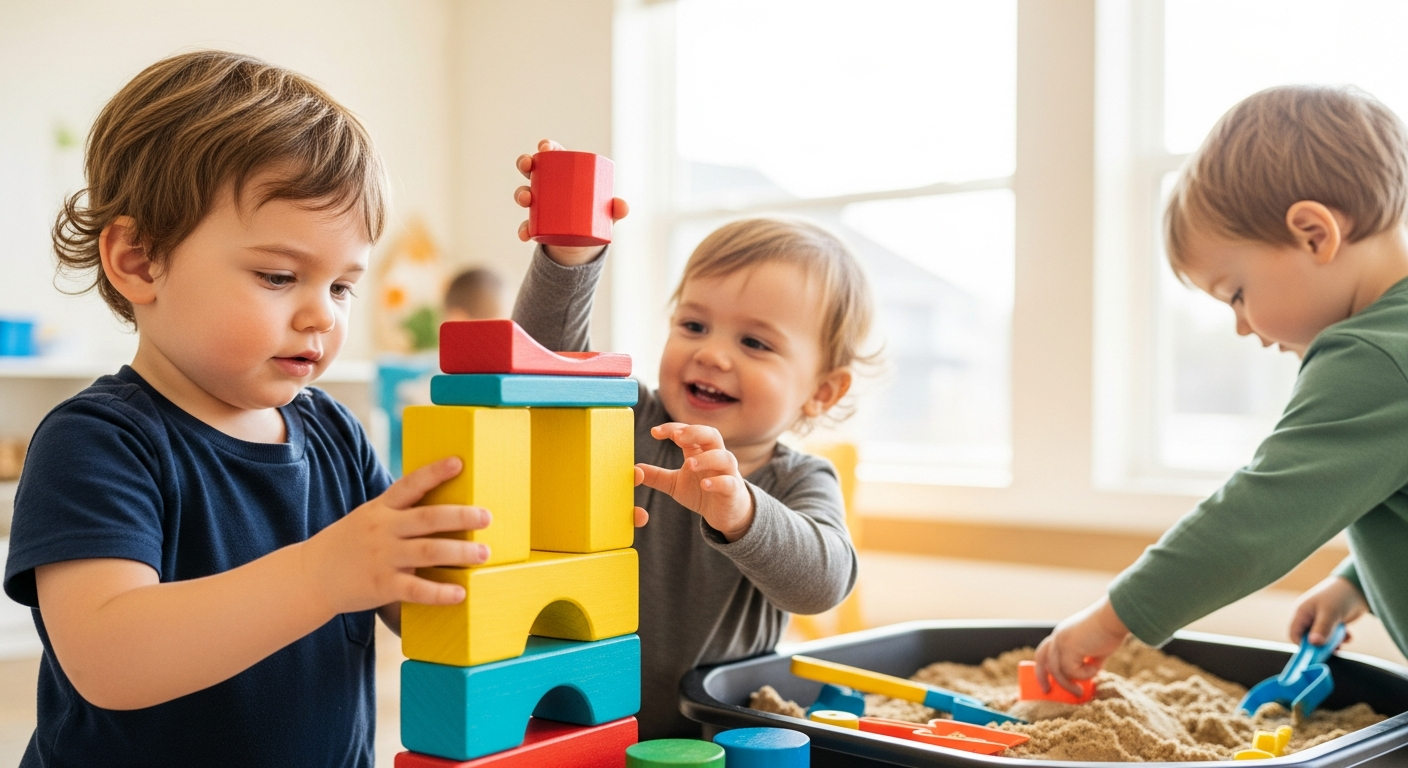
Table of Contents
- Introduction
- Why Play-Based Activities Matter for Toddlers
- Sensory Exploration Activities
- Fine Motor Skills and Focus
- Gross Motor Activities for High Energy
- Creative Arts and "Process Art"
- The Role of Smart Screen Time in Toddler Development
- Understanding Our Pricing and Value
- Setting Realistic Expectations
- Practical Tips for Daycare Providers and Parents
- Summary of Toddler Activities for Daycare
- Conclusion
- Frequently Asked Questions
Introduction
Did you know that by the age of three, a child’s brain has already reached roughly 80% of its adult size? This period of rapid neurological growth is a golden window for development, where every interaction, every tactile sensation, and every new word acts as a building block for the future. As parents and educators, we often find ourselves searching for the perfect "magic" activity that will keep a toddler engaged while simultaneously boosting their cognitive and linguistic skills. The reality is that the most effective toddler activities for daycare and home are often the simplest ones—those that lean into a child's natural curiosity and desire for play.
At Speech Blubs, our mission is to empower children to speak their minds and hearts. We understand the challenges of finding high-quality, educational resources because our company was born from the personal experiences of our founders. They all grew up with speech hurdles and decided to build the tool they wished they had as kids. We believe that play is the most powerful vehicle for learning. Whether you are a daycare provider looking for fresh ideas to fill your curriculum or a parent trying to survive a rainy afternoon, the activities we’ve curated here are designed to be low-prep, high-impact, and full of joy.

In this post, we will explore a wide variety of toddler activities for daycare settings, focusing on sensory exploration, fine and gross motor development, and creative expression. We will also discuss how to integrate "smart screen time" to supplement these physical activities, ensuring your little one is getting a well-rounded developmental experience. Our goal isn't just to keep kids busy; it's to foster a love for communication, build confidence, and create joyful family learning moments.
Why Play-Based Activities Matter for Toddlers
Between the ages of one and three, children transition from being passive observers to active explorers. This is a significant developmental shift. During this time, they are refining their motor skills, beginning to understand social cues, and exponentially growing their vocabulary. However, traditional "teaching" doesn't work for this age group. Toddlers learn best through hands-on experiences—what we call play-based learning.
When a child engages in toddler activities for daycare, they aren't just "playing." They are conducting scientific experiments. When they pour water from one cup to another, they are learning about volume and gravity. When they sort colored pom-poms, they are developing early math and categorization skills. Most importantly, when they play alongside peers or adults, they are practicing the foundational elements of communication: turn-taking, eye contact, and vocalization.
We advocate for a holistic approach that combines physical play with evidence-based digital tools. For example, our app uses a unique video modeling methodology. This science-backed approach allows children to learn by watching and imitating their peers, which is exactly how they learn in a daycare or home environment. By mirroring the natural way children interact with the world, we help them develop complex communication skills in an immediate and effective way.
Sensory Exploration Activities
Sensory play is a toddler’s best friend. It involves any activity that stimulates a child’s senses: touch, smell, taste, sight, and hearing. Sensory activities are fantastic for daycare because they can be scaled for groups and encourage independent exploration.

1. The Noodle Sensory Bin
This is a classic for a reason. Simply fill a large plastic tub with dry noodles of various shapes—rotini, penne, and bow-tie work great. Add in some plastic scoops, small toy animals, or even hidden "treasures" like large buttons.
- The Benefit: It builds fine motor skills and encourages descriptive language.
- Real-World Scenario: For a parent whose 2-year-old is a "late talker" and loves textures, a noodle bin is a great time to practice words like "crunchy," "smooth," "hard," and "hidden." As the child finds a hidden toy, you can prompt them to say "I found it!"
2. Edible "Bean" Bins with Cereal
If you are worried about younger toddlers putting things in their mouths, swap out dry beans for O-shaped cereal or puffed rice.
- The Benefit: It provides a safe environment for "snack and play."
- The Activity: Give the children measuring cups and empty egg cartons. Let them practice scooping the cereal into the different slots of the carton. This repetitive motion is incredibly soothing for toddlers and helps them focus.
3. Water Play and "Toy Washing"
Toddlers are drawn to water like magnets. In a daycare setting, you can set up a "toy car wash" or a "doll bath station." Fill a shallow bin with soapy water and provide sponges and rags.
- The Benefit: It teaches functional life skills and introduces concepts like "wet" vs. "dry" and "clean" vs. "dirty."
- Smart Supplement: While your child is splashing around, you can later reinforce these concepts by using the "Daily Routine" section of the Speech Blubs app, where they can see other kids performing similar tasks like washing their faces or brushing their teeth.
Fine Motor Skills and Focus
Fine motor skills involve the coordination of small muscles in the hands and fingers. Developing these skills is crucial for later tasks like writing, buttoning clothes, and using utensils.
4. The Sticky Wall (Contact Paper Play)
Tape a large piece of clear contact paper to the wall, sticky side out. Provide the toddlers with bits of colorful tissue paper, feathers, or ribbons.
- The Activity: Let them press the items onto the wall to create a collage.
- The Benefit: Working on a vertical surface strengthens the shoulder and wrist muscles more effectively than sitting at a table. It also allows toddlers to move around as they create, which is perfect for those with short attention spans.
5. Pom-Pom Push
Take an empty cardboard box or an old oatmeal container and poke several holes in the lid. Provide a bowl of large, colorful pom-poms.
- The Activity: The toddler’s job is to push the pom-poms through the holes into the container.
- The Benefit: This requires "pincer grasp" coordination and persistence.
- Real-World Scenario: If your child is working on color recognition, you can name the colors as they push them through. "Blue pom-pom! Red pom-pom!" This turns a motor task into a language-building session. You can see how other parents have used similar play-based strategies to encourage their children's growth in our user testimonials.
6. Painter’s Tape Rescue
Tape several small plastic animals or toy cars to a baking sheet using blue painter’s tape.
- The Activity: The child has to use their fingernails and fingers to peel the tape back and "rescue" the toys.
- The Benefit: This is an excellent activity for building focus and finger strength. It’s also a perfect travel activity for parents on the go.
Gross Motor Activities for High Energy
Toddlers have an incredible amount of energy. Gross motor activities help them burn that energy while developing balance, coordination, and spatial awareness.
7. Painter’s Tape Car Track
Use painter’s tape to create a network of roads and tracks across the daycare floor.
- The Activity: Encourage the children to crawl or walk along the lines while pushing their toy cars.
- The Benefit: This encourages "crossing the midline," a physical movement where the left side of the body crosses over to the right side (or vice versa), which is vital for brain development and future reading and writing skills.
8. Indoor Scavenger Hunts
Hiding objects and asking toddlers to find them is a never-ending source of entertainment.
- The Activity: Hide five large plastic blocks around the room. Give the toddlers clues or simply ask them to "Find the red one!"
- The Benefit: It builds listening skills and follow-through.
- Real-World Scenario: For a toddler who loves animals, you can hide toy farm animals and make the animal sounds as clues. If they find the cow, you can encourage them to say "Moo!" To further this interest, you might explore the "Animal Kingdom" section of the Speech Blubs app on Google Play, where they can watch real kids making animal faces and sounds.
9. The Bubble Pop Dance
Bubbles are the ultimate gross motor tool.
- The Activity: Blow bubbles and encourage the kids to pop them with different parts of their bodies—clap them with hands, stomp them with feet, or "boop" them with their noses.
- The Benefit: This improves hand-eye coordination and body awareness.
Creative Arts and "Process Art"
When it comes to toddler activities for daycare, the focus should always be on the process, not the product. We want children to explore the medium rather than worry about making a "pretty" picture.
10. Fizzy Drips (Baking Soda and Vinegar)
This is part science, part art. Fill a tray with baking soda. Provide small cups of vinegar colored with food coloring and a few medicine droppers.
- The Activity: Let the children drop the colored vinegar onto the baking soda and watch it fizz and foam.
- The Benefit: It’s a sensory delight and introduces basic cause-and-effect relationships.
11. Bath Tub Art Studio
If you are at home, the bathtub is the perfect mess-contained art studio. Use washable bathtub crayons or make your own "paint" by mixing shaving cream with a drop of food coloring.
- The Activity: Let the toddler paint the walls of the tub. When they are done, simply rinse it all away.
- The Benefit: It removes the stress of "making a mess" for the parent, allowing the child to be truly creative and uninhibited.
The Role of Smart Screen Time in Toddler Development
We know that "screen time" can be a loaded term for parents and educators. However, at Speech Blubs, we make a clear distinction between passive viewing—like sitting in front of a cartoon for hours—and "smart screen time." Smart screen time is interactive, educational, and designed to trigger real-world action.
Our app is designed as a tool for family connection. It’s not meant to be a digital babysitter; instead, it works best when an adult plays along with the child. We use video modeling to encourage kids to speak. When a child sees another child on the screen making a funny face or saying a new word, their "mirror neurons" fire, making them much more likely to try it themselves.
If you are unsure where your child stands in their communication journey, we offer a quick 3-minute preliminary screener. It involves 9 simple questions about your child's milestones and provides you with a personalized assessment and a next-steps plan. It’s a great way to gain peace of mind and see if our tools are a good fit for your family.
Understanding Our Pricing and Value
We want to be transparent about how you can access our resources. We offer two main plans to fit different needs:
- Monthly Plan: $14.99 per month. This is a great way to test the waters if you're looking for a short-term boost.
- Yearly Plan: $59.99 per year. This is the clear best choice for most families, breaking down to just $4.99 per month.
When you choose the Yearly plan, you aren't just saving 66%. You also get exclusive, high-value features that are not included in the monthly plan:
- A 7-day free trial: You can try the full experience before committing.
- The Reading Blubs app: An extra app designed to foster early literacy skills.
- Early access to updates: Be the first to try our newest activities and features.
- Priority Support: A 24-hour support response time to ensure you’re never stuck.
We encourage parents to start their free trial on the Yearly plan to get the most comprehensive experience possible.
Setting Realistic Expectations
It’s important to remember that every child develops at their own pace. While toddler activities for daycare can significantly boost a child's skills, we don't believe in "quick fixes" or guaranteed outcomes like "your child will be talking in sentences in a week."
Instead, our focus is on fostering a love for communication and building confidence. We want to reduce the frustration that often comes when a child can't express their needs. By creating joyful learning moments, we set the foundation for lifelong success. Our app should be seen as a powerful supplement to a child’s overall development plan and, when necessary, professional speech therapy.
Practical Tips for Daycare Providers and Parents
Implementing these activities doesn't require a huge budget or a degree in early childhood education. Here are a few tips to make these sessions successful:
- Embrace Repetition: Toddlers love doing the same thing over and over. If they want to play with the noodle bin every day for a week, let them! Repetition is how they master skills.
- Follow Their Lead: If you set up a "car wash" but the child decides to use the sponges to "wash" the floor, go with it. The goal is engagement, not strict adherence to your plan.
- Narrate Everything: While the child is playing, be a "sportscaster." Describe what they are doing. "You are picking up the blue car! Look at it go—vroom, vroom!" This constant stream of language helps them map words to actions.
- Co-Play is Key: Whether you're using a sensory bin or an app, your involvement makes the activity ten times more effective. Your reaction, your encouragement, and your shared joy are what truly drive development.
Summary of Toddler Activities for Daycare
To help you organize your week, here is a quick-reference list of the activities we’ve discussed:
CategoryActivity NameMain Material
Sensory
Noodle Sensory Bin
Dry Pasta
Sensory
Edible Bean Bin
O-shaped Cereal
Sensory
Toy Washing
Water & Soap
Fine Motor
Sticky Wall
Contact Paper
Fine Motor
Pom-Pom Push
Cardboard Box
Fine Motor
Tape Rescue
Painter's Tape
Gross Motor
Tape Car Track
Painter's Tape
Gross Motor
Scavenger Hunt
Household Toys
Art
Fizzy Drips
Baking Soda & Vinegar
Art
Tub Painting
Shaving Cream
Conclusion
Providing engaging toddler activities for daycare and home is about more than just filling time; it's about creating an environment where a child feels safe to explore, learn, and communicate. From the tactile joy of a noodle bin to the interactive peer-modeling in the Speech Blubs app, every activity is an opportunity for growth.
We invite you to join our community of parents and educators who are dedicated to helping children "speak their minds and hearts." Whether your child is hitting every milestone or needs a little extra support, we are here to provide a joyful, scientific, and effective solution.
Ready to transform your child's screen time into a powerful learning tool? Download Speech Blubs on the App Store or Google Play to begin your journey. We highly recommend selecting our Yearly plan to take advantage of the 7-day free trial, the Reading Blubs app, and the best overall value at just $59.99/year. Let’s make learning to communicate the most fun part of your child’s day!
Frequently Asked Questions
What are the best low-prep toddler activities for daycare?
The best low-prep activities are those that use everyday household items. Sensory bins with dry pasta or cereal, water play in the sink with plastic toys, and creating "tracks" on the floor with painter's tape are all excellent options. These require minimal setup and provide hours of engagement while building fine and gross motor skills.
How do sensory activities help a toddler’s speech development?
Sensory activities provide a rich context for language. When a child experiences different textures, smells, and sights, they are naturally inclined to express their reactions. Adults can use these moments to introduce descriptive adjectives (soft, cold, fuzzy) and action verbs (pour, splash, squeeze), helping the child connect words to physical sensations.
Is screen time okay for toddlers in a daycare setting?
While passive screen time should be limited, "smart screen time" that is interactive and educational can be a valuable tool. Apps that use video modeling, like Speech Blubs, encourage children to actively participate, imitate sounds, and engage in real-world play. When used as a supplement to physical activities and with adult interaction, it can foster significant developmental gains.
How can I encourage a toddler who is a "late talker" to engage in activities?
For late talkers, focus on activities that are high-interest and low-pressure. If they love animals, use an "Animal Kingdom" theme for your sensory bins and scavenger hunts. Use the Speech Blubs app to let them watch other children making animal sounds, which can reduce their frustration and build the confidence they need to try making those sounds themselves. Always keep the atmosphere playful and celebratory.
Sobre el autor