
Fun and Creative Preschool Toddler Activities
 Por Speech Blubs Team•23 mar 2026•14 min.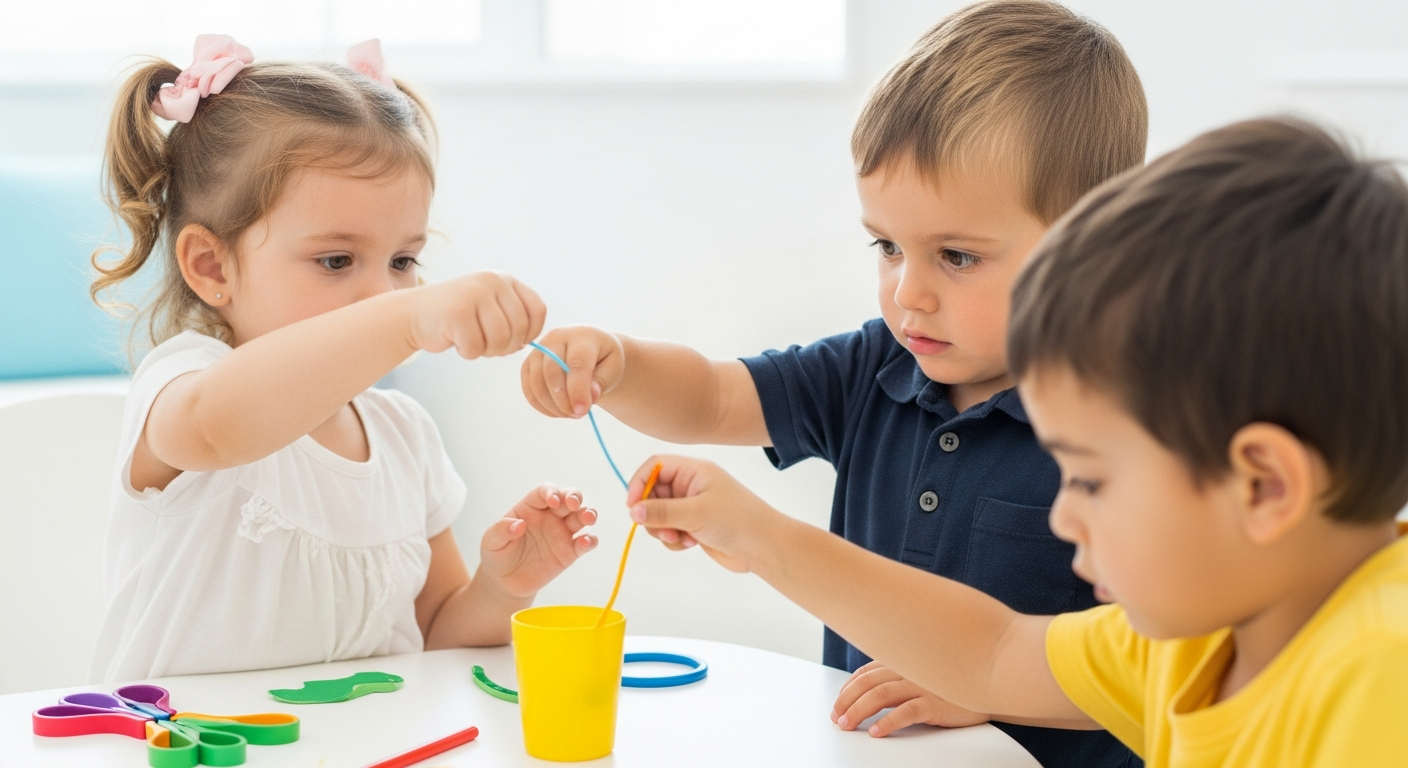
Table of Contents
- Introduction
- The Power of Sensory Play
- Developing Fine Motor Skills through Everyday Objects
- Creative Arts and Open-Ended Expression
- Integrating Language Development into Every Activity
- Low-Prep "Sanity Savers" for Busy Parents
- Outdoor Adventures and Gross Motor Play
- Transitioning to "Smart Screen Time"
- Building Confidence and Reducing Frustration
- Practical Scenarios for Everyday Success
- Choosing the Best Support for Your Child
- FAQs
- Conclusion
Introduction
Did you know that approximately 1 in 4 children will experience some form of speech or language delay during their early development? For many parents, this statistic isn't just a number—it’s a daily reality filled with "what-ifs" and a deep desire to help their little ones find their voice. At Speech Blubs, we believe every child deserves the chance to speak their minds and hearts. We understand the unique challenges of the toddler years because our founders grew up with speech hurdles themselves; they built the very tool they wish they’d had as kids.
The purpose of this post is to provide you with a comprehensive toolkit of preschool toddler activities that are not only fun but also strategically designed to support language, motor skills, and cognitive growth. We will explore everything from messy sensory bins to quick, low-prep "sanity savers" for those busy afternoons. Most importantly, we want to show you how these activities, combined with purposeful "smart screen time," can transform your child’s learning journey. By focusing on joyful play and peer-led imitation, we can help our children build the confidence they need to navigate the world.

The Power of Sensory Play
Sensory play is often the highlight of a toddler's day, and for good reason. When children engage their senses—touch, smell, sight, sound, and taste—they are building nerve connections in the brain’s pathways. This foundation is crucial for more complex learning tasks later in life.
The Noodle Sensory Bin
One of the simplest preschool toddler activities you can set up is a noodle sensory bin. All you need is a large plastic tub and a few boxes of dry pasta. Different shapes like rotini, bowties, and penne provide varied textures for tiny hands to explore. To make this even more engaging, toss in small toy animals or "bugs."
For a parent whose 3-year-old "late talker" loves animals, the "Animal Kingdom" section of our app offers a fun, motivating way to practice "moo" and "baa" sounds while they physically play with animal figurines in the pasta. This connection between the physical toy and the digital peer modeling creates a multi-sensory learning loop that sticks.
Water Play and "Fizzy Drips"
Water is a magic ingredient for toddlers. A simple tub of water with some soap and scoops can keep a child occupied for an hour. To take it up a notch, try "Fizzy Drips." Using baking soda and vinegar (with a drop of food coloring), children can use pipettes or spoons to create bubbling, colorful reactions. This activity isn't just about the "wow" factor; it encourages fine motor control and introduces basic scientific concepts like cause and effect.
If you are curious about how your child is meeting their developmental milestones through play, we recommend taking our quick 3-minute preliminary screener. It involves 9 simple questions and provides an assessment and a next-steps plan to help you tailor these activities to your child's specific needs.
Developing Fine Motor Skills through Everyday Objects
Fine motor skills involve the coordination of small muscles in the hands and fingers. These skills are the precursors to writing, buttoning clothes, and using utensils. The best part? You don’t need expensive toys to practice them.

The Colander and Pipe Cleaners
Turn your kitchen colander upside down and give your toddler a handful of colorful pipe cleaners. Show them how to poke the pipe cleaners through the tiny holes. This requires significant concentration and "pincer grasp" precision. As they work, you can narrate their actions: "In goes the blue one! Out comes the green one!" This constant stream of simple, descriptive language helps build their receptive vocabulary.
Painter’s Tape Tracks and Tunnels
Painter’s tape is a parent's best friend. You can tape "roads" across your living room floor or create "tunnels" by taping pieces of paper in arches. For a child who is obsessed with cars, this is a dream come true. Moving the cars along the tape lines helps with hand-eye coordination.
While they play, you might notice they struggle with certain sounds or words. This is where Speech Blubs on the App Store becomes a powerful supplement. Our app uses video modeling, where children watch their peers perform mouth exercises and say words. This "smart screen time" is a far cry from passive cartoon watching; it’s an interactive experience that encourages the child to mirror the movements they see on screen.
Creative Arts and Open-Ended Expression
Art at the preschool level isn't about the final product; it’s about the process. It’s about the joy of seeing a mark appear on a page and the feeling of wet paint between fingers.
The Giant Roll of Paper
Instead of small individual sheets, try taping a giant roll of craft paper to the floor or a wall. This "sticker wall" or "mural station" gives toddlers the freedom to move their whole bodies as they draw. Use dot markers, crayons, or reusable stickers to fill the space.
Playdough Monsters
Playdough is a classic for a reason. By adding googly eyes, pipe cleaners, and popsicle sticks, you turn a simple lump of dough into a "monster." This encourages imaginative play and storytelling. Ask your child, "What is your monster’s name?" or "Is the monster happy or sad?"
If you want to see how other families have used creative play and our methodology to help their children overcome speech delays, you can read through our collection of testimonials. Hearing from parents who were once in your shoes can provide the encouragement you need to keep going.
Integrating Language Development into Every Activity
Every activity mentioned so far is an opportunity for language growth. At Speech Blubs, we focus on the "why" behind the play. Our methodology is rooted in science, specifically the concept of mirror neurons. When a child watches another child (a peer) perform a task or say a word, their brain reacts as if they are doing it themselves.
Using Video Modeling as a Catalyst
Let’s say you are doing the "Animal Washing" activity, where your child scrubs plastic farm animals in a soapy bin. After the activity, you could open the "Early Sounds" section of Speech Blubs. Your child sees a peer making the "oink" sound. Because they just played with a pig in real life, the connection is immediate and meaningful. This isn't just entertainment; it's a bridge between play and communication.
Our approach is backed by research, placing us in the top tier of educational apps worldwide. We don't just want your child to use a screen; we want that screen time to be an "active" tool that sparks "offline" interaction between you and your child.
Low-Prep "Sanity Savers" for Busy Parents
We know that life as a parent is a balancing act. Sometimes you need an activity that requires zero setup and provides a high level of engagement while you're making dinner or taking a work call.
The Card Slot Drop
Find an old oatmeal container or shoe box and cut a thin slit in the lid. Give your child a deck of playing cards or some large buttons. The simple act of slotting the items into the hole is incredibly satisfying for a toddler. It builds focus and fine motor control without a single drop of paint or water on your floor.
The Kitchen Sink "Car Wash"
If you’re okay with a little water on the floor (pro-tip: lay down a towel!), the kitchen sink is a toddler's paradise. Fill it with soapy water and give them a few plastic cups, spoons, and their favorite waterproof toys. Being at "adult height" in the big sink makes them feel involved and empowered.
Scavenger Hunts
A simple scavenger hunt can be done anywhere. "Can you find something red?" "Can you find something soft?" This helps with categorization and adjective use. It’s a great way to burn off energy indoors on a rainy day.
For more structured learning during these busy moments, you can download Speech Blubs on Google Play. It’s designed for short, impactful sessions that fit perfectly into your daily routine, providing a productive alternative to passive viewing.
Outdoor Adventures and Gross Motor Play
Physical activity is vital for a toddler’s development. Large muscle movements, known as gross motor skills, help with balance, coordination, and even the breath support needed for speaking.
Nature Hunts
Take a bag outside and go on a "treasure hunt." Collect leaves, rocks, and sticks. When you get back inside, you can sort them by size or color. This links the outdoor physical activity with cognitive sorting skills.
Painter’s Tape Balance Beam
If you can't get outside, use that trusty painter's tape to make a "balance beam" on your carpet. Ask your child to walk "heel to toe" along the line. This simple task is great for vestibular development (their sense of balance and spatial orientation).
Transitioning to "Smart Screen Time"
In today's environment, screens are almost unavoidable. However, there is a massive difference between a child staring blankly at a cartoon and a child actively participating with a peer on screen. We advocate for "smart screen time"—sessions that are limited, purposeful, and adult-supported.
Our app is designed to be a co-play tool. Sit with your child, mirror the faces they see in the app, and celebrate when they attempt a new sound. This creates joyful family learning moments rather than isolated digital consumption. We are committed to providing an immediate, effective, and joyful solution for the 1 in 4 children who need speech support, blending scientific principles with play into one-of-a-kind experiences.
By choosing the right preschool toddler activities, you aren't just "keeping them busy." You are building the foundation for their future education and their ability to express who they are. If you're ready to take the next step, you can create your account and begin your 7-day free trial today.
Building Confidence and Reducing Frustration
One of the biggest hurdles for toddlers—especially those with speech delays—is frustration. When a child knows what they want but can't communicate it, they often resort to tantrums. By engaging in these preschool toddler activities, you are giving them alternative ways to express themselves and build "foundational wins."
The Power of Routine
Toddlers crave repetition and routine. Many of these activities, like the sensory bins or the "Card Slot Drop," can be repeated daily. This repetition builds a sense of mastery. When a child feels they are "good" at something, their confidence grows. That confidence eventually spills over into their attempts at communication.
At Speech Blubs, we don't suggest guaranteed outcomes like "your child will be giving public speeches in a month." Development is a journey, not a race. Instead, we focus on fostering a love for communication and reducing that daily frustration. Our app acts as a powerful supplement to your child's overall development plan and, when applicable, professional therapy.
Practical Scenarios for Everyday Success
Let's look at how these elements come together in a real-world home. Imagine a parent named Maria whose toddler, Leo, is struggling with early consonant sounds.
- Morning Activity: Maria sets up a bean sensory bin with hidden toy trucks. As Leo finds a truck, Maria says, "Beep beep! Big truck!"
- Smart Screen Time: After the bin, Maria opens Speech Blubs. They go to the "Beep Beep" section where Leo watches a peer make car sounds. Because Leo was just playing with trucks, he is much more likely to try and imitate the "B" sound he hears in the app.
- Evening Activity: While Maria cooks, Leo does the "Pipe Cleaner Push" with a colander, keeping his hands busy and his mind engaged in a quiet, focused task.
This combination of physical play, peer modeling, and parental interaction is the gold standard for early childhood development.
Choosing the Best Support for Your Child
As you integrate these preschool toddler activities into your life, consider how professional tools can lighten your load and provide expert guidance. We’ve designed our subscription plans to be transparent and accessible because we want to build a relationship of trust with our community.
Our Pricing Plans:
- Monthly Plan: $14.99 per month. This is a great way to test the waters if you're just starting out.
- Yearly Plan (Best Value): $59.99 per year. This breaks down to just $4.99 per month, saving you 66% compared to the monthly rate.
Why the Yearly Plan is the clear choice: While the monthly plan offers access to our core speech exercises, the Yearly plan is built for families who want the most comprehensive support. The Yearly plan includes:
- A 7-day free trial so you can explore the content risk-free.
- The Reading Blubs app, which expands your child’s learning into the world of literacy and phonics.
- Early access to new updates and features.
- Priority 24-hour support response time for any questions you might have.
The Monthly plan does not include these additional benefits, making the Yearly plan the most effective tool for long-term growth.
FAQs
What are the best preschool toddler activities for speech delay? Activities that combine physical movement with vocalization are best. Sensory bins where you name objects, "scavenger hunts" for specific sounds, and using apps like Speech Blubs that utilize peer-to-peer video modeling are highly effective. The goal is to make communication part of the fun rather than a chore.
How much screen time is appropriate for a toddler? The American Academy of Pediatrics suggests that for children ages 2 to 5, screen time should be limited to one hour per day of high-quality programming. At Speech Blubs, we advocate for "smart screen time," where the app is used as a tool for interaction and imitation for 10-15 minutes at a time, rather than passive consumption.
Can I do these activities if I have a small apartment? Absolutely! Many activities like the "Card Slot Drop," "Painter’s Tape Balance Beam," and "Playdough Monsters" require very little space. Even the "Giant Paper Roll" can be taped to the back of a door to save floor space.
How do I know if my child is making progress? Progress in toddlers often looks like increased confidence, a decrease in frustration-based tantrums, and an increase in "attempts" at sounds or words. For a more formal way to track development, you can use our preliminary screener or consult with a speech-language pathologist.
Conclusion
The journey of toddlerhood is a whirlwind of discovery, and as parents, we are the primary guides. By incorporating these preschool toddler activities—ranging from sensory bins and fine motor tasks to "smart screen time"—you are providing your child with a rich, stimulating environment where they can thrive. Remember that our mission at Speech Blubs is to empower your child to speak their mind and heart. We are here to support you with scientific methodology wrapped in the joy of play.
Focus on the small wins: a new sound attempted, a successful sorting task, or a moment of shared laughter over a playdough monster. These are the building blocks of a confident communicator. Ready to give your child the best start possible? Download Speech Blubs on the App Store or Google Play to begin. For the best value, including a 7-day free trial and the Reading Blubs app, be sure to select our Yearly plan. Together, let's make every moment a learning moment.
Sobre el autor