
Fun and Educational 11 Month Toddler Activities for Play
 Por Speech Blubs Team•18 mar 2026•15 min.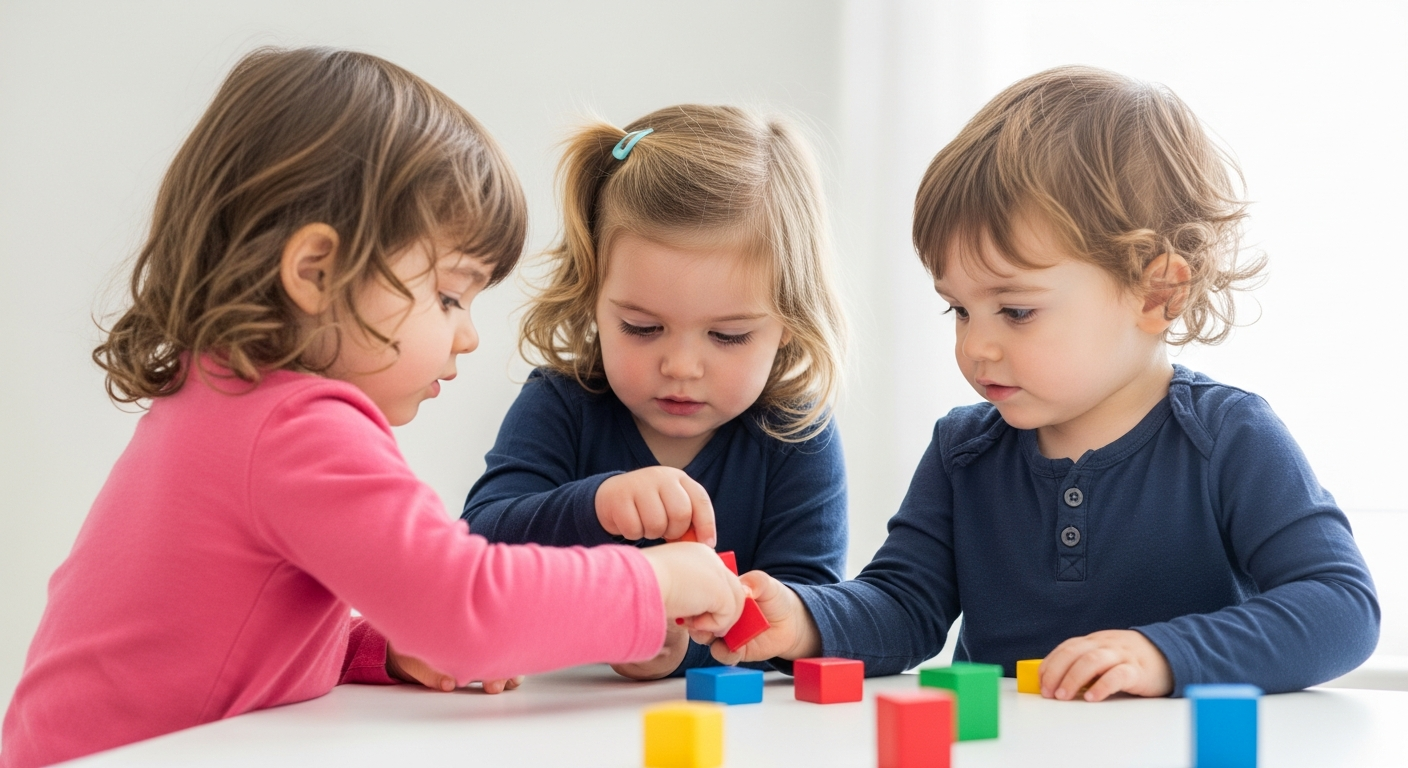
Table of Contents
- Introduction
- The Milestone Marathon: What’s Happening at 11 Months?
- Gross Motor Activities: Building Strength and Balance
- Fine Motor Skills: The Art of Precision
- Sensory Play: Exploring the World Through Touch and Sound
- Language and Communication: Building the Foundation
- Social and Emotional Activities: Developing Self and Others
- Creating a Language-Rich Environment
- Smart Screen Time vs. Passive Viewing
- Choosing the Right Plan for Your Family
- Summary of 11 Month Toddler Activities
- FAQ: Common Questions About 11-Month-Old Development
- Conclusion
Introduction
Did you know that by the time a child reaches their eleventh month, their brain has already formed billions of neural connections, many of which are specifically tuned to the sounds and rhythms of their native language? This final month before the "big one" is a whirlwind of transition. Your little one is likely standing on the precipice of toddlerhood—sometimes literally, as they pull themselves up on every piece of furniture in sight. At Speech Blubs, we understand that this is a pivotal time for both physical and linguistic development. Our mission is to empower children to speak their minds and hearts, and we believe that purposeful play is the most effective way to reach that goal.

In this blog post, we will explore a wide range of 11 month toddler activities designed to support gross motor skills, fine motor precision, sensory processing, and, most importantly, communication. We’ll dive into classic physical games, creative sensory experiences, and how to use "smart screen time" to foster language through peer-to-peer imitation. By the end of this guide, you will have a robust toolkit of ideas to make this final month of infancy a joyful, learning-filled journey for your family. Our goal is to help you foster a love for communication and build the foundational skills your child needs to thrive.
The Milestone Marathon: What’s Happening at 11 Months?
Before we jump into the specific 11 month toddler activities, it’s helpful to understand what is happening inside your child’s developing body and mind. At eleven months, many babies are "cruising"—shuffling along the edges of the coffee table or sofa. Some may even be taking their first tentative, independent steps. This surge in mobility is often mirrored by a surge in cognitive curiosity. They aren't just moving; they are exploring how objects work, how sounds are made, and how they can influence the world around them.
Communication is also hitting a high gear. While they may not have a library of clear words yet, their "jargon" (the melodic babbling that sounds like real conversation) is becoming more complex. They are beginning to understand simple instructions and can often point to familiar objects when named. This is the perfect window to introduce activities that bridge the gap between physical action and vocal expression. If you are ever unsure about where your child stands in their communication journey, we invite you to take our 3-minute preliminary screener. It involves nine simple questions and provides a tailored assessment and next-steps plan to support your child’s growth.
Gross Motor Activities: Building Strength and Balance
Gross motor skills involve the large muscles of the body—the ones used for crawling, standing, and eventually, walking. At 11 months, activities should focus on stability and the confidence to move through space.

1. The Living Room Obstacle Course
You don’t need fancy equipment to build a gym for your toddler. Use sofa cushions, pillows, and sturdy boxes to create a safe landscape for crawling and climbing. Encourage your child to navigate over the "hills" (pillows) and through the "tunnels" (a cardboard box with both ends open). This helps develop core strength and motor planning. As they reach the end of the course, celebrate with a big "Yay!" or "You did it!" to associate physical achievement with positive verbal reinforcement.
2. Supported Walking and "Cruising"
Cruising is the precursor to walking. You can encourage this by placing a favorite toy just out of reach on the other end of the sofa. This motivates them to shift their weight and move their feet while maintaining a handhold. For a parent whose child is eager to move but needs a little extra confidence, holding both of their hands while they "walk" across the rug is a wonderful bonding experience. This physical activity builds leg strength and balance, essential for those first independent steps.
3. Ball Play: Roll, Toss, and Chase
A simple soft ball is one of the best tools for 11 month toddler activities. Sit on the floor opposite your child and roll the ball toward them. Encourage them to push it back. This teaches cause and effect, hand-eye coordination, and the social concept of turn-taking. If they are crawling, roll the ball slightly away so they have to chase it down. Use descriptive words like "ball," "roll," "fast," and "stop" to narrate the action.
Fine Motor Skills: The Art of Precision
Fine motor skills involve the small muscles in the hands and fingers. At this age, the "pincer grasp"—using the thumb and forefinger to pick up small objects—is becoming quite refined.
4. The Muffin Tin Discovery Game
Grab a standard muffin tin and place a different small (non-choking hazard) object in each cup—perhaps a large wooden block, a clean whisk, a silk scarf, or a plastic measuring spoon. Cover each cup with a post-it note or a small piece of fabric. Your 11-month-old will love the "reveal" as they pull off the covers to find the treasures beneath. This activity works on finger dexterity and introduces the concept of object permanence.
5. Stacking and Nesting
Stacking cups or blocks are a staple for a reason. At 11 months, your child might be better at knocking down towers than building them, and that’s perfectly okay! Knocking things down teaches them about gravity and their own physical power. As they try to place one cup inside another, they are developing spatial awareness and problem-solving skills.
6. Scribbling and Early Art
Provide thick, triangular crayons (which are easier for small hands to grip) and a large sheet of paper taped to the floor. Show them how to make a mark. Don't expect a masterpiece; the goal is for them to see the connection between their hand movement and the line appearing on the page. This is a foundational step for both creativity and future writing skills.
Sensory Play: Exploring the World Through Touch and Sound
Sensory activities engage a child's senses, helping them process information and understand their environment.
7. Water Play in a Bin
Water is endlessly fascinating to an 11-month-old. Fill a shallow plastic bin with an inch or two of water and provide cups, sponges, and floating toys. Let them splash, pour, and squeeze. This tactile experience is excellent for fine motor development and introduces early "science" concepts like "full" vs. "empty" and "sink" vs. "float." Always supervise water play closely to ensure safety.
8. Texture Treasure Hunt
Create a sensory board or simply gather items with different textures: a piece of soft faux fur, a rough piece of cardboard, a smooth silk ribbon, and a bumpy silicone mat. Let your child touch each one while you describe the feeling. "This is soft," or "This is bumpy." Connecting the physical sensation with the descriptive word is a powerful way to build their vocabulary.
9. Musical Explorations
You don't need a drum set to make music. A wooden spoon and a plastic bowl make an excellent drum. Shake a container filled with rice (securely taped shut!) to make a maraca. Experimenting with different sounds helps with auditory processing and rhythm. Sing along as they play, pausing occasionally to see if they try to "fill in" a sound or a word.
Language and Communication: Building the Foundation
At Speech Blubs, we believe that communication is the heart of human connection. Our founders all grew up with speech challenges, which is why we created the tool we wished we had as children. We’ve blended scientific principles with the joy of play to create "smart screen time" that actually helps kids learn.
10. Using Speech Blubs for Video Modeling
One of the most effective ways children learn is by watching their peers. This is known as "video modeling." When you use the Speech Blubs app, your child sees videos of other children making sounds and saying words. This triggers "mirror neurons" in the brain, encouraging your little one to imitate what they see.
For a parent whose 11-month-old is starting to show interest in animals, the "Animal Kingdom" section of the app is a perfect fit. Instead of just watching a cartoon bird fly across a screen (passive viewing), your child watches a peer make a "tweet tweet" sound. You can then mimic the sound together, creating a joyful family learning moment. This isn't about replacing your interaction; it's a powerful supplement to it. You can download Speech Blubs on the App Store or Google Play to see the difference for yourself.
11. Reading with a Twist
By 11 months, your child might have the manual dexterity to help turn the pages of a board book. Choose books with bright, realistic photos and interactive elements like "touch and feel" patches. Instead of just reading the text, point to the pictures and ask, "Where is the doggy?" even if they can't answer yet. When they point or babble in response, validate them: "Yes! There is the brown doggy. He says woof!"
12. Mimicking and Vocal Play
At this age, imitation is the primary engine of learning. When your child makes a sound, repeat it back to them. This creates a "conversation" loop. If they say "ba," you say "ba," then wait. Often, they will repeat it back again. This back-and-forth interaction is the fundamental structure of all human communication. You can also make funny faces or stick out your tongue and see if they copy you. Our scientific methodology is built on these very principles of imitation and engagement.
Social and Emotional Activities: Developing Self and Others
As your child approaches their first birthday, they are becoming more aware of themselves as individuals and starting to understand social cues.
13. Mirror Play
A shatterproof mirror at floor level is a source of endless entertainment for an 11-month-old. They are beginning to realize that the "baby in the mirror" is actually them. Point to their nose in the mirror and then to your own. Make happy, sad, or surprised faces and talk about the emotions. This helps with self-awareness and early emotional intelligence.
14. Peekaboo Variations
Peekaboo is more than just a game; it's a lesson in object permanence and social trust. Try hiding behind a chair, or cover your child’s favorite toy with a blanket and ask, "Where did it go?" When they find it, celebrate with enthusiasm. This builds confidence and reduces the frustration that can come with the "disappearance" of objects or people.
15. Simple Pretend Play
While complex "make-believe" comes later, 11-month-olds can start with simple mimicry. Give them a toy telephone and pretend to have a conversation. Or, give them a clean, empty cup and pretend to take a drink, then offer it to them. These early acts of pretend play are the first steps toward imaginative thinking and empathy.
Creating a Language-Rich Environment
Beyond specific 11 month toddler activities, the most important thing you can do is talk to your child throughout the day. Narrate your life. "Now I'm putting the blue socks on your feet. One, two! Now we are going to the kitchen to get some water." This constant exposure to language helps them map sounds to meanings long before they can speak the words themselves.
We know that for the 1 in 4 children who face speech delays, this process can feel overwhelming for parents. We are here to provide an immediate, effective, and joyful solution. Our approach is designed to reduce frustration and build the foundational skills necessary for complex communication. It’s not about rushing the process; it’s about creating moments of connection. You can read parent reviews to see how other families have integrated Speech Blubs into their daily routines with great success.
Smart Screen Time vs. Passive Viewing
In a world full of digital distractions, it’s important to distinguish between "smart screen time" and passive consumption. Passive viewing, like watching a fast-paced cartoon, often doesn't require any interaction from the child. It can be overstimulating and provides little educational value for a developing brain.
In contrast, our "smart screen time" experiences are designed to be active and participatory. The video modeling approach used in Speech Blubs requires the child to look, listen, and attempt to vocalize. It’s a tool for family connection, not a "babysitter." We encourage parents to use the app with their children—imitating the sounds together and celebrating every attempt. This co-play approach ensures that technology remains a bridge to the real world, not a barrier.
Choosing the Right Plan for Your Family
We want to make Speech Blubs accessible to every family who needs it. We offer two main subscription options to fit your needs:
- Monthly Plan: For $14.99 per month, you get full access to the Speech Blubs app and all its engaging activities.
- Yearly Plan: For $59.99 per year, which breaks down to just $4.99 per month.
The Yearly plan is our best value choice. Not only does it save you 66% compared to the monthly rate, but it also includes several exclusive features designed to give your child the best start:
- 7-Day Free Trial: Experience the full power of the app before committing.
- Reading Blubs App: An additional app specifically designed to foster early literacy skills.
- Early Access: Be the first to try new updates and activities.
- Priority Support: A 24-hour response time from our dedicated support team.
The Monthly plan does not include the free trial, the Reading Blubs app, or early access features. We highly recommend choosing the Yearly plan to ensure your child has a consistent, comprehensive tool for their entire first year of toddlerhood and beyond. You can create your account and start your 7-day free trial here.
Summary of 11 Month Toddler Activities
To help you plan your week, here is a quick summary of the activities we’ve discussed:
CategoryActivity IdeaKey Benefit
Gross Motor
Obstacle Course
Core strength and motor planning.
Fine Motor
Muffin Tin Discovery
Finger dexterity and object permanence.
Sensory
Water Play
Tactile exploration and early physics.
Language
Speech Blubs App
Peer-to-peer imitation (Video Modeling).
Cognitive
Stacking Cups
Spatial awareness and problem solving.
Social
Mirror Play
Self-awareness and emotional recognition.
FAQ: Common Questions About 11-Month-Old Development
1. My 11-month-old isn't walking yet. Should I be worried?
Not at all! The average age for a first independent step is 12 months, but many perfectly healthy children don't walk until 15 or even 18 months. Focus on the progression: are they crawling? Are they pulling to stand? Are they cruising along furniture? If they are moving and showing strength in their legs, they are on the right track.
2. How many words should my child have at 11 months?
Most 11-month-olds do not have many (or any) clear, consistent words. They are likely in the "jargon" phase—long strings of babbles that sound like speech. They might have one or two specific sounds for things (like "ma" for mama), but their understanding (receptive language) is much greater than their ability to speak (expressive language).
3. How much screen time is okay for an 11-month-old?
The American Academy of Pediatrics generally recommends avoiding screen time for children under 18 months, with the exception of video chatting. However, at Speech Blubs, we believe that short bursts of "smart screen time" that involve active participation and co-play with an adult can be a valuable developmental tool. We recommend keeping sessions short (5-10 minutes) and always interactive.
4. What if my child gets frustrated with the activities?
Frustration is a natural part of learning! If your child gets upset because a tower fell or they can't get a puzzle piece to fit, acknowledge their feeling: "That was hard! You’re working so hard." Then, offer a little help or move to a different activity. The goal of 11 month toddler activities is to keep learning joyful, not to perfect a skill.
Conclusion
The eleventh month is a beautiful, transitional time. Your baby is transforming into a toddler right before your eyes, and every bit of play is a building block for their future. By engaging in these 11 month toddler activities—from climbing over pillows to mimicking sounds on the Speech Blubs app—you are providing the stimulation their growing brain craves.
Remember, our mission at Speech Blubs is to help your child find their voice and speak their heart. We don't promise overnight miracles; we promise a scientifically-backed, joyful process that builds confidence and foundational communication skills. Whether you are navigating a speech delay or simply want to give your child a head start, we are here to support you.
Ready to begin? Join the thousands of families who have seen the benefits of our unique video modeling approach. Start your journey today by downloading the Speech Blubs app or signing up on our website. We strongly recommend choosing the Yearly plan to take advantage of the 7-day free trial, the Reading Blubs app, and the best overall value for your child’s development.
Download Speech Blubs on the App Store or Get it on Google Play to start playing today!
Sobre el autor