
Fun and Educational New Year's Toddler Activities
 Por Speech Blubs Team•18 mar 2026•14 min.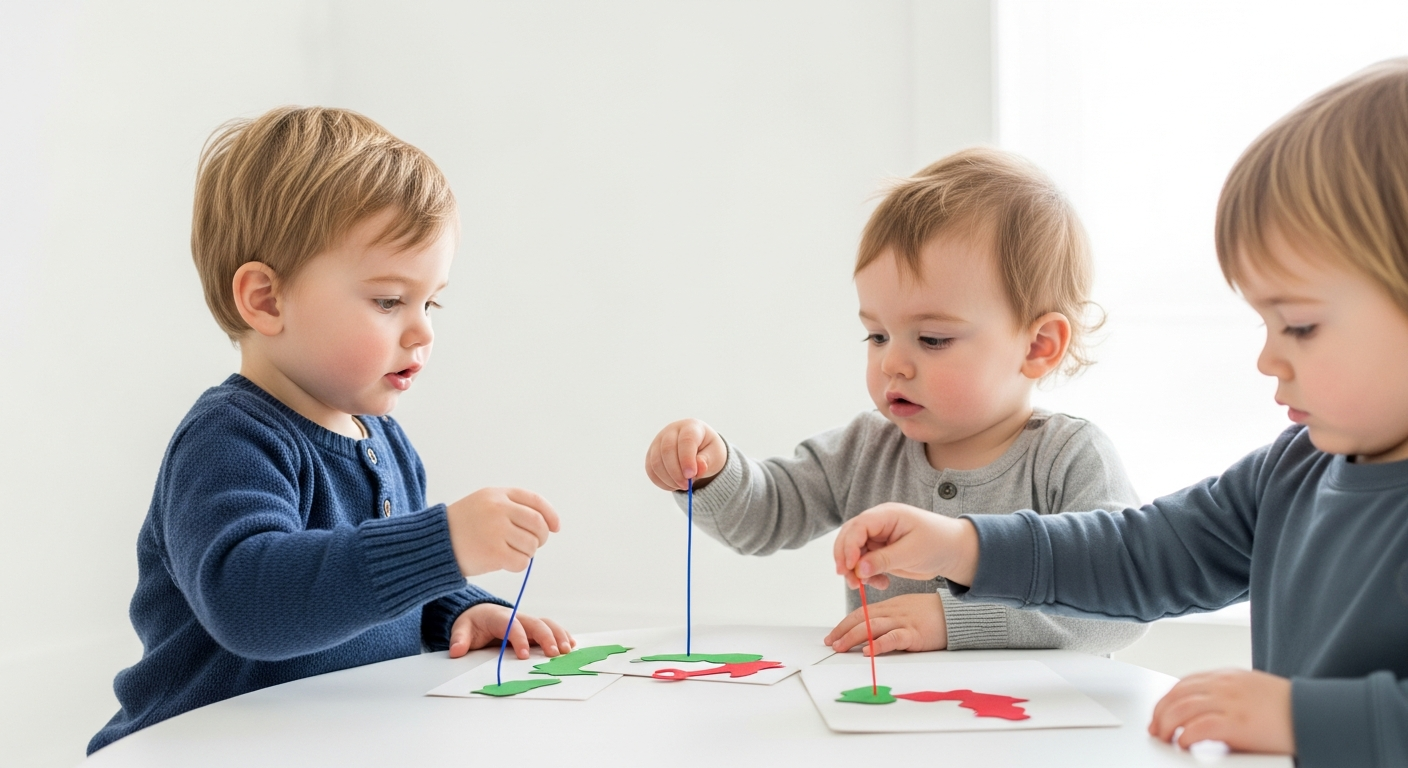
Table of Contents
- Introduction
- The Magic of "Noon Year’s Eve"
- Creative Crafts for Fine Motor Success
- Sensory Play: New Year's Edition
- Active Games to Burn Off Holiday Energy
- Building Traditions and Emotional Connection
- Making Screen Time "Smart" This Holiday
- Planning Your New Year with Speech Blubs
- Tips for a Stress-Free Celebration
- Healthy New Year Snacks for Little Ones
- Transitioning to a New Year of Growth
- Summary of Key Takeaways
- FAQ
- Conclusion
Introduction
Does the thought of keeping a toddler awake until midnight on New Year’s Eve feel more like a survival challenge than a celebration? You aren't alone. For most parents of little ones, the traditional midnight countdown is a distant memory, replaced by early bedtimes and the realization that a 7:00 AM wake-up call happens regardless of how many sparkles were involved the night before. But just because your "ball drop" happens while the sun is still up doesn't mean the holiday can't be magical. In fact, New Year’s Eve is a golden opportunity to foster your child’s development, spark their curiosity, and build foundational communication skills through play.
In this guide, we are going to explore a variety of creative, low-stress, and developmentally rich new years toddler activities that the whole family can enjoy. We’ll cover everything from sensory-friendly "Noon Year’s Eve" parties to DIY crafts that build fine motor skills and vocabulary. We at Speech Blubs believe that every moment is a learning moment, and our mission is to help your child "speak their minds and hearts" by turning screen time into an interactive, joyful experience.

By the end of this post, you’ll have a full toolkit of activities that prioritize connection over perfection. Whether you’re looking for ways to reduce holiday-related frustration or want to start a meaningful new family tradition, these activities are designed to celebrate your child’s progress while ringing in a brand-new year of growth.
The Magic of "Noon Year’s Eve"
For a toddler, time is an abstract concept. They don’t know the difference between 12:00 PM and 12:00 AM, but they certainly know the difference between being well-rested and being overtired. A "Noon Year’s Eve" celebration allows you to capture all the excitement of the holiday—the music, the snacks, and the big countdown—without disrupting the sacred nap schedule or bedtime routine.
Setting up a Noon Year’s Eve party is simple. You can set a kitchen timer or use a video countdown to hit "zero" at midday. This is a fantastic way to practice counting, a key early math and language skill. For a child who is just beginning to explore numbers, the repetition of "3, 2, 1, Happy New Year!" is a rhythmic way to build phonological awareness.
If you’re unsure where your child stands with their developmental milestones as the year ends, you can take our quick 3-minute preliminary screener. It involves just 9 simple questions and provides an assessment and next-steps plan to help you start the new year with clarity.
Creative Crafts for Fine Motor Success
Crafting isn't just about the final product; it’s about the process of manipulating materials, which builds the hand strength and coordination needed for writing and self-care later on.
1. DIY Confetti Shakers
Noisemakers are a staple of New Year’s Eve, but the store-bought ones can be overwhelming for sensory-sensitive children. Creating your own allows you to control the volume.
- What you need: Two paper plates or a clean plastic bottle, dried beans, rice, or pom-poms, and some tape.
- The Activity: Have your toddler help you pour the "noise" into the container. Secure it tightly with tape and let them decorate the outside with stickers.
- Language Connection: Use this time to practice "action words." Ask your child to "shake," "stop," "listen," and "pour." If your little one is working on specific sounds, like the "sh" in "shake," this is a natural way to model that sound repeatedly in a fun context.
2. Sparkling New Year Crowns
Wearing a special hat makes any day feel like a party.

- What you need: Cardstock strips, markers, and non-toxic glitter glue or stickers.
- The Activity: Cut a crown shape out of the cardstock and let your toddler go to town with the decorations.
- Scenario: For a parent whose 3-year-old "late talker" loves bright colors and shiny objects, the process of choosing "blue sparkles" or "big stars" provides a high-motivation environment for requesting and naming. You can supplement this by exploring the "Colors" section of the Speech Blubs app, where children learn by watching and imitating their peers through our unique video modeling methodology.
Sensory Play: New Year's Edition
Toddlers learn about the world through their senses. Sensory bins are an incredible way to keep a child engaged while you prepare a special holiday meal or simply need a moment of peace.
The "Golden" Sensory Bin
Fill a large plastic bin with dyed yellow rice, gold tinsel, large plastic "gold" coins, and various scoops or cups. You can even hide plastic numbers (like 2, 0, 2, and 5) in the bin for your child to find.
- Building Vocabulary: As your child plays, describe what they are doing. "You found the gold!" "That tinsel is soft." "The rice feels crunchy."
- Safe Exploration: Sensory play is also a great "screen-free" alternative to passive viewing. While we advocate for "smart screen time," balancing it with tactile experiences is key to a well-rounded day.
Active Games to Burn Off Holiday Energy
If the winter weather has you trapped indoors, these new years toddler activities will help get the wiggles out.
1. Glow-in-the-Dark Dance Party
Crack a few glow sticks, dim the lights, and put on a kid-friendly playlist.
- Why it works: Movement is closely linked to language development. When children move their bodies to a rhythm, they are practicing the same timing and sequencing skills required for speech.
- Activity Idea: Play "Freeze Dance." When the music stops, everyone has to be as still as a statue. This helps with impulse control and following multi-step directions.
2. The Balloon Pop Countdown
This is a favorite for many families. Write a small activity (like "eat a cookie" or "read a book") on a slip of paper and put it inside a balloon. Blow up four or five balloons and write a time on each one (e.g., 4:00, 5:00, 6:00). At each hour, let your child help you "pop" the balloon to reveal the activity.
- Note for sensitive ears: If your child is afraid of loud noises, you can "un-pop" the balloon by slowly letting the air out or simply putting the activity slips in decorated paper bags instead.
Building Traditions and Emotional Connection
New Year's is a time for reflection, even for the smallest members of the family. Helping your toddler understand the concept of "before" and "after" is a significant cognitive milestone.
1. The Annual Family Interview
Ask your child a few simple questions and record their answers.
- "What is your favorite toy?"
- "What makes you happy?"
- "What was the funniest thing that happened this year?" Recording these moments is a beautiful way to see how their speech and personality evolve year over year. At Speech Blubs, we are committed to providing an immediate, effective, and joyful solution for the 1 in 4 children who need speech support, and seeing progress in these annual interviews is often a moment of immense pride for parents.
2. The Time Capsule
Find a small box or jar. Have your child choose one item to put inside—a drawing, a favorite pebble, or a photo. Tuck it away to be opened next New Year’s Eve. This activity fosters a sense of belonging and helps children understand their place in the family story.
Making Screen Time "Smart" This Holiday
We know that holidays can be hectic. There are times when you need your child to be safely occupied so you can finish a task. Instead of turning on a passive cartoon, this is the perfect time to utilize "smart screen time."
Our app was born from the personal experiences of our founders, who all grew up with speech problems and created the tool they wished they had. Unlike traditional media, our approach uses video modeling, where children learn by watching other children. This triggers "mirror neurons" in the brain, encouraging them to imitate sounds and words.
When you use Speech Blubs, you aren't just giving your child a screen; you’re giving them a powerful tool for family connection. We encourage parents to engage in "co-play"—sit with your child, mimic the sounds together, and celebrate every attempt at communication. Our goal isn't just to teach words; it's to build the confidence your child needs to express themselves.
To see the impact of our science-based approach, you can read testimonials from parents who have seen their children's communication skills flourish. You can also explore the research that places us in the top tier of speech apps globally.
Planning Your New Year with Speech Blubs
As you look forward to the coming year, consider making speech and language development a consistent part of your routine. We offer flexible plans to fit every family’s needs, but our Yearly plan is designed to provide the most comprehensive support for your child's journey.
Our Pricing Plans:
- Monthly Plan: $14.99 per month. This is a great way to test the waters and see how your child responds to the app.
- Yearly Plan (Best Value): $59.99 per year. This breaks down to just $4.99 per month, saving you 66% compared to the monthly rate.
Why the Yearly Plan is the clear best choice: The Yearly plan isn't just about saving money; it’s about providing a complete educational experience. When you choose the Yearly plan, you receive:
- A 7-day free trial to explore all features risk-free.
- Full access to the Reading Blubs app, which helps transition your child from speech to literacy.
- Early access to all new updates and content releases.
- 24-hour support response time from our dedicated team.
Download Speech Blubs on the App Store or get it on Google Play to start your 7-day free trial today. By choosing the Yearly plan, you ensure that your child has the consistent, high-quality support they need to thrive all year long.
Tips for a Stress-Free Celebration
The most important part of any of these new years toddler activities is that they should reduce frustration, not add to it. Here are a few tips to keep the vibes positive:
- Follow Their Lead: If your child is more interested in the box the craft supplies came in than the craft itself, that’s okay! Play is child-led discovery.
- Manage Expectations: We aren't looking for public speeches by next week. We are looking for joyful moments of imitation, a new word here and there, and a child who feels heard.
- Stick to the Routine: Try to keep mealtimes and nap times as consistent as possible. A well-rested toddler is much more likely to engage in new activities.
- Keep it Short: Toddlers have short attention spans. Most of these activities are designed to last 10 to 15 minutes. It’s better to have several short bursts of fun than one long, forced activity.
Healthy New Year Snacks for Little Ones
No party is complete without food! You can make snack time educational by involving your toddler in the preparation.
- Fruit Sparklers: Put pieces of melon, grapes, and berries on a child-safe straw or blunt skewer.
- Countdown Crackers: Use a bit of cream cheese or peanut butter to "glue" small pieces of fruit or veggies onto a round cracker to look like a clock face.
- Number Pizza: If you’re making pizza for dinner, help your child arrange the pepperoni or veggies into the shape of the new year’s numbers.
These culinary activities are perfect for practicing descriptive words like "sweet," "salty," "round," and "sticky." For a child who is a picky eater, being involved in the "assembly" of the food can often encourage them to try a bite of something new.
Transitioning to a New Year of Growth
As the clock (or the kitchen timer) strikes twelve, take a moment to reflect on everything your child has achieved this year. Maybe they've started pointing to things they want, or perhaps they've uttered their first few words. These are huge wins!
Our goal at Speech Blubs is to be your partner in this journey. We know that the path to communication isn't always a straight line, but with the right tools and a lot of play, every child can find their voice. Whether you are using our app as a powerful supplement to professional therapy or as a way to jumpstart a "late talker," we are here to support you.
Ready to make this your child's most expressive year yet? Create your web account and begin your 7-day free trial today. Remember to select the Yearly plan to unlock Reading Blubs and ensure you have the best value for your family’s investment.
Summary of Key Takeaways
Celebrating New Year's Eve with a toddler is about creating "joyful family learning moments." Here is a quick recap of how to make the most of the holiday:
- Prioritize Sleep: Use the "Noon Year's Eve" concept to celebrate during the day.
- Focus on Sensory Play: Use bins and DIY noisemakers to build vocabulary and fine motor skills.
- Encourage Movement: Use music and dance to foster the rhythm and sequencing needed for speech.
- Use Smart Screen Time: Switch from passive viewing to interactive video modeling with Speech Blubs.
- Choose Value: The Yearly plan offers the best long-term support for your child’s development, including bonus apps and trial periods.
FAQ
1. Is New Year’s Eve too loud for a toddler with sensory issues? It can be, but you can easily adapt! Instead of loud poppers, use "quiet makers" like shakers filled with cotton balls or pom-poms. Focus on visual celebrations like glow sticks or bubbles, which provide festive fun without the startling noise.
2. How can I explain the concept of a "New Year" to a two-year-old? Keep it simple. You can say, "We are saying 'thank you' to the old year and 'hello' to a new year!" Focus on the "birthday" of the calendar. Using a visual aid like a paper chain or a countdown clock can help make the abstract concept more concrete for them.
3. What if my child isn't talking much yet? Can they still do these activities? Absolutely! In fact, these activities are specifically designed to encourage pre-verbal skills like imitation, turn-taking, and pointing. Activities like the "Balloon Pop" or "Freeze Dance" are perfect for building the foundational skills that lead to speech.
4. Why should I choose the Yearly plan over the Monthly plan? The Yearly plan is designed for families committed to seeing long-term progress. At $59.99/year (just $4.99/month), it’s 66% cheaper than the monthly option. Plus, it’s the only plan that includes a 7-day free trial and the Reading Blubs app, which is essential for helping your child move from speaking to reading.
Conclusion
The end of the year is a wonderful time to pause and appreciate the small, everyday miracles of childhood. From the first time they mimic a "moo" to the day they can finally tell you they love you, every step forward is worth celebrating. We hope these new years toddler activities bring a sense of joy and connection to your home.
Don't wait for January 1st to start supporting your child's communication skills. Download Speech Blubs on the App Store or Google Play to begin. By choosing our Yearly plan, you'll get the 7-day free trial, the Reading Blubs app, and the peace of mind that comes with knowing you've provided your child with the best possible tool for their development. Here’s to a happy, healthy, and talkative New Year!
Sobre el autor