
Fun and Educational Non Messy Toddler Activities for Busy Homes
 Por Speech Blubs Team•23 mar 2026•16 min.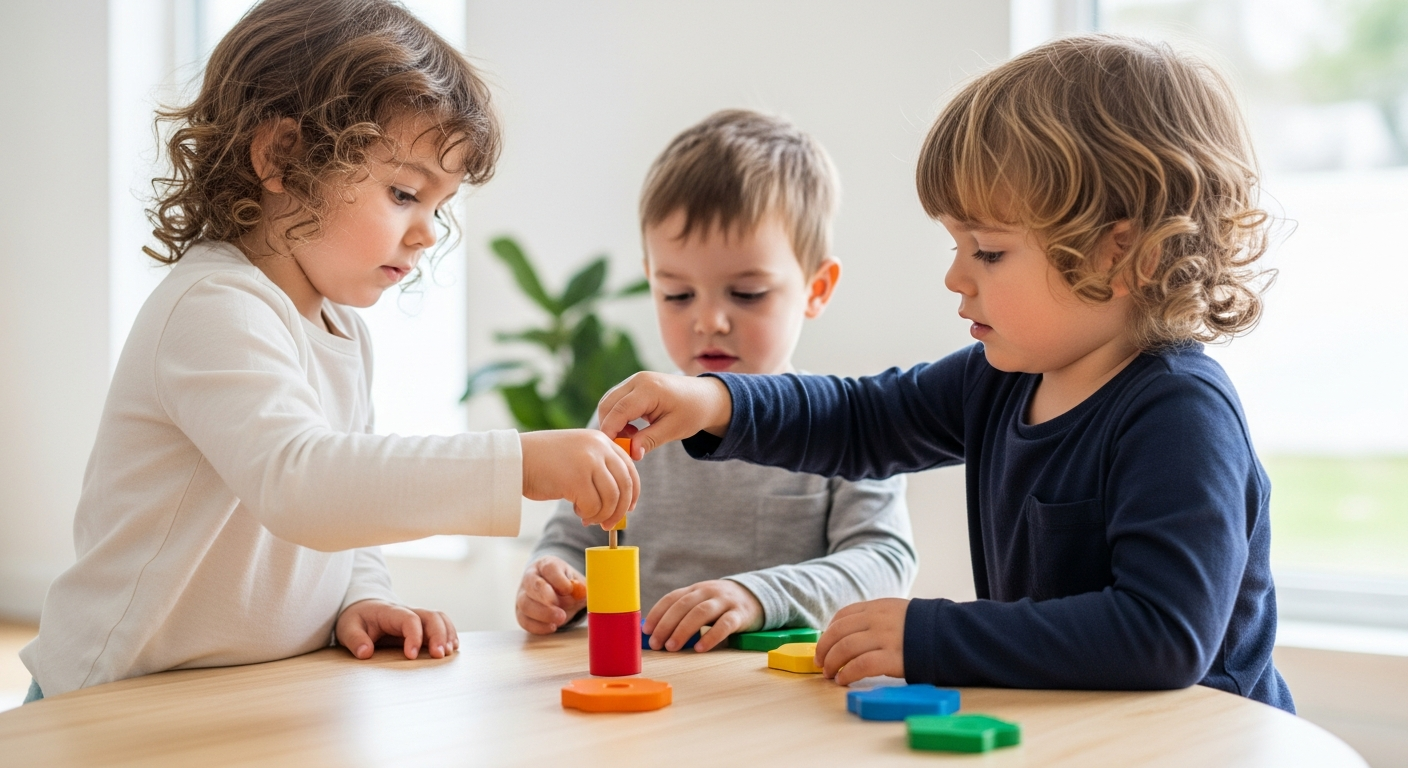
Table of Contents
- Introduction
- The Philosophy of Low-Mess Play
- High-Value Toys for Mess-Free Engagement
- Creative Household Hacks for Non-Messy Fun
- Integrating "Smart Screen Time" with Speech Blubs
- Fine Motor Skills and Language Development
- Building Trust with Science and Real Results
- On-the-Go and Quiet Time Success
- Understanding the Value of Your Speech Blubs Subscription
- How to Choose the Right Activity for Your Child's Mood
- Setting Realistic Expectations
- Encouraging Peer Observation
- Summary of Non-Messy Toddler Activities
- Conclusion
- FAQs
Introduction
Have you ever looked at your living room and wondered if a small, adorable tornado had just passed through? If you are the parent of a toddler, you know that "playtime" is often synonymous with "cleanup time." While we all want our children to explore their world through sensory experiences, there are days when the thought of scraping dried oatmeal off the floor or scrubbing finger paint out of the carpet feels like too much to handle. You want to engage your child’s curiosity and support their development, but you also need to keep your home—and your sanity—intact.
At Speech Blubs, we understand this balancing act perfectly. Our mission is to empower children to "speak their minds and hearts," a goal born from the personal experiences of our founders who grew up with speech challenges themselves. We know that for the 1 in 4 children who need speech support, every moment of engagement is an opportunity for growth. That’s why we advocate for "smart screen time" and high-quality, hands-on activities that foster communication without the chaos.

In this blog post, we will explore a massive variety of non messy toddler activities that you can set up in minutes. We’ll cover everything from household hacks to "smart screen time" solutions that help your child reach their milestones while you manage the demands of a busy household. By the end of this article, you will have a toolkit of low-prep, low-mess ideas that build confidence, reduce frustration, and create joyful learning moments for your family.
The Philosophy of Low-Mess Play
Many parents feel a sense of "mom guilt" or "dad guilt" when they don't provide elaborate, messy sensory bins filled with dyed rice or shaving cream. However, child development isn't dependent on the size of the mess. In fact, many of the most effective ways to build fine motor skills and language are entirely clean.
The key is to focus on engagement. When a child is deeply engaged, they are learning. Whether they are concentrated on pushing a pipe cleaner through the holes of a colander or watching a peer pronounce a new word on a screen, their brain is firing on all cylinders. At Speech Blubs, we believe in blending scientific principles with play. This "smart" approach ensures that even "quiet time" is productive.
High-Value Toys for Mess-Free Engagement
Sometimes, the best way to keep a toddler occupied without a mess is to invest in a few key "open-ended" toys. These are items that can be used in dozens of different ways, growing with your child as their skills evolve.
1. Magnetic Tiles
Magnetic tiles are a staple for a reason. They allow toddlers to build towers, "garages" for cars, or even flat patterns on the floor. Because the pieces stick together, they are much easier to clean up than traditional wooden blocks. They encourage spatial awareness and problem-solving. To add a language component, you can ask your child to "give me the red square" or "put the yellow triangle on top," practicing colors and prepositions.
2. Water Wow! Books
If your child loves the idea of painting but you dread the potential for spills, these reusable water-reveal pads are a lifesaver. Your child uses a refillable water pen to "color" the pages, revealing hidden pictures that disappear as they dry. It’s a completely non-messy toddler activity that is perfect for car rides or waiting at a doctor’s office.

3. Reusable Sticker Books
Stickers are a classic, but traditional ones can end up stuck to your hardwood floors or furniture. Reusable sticker sets (often made of "static cling" material) allow children to create scenes on a glossy background. For a parent whose 3-year-old "late talker" loves animals, using these to label "cow," "pig," and "sheep" offers a fun, motivating way to practice vocabulary while sticking and re-sticking.
4. Magnetic Drawing Boards
The old-school magnetic doodle pads are still some of the best tools for fine motor development. They allow for endless drawing and "erasing" without a single scrap of paper or a stray crayon mark. You can use these to model simple shapes or even letters as your child gets older.
Creative Household Hacks for Non-Messy Fun
You don’t always need to buy new toys to keep your toddler engaged. Some of the best non messy toddler activities come from items you already have in your pantry or craft drawer.
5. The Colander and Pipe Cleaner Challenge
Turn a kitchen colander upside down and give your child a pack of colorful pipe cleaners. Show them how to thread the pipe cleaners through the holes. This is an incredible workout for their tiny hand muscles (fine motor skills) and requires deep concentration. As they work, you can describe what they are doing: "You’re pushing the blue one in!" or "Now pull it out!"
6. Card Slot Drop
Find an empty oatmeal container or a shoe box and cut a thin slit in the lid. Give your child a deck of playing cards and let them "mail" the cards into the slot. This simple repetitive motion is highly satisfying for toddlers and helps with hand-eye coordination.
7. Painter's Tape Maze
Painter’s tape is a parent's best friend because it comes off surfaces easily without leaving residue. You can tape "roads" on the floor for their toy cars to follow, or tape small toys (like plastic dinosaurs) to a cookie sheet and let your child "rescue" them by peeling the tape off. This "peeling" action is excellent for strengthening the pincer grasp.
8. Contact Paper "Sticky Wall"
Tape a piece of clear contact paper to the wall with the sticky side facing out. Give your child lightweight items like scraps of tissue paper, feathers, or pieces of yarn to stick onto the wall. It’s a vertical art project that stays contained in one spot!
Integrating "Smart Screen Time" with Speech Blubs
While hands-on play is vital, every parent needs a moment to start dinner, take a work call, or simply breathe. This is where many parents turn to cartoons, but passive viewing doesn't always support development. At Speech Blubs, we’ve created a "smart screen time" experience that acts as a powerful supplement to your child’s overall development plan.
The Power of Video Modeling
Our app is built on the scientific methodology of video modeling. Instead of watching an animated character, your child watches real children—their peers—performing speech exercises and making sounds. This triggers mirror neurons in the brain, which are the cells that fire both when we perform an action and when we observe someone else performing that same action.
For example, if your child is working on early sounds like "B" or "P," they can enter the "Early Sounds" section of the app. They see another child happily saying "B-B-B-Ball," and they are naturally inclined to imitate them. This peer-to-peer connection builds confidence and reduces the frustration often associated with learning to speak.
A Tool for Family Connection
While Speech Blubs is a great "quiet time" activity, it’s even more powerful when used together. You can co-play with your child, mimicking the sounds along with the "Blubers" on the screen. It creates joyful family learning moments that feel like a game rather than a therapy session.
Download Speech Blubs on the App Store or Google Play to begin and see how peer modeling can transform your child’s engagement.
Fine Motor Skills and Language Development
It might seem like "threading beads" and "speaking clearly" are two different worlds, but they are closely linked. The part of the brain responsible for fine motor control is situated right next to the area responsible for speech production. Engaging in non messy toddler activities that challenge the hands often supports the brain's overall readiness for communication.
9. Pasta Threading
Using a lump of playdough as a base, stick a few dry spaghetti noodles or straws into it so they stand upright. Give your child large, hollow pasta like rigatoni or penne and have them thread the pasta onto the "poles." This requires a steady hand and quiet focus.
10. Pom Pom Sorting
Give your child a muffin tin and a bowl of colorful pom poms. You can ask them to sort the pom poms by color into the different muffin cups. To make it more challenging (and better for motor skills), give them a pair of toddler-safe tweezers or a large spoon to move the pom poms.
11. "Washing" Plastic Animals
While water can sometimes be messy, a shallow tray with just a tiny bit of water and a toothbrush can provide 30 minutes of engagement. Tell your child the plastic lions and cows need a "bath." They can scrub the animals clean and dry them with a rag. This is a great time to practice action words: "Scrub, scrub, scrub!" and "Dry, dry, dry!"
Building Trust with Science and Real Results
We know that as a parent, you want to ensure that the tools you use are effective. Our method is backed by science, placing us in the top tier of speech apps worldwide. We’ve received high ratings on the MARS (Mobile App Rating Scale) and have helped over 5 million families worldwide.
But don't just take our word for it. See what other parents are saying about their child's success with Speech Blubs. From late talkers finding their first words to children with autism gaining the confidence to imitate sounds, the stories of progress are what drive our mission every day.
If you’re unsure where your child stands, we offer a quick 3-minute preliminary screener. It involves 9 simple questions and provides you with a personalized assessment and a next-steps plan to help your child thrive.
On-the-Go and Quiet Time Success
Sometimes the biggest challenge isn't the mess at home, but keeping a toddler occupied in public—like at a restaurant or on an airplane.
12. The "Busy Bag"
Create a small bag filled with non messy toddler activities that only comes out during "special" times. This might include:
- A few "Wax Sticks" (like Wikki Stix) that can be bent into shapes and stuck to surfaces without any residue.
- A small container of "Gak" or high-quality putty that doesn't crumble like playdough.
- A "Button Pegboard" where kids can press colorful buttons into a picture board.
13. Window Clings
If you are traveling by plane or car, or even just sitting at home near a sliding glass door, gel window clings are a fantastic mess-free toy. Toddlers love the sensory feel of the squishy gel and can spend a long time moving the shapes around on the glass.
14. "I Spy" Bottles
Fill a clear plastic bottle with dry rice or sand (glued shut for safety!) and hide small trinkets inside like a tiny die, a bead, or a small plastic insect. Your child can shake and turn the bottle to find the items. This is a great "quiet" activity that encourages visual tracking and vocabulary as they name the items they find.
Understanding the Value of Your Speech Blubs Subscription
We want to be transparent about how we support your child's journey. While there are many apps out there, we pride ourselves on being a "smart" solution that delivers actual developmental value rather than just entertainment.
To provide the best experience, we offer two primary plans:
- Monthly Plan: $14.99 per month. This is a great way to test the waters if you're looking for a short-term boost.
- Yearly Plan: $59.99 per year.
The Yearly plan is our clear best choice for families. Not only does it save you 66% compared to the monthly rate (breaking down to just $4.99/month), but it also includes high-value features that the monthly plan lacks:
- A 7-day free trial: You can explore the full library of 1,500+ activities risk-free.
- Reading Blubs: You get full access to our second app, Reading Blubs, which focuses on early literacy and phonics.
- Priority Support: You receive 24-hour support response times and early access to all new content updates.
Choosing the yearly plan ensures your child has a consistent, long-term tool to foster a love for communication and build foundational skills. Ready to get started? Create your account and begin your 7-day free trial today.
How to Choose the Right Activity for Your Child's Mood
Not every activity is right for every moment. Understanding your child's "energy level" can help you choose the best non messy toddler activity to keep them regulated and happy.
For "High Energy" Toddlers
If your child is bouncing off the walls, they need "heavy work" or gross motor engagement.
- Laundry Basket Basketball: Give them soft rolled-up socks and have them try to toss them into a laundry basket from across the room.
- The Painter's Tape Balance Beam: Tape a long straight line on the carpet and have them practice walking "the tightrope."
- Pantry Stack: Let them stack unopened cans from the pantry into towers. It’s heavy, satisfying, and completely clean.
For "Focus Needed" Toddlers
If your child seems restless and needs to calm down, fine motor tasks are best.
- Toothpick Drop: Give them a container of toothpicks and an empty spice jar with small holes in the lid. Dropping the toothpicks in requires immense focus.
- Button Sorting: Give them a bowl of large buttons and have them sort them by size or color into a muffin tin.
For "Transition" Times
If you're trying to move from playtime to naptime or mealtime, use "smart screen time" as a bridge.
- Set a timer for 10-15 minutes of Speech Blubs on Google Play. The calm, focused nature of the video modeling helps them transition from high-intensity play to a quieter state of mind.
Setting Realistic Expectations
As a parent, it’s important to remember that progress isn't always linear. We don't suggest that using an app or doing a few crafts will mean your child is giving public speeches in a month. Instead, we focus on the benefits of the process.
By providing these engaging, non-messy toddler activities, you are:
- Fostering a love for communication: Making language fun rather than a chore.
- Building confidence: Giving them small "wins" through mastered tasks.
- Reducing frustration: Providing them with tools to express themselves.
- Developing key foundational skills: Strengthening the muscles and neural pathways needed for future success.
Whether you are using our app as a powerful supplement to professional therapy or as a way to jumpstart your child's language journey at home, the goal is always joyful learning.
Encouraging Peer Observation
One of the most unique aspects of Speech Blubs is how we utilize the way toddlers naturally learn: by watching other kids. Have you ever noticed how your child is much more likely to try a new food if they see a friend eating it? Or how they suddenly want to climb a slide because they saw a slightly older child do it?
This is peer modeling in action. In our app, we don't use "teachers" in the traditional sense. We use "Blubers"—real kids who are just like your child. When your child sees a peer making a silly face, sticking out their tongue, or saying a new word, it feels achievable. It feels like play. This is the heart of our scientific methodology.
Summary of Non-Messy Toddler Activities
To recap, keeping your toddler engaged doesn't have to result in a disaster zone. Here are our top categories for success:
- Smart Screen Time: Use Speech Blubs for peer-to-peer modeling and "smart" engagement.
- Vertical Play: Use contact paper or tape on walls to keep activities contained and encourage standing.
- Kitchen Tools: Repurpose colanders, spice jars, and muffin tins for fine motor work.
- Low-Mess Art: Stick to Water Wow books, magnetic boards, and reusable stickers.
- Heavy Work: Use pantry cans or laundry baskets for "clean" gross motor play.
Conclusion
Finding the right balance between "fun" and "manageable" is one of the greatest challenges of parenting a toddler. We hope this list of non messy toddler activities gives you the inspiration you need to fill your days with learning and laughter—without the constant need for a mop.
Remember, your child's path to communication is a journey. At Speech Blubs, we are honored to be a part of that journey, providing a tool that turns screen time into a developmental milestone. By blending hands-on activities with our unique peer-modeling app, you are giving your child the best possible foundation for "speaking their minds and hearts."
Don’t wait to start building those vital skills. Download Speech Blubs on the App Store or Google Play today to start your 7-day free trial. For the best value and access to our full suite of features—including the Reading Blubs app and priority support—be sure to select the Yearly plan. Let’s make communication joyful, one "smart" moment at a time.
FAQs
1. Are "messy" activities better for sensory development than "non-messy" ones?
Not necessarily. While "messy" play like mud or paint offers tactile input, "non-messy" activities like sorting pom poms, threading pasta, or using magnetic tiles provide excellent fine motor and cognitive challenges. Sensory development also includes visual and auditory input, which "smart screen time" and simple household activities provide in spades.
2. How much screen time is appropriate for a toddler?
The American Academy of Pediatrics suggests that for children aged 2 to 5 years, screen time should be limited to one hour per day of high-quality programming. This is why we focus on "smart screen time"—ensuring that the time your child spends on a device is active, educational, and focused on peer modeling rather than passive consumption.
3. Can Speech Blubs replace professional speech therapy?
No, Speech Blubs is designed to be a powerful supplement to professional therapy or a tool for general language enrichment. If you have concerns about your child's development, we always recommend consulting with a licensed Speech-Language Pathologist (SLP). Our app is a great way to practice the skills learned in therapy sessions at home.
4. Why is the Yearly plan better than the Monthly plan?
The Yearly plan offers the best long-term value, saving you 66% over the monthly cost. Crucially, it also includes exclusive features like a 7-day free trial, access to the Reading Blubs app for early literacy, and 24-hour support response times, ensuring you have the full "Speech Blubs" experience.
Sobre el autor