
Fun and Educational Toddler Activities in Winter
 Por Speech Blubs Team•23 mar 2026•13 min.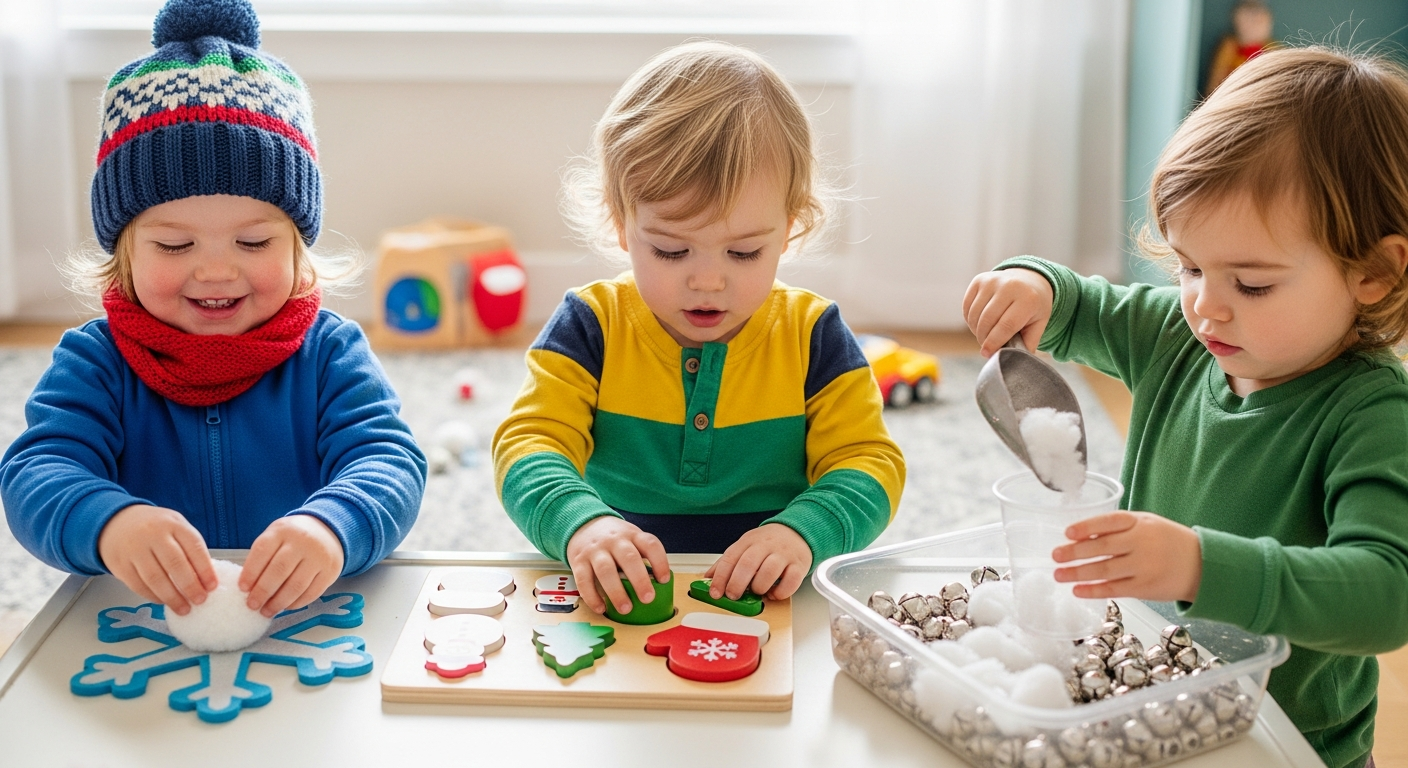
Table of Contents
- Introduction
- Embracing the Chill: Why Winter Play Matters
- Creative Indoor Sensory Activities for Cold Days
- Fine Motor Skills and Winter-Themed Crafts
- Building Communication Skills with "Smart Screen Time"
- Active Indoor Play to Burn Off Winter Energy
- Co-Playing and Connection: Making the Most of Winter Days
- Why Speech Blubs is Your Best Winter Companion
- Conclusion
- FAQ
Introduction
Have you ever looked out the window at a gray, freezing morning and felt a tiny surge of "cabin fever" panic before your coffee even finished brewing? If you are a parent or caregiver to a curious toddler, you know exactly what that feeling is. When the temperature drops and the backyard becomes a frozen tundra, the walls of your home can start to feel a little bit closer every hour. Keeping a little one engaged, learning, and happy during the long winter months is a challenge that requires a mix of creativity, patience, and the right tools. At Speech Blubs, we understand this challenge deeply because our mission is to empower children to speak their minds and hearts, even when the weather keeps us all inside.
The purpose of this guide is to provide you with a comprehensive toolkit of toddler activities in winter that go beyond just passing the time. We want to help you turn these chilly days into opportunities for growth, language development, and joyful family connection. We will cover everything from indoor sensory play and winter-themed crafts to how you can use "smart screen time" to boost your child's communication skills. By the end of this post, you will have a clear plan to navigate the winter season with confidence, ensuring your child stays active and engaged. Our goal is to provide an immediate, effective, and joyful solution for the 1 in 4 children who need speech support, blending scientific principles with the power of play.

Embracing the Chill: Why Winter Play Matters
Winter presents a unique developmental opportunity for toddlers. While it’s easy to focus on the limitations of the cold, the season offers a completely different set of textures, sounds, and vocabulary words. Think about the difference between the crunch of dry leaves in autumn and the silent, soft falling of snow. These sensory experiences are foundational for a child's understanding of the world.
When we engage in toddler activities in winter, we aren’t just keeping them busy; we are building their brains. Sensory play, in particular, is vital. It helps strengthen neural pathways and supports fine motor skills, which are necessary for later tasks like writing and even clear speech. Furthermore, the change in routine allows us to focus on specific seasonal vocabulary. Words like "shiver," "glacier," "mitten," and "hibernate" might not come up in July, but they are perfect for winter-time learning.
If you are ever unsure about where your child stands in their developmental journey, we encourage you to take our 3-minute preliminary screener. It consists of 9 simple questions and provides you with a personalized assessment and a next-steps plan to support your child’s growth.
Creative Indoor Sensory Activities for Cold Days
Sensory bins and water play are the "holy grail" of indoor activities. They are relatively low-prep but offer high-engagement value.
Arctic Water Play and Ice Rescue
One of our favorite ways to bring the magic of the outdoors inside without the frostbite is through an "Ice Rescue" mission. This activity is excellent for hand-eye coordination and problem-solving.
- How to Set it Up: Take a few small plastic arctic animals (like penguins or polar bears) and place them in a muffin tin or small containers filled with water. Freeze them overnight. The next day, place the frozen blocks in a large plastic bin.
- The Play: Give your toddler a spray bottle filled with warm water or a small spoon and a bowl of warm water. Encourage them to "rescue" the animals by melting the ice.
- The Language Connection: As they work, narrate the process. "Oh look, the penguin is stuck! Is the water warm or cold? You are spraying the ice." This simple narration helps build their receptive language.
For a parent whose 3-year-old "late talker" loves animals, our "Animal Kingdom" section in the app offers a fun, motivating way to practice "moo" and "baa" sounds alongside these physical activities. You can download Speech Blubs on the App Store to see how our peer-led videos can encourage your child to imitate these fun animal sounds.

Bringing the Snow Indoors: Colored Snow Painting
If you have snow on the ground but it’s too cold to stay out for long, bring a bucket of it inside! Place it on a large tray or in a sensory bin. Give your child small cups of water mixed with food coloring and a few eye droppers or paintbrushes.
Watching the colors bleed into the white snow is a fantastic lesson in cause and effect. It also encourages fine motor control as they squeeze the droppers. You can talk about color mixing—"What happens when the blue water hits the yellow snow? It turns green!"
The Magic of Winter Sensory Bins
A sensory bin can be as simple as a container filled with "snow" (which can be cotton balls, white rice, or even shredded white paper) and hidden treasures.
Expert Tip: Sensory play is most effective when it is open-ended. Avoid giving too many "rules." Let your child explore the textures in their own way, even if it gets a little messy.
Consider adding:
- Blue Flat Marbles: To represent ice.
- White Pom-Poms: To represent snowballs.
- Scoops and Bowls: For transferring, which builds hand strength.
- Winter Erasers: Tiny snowflakes or snowmen for hiding and finding.
Fine Motor Skills and Winter-Themed Crafts
Winter crafts are a cozy way to spend an afternoon while developing the tiny muscles in a child’s hands. At Speech Blubs, we believe that every interaction is an opportunity for connection.
Melted Puffy Paint Snowmen
This is a classic activity that toddlers love because of the unique texture.
- The Recipe: Mix equal parts white school glue and shaving cream. Stir it until it’s thick and fluffy.
- The Craft: Let your toddler "paint" a big blob on a piece of blue construction paper. Because the paint is thick, it looks like a melting snowman!
- Decoration: While the paint is wet, let them press in "coal" eyes (black buttons or paper circles), an orange triangle "carrot" nose, and twig arms.
As you build the snowman together, you can work on body parts. "Where are the snowman’s eyes? Where is his nose?" This mimics the interactive learning found in our app, where we use scientific methodology like video modeling to help children identify and name parts of the face.
DIY Artificial Snow for Open-Ended Play
If you don't have real snow nearby, you can make your own "smart snow" using just two ingredients: baking soda and white hair conditioner (or shaving cream). Mix about 2.5 cups of baking soda with 1/2 cup of conditioner. The result is a cold, moldable substance that smells great and feels remarkably like the real thing. It’s perfect for building tiny indoor snowmen or creating a "winter wonderland" for toy cars and figurines.
Snowflake Pattern Blocks and Literacy
Winter is a great time to introduce basic shapes and patterns. You can print out simple snowflake templates and have your toddler place "pattern blocks" or even colored popsicle sticks over the lines.
Pairing these activities with winter-themed books is also a great way to foster a love for reading. Look for books with simple repetitive phrases. As you read, point to the words. This helps your child begin to understand that those "squiggles" on the page represent the sounds we say. This is the same principle behind our Reading Blubs app, which is included exclusively in our Yearly plan to help bridge the gap between speaking and reading.
Building Communication Skills with "Smart Screen Time"
In the winter, it’s inevitable that screen time might increase. However, not all screen time is created equal. At Speech Blubs, we differentiate between "passive viewing" (like sitting in front of a cartoon) and "smart screen time," which is active, educational, and designed for co-play.
Using Speech Blubs to Expand Winter Vocabulary
Our app was born from the personal experiences of our founders, who all grew up with speech problems and created the tool they wished they had. We use a unique approach called video modeling. In our videos, children see other children—their peers—performing speech exercises, making sounds, and naming objects.
Research shows that children are much more likely to imitate other children than they are to imitate adults. This is due to "mirror neurons" in the brain that fire when we see someone like ourselves performing an action. During the winter, you can use the "Winter Fun" or "Early Sounds" sections of the app to practice words that are relevant to the season.
The Power of Video Modeling in Winter Learning
When your toddler watches a peer in the app say the word "hat" while putting on a beanie, they aren't just watching a video; they are participating in a social learning experience. You can reinforce this by having a real hat ready. When the child in the app says "hat," you can point to your child's hat and say, "You have a hat, too! Can you say hat?"
This interaction transforms screen time into a powerful tool for family connection. It reduces the frustration that often comes with speech delays by making the learning process feel like a game. Don’t just take our word for it—you can read testimonials from other families who have seen their children's confidence soar using this method.
Active Indoor Play to Burn Off Winter Energy
Sometimes, sensory bins and crafts aren't enough. Toddlers have a lot of physical energy that needs an outlet, even when it’s ten degrees outside.
- The Indoor "Snowball" Fight: Use rolled-up white socks or large white pom-poms as snowballs. This is a safe way to play "catch" indoors and works on gross motor skills.
- Obstacle Courses: Use pillows as "snowdrifts" to crawl over, painter's tape on the floor as "ice balance beams," and chairs as "ice caves" to crawl through.
- Animal Walks: Encourage your child to move like winter animals. "Can you waddle like a penguin? Can you stomp like a polar bear? Can you crawl quietly like a snow leopard?"
These activities are not just fun; they help with "proprioception"—the sense of where one's body is in space. A child who is physically active is often more regulated and ready to focus on language tasks later in the day.
Co-Playing and Connection: Making the Most of Winter Days
The most important ingredient in any of these toddler activities in winter is you. While it’s tempting to set up an activity and check your email, the real magic happens during co-play.
Co-play doesn't mean you have to direct every move. It means being present, following your child's lead, and providing the "language bridge." If they are playing with the "artificial snow," you don't need to tell them how to build a castle. Instead, just sit with them and narrate: "Oh, you are scooping. That is a big pile! It feels cold."
This responsive interaction is what builds secure attachment and encourages a child to "speak their minds and hearts." It’s about creating joyful learning moments that reduce frustration and build foundational skills.
Why Speech Blubs is Your Best Winter Companion
As you plan your winter schedule, we want to be part of your journey. Speech Blubs is designed to be a supplement to your child's overall development and, where applicable, a powerful partner to professional therapy. We offer a way to make speech practice feel less like "work" and more like "play."
Pricing and Value
We want to be transparent about our pricing so you can make the best choice for your family. We offer two main paths:
- Monthly Plan: For $14.99 per month, you get full access to the Speech Blubs app and its vast library of over 1,500 activities and peer-led videos.
- Yearly Plan (Best Value): For $59.99 per year, which breaks down to just $4.99 per month.
We strongly recommend the Yearly Plan because it is designed to support your child's long-term development. When you choose the Yearly option, you save 66% compared to the monthly rate and receive several exclusive benefits:
- 7-Day Free Trial: You can explore everything we have to offer for a full week at no cost.
- Reading Blubs App: You get full access to our secondary app designed to help toddlers transition from speech to early literacy.
- Priority Support: You receive 24-hour support response times and early access to all new updates and features.
The monthly plan does not include the free trial or the Reading Blubs app, making the Yearly plan the clear choice for families looking for the most comprehensive support. You can start by creating your account on our website today.
Conclusion
Winter doesn't have to be a season of boredom or stagnancy. With a few simple supplies and a little bit of imagination, you can turn your home into a vibrant center for learning and discovery. From the tactile joy of an "Ice Rescue" to the focused engagement of a Speech Blubs session, every activity is a step toward helping your child find their voice.
Remember, the goal isn't perfection; it's progress and connection. Whether you are painting a "melted snowman" or watching your child mimic a peer on the screen, you are doing the important work of fostering a love for communication and building their confidence. We are honored to be a part of that process.
Ready to make this winter your child's most talkative season yet? Download Speech Blubs on the Google Play Store or the Apple App Store today. Don’t forget to choose the Yearly plan to unlock your 7-day free trial, the Reading Blubs app, and the best overall value for your family's journey.
FAQ
1. How long should my toddler spend on indoor activities each day? There is no "perfect" amount of time, as every child's attention span varies. For toddlers, aim for "activity bursts" of 10–20 minutes. If they are deeply engaged in sensory play, let them continue! If they seem frustrated, it’s okay to move on. Consistency is more important than duration.
2. Can Speech Blubs replace traditional speech therapy? Speech Blubs is a powerful tool designed to supplement a child's development and professional therapy. It is not a medical replacement for a licensed Speech-Language Pathologist (SLP). However, many SLPs recommend our app as a way to encourage "homework" and practice at home in a way that feels like play.
3. What if my toddler tries to eat the sensory bin materials (like rice or "fake snow")? Safety is always the priority. For toddlers who are still in the "mouthing" phase, use taste-safe materials. Instead of shaving cream puffy paint, use whipped cream. Instead of plastic beads, use large O-shaped cereal. Always supervise sensory play closely.
4. Why is the yearly plan better than the monthly plan? The yearly plan is designed for parents committed to seeing long-term progress. Not only is it significantly cheaper (saving you 66%), but it also provides the 7-day free trial to ensure it's a good fit for your child. Plus, the inclusion of the Reading Blubs app helps support your child's next developmental milestone: literacy.
Sobre el autor