
Fun and Simple Fine Motor Toddler Activities
 Por Speech Blubs Team•25 mar 2026•15 min.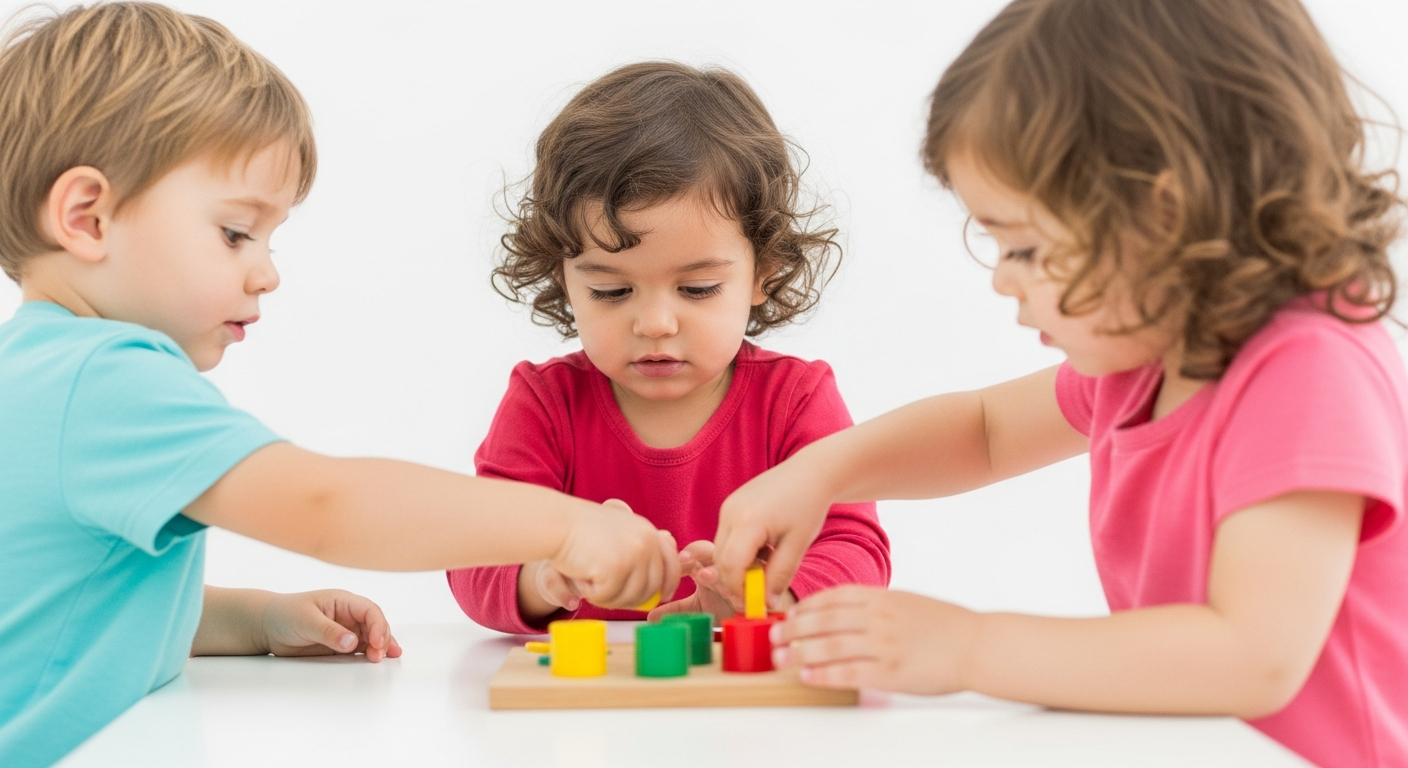
Table of Contents
- Introduction
- What Are Fine Motor Skills and Why Do They Matter?
- The Science: The Hand-Brain Connection
- Developmental Milestones: What to Expect
- 15 Creative Fine Motor Toddler Activities for Home
- How Speech Blubs Enhances the Experience
- Why Peer-to-Peer Learning Works
- Smart Screen Time vs. Passive Viewing
- Building a Routine for Success
- The Value of Speech Blubs: Pricing and Plans
- Fine Motor Precision vs. Strength
- Making Memories Through Play
- Conclusion
- FAQ
Introduction
Did you know that the same parts of a child's brain that control the movement of their fingers are also deeply involved in the complex process of learning to speak? It sounds surprising, but "hand-eye coordination" and "mouth-eye coordination" are more closely related than we might think. When you watch your toddler struggle to peel a sticker or carefully stack a block, you aren't just seeing a future artist or engineer at work—you are witnessing the foundational building blocks of communication, independence, and cognitive growth.
At Speech Blubs, our mission is to empower children to "speak their minds and hearts." We know that every small movement counts toward a bigger goal. Whether your child is a "late talker" or simply reaching new developmental stages, incorporating fine motor toddler activities into your daily routine can make a world of difference. In this post, we will explore why these tiny movements are so critical, provide a comprehensive list of therapist-approved activities you can do at home, and show you how "smart screen time" can support these physical milestones. By the end of this guide, you’ll have a toolbox full of joyful ways to help your child build the strength and confidence they need for life's everyday tasks.

What Are Fine Motor Skills and Why Do They Matter?
When we talk about fine motor skills, we are referring to the coordination of small muscle movements—usually involving the synchronization of hands and fingers with the eyes. These are the delicate actions that allow us to pick up a single Cheerio, zip up a jacket, or hold a pencil. Unlike gross motor skills, which involve larger movements like running or jumping, fine motor skills require precision and patience.
For a toddler, mastering these skills is a major step toward independence. Imagine the frustration of wanting to feed yourself but not being able to grasp the spoon, or wanting to play with a toy but not having the finger strength to click the pieces together. By focusing on fine motor toddler activities, we help reduce this frustration and foster a sense of "I can do it myself!"
Beyond self-care, these skills are essential for school readiness. Tasks like cutting with scissors, drawing shapes, and eventually writing names all stem from the strength built during early toddlerhood. At Speech Blubs, we view these physical skills as part of a holistic approach to child development. Just as our founders created a tool to help children overcome speech challenges they personally faced, we believe in providing parents with joyful solutions that address the whole child.
The Science: The Hand-Brain Connection
It isn’t just coincidence that fine motor play often mirrors speech development. Scientists have noted that the "motor cortex"—the part of the brain responsible for movement—has significant overlap in the areas that control the hands and the muscles used for articulation (the tongue, lips, and jaw).
When a child engages in a precision task, they are exercising their brain's ability to plan and execute complex sequences. This "motor planning" is exactly what is required to produce clear speech. This is why many occupational and speech therapists work hand-in-hand.
If you are curious about where your child stands in their development, taking a quick 3-minute preliminary screener can provide a helpful assessment. With just 9 simple questions, you can get a clearer picture of your child's current milestones and receive a personalized next-steps plan.

Developmental Milestones: What to Expect
Every child develops at their own pace, but there are general milestones that can help guide your play. Understanding these stages allows you to choose activities that are challenging enough to be engaging but not so hard that they lead to tears.
Birth to 1 Year: The Discovery Phase
In the first year, babies move from a primitive reflex grasp to more intentional reaching. By six months, they may hold a block with both hands. By twelve months, many are developing the "pincer grasp"—using the thumb and index finger to pick up small objects.
1 to 2 Years: The Explorer Phase
This is the era of stacking and scribbling. You might notice your toddler trying to use a spoon (with varying degrees of success!) or turning pages in a board book. They are beginning to understand how their hands can manipulate the world around them.
2 to 3 Years: The Independence Phase
At this age, children start to master the "big" small tasks. They might begin to undress themselves, use a fork, and snip paper with safety scissors. This is a great time to introduce more structured fine motor toddler activities that focus on precision.
3 to 5 Years: The Creator Phase
By now, children are often able to draw circles, copy lines, and even start writing some letters. Their hand-eye coordination is becoming much more refined, allowing them to tackle complex puzzles and intricate building sets.
15 Creative Fine Motor Toddler Activities for Home
The best part about building fine motor skills is that you don’t need expensive equipment. Most of the best tools are already in your kitchen or craft drawer. Here are 15 activities to get those little fingers moving:
1. Peeling and Placing Stickers
Stickers are a goldmine for fine motor development. The act of pinching the edge of a sticker and peeling it off the sheet requires a strong pincer grasp.
- Pro Tip: If your child struggles to get the edge up, peel off the "background" sticky part of the sheet first, leaving only the individual stickers on the backing. This makes them much easier to grab!
2. Stringing Cheerios or Pasta
Using a pipe cleaner or a piece of dry spaghetti as a "needle," have your child thread Cheerios or penne pasta onto it. This builds bilateral coordination, which is the ability to use both hands together to complete a task.
3. Ripping and Crumpling Paper
Don't throw away that junk mail! Let your toddler rip it into tiny pieces or crumple it into "snowballs." This builds hand strength and is surprisingly therapeutic for a frustrated toddler. You can then use the ripped pieces to glue onto a drawing to create a mosaic.
4. The Piggy Bank Challenge
If you have a piggy bank (or even a plastic container with a slot cut into the lid), have your child practice inserting coins or buttons. Orienting the coin so it fits through the thin slot requires significant visual-motor coordination.
5. Clothespin "Legs"
Grab a few board books and some clothespins. Ask your child to "give the book legs" by clipping the clothespins to the bottom edge so the book can stand up. Squeezing the clothespin is one of the best ways to build the muscle strength needed for eventually using scissors.
6. Sidewalk Chalk Art
Sidewalk chalk isn't just for fun; the thick grip of the chalk helps toddlers practice their "tripod grasp" (the finger position used for writing). Plus, the resistance of the pavement provides great sensory feedback to the brain.
7. Bubbles and Pokes
Blow bubbles and encourage your child to pop them using only their index finger. This encourages "finger isolation," which is the ability to move one finger independently of the others.
8. Kitchen Tongs and Pom-Poms
Give your child a pair of kitchen tongs or tweezers and ask them to move soft pom-poms (or cotton balls) from one bowl to another. This mimics the motion of using scissors and builds the muscles in the palm of the hand.
9. Play Dough Sculpting
Whether it's store-bought or homemade, dough is the ultimate fine motor tool. Encourage your child to roll "snakes," pinch off tiny "blueberries," or hide small plastic animals inside a dough ball for them to "rescue."
10. Water Dropper Art
Fill a few small cups with water and a drop of food coloring. Give your child an eye dropper or a clean medicine syringe and let them squeeze the colored water onto a paper towel. Watching the colors spread is mesmerizing and builds excellent finger control.
11. Sorting Games
Use an egg carton or an ice cube tray as a sorting station. Give your child a mix of colored beads, large buttons, or different types of dry beans and have them sort the items by color or shape. This combines fine motor work with early math skills!
12. "Painting" with Water
On a hot day, give your toddler a cup of water and a real paintbrush. Let them "paint" the side of the house, the fence, or the driveway. As the water evaporates, they can start all over again.
13. Puzzle Power
Start with chunky wooden puzzles and move toward jigsaws with more pieces. Fitting a puzzle piece into a specific spot requires rotation of the wrist and precise placement—key components of fine motor precision.
14. LEGOs and Building Blocks
Snap-together blocks like LEGO DUPLO are fantastic for building hand strength. The "push and pull" required to connect and disconnect the blocks works the small muscles of the hand in a way that few other toys can.
15. Helping with Meal Prep
For a parent whose 3-year-old "late talker" loves being in the kitchen, involve them in simple tasks. Let them tear lettuce for a salad, stir the pancake batter, or help "scrub" potatoes. These real-world tasks provide a sense of purpose and a lot of motor practice.
How Speech Blubs Enhances the Experience
While physical play is essential, we also live in a world where technology is a part of our lives. At Speech Blubs, we believe in "smart screen time." Instead of the passive viewing found in cartoons, our app is designed to be an active, participatory experience.
Our unique approach uses "video modeling." When your child uses the app, they see videos of other children (their peers) making sounds, saying words, and performing actions. This triggers "mirror neurons" in the brain—the same neurons that fire when we watch someone else perform a task we are learning. This methodology is backed by scientific research and has helped thousands of children find their voice.
By pairing our app with fine motor toddler activities, you create a multi-sensory learning environment. For example, after your child watches a peer make "moo" sounds in our "Animal Kingdom" section, you can have them use play dough to create a cow. This reinforces the vocabulary and the motor skill simultaneously!
"At Speech Blubs, we provide a screen-free alternative to passive viewing and a powerful tool for family connection."
Why Peer-to-Peer Learning Works
There is a special magic that happens when a child sees another child doing something. It feels attainable. When an adult says a word, it can feel like a "lesson." When a peer says a word, it feels like play. This is why our video modeling is at the heart of everything we do.
Our app doesn't just focus on speech; it fosters a love for communication and builds the confidence a child needs to navigate the world. We’ve heard countless parent testimonials about children who went from being frustrated and silent to joyful and communicative. By downloading the app, you are giving your child a "smart" companion on their developmental journey.
Smart Screen Time vs. Passive Viewing
It's a common concern for parents: "Is screen time bad for my child?" The answer depends entirely on the quality of the screen time. Passive viewing—where a child sits silently watching fast-paced animations—can lead to overstimulation and doesn't encourage interaction.
In contrast, Speech Blubs is designed for co-play. We encourage parents to sit with their children, imitate the sounds together, and then transition those lessons into real-world activities (like the fine motor games mentioned above). It is a tool for connection, not a "babysitter." Our app is rated highly on the MARS scale for its educational value and engagement, ensuring your child is getting the very best digital experience.
Building a Routine for Success
Consistency is key when it comes to developing any new skill. You don't need to dedicate hours a day to fine motor toddler activities. Instead, look for "micro-moments" throughout your routine:
- Morning: Let them try to pull up their own socks.
- Snack Time: Encourage them to pick up small pieces of fruit with their fingers.
- Playtime: Spend 10-15 minutes with Speech Blubs, followed by 10 minutes of blocks or dough.
- Bath Time: Use sponges to squeeze water, building grip strength.
By weaving these activities into the fabric of your day, you make learning feel natural and fun.
The Value of Speech Blubs: Pricing and Plans
We are committed to making our "smart screen time" accessible and effective for the 1 in 4 children who need speech support. To get the most out of our platform, we offer two main plans:
- Monthly Plan: $14.99 per month. This is a great way to test the waters and see how your child responds to the video modeling method.
- Yearly Plan: $59.99 per year. This is the clear best choice for families committed to their child's growth. At just $4.99/month, it offers a massive 66% savings compared to the monthly rate.
When you choose the Yearly Plan, you also unlock exclusive high-value features that are not available on the monthly plan:
- A 7-day free trial: See the results for yourself before committing.
- Reading Blubs App: An extra app designed to help your child transition from speaking to reading.
- Early Access: Be the first to try new updates and activities.
- Priority Support: 24-hour support response time for any questions you have.
We invite you to join our community and see why we are a leader in speech therapy resources. You can begin by creating your account today and exploring our wide range of activities.
Fine Motor Precision vs. Strength
As you plan your fine motor toddler activities, try to balance "precision" and "strength."
Precision activities include things like puzzles, mazes, and placing stickers. These teach the hand to move exactly where the brain wants it to go.
Strength activities include squeezing play dough, using hole punchers, or playing with "resistant" toys like LEGOs. These build the actual muscle tissue in the hands and wrists.
Both are necessary! A child might have the precision to hold a pencil but lack the strength to press down hard enough to leave a mark. Or they might have the strength to squeeze a toy but lack the precision to aim it. By mixing up your play, you ensure they develop a well-rounded set of skills.
Making Memories Through Play
At the end of the day, these activities are about more than just "milestones." They are about the giggle your child makes when a bubble pops on their nose. They are about the pride in their eyes when they finally click two blocks together. They are about the joyful family learning moments that build a lifetime of confidence.
Our founders started Speech Blubs because they knew the frustration of not being able to communicate. They wanted to create the tool they wished they had as children—something that makes learning feel like a celebration rather than a chore. Whether you are using our app or playing with sidewalk chalk, the goal is the same: to help your child speak their mind and heart.
Conclusion
Developing fine motor skills is a journey of a thousand tiny movements. From the first time a baby reaches for a rattle to the moment a preschooler writes their name, these skills are the engine of independence and communication. By integrating fine motor toddler activities like sticker peeling, dough sculpting, and sorting into your daily routine, you are providing your child with the physical foundation they need to succeed.
We encourage you to supplement this physical play with our unique "smart screen time." Our video modeling methodology is designed to reduce frustration and foster a genuine love for learning. Ready to take the next step? Download Speech Blubs on the App Store or get it on Google Play to begin your journey.
Remember, the Yearly Plan offers the best value, including a 7-day free trial, the Reading Blubs app, and priority support. It’s an investment in your child’s future that costs less than a single cup of coffee per month. Let’s start building those skills—and those smiles—together. Visit the Speech Blubs homepage to learn more about our story and our mission.
FAQ
1. What exactly are fine motor skills for toddlers?
Fine motor skills involve the coordination of small muscles in the hands, fingers, and wrists, usually in coordination with the eyes. These skills allow toddlers to perform tasks like picking up small objects, using utensils, and eventually writing.
2. Is there a link between fine motor skills and speech?
Yes! The areas of the brain that control fine motor movements and speech production are closely linked. Developing hand-eye coordination and motor planning through play can support the foundational skills needed for clear articulation and communication.
3. At what age should I start focusing on these activities?
You can start simple activities as early as infancy (like encouraging reaching and grasping). However, toddlerhood (ages 1-3) is a peak time for developing the pincer grasp, hand strength, and bilateral coordination through more structured play like stickers and blocks.
4. How can a screen-based app help with physical motor skills?
Speech Blubs uses "video modeling," where children watch their peers perform actions and make sounds. This encourages the child to imitate what they see, which is a powerful way to learn both communication and the motor planning required for speech. It is an active, rather than passive, form of learning.
Sobre el autor