
Fun Toddler Activities at Home 3 Year Old Kids Love
 Por Speech Blubs Team•23 mar 2026•15 min.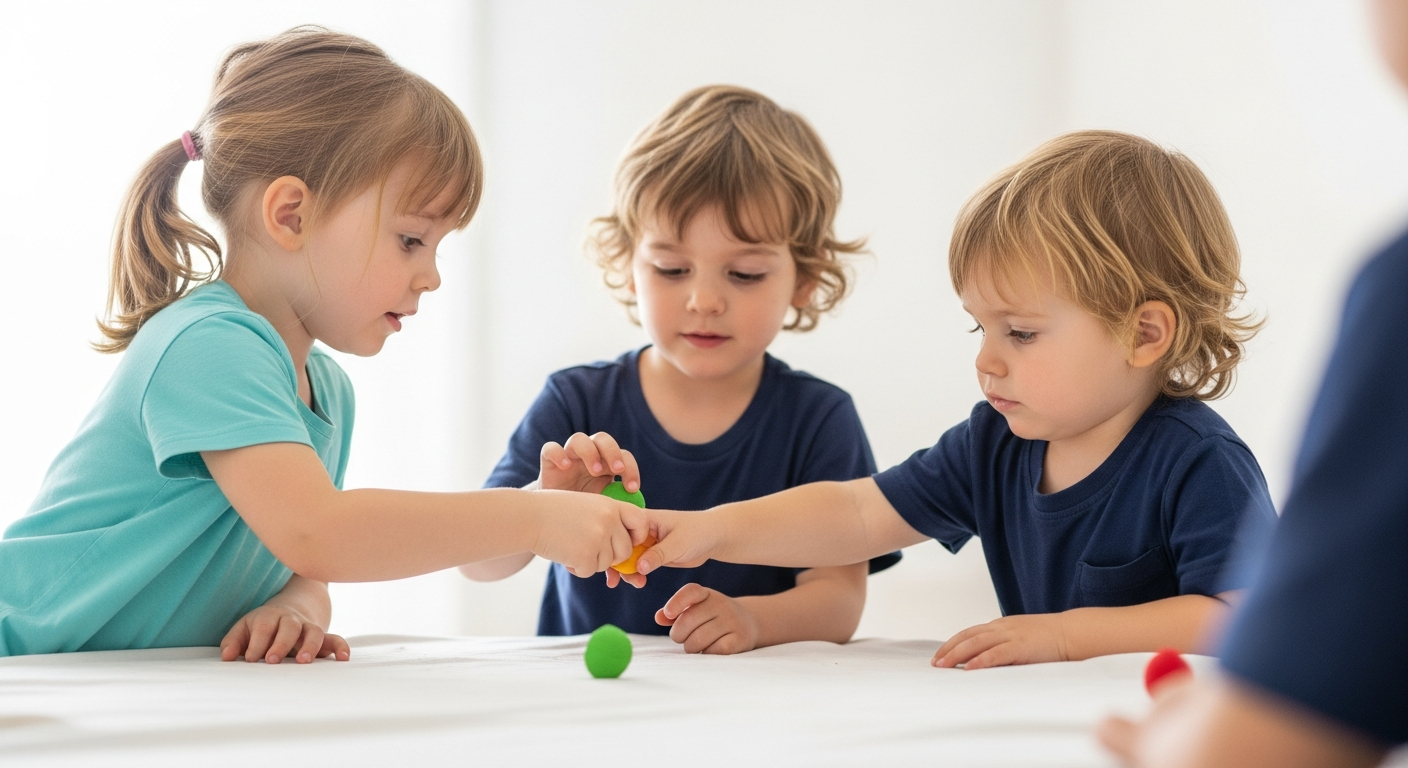
Table of Contents
- Introduction
- The Power of Playful Learning for Three-Year-Olds
- Sensory Activities to Spark Curiosity
- Fine Motor Skills and "Quiet Time" Tasks
- Active Indoor Play for High Energy
- Incorporating Smart Screen Time with Speech Blubs
- Building a Routine That Works
- Language-Rich Activities for Everyday Moments
- Practical Scenarios: Connecting Activities to Progress
- Creating a Screen-Free Alternative to Passive Viewing
- Frequently Asked Questions
- Conclusion
Introduction
Did you know that by the age of three, a child’s brain is actually twice as active as an adult’s? If you have ever spent a rainy afternoon trying to keep a "threenager" occupied, that statistic probably doesn't surprise you at all. At this age, children are in a whirlwind of development, bursting with newfound independence, a rapidly expanding vocabulary, and enough energy to power a small city. It is a magical time, but for parents and caregivers, it can also be exhausting to keep up with the constant demand for "something to do."
At Speech Blubs, we understand this challenge deeply. Our mission is to empower children to speak their minds and hearts, and we know that the foundation of communication is built through play. We believe that every moment spent at home is an opportunity for a joyful learning experience. Whether you are a stay-at-home parent looking to fill the hours or a busy professional seeking quality connection after work, having a toolkit of engaging ideas is essential.

In this post, we will explore a wide range of toddler activities at home for 3-year-olds, covering everything from sensory bins and fine motor skills to active indoor play and smart screen time. We will also discuss how to build a routine that fosters independence and reduces those inevitable power struggles. Our goal is to provide you with practical, low-prep strategies that turn your living room into a world of discovery. By the end of this article, you will have a clear plan to support your child’s development while creating memories that last far longer than the activity itself.
The Power of Playful Learning for Three-Year-Olds
At three, play is much more than just "fun"—it is your child’s primary way of understanding the world. This is the age where "pretend play" takes center stage, and simple objects become magical tools. A cardboard box becomes a rocket ship, and a wooden spoon becomes a magic wand.
When we look at toddler activities at home 3 year old children enjoy, we are looking for activities that hit several developmental markers. We want to encourage:
- Language Growth: Narrating what they are doing and learning new descriptive words.
- Fine Motor Skills: Strengthening the small muscles in the hands for future writing.
- Gross Motor Skills: Burning off energy and improving balance and coordination.
- Social-Emotional Regulation: Learning patience, following simple directions, and managing frustration.
At Speech Blubs, our founders created the tool they wished they had when they were growing up with speech challenges. We focus on "smart screen time" that isn't passive—like sitting in front of cartoons—but is instead an interactive, joyful experience. Our approach uses video modeling, where children watch their peers perform actions and sounds. This peer-to-peer connection is rooted in science and helps children feel confident enough to try new things.
Sensory Activities to Spark Curiosity
Sensory play is often the "holy grail" of toddler entertainment. It engages multiple senses at once, which can be incredibly calming for a high-energy three-year-old. While the word "sensory" sometimes scares parents because of the potential mess, many of these can be contained with a simple plastic bin and a large towel underneath.

The Classic Noodle Bin
Dry pasta is a fantastic, low-cost material. Fill a large plastic tub with different shapes of dry pasta—rotini, penne, and bowties work great. Add in some measuring cups, spoons, or even small plastic dinosaurs.
- Scenario: For a parent whose child is a "late talker" and loves animals, use the pasta bin as a "jungle." Hide toy animals in the noodles. As your child finds them, practice animal sounds. If they find a cow, you can say, "Oh! The cow says Moo!" This mirrors the playful way we encourage sound production in our Speech Blubs app.
Water Play: Not Just for Bath Time
Three-year-olds are naturally drawn to water. You don't need a pool to make this happen.
- The Toy Wash: Fill a shallow bin with soapy water and give your child a scrub brush or a washcloth. Let them "wash" their plastic cars, blocks, or dolls.
- Color Mixing: Give them three clear cups of water with a drop of food coloring in each (red, blue, yellow). Provide an empty cup and a dropper or a small spoon, and let them experiment with what happens when they mix the colors.
Sticky Wall Art
Using contact paper (the kind used for lining shelves), tape a large piece to the wall with the sticky side facing out. Give your child various lightweight items to stick to it: bits of construction paper, feathers, pom-poms, or yarn. This is a mess-free way to explore textures and spatial awareness.
Fine Motor Skills and "Quiet Time" Tasks
As toddlers approach preschool age, their hand-eye coordination becomes more refined. Activities that challenge their fingers are great for building the focus needed for later academic success.
The Colander and Pipe Cleaners
This is a parent favorite because it is virtually zero-mess and highly engaging. Hand your toddler a kitchen colander and a pack of colorful pipe cleaners. Show them how to poke the pipe cleaners through the holes to create a "sculpture." This requires significant concentration and precision.
Sticker Rescue
If you have a sheet of stickers and some painter's tape, you have an activity. Stick several stickers to a piece of cardboard or a plastic tray, then place a piece of painter's tape over each one. Your toddler's job is to peel back the tape to "rescue" the stickers. This is excellent for building the "pincer grasp" used for holding pencils later.
"Feeding the Monster"
Take an empty tissue box or a plastic container with a lid. Decorate it to look like a monster, cutting a mouth-shaped hole in the top. Give your child "food" for the monster, such as large buttons, pom-poms, or even playing cards.
- Speech Connection: As they "feed" the monster, you can practice action words like "eat," "open," "more," and "yum." This type of functional language is exactly what we focus on in our early learning modules. If you are unsure where your child stands with these communication milestones, you can take our 3-minute preliminary screener to get a personalized assessment.
Active Indoor Play for High Energy
Sometimes, the weather doesn't cooperate, and you find yourself stuck inside with a toddler who needs to run. Instead of fighting the energy, channel it into structured movement.
Painter’s Tape Obstacle Course
Use blue painter's tape to create lines, zig-zags, and circles on your floor. Tell your child the floor is "lava" and they have to stay on the tape lines to get across the room. You can also create "jumping spots" where they have to hop from one tape square to another.
Balloon Tennis
Blow up a balloon and give your child a paper plate (you can tape a popsicle stick to the back for a handle) or just let them use their hands. The goal is to keep the balloon from touching the floor. Because balloons move slowly, it gives three-year-olds enough time to react, building their confidence in their physical abilities.
The Living Room Parade
Turn on some upbeat music and grab some "instruments" from the kitchen—pots and wooden spoons work perfectly. Lead a parade around the house. This is a great way to practice following directions ("March fast!" "March slow!" "Freeze!") while getting some cardio in.
Incorporating Smart Screen Time with Speech Blubs
We know that many parents feel "screen guilt," but at Speech Blubs, we believe that not all screen time is created equal. There is a huge difference between a child passively watching a cartoon and a child actively engaging with a tool designed by experts to promote development.
Our app is a powerful supplement to your child’s daily routine. It is built on the scientific principle of video modeling. When children see other children—their peers—making sounds and speaking words, their "mirror neurons" fire up. This makes them much more likely to imitate what they see.
"Our approach transforms the screen from a passive window into an interactive mirror, encouraging children to find their own voices by following the lead of a friend on the screen."
For a three-year-old, we recommend starting with sections like "Early Sounds" or "Animal Kingdom." You can sit with your child, watch the video of a peer making a "b-b-b" sound, and then encourage your child to try it too. It becomes a game, not a chore.
Choosing the Right Plan for Your Family
We want to make speech support accessible and effective. To get the most out of the experience, we offer two main paths:
- Monthly Plan: For $14.99 per month, you get access to our core speech-building content.
- Yearly Plan (Best Value): At $59.99 per year (only $4.99/month), you save 66% compared to the monthly rate.
The Yearly Plan is our most popular choice because it includes exclusive features that aren't available on the monthly plan:
- 7-Day Free Trial: Try everything risk-free before you commit.
- Reading Blubs App: An additional app specifically designed to help toddlers transition from speaking to reading.
- Early Access & Priority Support: Be the first to try new updates and enjoy 24-hour support response times.
If you are ready to see how video modeling can help your child speak their mind and heart, you can start your free trial here.
Building a Routine That Works
One of the most effective "activities" for a three-year-old is actually a consistent routine. Toddlers thrive when they know what to expect. It reduces anxiety and limits the number of tantrums because they feel a sense of control over their day.
A sample day for a three-year-old at home might look like this:
- 7:30 AM: Wake up and breakfast.
- 8:30 AM: Active play (Obstacle course or outdoor time).
- 10:00 AM: Sensory bin or art project.
- 11:00 AM: Smart Screen Time (20 minutes of Speech Blubs).
- 12:00 PM: Lunch.
- 1:00 PM: Nap or Quiet Time (Sticker rescue or colander play).
- 3:00 PM: Snack and "Helpful" chores (Matching socks or wiping the table).
- 4:30 PM: Free play / Imaginative play.
- 6:00 PM: Dinner.
- 7:00 PM: Bath and Bedtime stories.
By mixing high-energy activities with focused tasks, you provide a balanced "diet" for your child’s brain and body.
Language-Rich Activities for Everyday Moments
You don't always need special equipment to support your child's speech. Some of the best toddler activities at home for a 3-year-old involve simply including them in your daily chores.
The Laundry Sort
Give your child the clean laundry basket. Ask them to find all the "blue" socks or all the "big" shirts. This teaches categorization, color recognition, and descriptive language.
- Tip: Ask questions like, "Whose shirt is this? Is it Mommy's or yours?" to practice possessive nouns.
Kitchen Science (Baking Soda and Vinegar)
This is a classic for a reason. Put some baking soda in a tray and give your child a small cup of vinegar (add food coloring for extra fun). Let them use a spoon or a dropper to put the vinegar on the soda. The "fizz" is endlessly fascinating. Use this moment to talk about what they see and hear: "Wow, it’s bubbling! It sounds like ssssss."
Reading and Story Baskets
Reading is the single most important activity for language development. To make it more engaging for a three-year-old, create a "story basket." If you are reading a book about a bear, put a teddy bear, a small blanket, and a plastic honey pot in a basket. As you read, let your child hold and move the objects to match the story.
Our methodology is backed by science and has been rated highly on the MARS scale for educational quality. You can read more about our research to see how we blend play with evidence-based speech therapy techniques.
Practical Scenarios: Connecting Activities to Progress
Every child is different, and what works for one might not work for another. Here are a few relatable scenarios to help you tailor these activities:
- The "Late Talker" Who Loves Cars: If your child isn't talking much but loves vehicles, focus on "sound play" during the car track activity. Don't worry about words yet; just focus on "vroom," "beep," and "skrrrrt." The "Yummy Time" and "Toy Box" sections in our app are great for this, as they focus on simple, high-interest objects.
- The High-Energy Child Who Can't Sit Still: If your child struggles with the 20-minute sensory bin, don't force it. Use the "Follow the Leader" game to practice verbs. Say "Jump!" then jump together. Say "Spin!" then spin. This builds "receptive language"—their ability to understand and follow directions.
- The Child Who Gets Frustrated Easily: Use activities with an "easy win," like the Sticker Rescue. This builds their confidence. When they succeed, celebrate with lots of specific praise: "You used your strong fingers to peel that tape! Great job!"
For more inspiration, you can read testimonials from other parents who have used these strategies and our app to help their children reach new milestones.
Creating a Screen-Free Alternative to Passive Viewing
Many parents turn on the TV when they need to cook dinner or take a phone call. We understand that necessity! However, if you find yourself relying on cartoons that offer no educational value, consider our "smart screen time" as a powerful alternative.
Unlike typical kids' shows, Speech Blubs doesn't just entertain; it invites participation. It is designed to be a tool for family connection. Even if you are busy in the kitchen, you can hear your child repeating words or laughing along with the kids on the screen. It is a screen-free alternative in spirit because it encourages the child to look away from the screen and interact with you or their toys using their new skills.
Frequently Asked Questions
1. How much screen time is okay for a 3-year-old?
The American Academy of Pediatrics suggests limiting screen time to about one hour per day of high-quality programming for children aged 2 to 5. We recommend using Speech Blubs for about 15–20 minutes a day, ideally with an adult co-playing. This ensures the screen time is "active" rather than "passive."
2. My child won't play independently. What should I do?
Independent play is a skill that must be learned. Start by playing with them for 10 minutes, then tell them, "I am going to wash three dishes, and then I will come back. You keep building your tower." Gradually increase the time you are away. Simple, engaging activities like sensory bins or sticker walls are usually the best way to encourage those first minutes of solo play.
3. Should I worry if my 3-year-old isn't speaking in full sentences yet?
Every child develops at their own pace. However, by age three, most children can use 3-4 word sentences and be understood by strangers about 75% of the time. If you have concerns, it is always best to consult with a professional. Our preliminary screener is a great first step to see if your child is meeting typical milestones.
4. How can I manage the mess of indoor toddler activities?
Preparation is key! Use a "mess mat" or an old shower curtain under sensory bins or art projects. Keep a dedicated "activity bin" with all your supplies (tape, pipe cleaners, stickers) so you can set things up in under a minute. Remember, a little bit of mess is often a sign of a lot of learning!
Conclusion
Finding the right toddler activities at home for a 3-year-old doesn't require a degree in early childhood education or a house full of expensive toys. It simply requires a little bit of creativity, a dose of patience, and a commitment to meeting your child where they are. Whether you are building an obstacle course out of painter's tape, "washing" toy cars in the sink, or exploring new sounds together with a peer on a screen, you are doing the vital work of supporting your child's development.
At Speech Blubs, we are honored to be a part of that journey. We believe in the power of joyful learning and the magic that happens when a child finds the confidence to speak their heart. Our app is designed to be a bridge between play and progress, providing an effective, science-based tool that fits right into your daily routine.
We invite you to join our community of over 5 million parents who are transforming screen time into "smart time." Download Speech Blubs today on the App Store or Google Play Store to begin your journey.
For the best experience and the greatest value, we highly recommend choosing our Yearly Plan. Not only will you save 66% compared to the monthly cost, but you will also unlock a 7-day free trial, our Reading Blubs app, and priority support. Let's start building those foundational skills and creating joyful family learning moments together. Your child has so much to say—let's help them find the words!
Sobre el autor