
How Being Active Helps Toddler Brain Development
 Por Speech Blubs Team•23 mar 2026•14 min.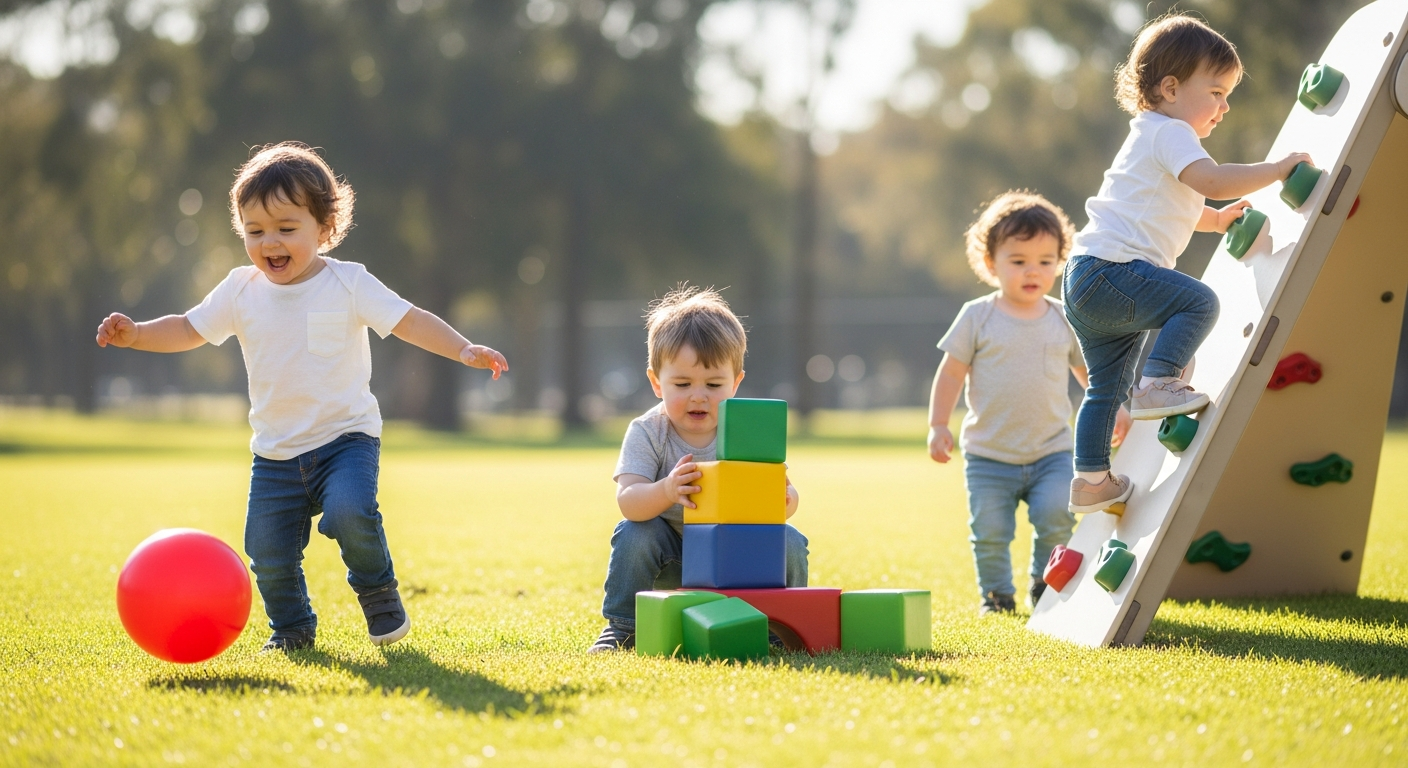
Table of Contents
- Introduction
- The Neurological Connection: How Movement Shapes the Brain
- Cognitive Engagement: Play as a Brain Workout
- The Power of Video Modeling and Active Imitation
- Whole-Body Integration and Sensory Awareness
- The Biological Benefits: Myokines and Brain Growth
- Why the Toddler Years are a "Critical Window"
- Social and Psychological Growth through Activity
- Practical Tips: Integrating Movement into Your Daily Routine
- Choosing the Right Tools: Smart Screen Time vs. Passive Viewing
- Understanding the Value: Monthly vs. Yearly Plans
- Setting Realistic Expectations
- Conclusion
- FAQ
Introduction
Did you know that nearly half of all preschoolers—approximately 46%—are not meeting the recommended daily physical activity levels? While we often think of "getting the wiggles out" as a way to burn off energy so our little ones will nap better, the reality is much more profound. Physical activity is not just about building strong muscles or healthy hearts; it is the fundamental fuel for a toddler’s rapidly developing brain. Every hop, skip, and climb sends a surge of neurological signals that shape how a child thinks, learns, and eventually communicates.
In this article, we will explore the deep connection between physical movement and cognitive growth. We’ll look at the science of "myokines," the importance of "synaptic plasticity" during the early years, and how active play directly prepares the brain for complex tasks like language and problem-solving. At Speech Blubs, we believe in empowering children to "speak their minds and hearts," and we know that a body in motion is a brain in growth. Our mission is to provide "smart screen time" that encourages interaction rather than passive consumption, blending scientific principles with the joy of play.

By the end of this post, you’ll understand why being active is critical for your toddler’s brain architecture and how you can foster this development through simple, joyful daily habits. The core message is clear: when your child moves their body, they are literally building their mind.
The Neurological Connection: How Movement Shapes the Brain
The brain and the body are not separate entities; they are part of a continuous feedback loop. When a toddler participates in activities that challenge their motor skills, such as balancing on a curb or navigating a playground, they are doing much more than practicing physical coordination. They are activating neural pathways that connect motor and cognitive functions.
Scientific research shows that physical activity stimulates the cerebellum and the prefrontal cortex—the areas of the brain responsible for "higher-order" thinking. This includes planning, making decisions, and solving problems. For example, consider a child named Dale who is learning to rollerblade. On the surface, Dale is just trying to stay upright. However, beneath the surface, Dale’s brain is working overtime. As he adjusts his arms to find balance and maneuvers around a crack in the sidewalk, his brain is forming new connections. This improves his agility, but it also sharpens his attentiveness and perception.
This "neurological bridge" means that a child who is physically active is often better prepared for academic challenges later in life. By building the "hardware" of the brain through movement, we are setting the stage for the "software" of learning. If you are curious about how your child's development is progressing, you can take our 3-minute screener to get a simple assessment and a free 7-day trial of our tools.
Cognitive Engagement: Play as a Brain Workout
Cognition is the process of acquiring and processing information. For a toddler, this happens most effectively through play that requires goal-directed action. When children play games that involve rules or strategy, they are exercising their "executive function"—the brain's command center.

Think about a classic game like "Red Light, Green Light." A toddler named Ella is playing this with her friends. When the leader says "green light," Ella moves; when they say "red light," she must stop instantly. Sometimes, the leader might try to trick her by saying "bread light" or "green night."
In this scenario:
- Ella’s body is practicing stop-and-go motor control.
- Ella’s brain is exercising working memory (remembering the rules), inhibitory control (resisting the urge to run when she shouldn't), and cognitive flexibility (adjusting to the leader's tricks).
These are the same skills a child will eventually use to follow multi-step instructions at school or to regulate their emotions during a difficult task. At Speech Blubs, we leverage this type of engagement through our unique video modeling methodology. By watching and imitating their peers on screen, children engage in a form of "digital play" that is active and participatory. You can see the impact this has by reading our parent success stories.
The Power of Video Modeling and Active Imitation
At Speech Blubs, our company was born from the personal experiences of our founders, who all grew up with speech problems. They created the tool they wished they had—one that turns screen time into a joyful, interactive learning experience. One of our most powerful tools is "video modeling."
Science tells us that when a child watches another child perform an action or say a word, "mirror neurons" in their brain fire as if they were doing it themselves. This creates a powerful foundation for learning.
For a parent whose 3-year-old "late talker" loves animals, the "Animal Kingdom" section in the Speech Blubs app offers a fun, motivating way to practice "moo" and "baa" sounds. The child doesn't just sit and watch a cartoon; they see a peer making the sound, and the app encourages them to mirror that movement and sound. This active imitation is a form of cognitive "exercise" that bridges the gap between seeing, doing, and speaking. To start this journey with your child, Download on the App Store today.
Whole-Body Integration and Sensory Awareness
Physical activity often requires the integration of multiple senses. When a child plays hide and seek, they aren't just running. They are using their vision to find a spot, their hearing to listen for the "seeker," and their sense of "proprioception"—the awareness of where their body is in space—to squeeze into a hiding spot.
This whole-body integration is vital for developing focus and concentration. Research indicates that children who engage in activities requiring coordination of multiple sensory systems show improved attention spans. This is why "active" children often seem more "plugged in" to their environment.
Developing Spatial Reasoning
When children climb, crawl, or navigate obstacles, they are developing spatial reasoning. Imagine two toddlers, Rajan and Ian, playing "the floor is lava" on a playground climber. They have to plan their route, grab the monkey bars, and navigate a swinging bridge.
- The physical challenge: Climbing and balancing.
- The cognitive challenge: Problem-solving in real-time and utilizing spatial reasoning to reach their goal.
These skills are directly transferable to later cognitive tasks, such as understanding math concepts or organizing a backpack.
The Biological Benefits: Myokines and Brain Growth
Beyond the behavioral benefits, being active produces literal chemical changes in a toddler's brain. When muscles contract during aerobic exercise—the kind that gets the heart rate up—they release proteins called "myokines" (sometimes referred to as "exerkines").
These myokines travel through the bloodstream to the brain, where they stimulate the production of Brain-Derived Neurotrophic Factor (BDNF). BDNF is often described by scientists as "miracle-gro" for the brain. It encourages the growth of new neurons and strengthens the synapses (the connections) between them.
A study in the journal Brain Research found that children with higher fitness levels actually had larger hippocampi—the area of the brain associated with long-term memory and learning. By encouraging your toddler to run, swim, or dance, you are helping them build a "bigger," more connected brain. This is part of our scientific methodology at Speech Blubs; we understand that early intervention and active engagement lead to better long-term outcomes.
Why the Toddler Years are a "Critical Window"
Early childhood is a period of intense "synaptic plasticity." This means the brain is incredibly flexible and responsive to experiences. Physical activity during this window has a much longer-lasting impact than exercise started later in life.
Studies using pre-clinical models have shown that exercise during the "juvenile" period (the equivalent of human toddlerhood and early childhood) leads to a permanent increase in the strength of neural pathways. While exercise is beneficial at any age, the "boost" provided during these early years creates a foundation that lasts a lifetime.
This is why we focus on the 1 in 4 children who need speech and developmental support as early as possible. We want to provide an immediate, effective, and joyful solution while the brain is at its most receptive. Ready to give your child that head start? You can Get it on Google Play and begin today.
Social and Psychological Growth through Activity
We cannot overlook the social and psychological benefits of being active. Physical play is often the first way toddlers learn to interact with their peers. Whether it's a game of "Tag" or a simple game of catch, these activities teach:
- Cooperation: Working together toward a common goal.
- Communication: Expressing needs and strategies ("Pass the ball!" or "I'm hiding here!").
- Resilience: Learning to handle a fall or a loss in a game.
Building Confidence and Self-Esteem
As a toddler masters a new skill—like finally reaching the top of the slide or successfully jumping with both feet—they experience a surge of pride. This sense of accomplishment builds self-confidence. Physical activity also triggers the release of endorphins, the body’s natural "feel-good" chemicals, which reduce stress and promote a positive mood.
For a child struggling with speech, these "wins" in the physical realm are incredibly important. They build the confidence needed to keep trying in other areas, like communication. We frame our app's use as a powerful supplement to this overall development, fostering a love for communication by making every small success a reason to celebrate.
Practical Tips: Integrating Movement into Your Daily Routine
You don’t need a gym membership or expensive equipment to help your toddler’s brain development. The goal is "purposeful play." Here are some simple ways to keep your child active:
- Dance Parties: Put on some music and have a 10-minute dance session. It’s aerobic, fun, and great for coordination.
- Animal Walks: Encourage your child to crawl like a bear, hop like a frog, or waddle like a penguin. This builds core strength and gross motor skills.
- The "Obstacle Course": Use pillows, chairs, and blankets to create a course in your living room. Crawling under a table or over a cushion requires planning and spatial awareness.
- Active Screen Time: Instead of letting your child passively watch cartoons, use an interactive tool. When using Speech Blubs, encourage your child to stand up and mimic the facial expressions and movements of the kids on the screen.
Our approach provides a screen-free alternative to passive viewing. We want families to connect, play, and move together. We recommend adult co-play to maximize these benefits, turning a digital experience into a joyful family learning moment.
Choosing the Right Tools: Smart Screen Time vs. Passive Viewing
In a world full of digital distractions, it’s important to choose "smart screen time." Passive viewing—like sitting still for an hour watching a cartoon—does not provide the neurological stimulation a growing brain needs. In fact, excessive sedentary screen time can lead to missed opportunities for the movement that drives brain growth.
Speech Blubs is designed to be the opposite of passive. It is a "one-of-a-kind" experience that requires the child to listen, look, and respond. Our video modeling methodology ensures that the child is an active participant in the process. We don't just want your child to look at the screen; we want them to "speak their minds and hearts."
By choosing the right tools, you can ensure that even when your child is using a device, they are building the foundational skills necessary for communication and cognitive health. To get the most out of our platform, we recommend our Yearly plan, which offers the best value and exclusive features. Start your 7-day free trial by signing up on our web page.
Understanding the Value: Monthly vs. Yearly Plans
We want to be transparent about our pricing because we believe in the value we provide to families. We offer two main paths for parents looking to support their child’s development:
- Monthly Plan: $14.99 per month. This is a great way to test the waters and see how your child responds to our "smart screen time."
- Yearly Plan: $59.99 per year. This is the clear best choice for families committed to their child's long-term growth, breaking down to just $4.99 per month.
The Yearly plan isn't just about saving 66%. It also includes high-value features that are not available on the monthly plan:
- A 7-day free trial: Test everything out risk-free.
- Reading Blubs: Our extra app dedicated to building early literacy skills.
- Early Access: Be the first to see new updates and features.
- 24-hour Support: Priority response time from our dedicated team.
By choosing the Yearly plan, you are investing in a comprehensive suite of tools designed to grow with your child. We encourage all our users to select this option to get the full suite of features and the best possible experience.
Setting Realistic Expectations
While being active is a powerful engine for brain development, it is important to maintain realistic expectations. Every child develops at their own pace. Using Speech Blubs or increasing physical activity will not result in your child giving public speeches in a month.
Instead, focus on the benefits of the process:
- Fostering a love for communication.
- Building foundational confidence.
- Reducing the frustration that often comes with speech delays.
- Creating joyful family learning moments.
Our app is a powerful supplement to a child’s overall development plan and, when applicable, can work beautifully alongside professional speech therapy. We provide the tools; you provide the love and support.
Conclusion
Is being active helpful for toddler brain development? The answer is a resounding yes. Movement is the foundation upon which cognitive, social, and emotional skills are built. From the release of brain-boosting myokines to the strengthening of neural pathways through synaptic plasticity, every active moment is an investment in your child's future.
At Speech Blubs, we are dedicated to supporting this journey. By blending the science of video modeling with the joy of play, we help children overcome barriers and find their voices. We invite you to join our community of parents who are choosing "smart screen time" to empower their children.
Ready to get started? Download Speech Blubs on the App Store or Google Play to begin your journey. For the best value and access to all our premium features—including Reading Blubs and a 7-day free trial—make sure to choose our Yearly plan. Let’s help your child move, play, and speak their way to a brighter future!
FAQ
1. How much physical activity does my toddler really need?
Most health organizations, including the World Health Organization and CSEP, recommend that toddlers and preschoolers get at least 60 minutes of energetic, heart-pumping physical activity every day. This can be broken up into smaller chunks throughout the day, such as 10-minute bursts of active play.
2. Can "screen time" ever be considered "active"?
Yes, if it is "smart screen time." Passive viewing (watching a cartoon) is sedentary. However, interactive apps like Speech Blubs use video modeling to encourage kids to mimic sounds, make faces, and engage physically with the content. This type of active participation is much better for brain development than passive consumption.
3. What if my child has a physical limitation?
Physical activity can be adapted for children of all abilities. The goal is to encourage movement within the child’s capability to stimulate the brain-body connection. Consult with a pediatrician or physical therapist to find the best activities for your child's specific needs.
4. Why is the Yearly plan better than the Monthly plan?
The Yearly plan offers the best value ($4.99/mo vs. $14.99/mo) and includes essential extras like the Reading Blubs app, a 7-day free trial, early updates, and faster support response times. It is designed to provide a comprehensive, long-term support system for your child’s development.
Sobre el autor