
How to Use Speech Delay Flashcards for Better Communication
 Por Speech Blubs Team•9 mar 2026•14 min.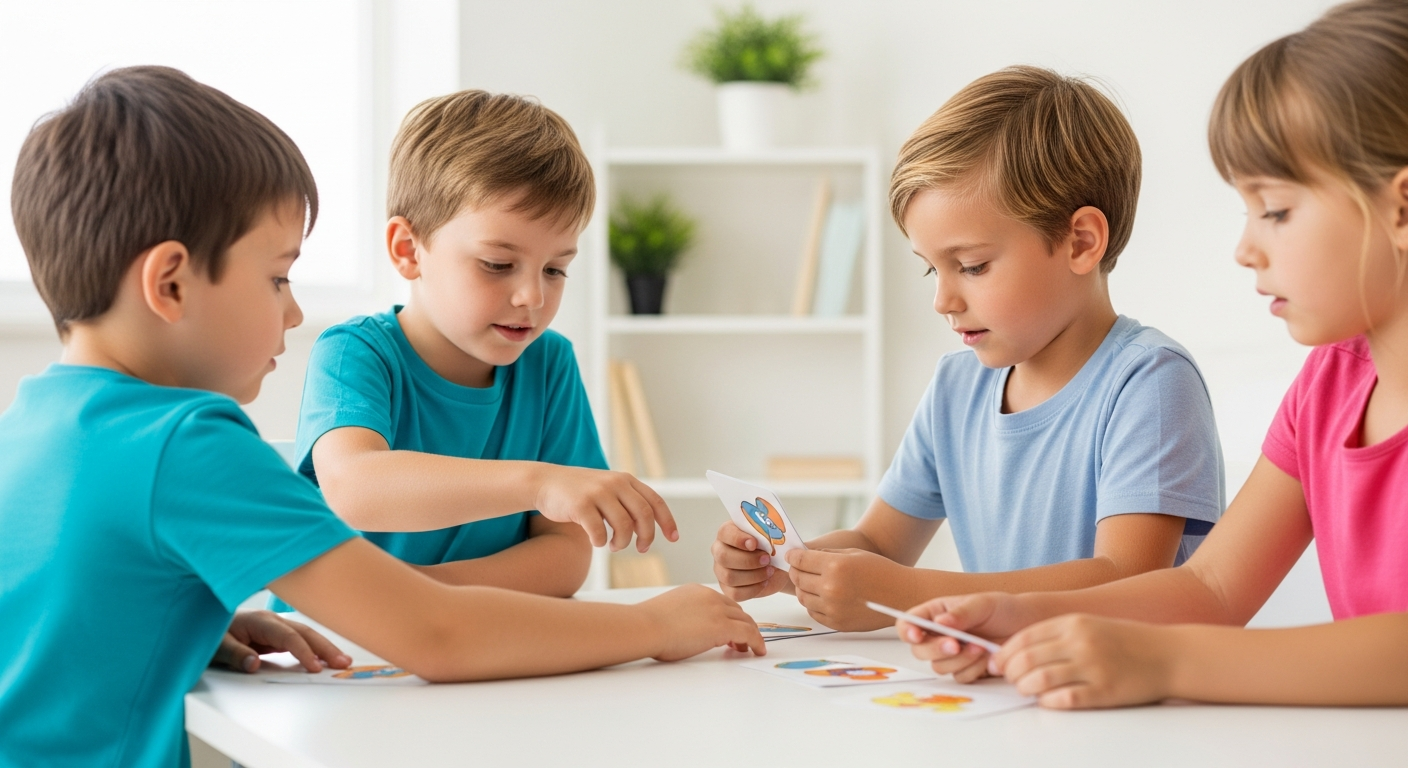
Table of Contents
- Introduction
- Understanding Speech Delay and the Power of Visuals
- The Different Types of Speech Delay Flashcards
- The "Flashcard Trap": Why Static Pictures Aren't Enough
- How to Make Flashcards Interactive and Fun
- Moving from Flashcards to "Smart Screen Time"
- Practical Scenarios: Bringing Language to Life
- Choosing the Right Path for Your Child
- Summary of Key Takeaways
- FAQs
- Conclusion
Introduction
Have you ever sat on the floor with your little one, surrounded by colorful blocks and silent toys, wishing more than anything that they would just tell you what they’re thinking? If you’ve felt that pang of worry when other children their age are chatting away while your child remains quiet, you are certainly not alone. Statistics show that roughly 1 in 4 children will face some form of speech or language challenge during their early years. This realization can be overwhelming, but it is also the first step toward finding the right tools to help your child find their voice.
The purpose of this guide is to dive deep into one of the most common tools in a parent's toolkit: speech delay flashcards. We will explore why these cards are used, when they are most effective, and—perhaps most importantly—how to move beyond static pictures to foster real-world communication. We’ll look at various types of flashcards, from simple nouns to complex "Wh-" questions, and discuss how to integrate them into a joyful, play-based routine.

At Speech Blubs, our mission is to empower children to "speak their minds and hearts." Our company was born from the personal experiences of our founders, who all grew up with speech problems and created the tool they wished they had. We believe that while traditional tools like flashcards have their place, the most powerful way to learn is through the joy of "smart screen time" and peer-to-peer connection. By the end of this article, you will have a comprehensive understanding of how to use visual aids effectively and how our unique scientific methodology can take your child’s progress to the next level.
Understanding Speech Delay and the Power of Visuals
Before we shuffle the deck of speech delay flashcards, it’s important to understand what we are targeting. Late language emergence, often called being a "late talker," typically refers to children who hit 24 months of age with a spoken vocabulary of fewer than 50 words or who aren't yet combining two words together (like "more juice" or "mama go").
For these children, the world of spoken language can feel abstract and fleeting. Sounds disappear as soon as they are uttered. This is where visual aids become essential. Research into child development shows that the human brain processes visual information significantly faster than written or spoken words. For a child struggling to process the sounds of "apple," seeing a clear, bright picture of an apple provides a "hook" for the brain to hang the word on.
Why Visuals Work
- Simplicity and Focus: A good flashcard strips away the "noise" of the environment. Unlike a busy room or a cluttered toy box, a card features one concept at a time.
- Consistency: The picture on the card doesn't change. This allows for the repetitive exposure needed to build neural pathways.
- Bridge to Symbolism: Words are symbols for objects. Flashcards serve as a middle ground between the physical object (the real apple) and the abstract sound (the word "apple").
If you are unsure where your child stands in their development, taking a proactive step is always better than the "wait and see" approach. You can take our quick 3-minute preliminary screener to get a simple assessment and a free 7-day trial. It involves just 9 simple questions and provides a personalized next-steps plan for your family.

The Different Types of Speech Delay Flashcards
Not all flashcards are created equal. Depending on where your child is in their language journey, you might use different categories of cards to target specific skills.
Nouns and Category Cards
These are the building blocks of language. They typically feature common objects like animals, food, household items, and clothing. The goal here is vocabulary expansion. For a parent whose 3-year-old "late talker" loves animals, using cards in an "Animal Kingdom" theme offers a fun, motivating way to practice "moo," "baa," and "roar" sounds.
Action Verb Cards
Once a child has a handful of nouns, they need "engines" to drive their sentences. Verb cards show people or animals doing things: jumping, eating, sleeping, or running. These are crucial for moving from single words to two-word combinations.
Emotion and Social Skill Cards
For children on the autism spectrum or those with social-emotional delays, identifying feelings can be a challenge. Flashcards featuring real human faces showing happiness, sadness, anger, or surprise help children learn to "read" the world around them.
Articulation and Minimal Pairs
Sometimes the delay isn't about knowing the word, but about saying it clearly. Articulation cards focus on specific sounds. "Minimal pair" cards are especially helpful; these are pairs of words that differ by only one sound (like "tea" and "key"). This helps children realize that changing a sound changes the meaning of the word.
The "Flashcard Trap": Why Static Pictures Aren't Enough
While flashcards are a staple in many therapy rooms, they come with a significant limitation: they are static. A picture of a cup is just a symbol. For many toddlers, especially those who aren't yet "symbolic" thinkers, a picture might not immediately register as representing the real thing.
Imagine you are trying to learn a new language. Someone shows you a photo of a bicycle. You might memorize the word for it, but you don't experience the movement, the sound of the bell, or the feeling of the wind. This is why we often see a "generalization gap"—where a child can name every card in the deck but can't ask for those same items in the kitchen or at the park.
At Speech Blubs, we recognized this gap early on. We knew that for 1 in 4 children who need speech support, we needed to provide something more dynamic than a piece of cardboard. That’s why our approach centers on video modeling.
The Science of Video Modeling
Instead of a static card, Speech Blubs uses "smart screen time" featuring real children—peers—performing the actions and saying the words. This taps into the brain's mirror neurons. When a child watches another child say "apple" or "bubbles," their brain reacts as if they are the ones saying it. It’s a powerful, joyful way to learn complex communication skills. Our methodology is backed by scientific research, placing us in the top tier of speech apps worldwide with a high MARS (Mobile App Rating Scale) score.
How to Make Flashcards Interactive and Fun
If you choose to use physical speech delay flashcards, the key is to make them "come alive." Here are some practical strategies to ensure they are more than just a boring drill:
1. The "Object-to-Picture" Match
Don't just show the card. If you have a card with a "ball" on it, have the real ball right there. Roll the ball, bounce it, and then show the card. This helps the child understand that the 2D image represents the 3D object they love to play with.
2. Sensory Integration
Hide flashcards in a sensory bin filled with rice, beans, or sand. Let your child "dig" for the words. This turns a language lesson into a motor-skills game, reducing the pressure to perform.
3. Follow the Leader
If you're using action verb cards (like "jump"), don't just say the word. Have everyone in the room jump! Make it a game of "Simon Says." This physical involvement helps solidify the meaning of the word in the child's long-term memory.
4. Choice-Making
Use two cards to give your child a choice during snack time. Hold up a card for "apple" and a card for "banana." Wait for them to point or attempt the sound of the one they want. This empowers them to use their "mind and heart" to make a real-world decision.
Moving from Flashcards to "Smart Screen Time"
While physical cards are a great start, many modern parents find it hard to keep a toddler engaged with a stack of paper for more than a few minutes. This is where "smart screen time" serves as a powerful supplement. Unlike passive viewing (like watching cartoons), which can often lead to a "zombie-like" state, interactive tools encourage active participation.
We designed Speech Blubs to be a bridge between digital play and real-world connection. It’s a tool for family connection, intended for you to use with your child. When you use our app, you aren't just handing over a phone; you are engaging in a shared learning experience.
"Our mission is to provide an immediate, effective, and joyful solution for the millions of children who need a little extra help finding their voice."
The app takes the concept of speech delay flashcards and turns them into 3D, interactive experiences. Instead of a picture of a dog, your child sees a real peer wearing fun "face filters" (like digital dog ears) while barking and saying the word. This play-based approach builds confidence and reduces the frustration that often comes with speech delays.
To see how this has worked for thousands of other families, you can read our testimonials and see the real-world success stories of children who moved from silence to speaking.
Practical Scenarios: Bringing Language to Life
Let’s look at how you can apply these concepts in everyday life. Communication isn't a classroom subject; it’s the way we live.
The Animal Lover
For a child fascinated by the zoo, you might start with animal flashcards. But to take it further, open the "Animal Kingdom" section in Speech Blubs. Your child will see a peer imitating a lion. They can use the built-in "mirror" feature to see themselves on the screen alongside the "blubber" (the peer model). This encourages them to mimic the mouth movements and sounds in a way that a static card simply cannot.
The Frustrated "Late Talker"
Imagine a 2-year-old who gets frustrated because they can't tell you they are thirsty. Using a "drink" flashcard can help, but practicing the "m-m-m" sound for "milk" in a fun, low-pressure environment like our "Early Sounds" section can build the foundational skills needed to eventually say the full word. This builds a love for communication rather than a fear of failure.
The "Wh-" Question Milestone
As children grow, they need to understand "Who," "What," and "Where." Traditional flashcards often use stories to teach these. You can supplement this by asking these questions during your Speech Blubs sessions. "Who is on the screen?" "What is he doing?" "Where is the hat?" This turns a digital activity into a rich conversational opportunity.
Choosing the Right Path for Your Child
Every child's journey is unique. Some may flourish with a combination of professional speech therapy and home-based physical tools. Others may find that digital peer modeling is the "spark" that finally gets them talking.
When looking for a supplemental tool, it's important to have realistic expectations. We don't promise that your child will be giving public speeches in a month. Instead, we focus on the beauty of the process: fostering a love for communication, building confidence, and creating joyful family learning moments. Speech Blubs is a powerful supplement to a child’s overall development plan and professional therapy.
Understanding Our Plans and Value
We believe in transparency and providing the best possible value for families committed to their child's progress. We offer two main ways to access our full suite of over 1,500 activities:
- The Monthly Plan: At $14.99 per month, this is a great way to test the waters.
- The Yearly Plan (Best Value): At $59.99 per year, this breaks down to just $4.99/month.
We strongly recommend the Yearly Plan because it is designed for long-term success and includes several exclusive benefits that the monthly plan does not:
- A 7-day free trial so you can explore everything risk-free.
- The extra Reading Blubs app, which helps transition speech skills into early literacy.
- Early access to all new updates and content.
- Priority 24-hour support response time from our team.
By choosing the yearly option, you're not just saving 66%; you're giving your child a comprehensive, multi-sensory environment that evolves as they do.
Summary of Key Takeaways
Using speech delay flashcards can be a wonderful starting point for language development. They provide visual stability, focus, and a way to introduce new vocabulary. However, for the best results:
- Pair pictures with real objects: Move from 2D to 3D whenever possible.
- Keep it playful: If your child is bored, they aren't learning. Turn drills into games.
- Use Peer Modeling: Supplement physical cards with the power of video modeling to activate mirror neurons.
- Be Patient: Focus on building confidence and reducing frustration.
- Seek Support: Use tools like our screener to understand your child's specific needs.
Ready to take the next step? Download Speech Blubs on the App Store or find us on the Google Play Store to begin your journey.
FAQs
1. Are flashcards effective for a child who is completely non-verbal?
Flashcards can be a helpful starting point to gauge a child's receptive language (what they understand). If a child can point to a "dog" when asked, even if they can't say the word, they are showing symbolic understanding. However, for non-verbal children, "real-life" objects and dynamic video modeling are often more effective because they provide more context and sensory input than a flat card.
2. How many flashcards should I introduce at one time?
Less is more. Start with 3 to 5 cards featuring objects your child already loves (like "car," "ball," or "juice"). Once they can consistently identify or attempt the names of those objects, rotate in new cards while keeping the old ones for "easy wins" to build their confidence.
3. My child just throws or bites the flashcards. What should I do?
This is very common! It usually means the child isn't yet seeing the card as a "symbol" but rather as a toy or an object to explore. In this case, stop the flashcard drills. Focus instead on "people games" like peek-a-boo, or use interactive tools like Speech Blubs where the "action" happens on the screen, removing the physical temptation to throw the materials.
4. Can I use Speech Blubs instead of physical flashcards?
Many parents find that Speech Blubs is a more engaging and effective alternative because it uses video modeling and interactive filters. While physical cards are great for "on-the-go" moments or mealtime choice-making, the app provides the repetition and peer-modeling science that static cards lack. They work best when used together—the app to learn the sound/word, and cards or real objects to practice it throughout the day.
Conclusion
Helping a child with a speech delay is a journey of a thousand small steps. Whether you are using a deck of speech delay flashcards or a "smart screen time" tool like Speech Blubs, the most important ingredient is your presence and encouragement. By turning learning into play, you reduce the pressure on your child and create a space where they feel safe to try, fail, and eventually succeed.
We invite you to join our community of families who are committed to helping their children speak their minds and hearts. Our founders created this tool because they knew the struggle firsthand, and they wanted to ensure no child has to face it alone.
Ready to get started? Create your account and begin your 7-day free trial today. We highly recommend choosing the Yearly Plan to receive the 7-day free trial, the Reading Blubs app, and the best overall value for your child's development. Let’s start making some noise together!
Sobre el autor