
Kit de manualidades navideñas para niños: Despierta la alegría y el aprendizaje en estas fiestas
Tabla de contenidos Introducción La magia de las manualidades: Mucho más que solo brillo Cómo elegir el kit de manualidades navideñas perfecto para niños Cómo maximizar el potencial de desarrollo de tu kit de manualidades navideñas...
 Por Speech Blubs Team•22 dic 2025•18 min.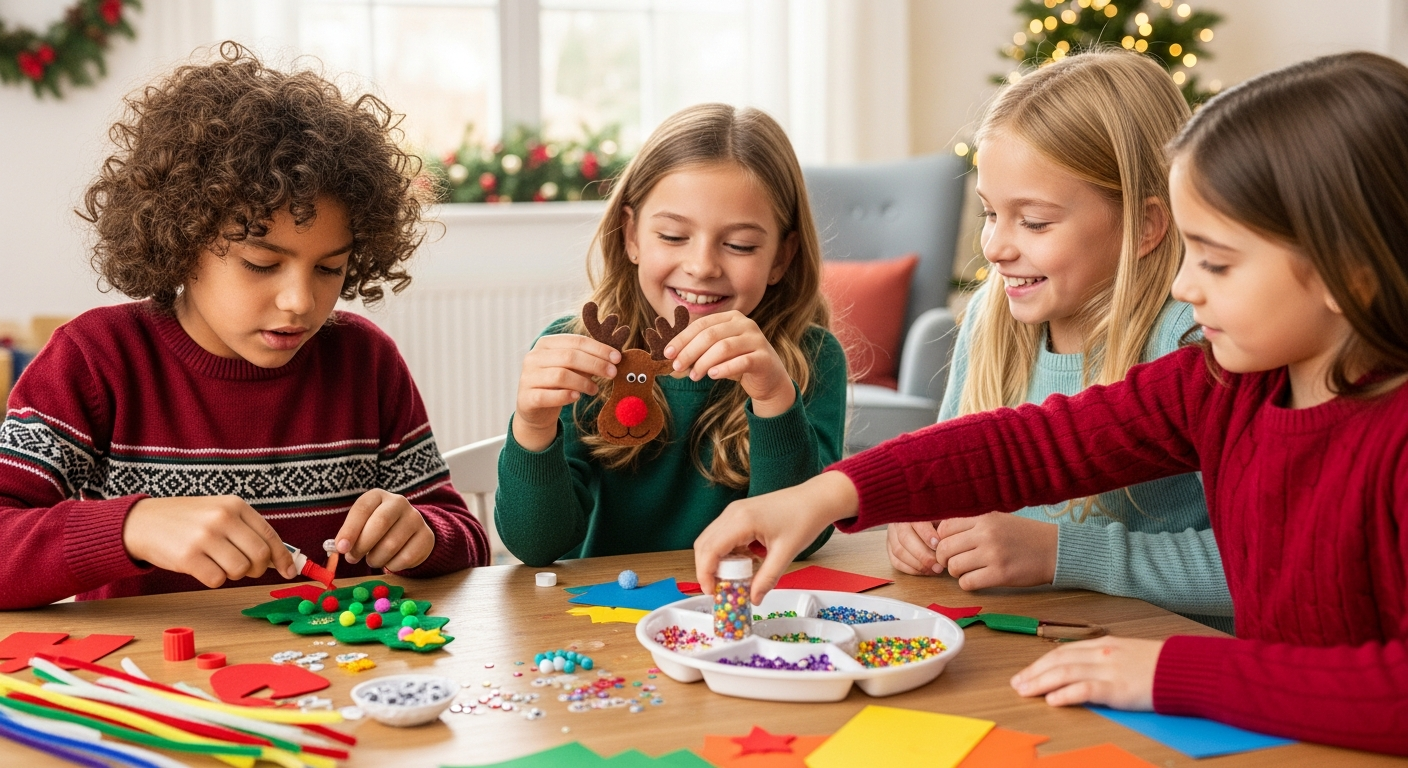
Table of Contents
- Introduction
- Crafting Magic: It's More Than Just Glitter!
- Finding the Perfect Christmas Craft Kit for Your Child
- Getting the Most Learning Out of Your Christmas Craft Kit
- Beyond the Kit: Keeping the Communication Going
- Conclusion
- Common Questions About Christmas Craft Kits for Kids
Introduction
The holidays sparkle with magic, especially through a child's eyes. From the smell of pine to the glow of lights, it's a time for wonder, excitement, and special family moments. While holiday traditions often involve watching TV, there's a fun, hands-on way to make the holidays even better: a simple Christmas craft kit! More than just something to keep little hands busy, doing creative projects with a Christmas craft kit helps kids build important skills, connect with you, and even improve their talking and language.
At Speech Blubs, we want every child to "speak their mind and heart," and we know kids learn best when they're having fun. Our founders, who had speech challenges as kids, created a tool they wish they'd had – a science-backed, play-based way to help the 1 in 4 kids who need help with their speech. We believe in "smart screen time" that gets kids talking, which is why we love hands-on activities like crafting. In this post, we'll show you all the great things about Christmas craft kits for kids. We'll help you pick the perfect one, get the most learning out of it, and make crafting part of your child's overall growth, including their talking skills!

Crafting Magic: It's More Than Just Glitter!
When you think of a child using a Christmas craft kit, you might picture glitter, glue, and colorful paper everywhere. And while the crafts are often cute, the real magic is in the process itself and all the amazing ways it helps kids grow. Crafting uses a child's senses and gets different parts of their brain and body working together, helping them grow in more ways than just art.
Boosting Fine Motor Skills
One of the best things about Christmas craft kits is how they help kids develop fine motor skills. These are the small, careful movements of the hands and fingers that are important for things like writing, buttoning clothes, and even speaking clearly.
- Pinching and Grasping:Picking up small things like beads, sequins, or pom-poms makes their pincer grasp stronger.
- Cutting:Using kid-safe scissors to cut paper or felt helps with hand-eye coordination and using both hands together.
- Gluing and Sticking:Using glue, stickers, or peel-and-stick pieces helps with careful movements and doing things just right.
- Working with Materials:Bending pipe cleaners, shaping clay, or threading string makes their hands stronger and more flexible.
These actions might seem simple, but they're very important. For kids, especially those working on their speech, good fine motor skills are often connected to how well they can control their mouth muscles and how clearly they can speak. The better kids get at controlling their hand muscles, the better they'll be able to control the small muscles in their mouth, tongue, and jaw that they use for talking.
Nurturing Creativity and Imagination
A Christmas craft kit isn't just about following the rules; it's a chance to let their imagination soar. Many kits have patterns to follow, but they also let kids add their own special touch, pick their favorite colors, or do things their own way.
- Problem-Solving:What if a piece doesn't fit? How can I make this look like Santa's beard? These questions help kids think creatively.
- Self-Expression:Crafting lets kids show their feelings, ideas, and unique way of seeing the world in a way you can see and touch.
- Storytelling:When they're done, they can tell stories about their craft. "This is a reindeer who wants to fly to the moon!" helps them build their storytelling skills.
Being creative is important for how kids' brains develop. It teaches them that there's not always just one "right" answer and encourages them to think outside the box, which is helpful in all kinds of learning, including talking.

Fostering Cognitive Development
Besides being creative, crafting with a Christmas craft kit helps kids develop lots of important thinking skills.
- Following Instructions:Most kits have step-by-step directions, which helps kids learn to understand and follow information in order.
- Sequencing:Learning that some steps need to come before others (like gluing before adding glitter).
- Color and Shape Recognition:Knowing the different colors, shapes, and sizes of the craft pieces.
- Spatial Reasoning:Understanding how the pieces fit together and where they go.
- Cause and Effect:Seeing how different things react (like glue drying or paint spreading).
These thinking skills are closely linked to how kids learn language. For example, being able to follow directions is a key part of understanding what people say. When a child understands "First, glue the eyes, then add the nose," they're getting ready to understand more complicated sentences and stories.
Building Communication Skills: The Speech Blubs Connection
This is where a Christmas craft kit can really work wonders for your child's speech and language development. Even though crafting isn't about talking, doing it together gives you lots of chances to have great conversations with your child. This kind of active learning is like the "smart screen time" we believe in at Speech Blubs, where learning online is fun and interactive, not just watching a screen.
- Vocabulary Expansion:As you craft, you can teach them new words for colors, shapes, textures (like "bumpy," "smooth," "sticky"), actions (like "cut," "glue," "paint," "thread"), and holiday things (like "ornament," "reindeer," "snowflake").
- Descriptive Language:Encourage your child to say what they're doing, what they're using, or what their craft looks like. "I'm making asparkly redstar for thetopof the tree."
- Following Verbal Directions:Instead of just pointing, tell your child what to do: "Can you hand me thegreenpipe cleaner?" or "Let's put thesnowman's hatontopof his head."
- Asking and Answering Questions:Have a conversation. "What color should we use next?" "Where do you think this piece goes?" "What are you making?"
- Narrative Skills:When they're done, ask your child to tell a story about it. Who is it? What happened to them?
- Sound Practice:If your child is working on certain sounds, use them naturally. If they're making a "star," say the 'st' sound clearly. If they're crafting a "reindeer," practice the 'r' sound.
For a parent whose 3-year-old is a 'late talker' and loves animals and the holidays, a Christmas craft kit with reindeer or polar bears is a fun way to practice 'r' sounds or animal names. As they glue felt antlers onto a reindeer, you can say "R-r-reindeer!" and encourage them to say it too. Our Speech Blubs app uses similar ideas, where kids learn by watching and copying other kids through our specialvideo modeling method.This uses the power of "mirror neurons" in the brain, which makes learning feel natural and easy.
Ready to see how Speech Blubs can help your child grow?Download Speech Blubs from the App StoreorGoogle Playto find activities that will help them find their voice!
Finding the Perfect Christmas Craft Kit for Your Child
There are so many choices, it can be hard to pick the right Christmas craft kit. Here's what to think about to make sure it's fun and helps them learn:
Age Appropriateness
This is very important for safety and keeping them interested.
- Toddlers (1-3 years):Look for kits with big, easy-to-grab pieces. Don't use kits with small pieces that they could choke on. Simple things like stick-on shapes, big stamps, or finger painting are great. Focus on using their senses and basic hand movements.
- Preschoolers (3-5 years):Kits that involve cutting with safety scissors, gluing bigger pieces, easy threading, or simple directions are perfect. Things like Santa, snowmen, or simple ornaments are usually a hit.
- Early Elementary (5-8 years):Kids this age can handle more careful cutting, gluing, simple sewing, or putting together projects with a few steps. Kits that let them be creative and add their own ideas will be a big hit.
- Older Kids (8+ years):Think about kits that teach them new skills like weaving, advanced paper crafts, or more complicated building. They might like making gifts for others or decorations that are more grown-up.
Always check the age range on the box and watch them closely, especially with younger kids or those who still put things in their mouth.
Types of Kits to Consider
Christmas craft kits come in so many fun forms.
- Ornament Kits:From painting wood ornaments to sticking on foam pieces, these are popular for a reason. They create memories and decorate the tree!
- Card Making Kits:Encourage kids to make holiday cards for family and friends to teach them about giving and help their fine motor skills.
- Decoration Kits:Wreaths, garlands, paper chains, or window clings – these make your home feel festive and get kids involved.
- Gingerbread House Kits:While not exactly "crafts," decorating a gingerbread house is great for using their senses and working on fine motor skills.
- Painting Kits:Painting on canvas or painting figurines can be really fun for kids who like art.
- DIY Gift Kits:Kids love making gifts. Kits for making soaps, decorating picture frames, or making jewelry are wonderful.
- Storybook Craft Kits:Some kits are based on popular Christmas stories, which combines reading with hands-on fun.
Material Safety and Quality
Always put safety first. Make sure the materials are non-toxic, especially for younger kids. Look for strong pieces that won't break easily. Good materials make crafting more fun and less frustrating. Think about eco-friendly options if that's important to your family.
Open-Ended vs. Structured Kits
- Structured Kits:These have clear directions and all the pieces you need to make something specific (like a certain reindeer ornament). They're great for learning to follow directions and getting a finished product they can be proud of.
- Open-Ended Kits:These might have a bunch of craft supplies (like a box of holiday-themed materials like pipe cleaners, googly eyes, pom-poms, and glitter glue) without specific instructions. They're perfect for letting their imagination run wild and creating whatever they want.
Having both kinds can be good, so they can feel good about finishing a project and also have the freedom to create.
Getting the Most Learning Out of Your Christmas Craft Kit
Once you've picked the perfect Christmas craft kit, the next step is to get the most out of it. It's not just about putting out the materials and letting your child go; it's about getting involved, talking to them, and creating a space where they can learn and connect with you. This is what we believe at Speech Blubs: kids do best when they're having fun and interacting with you, whether it's with a craft kit or our "smart screen time" app.
Setting the Stage for Success
- Designate a Craft Zone:Pick a comfy spot with good lighting where you can easily clean up messes. Cover the table with old newspapers or a craft mat.
- Gather All Supplies:Before you start, make sure you have everything you need – not just from the kit, but also things like wipes for sticky fingers, a cup for water (if painting), or extra glue.
- Manage Expectations:Remember, it's about having fun, not making something perfect. Help your child understand that it's okay to make mistakes.
- Time it Right:Pick a time when your child is rested and not in a hurry. Short, focused times are often better than long ones.
Engaging in Conversational Play
This is where the talking magic happens. Think of crafting as a chance to talk, not just do something.
- Narrate Your Actions:"I'msqueezingthe glue very gently," or "Now I'mcuttinga long, red strip." This shows them how to use language and describe what they're doing.
- Ask Open-Ended Questions:Instead of "Do you like it?", try "What's your favorite part so far?" or "What do you want to add next?" This gets them to give more detailed answers.
- Encourage Description:"Tell me about your snowflake. What colors did you use? How does it feel?"
- Practice Sounds and Words:If your child is working on certain sounds or words, find ways to use them. If they're making a "tree," say the "tr" sound clearly. If they're making a "star," practice "s" blends.
- Use Gestures and Visual Cues:Use your hands when you talk. Point to the "glue" when you say the word, or pretend to cut with scissors.
For a child who has trouble talking, the visual and hands-on nature of a Christmas craft kit can be a great way to get them talking. They canshowyou what they want to do even if they can'tsayit yet, and then you can give them the words. This kind of fun play is what we want to do with Speech Blubs. Our app has clear videos that show how to say sounds, words, and sentences, which makes it easier for kids to copy and build their talking skills. It's made to help families connect, not just watch a screen.
Want to learn more about how Speech Blubs helps kids develop their communication skills? Take ourquick 3-minute preliminary screenerto get an idea of where your child is at and what to do next.
Collaborative Crafting and Problem-Solving
Crafting together is a great way to bond.
- Work Side-by-Side:Even if you're making your own craft, sitting with your child helps them feel like you're doing something together.
- Offer Help Strategically:Let your child try first, even if it's not perfect. Only help when they really need it, or suggest ways they might solve the problem themselves. "Hmm, this piece doesn't fit. What do you think we could try?"
- Celebrate Efforts, Not Perfection:Praise them for working hard, being creative, and not giving up, more than how it looks. "You worked so hard on that!" or "I love the colors you chose."
Integrating Crafting with Other Learning
A Christmas craft kit can be a great way to connect to other things they're learning.
- Story Time:Read a Christmas book, then make a craft based on one of the characters or ideas in the book.
- Singing:Sing holiday songs while you craft. "Jingle Bells" for a sleigh craft, or "Twinkle, Twinkle Little Star" for a star ornament.
- Counting:Count the number of pom-poms, stickers, or craft sticks you use.
- Gift-Giving:Talk about who the craft could be a gift for, which teaches them about caring for others.
By using language and connecting it to what they're learning during craft time, you can turn a fun holiday activity into a great way to help them grow.
Beyond the Kit: Keeping the Communication Going
While a Christmas craft kit is great for the holidays, growing their communication skills takes ongoing effort. That's where a well-rounded approach, using both hands-on activities and tools for speech and language, can really make a difference.
At Speech Blubs, we want to give kids the help they need to talk in a way that's fun and works. Our app uses a specialvideo modelingmethod where kids learn by watching and copying other kids. This makes it fun and helps them learn. It's "smart screen time" – an active, fun experience that encourages them to talk and feel good about themselves, not just watch a screen.
How Speech Blubs Complements Crafting and Play
Imagine your child just finished a beautiful Christmas tree ornament.
- Reinforce Vocabulary:You can open Speech Blubs and find activities about "tree," "star," "colors," or "decorate." The app will help them remember those new words in a different way, using fun videos.
- Practice Specific Sounds:If your child was working on the 's' sound while making a "star," Speech Blubs has activities just for 's' sounds, so they can practice in different ways.
- Build Sentences:After they describe their craft, they can practice making simple sentences in the app, like "I made a star" or "It is red."
- Confidence Building:Doing well with crafts and having fun in Speech Blubs can help your child feel better about talking and expressing themselves.
We know you want the best for your child, including tools that are easy to use and really work. Our app has thousands of activities that make learning feel like play.
Speech Blubs Pricing & Value
We have different plans to fit your family's needs:
- Monthly Plan:For just $14.99 a month, you can use all of our main speech therapy activities.
- Yearly Plan:This is our most popular and best value at $59.99 a year. That's only $4.99 a month – a huge66% savingscompared to the monthly plan!
The Yearly Plan isn't just cheaper; it helps you get the most out of our app. With the Yearly plan, you get:
- A 7-day free trial:Try out all the Speech Blubs activities before you pay.
- The extra Reading Blubs app:An extra app to help them learn to read and improve their literacy skills.
- Early access to new updates:Be the first to see our new features and content.
- 24-hour support response time:Get help quickly when you need it.
The Monthly plan doesn't have these extra features or the free trial. We really suggest you choose theYearly plan to get your free 7-day trialand get all the benefits of Speech Blubs, including the Reading Blubs app. It's the best way to help your child's communication skills.
Lots of parents have seen amazing changes.See what other parents are sayingabout how Speech Blubs has helped their kids talk and express themselves.
Conclusion
The magic of a Christmas craft kit goes beyond the finished product. It's a chance to be creative, improve fine motor skills, help their brain develop, and most importantly, improve their talking and language skills through fun, interactive play. By talking and getting involved in these fun projects, you're not just making ornaments; you're building important skills and creating memories that will last long after the holidays.
At Speech Blubs, we want to help kids communicate in a way that's fun and works. Our "smart screen time" app, which is based on science and the experiences of our founders, is a great way to add to hands-on activities like crafting. It helps your child learn to express themselves with confidence. We believe in celebrating every step they take, helping them love to communicate, feel good about themselves, and not get frustrated along the way.
Ready to give your child the gift of clear communication this holiday season and beyond? We invite you to see how Speech Blubs can help.Start your 7-day free trial today by creating your accountand select the Yearly plan to get all the extra features, including the Reading Blubs app and early access to new content. Download Speech Blubs from theApp StoreorGoogle Play Storeand start a journey of fun learning and confident communication.
Common Questions About Christmas Craft Kits for Kids
Q1: What's the best age to start using a Christmas craft kit?
A1: Kids as young as one can use simple craft kits that are right for their age. For toddlers (1-3), look for kits with big, non-toxic pieces, like big stamps, stickers, or finger paints. As kids get older, kits can teach them more complex skills like cutting with safety scissors (3-5), gluing, or even simple sewing (5+). Always check the age on the box and watch young children closely.
Q2: How can a Christmas craft kit help my child's speech development?
A2: Crafting is a great way to use language. You can teach them new words by naming colors, shapes, and actions ("cut," "glue," "paint"). It encourages them to describe what they're making and practice following directions ("First, put the star on, then the glitter"). For kids working on certain sounds, you can say words with those sounds clearly (like "star" for 's' blends, "reindeer" for 'r'). It's a fun way to make language learning interactive and real.
Q3: Are Speech Blubs activities similar to craft kits in how they help kids learn?
A3: Speech Blubs is an app and craft kits are hands-on, but they both believe in the same thing: learning by having fun and getting involved. Craft kits encourage fun play and talking with you, and Speech Blubs uses videos of other kids to help them learn. Both ways try to build important skills, help kids feel good about themselves, and help them communicate well, by getting them to participate instead of just watching.
Q4: How much does the Speech Blubs app cost, and what's the best plan?
A4: Speech Blubs has two main plans. The Monthly plan is $14.99 a month. For the best value, we recommend our Yearly plan at $59.99 a year, which is only $4.99 a month – a 66% savings! The Yearly plan also has extra benefits like a 7-day free trial, the Reading Blubs app, new updates first, and 24-hour support. The Monthly plan doesn't have these extras or the free trial. We recommend parents choose theYearly plan to get your free trial and all the featuresto help their child's speech and language.
Sobre el autor