
Manitas Alegres: Manualidades Navideñas DIY para Niños que Despiertan el Habla y la Alegría
Índice El Poder de Crear: Cómo las Manualidades Navideñas Impulsan el Desarrollo Infantil Hablando con Brillo: Manualidades Navideñas DIY Fáciles con Integración de Speech Blubs Speech Blubs: Tu Compañero en...
 Por Speech Blubs Team•22 dic 2025•17 min.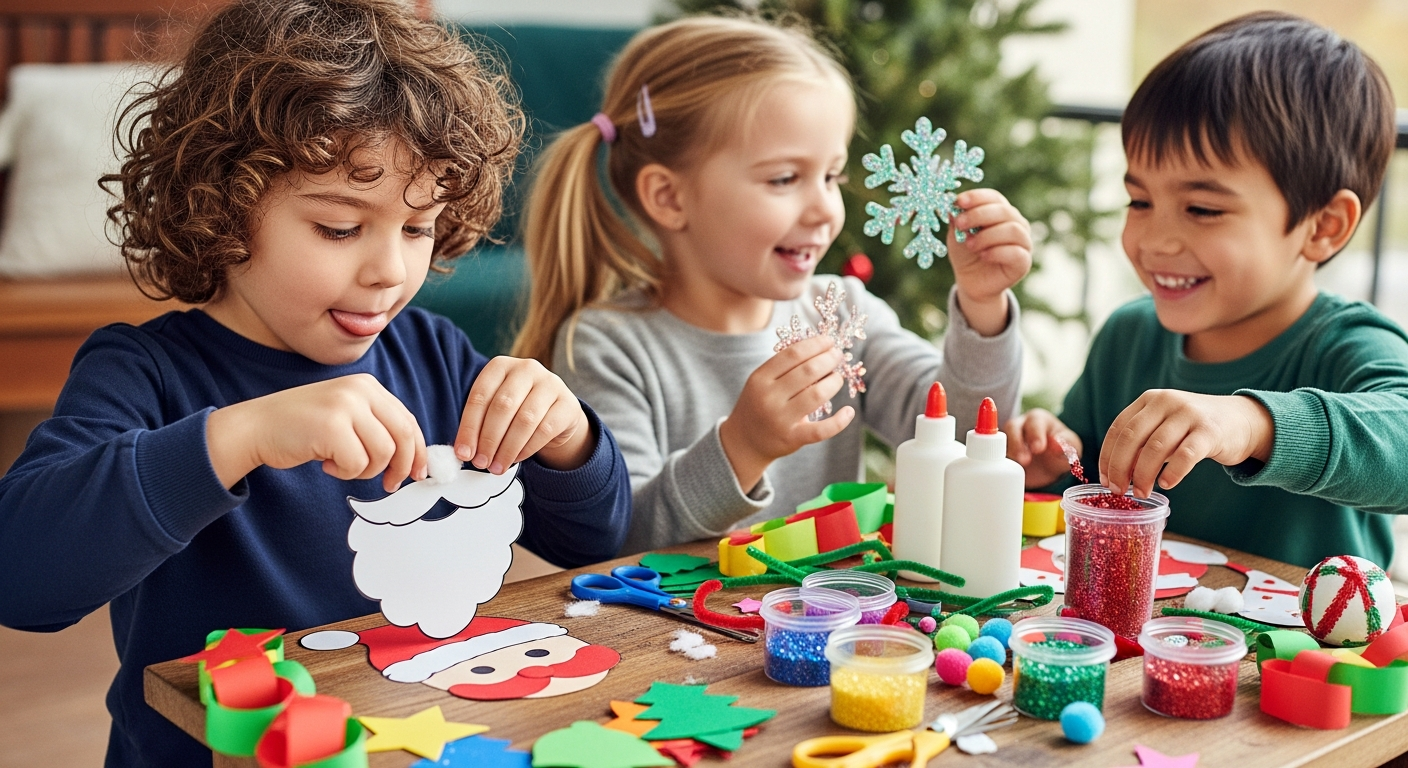
Table of Contents
- The Magic of Making: How Christmas Crafts Help Your Child's Development
- Speaking Through Sparkles: Easy Christmas Crafts You Can Do Yourself (DIY) and How Speech Blubs Can Help
- Speech Blubs: Your Partner in Helping Your Child Communicate All Year Long
- Ready to Make Communication and Joy Sparkle?
- Conclusion
- Frequently Asked Questions (FAQ)
As the holidays twinkle closer, many of us dream of cozy evenings, the smell of gingerbread, and the magic in our children's eyes. But what if those sparkling moments could also help them learn to talk and understand even better, turning simple crafting into a fun way to communicate? It’s not just a dream – it can happen! While the holidays can feel busy, making time for creative activities with your child can help them learn and grow in so many ways, not just by making pretty decorations. This post will explore the wonderful world of Christmas crafts you can do yourself (DIY), showing how these fun projects can spark their creativity and help them use their little hands better, but also give them amazing chances to improve their speech and language. We'll show you how to turn simple craft times into great learning experiences, making sure every glittery ornament and hand-painted card helps them find their voice, and we’ll share how Speech Blubs can help you along the way.

The Magic of Making: How Christmas Crafts Help Your Child's Development
Christmas crafts are more than just fun ways to decorate; they're rich experiences that use all the senses and help in lots of areas of development. From the moment your child reaches for glue and paper, the learning begins!
Fine Motor Skills and Coordination
Crafting naturally involves lots of small hand movements. Cutting with scissors for kids, peeling stickers, pinching pom-poms, threading beads, squeezing glue, and even coloring inside the lines all help develop fine motor control. These are the same small muscles in the hands and fingers that are important for writing and feeding themselves, but they're also linked to speech. The control needed to move the jaw, tongue, and lips to speak clearly uses similar pathways in the brain as fine motor skills. So, helping one can often help the other, building a strong base for clear and confident talking.
Cognitive Growth and Problem-Solving
Every craft project is like a little puzzle. Children learn to follow instructions, do things in order ("first we cut,thenwe glue"), see patterns, know shapes and colors, and make choices. They might face a problem – "the star won't stick!" – and learn to solve it, maybe by using more glue or trying something else. This helps them think, plan, and pay attention to details, all important skills that help them understand and use language well.
A World of Language and Communication Opportunities
This is where Christmas crafts really shine as a way to help your child's speech.
- Vocabulary Expansion:Introducing new words like "pinecone," "tinsel," "reindeer," "snowflake," "decorate," "sparkle," "glue," "cut," "smooth," "prickly," "glossy." You're building a rich vocabulary all about the holidays and crafting.
- Descriptive Language:Encouraging your child to describe what they're making. "What color is Santa's hat?" "How does the glitter feel?" "Tell me about your shiny star." This helps them use adjectives, adverbs, and more complex sentences.
- Following Directions:Craft instructions are great for practicing following steps. "First, get the red paper,thendraw a circle,and finallycut it out." This helps them listen and understand better.
- Sequencing and Storytelling:Talking about the steps of the craft ("What did we do first? What will we do next?"). Once it's done, have them tell a story about it – maybe about their gingerbread man's adventure or how their ornament got to the tree.
- Sound Practice:Using craft items or ideas that focus on certain sounds. For example, making a "s-s-star" or "s-s-snowman" can help practice the /s/ sound. Crafting a "r-r-reindeer" can focus on /r/.
- Social Interaction:When families craft together, it's a natural time to take turns talking, share materials, ask for help, and say what they need or want. These are important social skills.
Social-Emotional Development
Besides the learning and language benefits, Christmas crafts also help a child's emotions. The feeling of finishing a project, the pride in making something beautiful, and the joy of sharing it with family all build confidence. The process also teaches patience and trying again, especially if a craft doesn't go as planned. These shared creative moments become memories, making family stronger and encouraging a love for playing together.

Speaking Through Sparkles: Easy Christmas Crafts You Can Do Yourself (DIY) and How Speech Blubs Can Help
Now, let's look at some Christmas craft ideas you can do yourself (DIY) and how you can add speech and language learning, often with the help of Speech Blubs. Remember, the goal is to have fun and talk together, not to be perfect!
1. Paper Plate Characters: Santa, Reindeer, or Snowmen
Materials:Paper plates, cotton balls, construction paper, googly eyes, glue, markers.
The Craft:Decorate paper plates to look like Santa, a reindeer, or a snowman. Cotton balls make great beards or snow!
Speech & Language Boost:
- Vocabulary:Santa, reindeer, snowman, hat, nose, eyes, beard, carrot, antlers, red, brown, white, circle.
- Describing:"Santa has abig, whitebeard!" "The reindeer haspointyantlers." "The snowman isround."
- Sounds:Focus on /s/ for Santa/snowman, /r/ for reindeer, /n/ for nose/snowman. "Can you says-s-santa?"
- Following Directions:"First, glue the cotton balls,thenadd the googly eyes."
Speech Blubs Connection:For children working on animal sounds or vocabulary, the "Animal Kingdom" section in Speech Blubs is a fun way to practice. If your child is making a reindeer but has trouble with the /r/ sound, watch and copy the videos of other children making animal sounds. This kind of "smart screen time" withSpeech Blubsturns watching into learning, as children learn from our videos.
2. Pinecone Ornaments
Materials:Pinecones, glitter, small pom-poms, glue, string or pipe cleaners.
The Craft:Collect pinecones, then decorate them with glitter, glue on pom-poms, and add a loop to hang them.
Speech & Language Boost:
- Sensory Language:"How does the pinecone feel?Prickly?Rough?" "The glitter issparkly!" "The pom-poms aresoft."
- Counting:"How many pom-poms did you use?" "Let's count the bumps on the pinecone."
- Action Verbs:"Pick," "glue," "sprinkle," "hang."
- Comparisons:"This pinecone isbiggerthan that one."
3. Handprint/Footprint Keepsakes
Materials:Non-toxic paint, cardstock or salt dough.
The Craft:Paint your child's hand or foot and press it onto paper or salt dough to make a memory. Turn handprints into Santa, a reindeer, or a Christmas tree.
Speech & Language Boost:
- Body Parts:"This is yourhand." "This is yourfoot."
- Colors:"What color should we use for your handprint?"
- Action Verbs:"Paint," "press," "lift."
- Emotion Words:"Are youhappywith your handprint?" "Iloveyour footprint!"
4. Salt Dough Ornaments
Materials:1 cup flour, 1/2 cup salt, 1/2 cup water (add more if needed), cookie cutters, paint, glitter, ribbon.
The Craft:Mix ingredients to make dough, roll it out, cut shapes with cookie cutters, bake until hard, then paint and decorate.
Speech & Language Boost:
- Sequencing:"First, we mix the flour and salt,thenwe add water."
- Action Verbs:"Mix," "roll," "cut," "bake," "paint."
- Shapes:"What shape is this cookie cutter? Astar? Atree?"
- Vocabulary:Dough, flour, salt, oven, cookie cutter, ribbon.
5. Pom-Pom Garlands
Materials:Pom-poms of different sizes and colors, needle (blunt tip for kids), yarn or string.
The Craft:Thread pom-poms onto yarn to make a colorful garland.
Speech & Language Boost:
- Counting:"How many red pom-poms do we have?" "One, two, three..."
- Colors:Naming different colors.
- Patterns:"Let's make a pattern: red, green, red, green."
- Size Comparisons:"This is abigpom-pom, and this is asmallone."
- Fine Motor:Threading is great for practicing picking up small objects and hand-eye coordination.
6. DIY Snow Globes
Materials:Small jar with lid, waterproof glue, small plastic figures (like a snowman or tree), glitter, distilled water, glycerin (optional).
The Craft:Glue figures to the inside of the lid, fill the jar with water, add glitter and a drop of glycerin, seal tightly.
Speech & Language Boost:
- Vocabulary:Snow globe, glitter, water, snowman, tree, shake, inside, outside, top, bottom.
- Descriptive Language:"The glitter isshiny." "The snowman istiny." "Watch the snowfall slowly."
- Imagination:"What is the snowman doing in the snow globe?" "Where is he going?"
7. Cookie Decorating (Edible Craft)
Materials:Pre-baked sugar cookies, icing, sprinkles, candies.
The Craft:Decorate Christmas cookies.
Speech & Language Boost:
- Sensory Words:"The icing issweet." "The sprinkles arecrunchy." "The cookie issmooth."
- Colors & Shapes:Naming them.
- Action Verbs:"Spread," "sprinkle," "eat," "taste."
- Following Instructions:"First, spread the green icing,thenadd the red sprinkles."
8. Q-Tip Snowflakes
Materials:Q-tips, glue, dark construction paper.
The Craft:Cut Q-tips into different lengths and glue them onto dark paper to make snowflakes.
Speech & Language Boost:
- Shapes:"We're making astarshape with the Q-tips." "Look at all the differentangles."
- Counting:Counting the Q-tip pieces.
- Action Verbs:"Cut," "glue," "arrange," "dot."
- Repetitive Sounds:Using phrases like "dot, dot, dot" as you glue the Q-tips.
9. Popsicle Stick Ornaments
Materials:Popsicle sticks, glue, paint, glitter, buttons, small bells, string.
The Craft:Glue popsicle sticks together to make shapes (stars, trees, fences for a nativity scene), then paint and decorate.
Speech & Language Boost:
- Shapes:Building triangles, squares, stars.
- Colors:"What color should we paint our tree?"
- Spatial Concepts:"Glue the bellon topof the tree." "Put the glitterinsidethe star."
- Vocabulary:Stick, paint, bell, star, tree, ornament.
10. Recycled Cardboard Gingerbread Houses
Materials:Cardboard boxes, glue, paint, cotton balls, buttons, felt scraps, glitter, small candies (optional).
The Craft:Build a gingerbread house using cardboard boxes, then decorate with different craft supplies.
Speech & Language Boost:
- Planning & Design:"What will our house look like?" "Where should the door go?"
- Descriptive Language:"Our house has afluffysnow roof!" "It hasshinybutton windows."
- Storytelling:Once the house is built, have your child tell a story about who lives there or what happens inside.
- Problem-Solving:Figuring out how to make walls stand up, what materials to use for different parts.
Speech Blubs: Your Partner in Helping Your Child Communicate All Year Long
At Speech Blubs, our goal is to help children "speak their minds and hearts." We know that learning to communicate can be hard sometimes, and we're here to provide solutions that are quick, effective, and fun. Our company was started by people who had speech problems themselves as children, and they wanted to create the tool they wished they had – a fun app that uses science to help children find their voice.
We know that 1 in 4 children needs help with their speech, and we want to combine science and play into "smart screen time" experiences. We offer a better alternative to just watching TV (like cartoons) and a great way to connect with family, which goes well with hands-on activities like Christmas crafts.
How Speech Blubs Helps Your Child's Communication
Our special approach uses videos to show children how to learn by watching and copying other kids. This is very helpful because children love watching other children, and their brains are wired to copy what they see, making it a great way to learn. When your child copies the speech sounds, words, and phrases they see in our app, they're building important brain pathways for talking and learning language.
Imagine this: You’re making a reindeer craft, and your 3-year-old child, who is a "late talker" and loves animals, is excited but can't say "reindeer" or even "moo" for other animals. They start to get upset. This is where Speech Blubs can help. The "Animal Kingdom" section in our app is a fun way to practice animal sounds and words like "moo," "baa," "roar," and "ho-ho-ho" (perfect for Santa!). By watching and copying other children in the app, your child can feel more confident saying these sounds, which helps them feel less frustrated and builds the skills they need to bring back to the craft table. This makes learning easier and more like playing.
We want to make speech therapy easy and fun. Speech Blubs has lots of activities that cover many areas of speech and language, from first words and sounds to reading. It's a great addition to your child's learning plan and, if needed, professional therapy, providing support in a fun, interactive way. You can learn more about the science behind our method and our high rating on ourResearch page.
What Our Families Are Saying
Don't just take our word for it! Many parents have seen their children make progress with Speech Blubs. We're happy to share their stories of increased confidence, better talking, and the joy of seeing their children "speak their minds and hearts." Go to ourTestimonials pageto read what other parents say about how Speech Blubs has helped their children.
Getting the Most Out of Speech Blubs
To get the most out of Speech Blubs, remember that it's made to be played together. It's not just for keeping your child busy; it's a way to connect as a family. Sit with your child, do the activities together, repeat the sounds, and celebrate every success. Like with crafts, doing it regularly is important – short sessions are better than long ones sometimes. And always try to connect what they learn in the app to real life, like talking about your Christmas crafts!
Not sure if your child could use some help? Take our quick 3-minutetestto get a simple idea of how they're doing and a plan for what to do next. It only takes 9 questions and is a good way to start understanding your child's communication needs.
Ready to Make Communication and Joy Sparkle?
Helping your child's speech and language doesn't have to be hard or expensive. With fun activities like Christmas crafts and the help of Speech Blubs, you can create a place where communication can grow. We're here to give you the tools you need to help your child.
We have plans that are easy to understand and work for your family:
- Monthly Plan:$14.99 per month.
- Yearly Plan:For just $59.99 per year, which is only $4.99 per month!
TheYearly plan is the best deal and what we recommend, because yousave 66%compared to the monthly option. It's also cheaper in the long run and gives you special features to help your child:
- A 7-day free trial:Try Speech Blubs before you pay.
- The extra Reading Blubs app:Help with reading skills along with speech.
- Get new updates early:Be the first to see new features and content.
- Get help in 24 hours:Get fast help when you need it.
The Monthly plan doesn't have these benefits, so the Yearly plan gives you the most tools and support.
Ready to start and give your child the gift of a stronger voice this holiday season and beyond? Create your account and start your7-day free trial today! Remember to pick the Yearly plan to get all the extra features and savings. You can alsoDownload Speech Blubs on the App StoreorGoogle Playto start your free trial and get all the features with the Yearly subscription. Join our community of families who are helping their children speak their minds and hearts, one fun craft and activity at a time!
Conclusion
This holiday season, let your creativity flow not just for decorations, but also for helping your child's speech and language development. Christmas crafts are a great mix of fun, practice for little hands, thinking skills, and chances to learn language. From learning new words and practicing sounds to following directions and telling stories, every craft project is a chance for your child to grow. When you add Speech Blubs, these fun activities become a great way for your child to find and strengthen their voice. We encourage you to enjoy these moments of creating and communicating together.
Ready to add some extra speech-boosting magic to your holidays? Try "smart screen time" with Speech Blubs. Start your7-day free trialtoday by choosing theYearly plan– it's the best value, saving you 66% and offering special features like the Reading Blubs app and fast support.Download Speech Blubs on the App StoreorGoogle Playnow and start helping your child speak their minds and hearts, creating memories and building skills that will last.
Frequently Asked Questions (FAQ)
Q1: What age are these Christmas crafts best for?
A1: Most of these Christmas crafts can be changed to fit different ages. They're good for toddlers (2-3 years old) with lots of help from an adult, preschoolers (3-5 years old) with some help, and even children in early elementary school (6-8 years old) who can do more on their own. The key is to choose materials that are safe for their age and make the instructions easier or harder. For younger children, focus on feeling and exploring things and doing simple things like gluing or painting, while older children can do more detailed designs and follow more steps.
Q2: How can I help my child talk more during craft time?
A2: The best way to help them talk is to be involved and excited! Talk about what you're doing ("I'm putting theredglitter ontop"), ask questions that make them think ("What should we donext?" "How does that feel?"), and describe what you see ("Look at yoursparklystar!"). Don't make them say certain words; instead, show them how to use language, give them choices ("Do you want thegreenpaint or thebluepaint?"), and be happy with any way they try to talk, even if it's just pointing or making sounds. Speech Blubs can also help them practice certain sounds or words that you can then use during craft time.
Q3: My child doesn't seem interested in crafts. How can I make it more fun?
A3: Try to do crafts that your child likes. If they love animals, make animal ornaments. If they like to feel different things, use materials like cotton balls, pipe cleaners, and felt. Keep the craft time short, especially at first, and don't worry about making something perfect; focus on having fun together. Letting them help plan and choose materials can also make them more interested. Remember, the goal is to have fun and connect, not just to finish a craft.
Q4: How does Speech Blubs help with communication along with crafts?
A4: Speech Blubs is a great addition to activities like crafts. Crafts give a real-world way to use language, and Speech Blubs helps them practice certain sounds, words, and ideas by showing videos of other children. For example, if your child is working on the /s/ sound while making a "snowman," they can practice that sound by copying other children in the "Silly Sounds" section of the app. This helps them feel more confident and able to use those skills during craft time, making learning better and more complete.
Sobre el autor