
¡Manualidades navideñas para niños: ¡Habla y brilla!
Tabla de contenido Introducción La magia de crear: por qué las manualidades son importantes para los niños El enfoque de Speech Blubs para aprender a través del juego Nuestras manualidades navideñas favoritas para el desarrollo del habla Consejos para...
 Por Speech Blubs Team•22 dic 2025•18 min.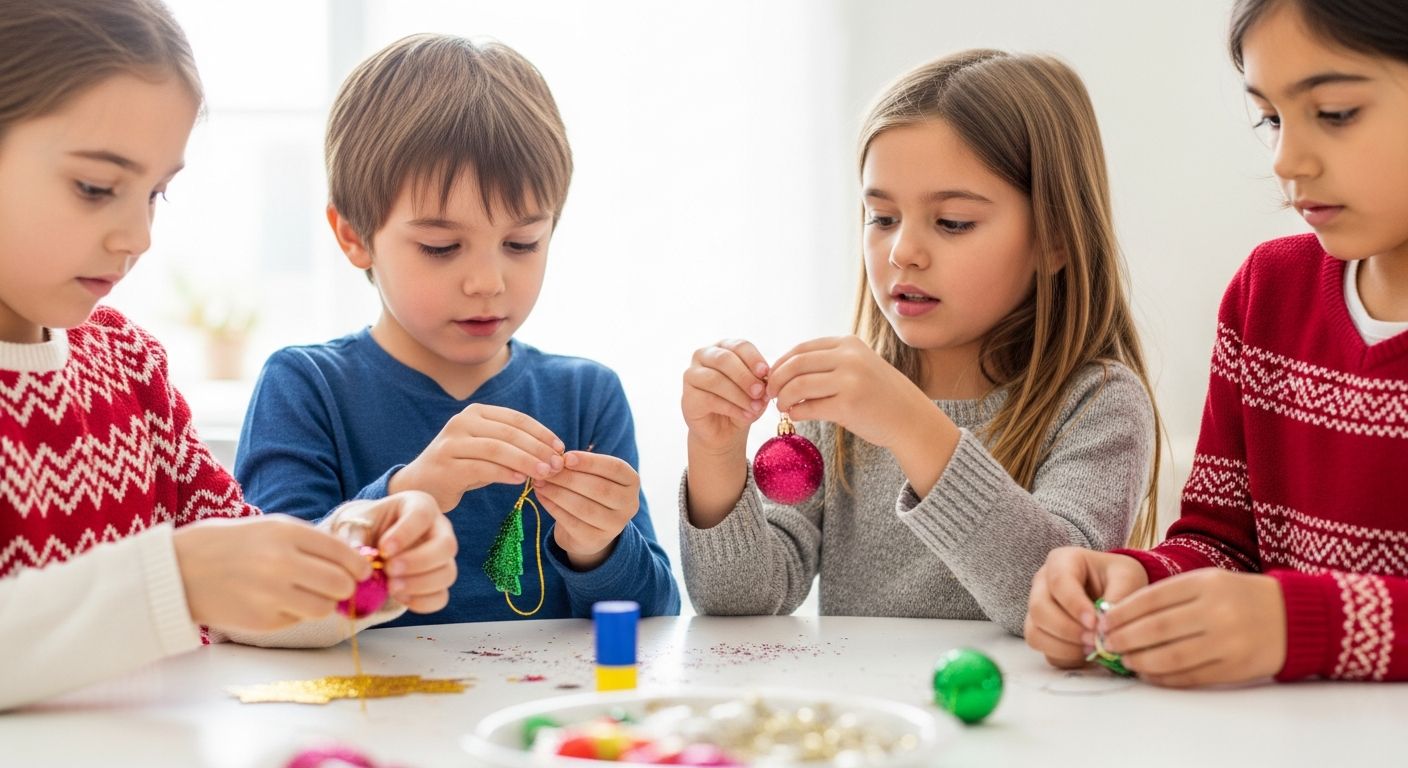
Contents
- Intro
- The Magic of Making: Why Crafts are Great for Kids
- Speech Blubs' Way of Helping Kids Learn Through Play
- Our Favorite Christmas Crafts to Help With Talking
- Tips to Help Your Child Talk More While Crafting
- When to Think About Getting Extra Help: What Makes Speech Blubs Different
- Why Speech Blubs is Great: Helping Your Child Find Their Voice
- Wrapping Up
- Common Questions
Intro
As Christmas gets closer, we all get busy getting ready for the holidays. But in the middle of the lights and songs, there's something really special that happens when kids get involved: the fun of making things. Imagine how happy they'll be showing off an ornament they made, something they created with their own hands and imagination. These aren't just pretty decorations; they're a great way to connect with your child, get creative, and help them learn to talk. This blog post will show you lots of fun, easy Christmas crafts that are perfect for kids and help them with their speech. We'll see how these activities not only make your home look nice but also help your child communicate better, so they can share their thoughts and feelings and make memories that will last for years.
The Magic of Making: Why Crafts are Great for Kids
Crafting is super important for kids as they grow. It has lots of benefits that go beyond just making something pretty. When kids use their hands to work with glue, glitter, and paper, lots of things happen that help them develop.

Getting Creative and Thinking Skills Going
Crafts spark a child's imagination, letting them turn simple things into something brand new. This helps them think creatively, solve problems, and make choices. "What color glitter should I use?" "How can I make this star stay on?" These little choices are like a workout for their brains, helping them become more independent and confident. Kids learn to follow steps, guess what will happen next, and change their plans if things don't go as expected – all important skills for life.
Improving Small Motor Skills
The small movements involved in crafting—cutting, gluing, threading, painting, shaping—are great for developing small motor skills. These are the small muscle movements in the hands and fingers that help with things like writing, buttoning clothes, and even using forks and spoons. Strong small motor skills help kids do things on their own and get ready for school.
Building Feelings of Connection and Confidence
Working on a craft project together creates special moments between kids and their parents or caregivers. It’s a shared experience, a time for laughing, working together, and encouraging each other. When a child sees something they made on display, they feel really proud of themselves, which boosts their confidence and makes them want to learn and try new things. This shared focus also helps them talk and connect with others, which is great for learning to talk.
Crafting a Way to Communicate: Talking and Language Development
One of the best things about crafting that people don't always realize is how much it helps with talking and language development. Every snip, every bit of glue, every color choice is a chance for them to learn and grow.
- Learning New Words:Introducing new words for what things are made of (felt, yarn, glitter, pipe cleaner), what you do (cut, glue, paint, sprinkle, thread), colors, shapes, and how things feel (bumpy, smooth, sticky).
- Following Directions:Craft projects have lots of steps. "First, cut the paper, then glue it here." This helps kids understand and follow instructions in order, which is important for listening and understanding language.
- Describing Things:Encouraging kids to describe what they're making ("It's a sparkly red star!"), what things are made of ("This glue is sticky!"), or what they're doing ("We're making the snowman's round belly.") helps them learn descriptive words and how to explain what they see.
- Putting Things in Order and Telling Stories:Talking about the steps of a craft project after it's done helps kids practice putting events in order and telling a story that makes sense, which is important for storytelling and communicating well.
- Taking Turns and Talking:Craft time is a good time for talking back and forth. "My turn to glue!" "Your turn to pick the color." These exchanges teach them how conversations work.
- Practicing Sounds:Repeating action words or sounds related to crafting ("snip-snip," "sticky," "squish") is a fun, easy way to practice saying certain sounds and words.
When we think about crafting this way, it's clear that it's more than just something to do for the holidays. It's a great way to help kids grow in all sorts of ways, helping them be creative and use their hands, but also helping them learn to talk well.

Speech Blubs' Way of Helping Kids Learn Through Play
At Speech Blubs, we know how much fun and interesting activities help kids grow. Our goal is to help kids "speak their minds and hearts," giving them a fun and helpful way to get better at talking if they need it. Our company started because our founders had speech problems when they were kids and wanted to create something that would have helped them—which shows how committed we are to making a real difference.
We mix science with play to create "smart screen time" that's like nothing else. We think that technology can be a great way to help kids grow if it's used in the right way. Our special method uses "video modeling," where kids learn by watching and copying other kids. This uses the power of mirror neurons, encouraging kids to copy sounds, words, and expressions in a natural, fun way. It’s a better way to use screens than just watching cartoons, and it turns screen time into something that helps families connect with each other.
Just like crafting helps kids copy, talk, and connect with others, our app provides a similar fun and organized environment. If a child is a "late talker" and loves animals, the "Animal Kingdom" part of Speech Blubs is a fun way to practice "moo" and "baa" sounds by watching other kids. This helps them feel confident and less frustrated, just like when a child feels proud after finishing a Christmas craft. To see how our methods are proven by science, check out ourresearch page.
Our Favorite Christmas Crafts to Help With Talking
Now, let's look at some craft ideas that are not only fun and festive but also help your child's speech and language skills. Remember, the most important thing is not just making the craft, but the talking and connecting that happenswhileyou're doing it.
1. Salt Dough Ornaments: A Fun Way to Use Senses and Language
Salt dough is a classic for a reason! It's easy to work with, uses simple things you already have, and gives kids a great sensory experience that makes them want to describe things.
- The Craft:Mix flour, salt, and water to make dough. Roll it out, use cookie cutters to make Christmas shapes (stars, trees, bells, gingerbread people), make a hole for hanging, then bake it or let it air dry. Once it's cool, decorate it with paint, glitter, and markers.
- Speech and Language Focus:
- Vocabulary:Things you use (flour, salt, water), actions (mix, knead, roll, cut, press, bake, paint, sprinkle, dry), shapes (star, circle, heart), colors (red, green, gold), how things feel (sticky, smooth, rough, hard).
- Putting Things in Order:"First, we mix the ingredients. Next, we knead the dough. Then, we roll it flat." This is great for practicing how to say things in order.
- Describing Things:"The dough issmoothnow." "Let's make asparkly redstar." "This glitter is soshiny!"
- Following Instructions:"Roll the doughthin." "Cutthreestars."
- Speech Blubs Connection:Just like in our app, where kids learn by watching and copying other kids, here they copy what you do and say. If your child is working on action words, explaining "mix the dough" and "roll it flat" helps them learn language from our "Daily Activities" section. This real-life copying is a great way to learn.
2. Paper Plate Angels, Snowmen, or Reindeer: Simple Shapes, Big Words
Paper plates are a cheap and easy craft supply, and they're great for making Christmas characters.
- The Craft:Use a paper plate as the body. For an angel, add paper wings, a pipe cleaner halo, and draw on features. For a snowman, glue cotton balls on, add paper eyes, nose, and buttons. For a reindeer, glue brown paper antlers on, googly eyes, and a red pom-pom nose.
- Speech and Language Focus:
- Vocabulary:Body parts (eyes, nose, mouth, wings, antlers, halo, scarf), colors, shapes (round, oval, triangle for nose), things you use (glue, cotton ball, pom-pom, pipe cleaner).
- Following Instructions With Multiple Steps:"First, glue the cotton balls on the plate. Then, add two googly eyesabovethe nose." This is great practice for following longer instructions.
- Where Things Are:"Put the eyesabovethe nose," "The scarf goesaroundthe neck," "The antlers goon top."
- Cause and Effect:"If we put too much glue, it will bewet."
- Speech Blubs Connection:This craft helps with following instructions and understanding where things are, which is important for understanding what people say. Our app has activities that help kids follow commands and find objects based on where they are, like putting the reindeer's noseonits face or its antlerson topof its head.
3. Pinecone Critters or Ornaments: Nature's Classroom
Bring nature inside with these fun crafts. A quick walk to find pinecones is a fun adventure!
- The Craft:Collect pinecones. Decorate them with paint, glitter, googly eyes, felt scraps, pom-poms, and pipe cleaners to turn them into owls, reindeer, or just colorful ornaments. Add a string for hanging.
- Speech and Language Focus:
- Vocabulary:Nature words (pinecone, tree, branch, needle, acorn, leaf), how things feel (prickly, soft, smooth, rough), colors, animal names (owl, squirrel, deer) and their sounds.
- Describing Things:"This pinecone is sobumpyandbrown." "Let's give the owlbig, yelloweyes."
- Words for How Things Feel:"Feel howpricklythis is!"
- Comparing Things:"This pinecone isbiggerthan that one."
- Speech Blubs Connection:This craft helps with exploring and naming things and how they feel, which is like the activities in our app like "Around the House" or "Animals." If a child is learning to tell the difference between how things feel or how big they are, describing a "prickly pinecone" versus a "soft pom-pom" helps them understand what they're learning in our app.
4. Popcorn and Cranberry Garlands: Repetition and Rhythm
This classic garland is not only pretty but also great for helping with small motor skills and encouraging rhythmic language.
- The Craft:Pop plain popcorn (let it cool and dry a little so it's easier to thread). Get fresh cranberries. Use a blunt needle and thread/fishing line to string popcorn and cranberries, one after the other.
- Speech and Language Focus:
- Counting:"One popcorn, one cranberry, two popcorns, two cranberries..."
- Patterns:"What comes next? Popcorn or cranberry?" This helps with putting things in order and guessing what comes next.
- Action Words:"Thread," "poke," "slide," "tie."
- Descriptive Words:"Red," "white," "long," "short," "bumpy," "smooth."
- Practicing How to Say Words:The repeating helps with practicing certain sounds, like "p" in popcorn or "c" in cranberry.
- Speech Blubs Connection:The repeating in this craft, along with the focus on patterns, is like how Speech Blubs helps build language skills through regular, fun practice. Understanding patterns helps with understanding how sentences are made and the rhythm of speech.
5. Handprint/Footprint Ornaments: Personalized and Precious
These ornaments are special because they capture a moment in time and make wonderful keepsakes, while also helping with language.
- The Craft:Use salt dough (like above), air-dry clay, or child-safe paint on a plain ornament or cardstock. Press your child's hand or foot into it. Decorate with names, dates, and Christmas colors.
- Speech and Language Focus:
- Body Parts:"Where's your hand?" "Let's paint your fingers!"
- Action Words:"Paint," "press," "squish," "dry."
- Colors:"What color should we paint your hand? Red or green?"
- Saying How You Feel:"I love your handprint!" "You did a great job!"
- Getting Ready to Write:Tracing fingers or naming them.
- Speech Blubs Connection:This craft helps with saying how you feel and naming body parts, which are things we do in Speech Blubs sections like "My Face" or "Daily Activities," where kids learn to name and say words about themselves and what they do. This personal connection makes learning even better.
Tips to Help Your Child Talk More While Crafting
To make craft time a great time for learning language, here are some tips:
- Talk About Everything:Be like a sports commentator! "I'm cutting theredpaper now. Snip, snip, snip! Now I'm puttingglueon the back." This shows them how to use clear language and new words.
- Ask Questions That Need More Than a Yes or No Answer:Instead of "Do you like it?" ask, "What part do you like best?" or "Tell me about your snowman." This makes them say more than just yes or no.
- Add to What They Say:If your child says, "Ball!" while making a round ornament, you can say, "Yes! That's abig, red ball! We're making abig, red, roundornament!" This shows them how to use more complicated sentences and words.
- Give Them Choices:"Do you want the blue glitter or the green glitter?" This helps your child feel like they have control and lets them practice choosing and saying colors.
- Sing Songs or Read Stories About It:Sing Christmas songs or read stories about the characters you're making. Repeating the words and story helps them learn sounds and new words.
- Be Patient and Let Them Lead:Give them time to talk and don't force them to say things. Sometimes, just being there and paying attention is enough. If they really like a certain thing you're using, talk about that!
- Focus on Having Fun, Not Being Perfect:The point is to talk and connect, not to make something that belongs in a museum. Celebrate what they do and how they're creative.
- Use Pictures:Point to the things you're naming or what you're doing. This helps them connect the words to what they mean, especially if they learn best by seeing things.
- Use Phrases That Repeat:"Ready, set, go!" "One more!" "All done!" These short, easy phrases help them get excited and understand what's happening.
Remember, every moment together is a chance to learn and connect. By using these ideas, you're not just making pretty Christmas decorations; you're helping them learn how to communicate for the rest of their life.
When to Think About Getting Extra Help: What Makes Speech Blubs Different
While these crafts are great, we know that some kids might need a little extra help with their speech and language. If you're worried about how your child is talking, it's okay to ask for advice.
If you're not sure what to do, we have aquick 3-minute quiz. It has 9 simple questions and gives you a plan for what to do next. It's a great way to get some quick advice and figure out what to do next.
Speech Blubs is made to help kids grow and, if needed, work with a speech therapist. We offer "smart screen time" that's better than just watching cartoons. Instead of just watching, kids get to do things, learn, and grow with our "video modeling" method that's proven by science. Our goal is to help kids say what they think and feel. Don't just take our word for it; you canread stories from other parentswho have seen their kids get better with Speech Blubs.
We want to help kids love to talk, feel confident, get less frustrated, learn important skills, and have fun learning with their families. We want to help every child find their voice.
Why Speech Blubs is Great: Helping Your Child Find Their Voice
Helping your child with their speech and language is one of the best things you can do. At Speech Blubs, we want to make our app easy to get and also really helpful.
We have two plans to fit your family's needs:
- Monthly Plan:Costs$14.99 each month.
- Yearly Plan:Our best deal at$59.99 each year. That's just$4.99 each month, so yousave 66%compared to the monthly plan!
TheYearly Planis made to give you the best experience, with special things you don't get with the Monthly Plan:
- 7-Day Free Trial:Try it out without any risk and see everything Speech Blubs has to offer.
- The Extra Reading Blubs App:Get another app that helps with reading, which helps your child's speech development.
- Get New Things First:Be the first to try our newest features and content.
- Get Help in 24 Hours:Get help faster whenever you need it.
The Yearly Plan not only saves you money but also gives you these great things, so your child gets the best help possible. We made Speech Blubs to be the tool we wish we had when we were kids, and we put our hearts into making it the best it can be.
Wrapping Up
The Christmas season is a great time to make memories and help your child learn important skills with fun activities like making Christmas decorations. From the fun of touching and feeling salt dough to the talking practice of stringing popcorn, each craft helps them communicate better, be creative, and connect with you. These times, filled with laughing and working together, are great for learning new words, following instructions, and loving to talk.
Remember, the best part isn't just the finished ornament, but what happens while you're making it—the talking, the connecting, and the fun of making something together. As you decorate your home with your child's creations, you're also helping them feel confident and find their voice.
If you want to help your child talk confidently, try Speech Blubs. With our fun "smart screen time" activities that are based on "video modeling," we make learning to talk an exciting adventure. Don't miss out on the great deal and special things you get with our Yearly Plan, including a 7-day free trial and the extra Reading Blubs app.
Download Speech Blubs on the App StoreorGet Speech Blubs on Google Playtoday and choose the Yearly plan to get all the benefits and start your free trial. Let's help your child speak their mind and heart, not just during the holidays, but for their whole life. Or, if you want, you canstart your 7-day free trial and make your account on our website.
Common Questions
Q1: What Christmas crafts are best for helping young kids develop their speech skills?
A1: Crafts that have lots of steps, use different things, and encourage describing things are great. Some examples are salt dough ornaments (for learning words about actions and how things feel), paper plate characters (for following instructions and understanding where things are), pinecone critters (for learning nature words and descriptive words), and popcorn/cranberry garlands (for counting, patterns, and repeating words). The most important thing is to talk while you're crafting, saying what you're doing and asking questions that need more than a yes or no answer.
Q2: How does Speech Blubs work with crafts to help kids with their speech?
A2: Speech Blubs helps with crafts by using similar ways of learning. Just like kids copy what you do and say during crafts, our app uses "video modeling" where kids copy other kids, learning by watching. Both ways help kids get involved, learn new words, get better at following instructions, and have fun talking without feeling pressured. For example, words they learn by describing craft supplies can be used in our app's different word categories.
Q3: What should I do if my child doesn't seem interested in crafts or gets frustrated easily?
A3: Start with easy crafts that don't take long, like decorating a paper shape that's already cut out or just playing with salt dough. Keep it short and let your child lead. Focus on how it feels and talking together, not on the finished craft. Give them choices so they feel like they have control, and if they get frustrated, switch to something else or take a break. Remember that even short, fun times are helpful. If you think there might be a bigger problem with their speech, take ourquick 3-minute quizfor advice.
Q4: What are the plans for Speech Blubs and which one is best?
A4: Speech Blubs has a Monthly Plan for $14.99/month and a Yearly Plan for $59.99/year. We recommend the Yearly Plan because it saves you money (66% off, which is $4.99/month) and has special things you don't get with the Monthly Plan. These things include a 7-day free trial, the Reading Blubs app, getting new things first, and getting help in 24 hours. The Monthly Plan doesn't have these extra things. The Yearly Plan makes sure your child gets the best learning experience. You canvisit the Speech Blubs websiteto learn more.
Sobre el autor