
Artesanías Fáciles para Niños: Actividades Divertidas que Impulsan el Habla
Tabla de Contenidos Introducción La Magia de las Artesanías Fáciles: Más que un Juego Materiales Esenciales que Ya Tienes Nuestras Ideas Favoritas de Artesanías Fáciles para Niños (con un Toque de Comunicación) Maximizando...
 Por Speech Blubs Team•13 ene 2026•16 min.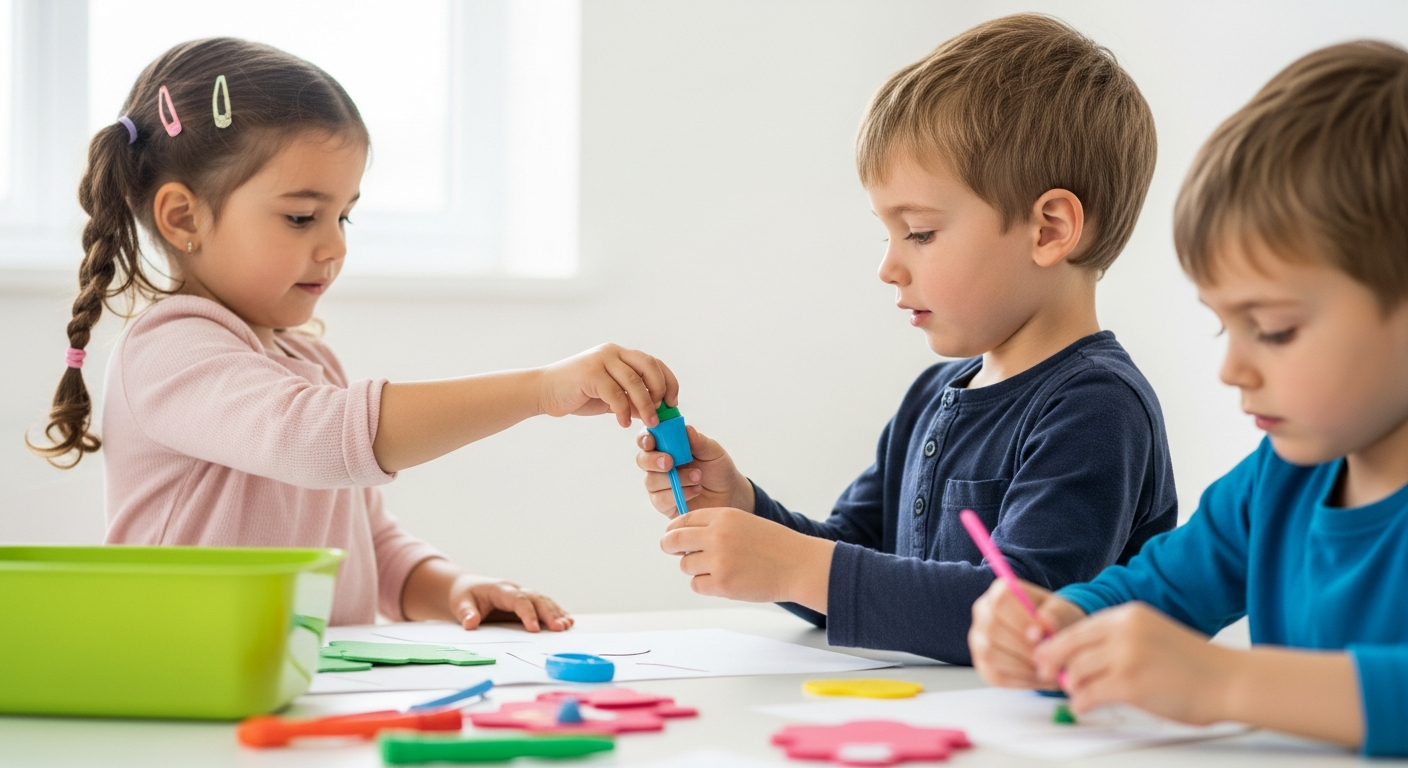
Table of Contents
- Introduction
- Easy Crafts: More Than Just Fun
- Craft Supplies You Already Have
- Easy Craft Ideas for Kids (with a Little Talking!)
- Crafts to Help Your Child Talk
- Speech Blubs: Helping Your Child Communicate
- Speech Blubs: Worth the Investment
- Conclusion
- FAQ
Introduction
Do you ever look at a pile of toilet paper rolls and wonder if they could be something cool? Or maybe you're looking for fun, cheap activities that help your kids learn? You're not alone! In a world full of screens, simple crafts can be a wonderful break and a chance to learn. This isn't just about making cute things; it's about helping your child communicate better, be creative, and connect with you, using stuff you probably already have at home. We'll share lots of easy craft ideas and show you how they can help your child's speech and language skills. We'll also talk about how Speech Blubs can help your child "speak their minds and hearts!"
Easy Crafts: More Than Just Fun
Crafts are often just seen as playtime, something to do when it's raining. But they're actually great for your child's development, especially their speech and language. Being creative helps them learn to communicate.
Think about all the things your child does during a craft session. Their little fingers are working hard – holding crayons, cutting with scissors, and gluing things carefully. This helps their brain develop, including the parts that help them talk. As they work, they're solving problems: "How do I make the bunny's ears stand up?" or "What color should I use for the fish?" These thinking skills are important for clear communication.

If you have a 3-year-old who isn't talking much and points instead of using words, crafts can be a great way to get them talking in a relaxed way. Imagine making a paper plate fish. You can tell them what you're doing: "First, wepaintthe plateblue," "Now, let'scutthefins," "Where does theeyego?" Hearing you use these words while they're seeing what you're doing helps them learn new words. It's a fun alternative to screens and a great way to connect with your child, where they learn how to make crafts and share their ideas and happiness.
Craft Supplies You Already Have
One of the best things about easy crafts for kids is that you usually don't need to go to a special store. You can make lots of fun and helpful things with stuff you already have in your kitchen, recycling bin, or craft box. Using what you have not only makes crafts easy but also teaches children to be resourceful and reuse things.
Here's a list of things you probably already have that you can use for crafts, plus a few extra things that can make them even more fun:
- Paper Plates:Great for making animal faces, masks, and more.
- Toilet Paper or Paper Towel Rolls:Perfect for making characters, binoculars, or little castles.
- Colored Construction Paper:Use it for cutting, folding, and making colorful shapes.
- White Construction or Printer Paper:Good for drawing, painting, and printing templates.
- Popsicle Sticks:Use them for building, making puppets, or adding structure.
- Glue or Tape:Helps you put things together and build fine motor skills.
- Kid-Safe Scissors:Helps develop hand strength and coordination (with supervision).
- Kid-Safe Paint, Crayons, or Markers:Use them to add color and personality to your creations. You can usually use one instead of another!
Extra Fun Stuff:
- Googly Eyes:Make characters come to life.
- Pom Poms:Add texture and color, and they're fun to touch.
- Tissue Paper Squares:Great for layering, making stained-glass windows, or adding colorful "sprinkles."
- Cardboard Boxes:Cereal boxes and shipping boxes are great for building big things.
The best thing about this list is that it's simple. You don't need to spend a lot of money to be creative. These everyday things, along with some imagination and help from you, can help your child learn and communicate.

Easy Craft Ideas for Kids (with a Little Talking!)
Let's look at some crafts that are easy to do and can also help your child's speech and language skills. We'll group them by the communication skills they help with, so you can see how every cut, glue, and color can be a chance to talk.
Crafts for First Sounds & Simple Words
These crafts are great for toddlers and preschoolers who are learning to say sounds, learn new words, and build their vocabulary.
1. Paper Plate Animals (like Lions, Fish, Ladybugs)
- The Craft:Turn a paper plate into a roaring lion, a swimming fish, or a spotted ladybug with paint, paper, and googly eyes.
- Communication Twist:This is a great way to practice animal sounds ("roar," "meow," "woof"), animal names ("lion," "fish," "cat"), and action words ("swim," "fly," "chase"). You can also practice colors, shapes (the round plate, triangular fins), and counting (two eyes, four legs). If your child is working on a specific sound, like "f," you can focus on "fish" and "fin."
- What This Looks Like:If your child has trouble making animal sounds or saying their names, the "Animal Kingdom" section of Speech Blubs is a fun way to practice. They can watch other kids make the sounds and say the words, which helps them learn. This is a key part of how we help kids learn to talk. Learn more on ourSpeech Blubs Homepage.
2. Toilet Paper Roll Creatures (like Bunnies, Octopuses, Bird Feeders)
- The Craft:Turn toilet paper rolls into hopping bunnies, wiggly octopuses, or even bird feeders.
- Communication Twist:Focus on words like "roll," "up," "down," "long," "short" (for ears or tentacles), and body parts. When making a bird feeder, talk about "birds," "seeds," and "eat." You can also use repeating phrases like, "Roll, roll, roll the paper," or "Hop, hop, hop the bunny."
- How Speech Blubs Can Help:Just like your child copies you during a craft, our app uses "video modeling" where children learn by watching and copying other kids. This really helps them develop communication skills in a fun way.
3. Handprint/Fingerprint Art
- The Craft:Make "trees" with fingerprint leaves, or make an animal with your handprint.
- Communication Twist:Focus on body parts ("hand," "finger"), colors, and how things feel ("wet paint," "sticky"). You can also practice using "my" and "your": "My hand," "Your print." "What color isyourfingerprint?"
- How Speech Blubs Can Help:Our app was created by people who had speech problems themselves. They wanted to make the tool they wish they had when they were kids. It helps children express themselves, just like they express their creativity through handprint art.
Crafts for Following Directions
These activities help children listen, understand, and follow instructions, which is important for everyday life and clear communication.
1. Rainbow Crafts (like Paper Plate Suns and Rainbows, Paper Rainbows)
- The Craft:Make a colorful rainbow using strips of colored paper or painting arches on a paper plate.
- Communication Twist:This is perfect for practicing words like "first," "next," and "then." It also helps with color recognition and counting. Talk about the order of the colors in the rainbow.
- How Speech Blubs Can Help:Understanding and following a sequence is important for speech development, from saying sounds in a word to making sentences. Our activities help children learn these sequences, just like they follow steps to make a rainbow. Our app has been rated highly for its scientific basis. You can learn more about theresearch behind Speech Blubs here.
2. Simple "Building" Crafts (like Cardboard Castles, Popsicle Stick Crafts)
- The Craft:Build a simple castle from a cardboard box or make shapes using popsicle sticks.
- Communication Twist:Focus on words that describe where things are ("on top," "under," "next to"), action words ("glue," "stack," "attach"), and prepositions ("in," "out"). Give instructions like, "Put the tall toweron topof the box." This helps children understand where things are in relation to each other, which helps them understand sentence structure.
- What This Looks Like:If your child has trouble following instructions, breaking a craft down into simple steps (like "First, cut. Then, glue. Next, draw.") is similar to how Speech Blubs introduces new words and sounds in a fun way.
Crafts for Describing Things & Telling Stories
As children get older, it's important for them to be able to describe things, tell stories, and explain what's happening. These crafts provide chances to develop these skills.
1. Monster Puppets/Goofy Robots
- The Craft:Turn old socks or cardboard boxes into unique monsters or robots using fabric, buttons, yarn, and markers.
- Communication Twist:This is where you can let your imagination run wild! Encourage your child to describe their creature: "My monster isfuzzyandgreenwiththree eyes." Ask questions like, "What does your robotdo?" "Where does your monsterlive?" Then, make up a story together. "Once upon a time, there was abig, sillyrobot..."
- How Speech Blubs Can Help:We want to help children "speak their minds and hearts." Making characters and stories through crafts is a great way to do this. Speech Blubs helps build the vocabulary and speaking skills needed to tell these stories.See what other parents are saying about how Speech Blubs has helped their children.
2. Homemade Clay Creations
- The Craft:Make simple clay from kitchen ingredients (baking soda, cornstarch) and let your child make anything they want.
- Communication Twist:Sensory activities are great for describing things. Talk about how the clay "feels" – "soft," "squishy," "cold," "smooth," "sticky." Talk about the shapes they're making: "round ball," "long snake." "What are you making? Tell me about it!"
- What This Looks Like:A child who doesn't usually talk much might start talking when they're playing with clay. This relaxed activity can help them start saying new words and describing things, just like Speech Blubs provides a comfortable environment for practice.
3. Decorate a Time Capsule
- The Craft:Decorate a box or jar to hold special things for the future.
- Communication Twist:This is a great way to talk about the past, present, and future. Talk about what things to put in it and why they're special. "What do youloveright now?" "What do you think you'll be doingnext year?" This helps build vocabulary related to time and personal stories.
Sensory & Creative Expression Crafts
These crafts focus on the experience and process, not just the final product. This allows for more freedom and expression.
1. Gluey Suncatchers / Bubble Painting / Sidewalk Paint
- The Craft:Use glue and food coloring to make suncatchers, or mix dish soap and paint for bubble art, or make sidewalk paint with cornstarch.
- Communication Twist:These are great for describing feelings and actions. "The glue issticky," "The bubbles arebubblyandfloaty." "Look at thebrightyellow paint!" Talk about what you're doing: "I'mblowingthe bubbles," "I'mswirlingthe colors."
- How Speech Blubs Can Help:Just like these crafts offer a different way to engage, Speech Blubs offers a unique "smart screen time" experience. It's active, engaging, and designed to turn screen time into learning time by combining fun with science.
Crafts to Help Your Child Talk
It's not enough to just give your child craft supplies; the real magic happens when you interact with them. Here's how to make every craft session a chance to help your child's speech and language development:
- Talk About What You're Doing:Be your child's personal announcer. Describe everything you're doing, seeing, and feeling. "I'mcuttingtheredpaper," "The glue feelssticky," "Now, we'llputthe eyeson top." This helps them learn new words and understand sentence structure.
- Ask Questions:Instead of asking questions that can be answered with "yes" or "no," ask questions that make them think. Instead of "Is it red?", ask "What color should we use here?" or "Tell me about your monster." This encourages them to think and give longer answers.
- Build on What They Say:If your child says "car," you can say "Yes, abig, red, fastcar!" or "That car isdrivingon the road!" By adding words and making their sentences longer, you show them how to use richer language without correcting them directly.
- Give Simple Directions:Break instructions down into easy steps, using clear language. "First, get the blue paint. Next, paint the sky. Then, draw a cloud." This helps children remember what they hear and follow instructions, which is important for school and everyday life.
- Talk Clearly:Speak clearly, slowly, and at a speed your child can understand. Say words carefully, especially new words. Children learn by copying you, so your clear speech is important.
- Focus on the Fun, Not Just the Result:Celebrate their effort and what they're learning, not just the finished product. This makes them feel less pressure and more willing to try new things, which makes them more likely to talk.
- Connect to Real Life:After making a paper plate fish, talk about seeing fish at the aquarium or in a book. This helps them use new words and ideas in other situations.
These tips will help you make every craft session a chance for your child to learn and grow. Just like crafts provide hands-on learning, Speech Blubs provides a fun environment to practice these skills. If you're wondering if your child could use some extra help, take ourquick 3-minute quiz. It has 9 simple questions and gives you an assessment and a plan for what to do next.
Speech Blubs: Helping Your Child Communicate
At Speech Blubs, we want to help children "speak their minds and hearts." We know that strong communication skills are important for a child's confidence, friendships, and overall development. Our company was started by people who had speech problems themselves and wanted to create the tool they wish they had – a fun and effective solution for children who need help with their speech.
We believe that learning should be fun, which is why we combine science and play into "smart screen time" experiences. While crafts are great for hands-on learning, Speech Blubs is a helpful addition that provides practice and exposure to language in a fun digital way.
We use "video modeling" to teach communication skills. Children learn by watching and copying other kids, which has been shown to be very effective. This is similar to how children learn in real life, which builds their confidence and makes learning feel like play.
If you have a child who is shy or has trouble expressing their thoughts, practicing with peers in the app can help them build confidence before they try it out during a craft project or conversation. Speech Blubs provides a safe space for practice, which reduces frustration and helps them enjoy communication. We offer a fun alternative to watching cartoons and a great way for families to connect, where parents and children can do activities together and encourage each other.
Speech Blubs: Worth the Investment
When you're looking for tools to help your child's development, we want to be open and honest about what you're getting. Speech Blubs offers different plans to fit your family's needs, but one is clearly the best choice for full support and savings.
- Monthly Plan:For $14.99 per month, you can use our main speech therapy app. This plan is good for short-term needs, but it doesn't give you all the benefits.
- Yearly Plan:Our most popular plan is only $59.99 per year. That's just $4.99 per month! By choosing the Yearly plan, yousave 66%compared to the monthly plan.
The Yearly plan is not only cheaper but also includes special features that will help your child's communication skills even more:
- A 7-day free trial:Try out Speech Blubs before you commit.
- The extra Reading Blubs app:Helps with reading skills along with speech development.
- Early access to new updates:Get new features and content first.
- 24-hour support:Get help whenever you need it.
The Monthly plan doesn't include these benefits. We encourage you to choose the Yearly plan to get the free trial and all the features. It's a great investment in your child's skills that will build their confidence and reduce frustration, all while creating fun family moments.
Conclusion
Easy crafts for kids are more than just fun; they're a way to be creative, develop fine motor skills, and improve speech and language. By doing these activities, you're not just making crafts; you're connecting with your child, encouraging their imagination, and building the communication skills they need to succeed. Every cut, glue, and color is a chance to talk, ask questions, describe things, and learn new words.
To help your child even more, Speech Blubs is a fun and scientifically-backed tool. Our "smart screen time" approach uses videos and peer imitation to help children practice and build confidence in a way that feels like play. We want to provide a fun and effective solution that helps children "speak their minds and hearts."
Ready to help your child's creativity and communication skills? Start your 7-day free trial today by choosing our Yearly plan to get all the premium features, including the Reading Blubs app and priority support. It's the best way to support your child's speaking skills.
Download Speech Blubs on the App StoreorGoogle Playto get started. You can alsocreate your account and see everything Speech Blubs has to offer, and make sure to choose the Yearly plan to get the free trial and all the amazing benefits!
FAQ
What age are these crafts best for?
Most of these crafts are good for children ages 3 to 10. However, you can help younger toddlers with them or make them more complicated for older children. The key is to adjust the difficulty to your child's age.
How can crafts help with speech?
Crafts create a comfortable environment for communication. They provide chances to learn new words (colors, shapes, materials, actions), practice following directions, describe how things feel, tell stories, and ask questions. When parents help and talk about what's happening, crafts become great language lessons that help children express themselves and understand what others are saying.
Is Speech Blubs a replacement for speech therapy?
Speech Blubs is a great addition to a child's development and can be used along with professional therapy if needed. It's designed to provide fun practice, build confidence, and reinforce skills. If your child has significant speech delays, we recommend talking to a speech therapist. Speech Blubs can be a great tool to use every day to support and speed up progress along with professional help.
Which Speech Blubs plan should I choose?
We recommend the Yearly plan. It's only $59.99 per year (just $4.99/month) and saves you 66% compared to the monthly plan. The Yearly plan includes a 7-day free trial, the Reading Blubs app, early access to updates, and 24-hour support, which the Monthly plan doesn't have. The Yearly plan gives your child the best experience possible.
Sobre el autor