
Guirnaldas Navideñas Festivas para Niños: ¡Manualidades Divertidas!
Índice Introducción Por qué las guirnaldas navideñas son más que solo decoración ¡Manos a la obra! Seguridad, materiales y preparación Un universo de ideas para guirnaldas: Diversión para todas las edades y habilidades...
 Por Speech Blubs Team•22 dic 2025•23 min.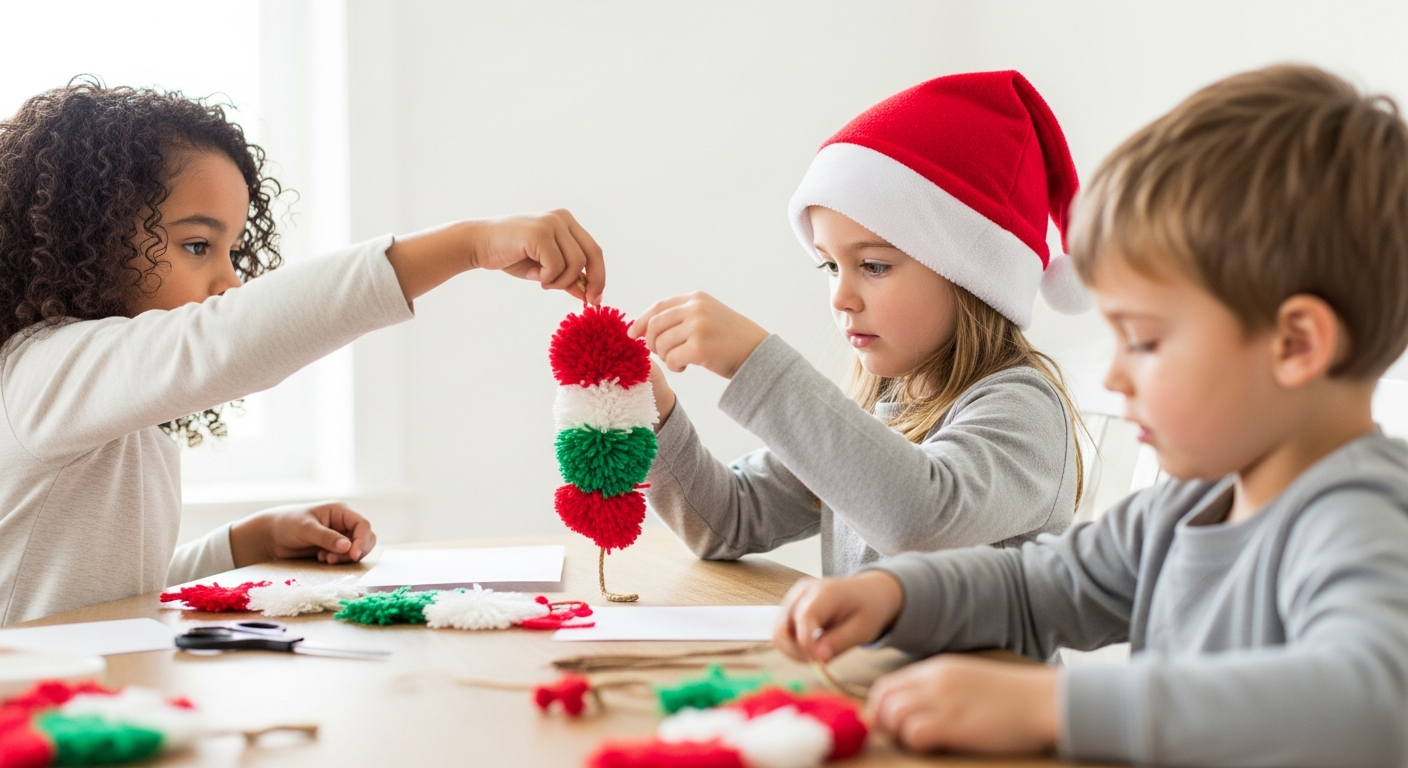
Table of Contents
- Introduction
- Why Christmas Garland Crafts Are More Than Just Decorations
- Getting Started: Safety, Supplies, and Setting the Scene
- A Galaxy of Garland Ideas: Fun for Every Age and Skill Level
- Turning Craft Time into Speech Time: The Speech Blubs Advantage
- Beyond the Garland: More Ways to Help Your Child Communicate This Christmas
- Choosing the Right Plan for Your Family's Speech Journey
- Conclusion
- FAQ
The smell of pine and gingerbread fills the air, Christmas songs start playing, and a special magic fills our homes as the holidays get closer. For many families, this is a time for traditions, and making things together is one of the best. Imagine how happy your child will be as they carefully put a handmade decoration on a string, helping to create a bright Christmas garland for your home. This isn't just about decorating; it's a fun experience where creativity, learning, and family time come together. In this guide, we'll explore fun Christmas garland crafts that are perfect for children of all ages. We'll see how these simple, happy activities can really help your child's development, especially their language and communication skills. We'll also show you how tools like Speech Blubs can make these activities even better, turning playtime into learning time.

Introduction
As the holidays sparkle into view, parents often look for meaningful activities to do with their children, ones that go beyond screens and store-bought toys. While shiny lights and beautiful shop-bought decorations are lovely, there's something extra special about a decoration that's been made with love. This year, instead of just buying a garland, imagine how proud your child will feel seeing their own creations hanging across the fireplace or doorway. Making a Christmas garland with your kids isn't just something to do for an afternoon; it's a wonderful experience that sparks imagination, improves motor skills, and, most importantly, creates lots of opportunities for talking and developing language. This post will give you lots of ideas for Christmas garland crafts that are perfect for different ages. We'll show you how these fun activities can really help your child's speech and language development, especially when you use helpful tools like the Speech Blubs app. By the end, you'll be ready to start a festive crafting adventure that will not only create beautiful decorations but also strengthen your bond with your child and help their communication skills blossom, empowering them to "speak their minds and hearts."
Why Christmas Garland Crafts Are More Than Just Decorations
Doing holiday crafts together has lots of benefits for your child's development, going far beyond just making something pretty. When children make a Christmas garland, they're actively involved in something that helps them grow in many ways.
Exploring with Their Senses
Making things involves lots of fun sensory experiences. Children touch different things—smooth paper, bumpy pinecones, soft cotton balls, sticky glue. They see bright colors, smell things like cinnamon sticks or dried oranges, and hear the snip of scissors or the crinkle of paper. This is really important for how their brains develop and helps them understand the world better. Talking about these sensations while crafting can help them learn new words and ways to describe things.

Developing Fine Motor Skills
The small movements needed for making garlands are great for developing fine motor skills. Cutting shapes, carefully using glue, threading beads or cereal onto a string, tying knots, or even just picking up small things, all help to strengthen the small muscles in their hands and fingers. These skills are important for things like writing, drawing, and taking care of themselves. Being precise with these tasks helps improve their hand-eye coordination and how well they can use their hands.
Cognitive Benefits
Crafting isn't just about doing things with their hands; it's a mental workout too! Following instructions, understanding what comes next ("first we cut, then we glue"), figuring out problems when something doesn’t quite fit, and planning a design all use a child's brainpower. These activities help develop things like attention, memory, and being able to think flexibly. If a child has trouble with instructions that have lots of steps, breaking down the garland-making process into small, easy steps can be a great way to practice, helping them learn to follow instructions better.
Language and Communication Opportunities
One of the best things about making garlands, especially for families who want to help their child's speech development, is that it creates so many opportunities to talk and communicate. Children naturally:
- Learn New Words:Naming colors, shapes, materials (yarn, felt, glitter), actions (cut, glue, string, hang).
- Describe Things:Describing how things feel (soft, rough), how big they are (big, small), and how they look (sparkly, shiny).
- Follow Instructions:"Pick up the red paper," "Put the glue on the star."
- Share Ideas:Children can talk about their creative choices, ask for help, or explain what they're doing.
- Practice Talking:Having conversations with a parent about the craft, sharing stories, and making observations.
This is where Speech Blubs can really help. We know that every time you talk with your child is a chance to learn, and our app is designed to make these experiences even better by providing fun activities that help reinforce language skills. We want to provide a fun, effective, and helpful way for children who need speech support to get the help they need. We combine science and play to create "smart screen time" experiences that are one of a kind. To learn more about how we help children speak their minds and hearts, visit ourhomepage.
Emotional Development
Making things also helps children grow emotionally. They learn to be patient as they wait for glue to dry or carefully thread small items. The pride they feel when they finish their handmade garland is a great boost to their self-esteem and confidence. It teaches them that when they work hard, they can create something beautiful, helping them feel good about themselves and express themselves.
Family Bonding
Most of all, making a Christmas garland together is about creating memories and strengthening your family's bond. It’s something you do together, a tradition in the making, and a chance to really connect with each other away from the distractions of everyday life. These moments of creating together become special holiday memories that show how important it is to be together.
Getting Started: Safety, Supplies, and Setting the Scene
Before you start making your wonderful Christmas garland, a little preparation will help make sure everyone has a safe, smooth, and enjoyable experience.
Child-Friendly Materials
Always make safety your top priority. For younger children, use non-toxic glue sticks, scissors with rounded ends (made especially for kids), and large items that are easy to handle. Avoid small objects that could be a choking hazard for toddlers. If you're using natural items, make sure they are clean, don't cause allergies, and are non-toxic in case they accidentally get put in the mouth.
Workspace Preparation
Making things can get messy – and that's part of the fun! Put down old newspapers, a disposable tablecloth, or a craft mat to protect your surfaces. Have wet wipes or a damp cloth nearby for sticky fingers. Organize your supplies so they're easy to reach, but make sure anything sharp or dangerous is watched by an adult.
Age-Appropriate Choices
Choose crafts that are right for your child’s age and abilities.
- For toddlers and preschoolers:Focus on simple, repeating actions and large pieces. Think about gluing shapes that are already cut out, stringing large beads or pasta, or painting with big strokes.
- For school-aged kids:You can introduce more complicated cutting, gluing in detail, simple sewing, or patterns with lots of details. They can follow more steps and often enjoy doing things on their own more.
- For pre-teens and older:Challenge them with projects that have lots of pieces, complicated designs, or crafts that need careful planning and doing. They might enjoy using different materials or learning a new skill like tying simple knots or weaving.
Encouraging Participation
The goal is to have fun together, not to make everything perfect. Let your child make creative choices whenever possible. "What color would you like to use next?" or "Where do you think this star should go?" These questions not only help them feel involved but also create natural opportunities for talking and making decisions. Don't worry about imperfections; they make the item special and show how much effort your child put in.
A Galaxy of Garland Ideas: Fun for Every Age and Skill Level
Let's explore some fun ideas for Christmas garlands that offer lots of opportunities to help your child's speech and language development.
Simple Garlands for Toddlers and Preschoolers
These crafts are perfect for little hands and minds. They focus on basic skills and early communication.
Construction Paper Chains
This classic garland is a great project to start with. Cut strips of colorful construction paper, help your child loop them into circles, and secure them with glue or tape.
- Speech Benefits:Naming colors ("red loop," "green chain"), counting loops, talking about what comes next ("first, then"), and using words to describe things ("long," "short," "sticky").
- Activity Prompt:"Can you find the blue paper? Let's make a long, colorful chain!"
- Speech Blubs Connection:For a child who is just starting to learn colors and make simple sentences, this activity is perfect. You can then use Speech Blubs’ "Colors" or "Early Words" section, where children learn by watching other children name similar objects and colors. This way of learning is much more fun than just watching passively and helps them remember those early words.Download Speech Blubs on the App StoreorGoogle Playto get started.
Cereal & Pasta Garlands
Stringing large O-shaped cereal or tube pasta (like penne or ditalini) onto yarn or pipe cleaners is great for improving fine motor skills. You can color the pasta beforehand with food coloring and rubbing alcohol to make it extra festive.
- Speech Benefits:Naming the items ("cereal," "pasta"), describing how they feel ("crunchy," "smooth"), talking about patterns ("cereal, pasta, cereal"), and asking for things ("more cereal, please!").
- Activity Prompt:"What comes next in our pattern? Is it a crunchy cereal or a smooth pasta?"
- Relatable Scenario:If you have a 3-year-old who is a 'late talker' and enjoys doing things over and over, stringing cereal is a great way to practice saying "more," "eat," and naming objects. Our app's "Foods" and "Routines" sections can help with this, showing videos of other children using similar objects and doing similar actions, turning screen time into smart speech practice.
Pom-Pom Garlands
Soft, colorful pom-poms are fun to use. Glue them onto a piece of string or yarn, or for older preschoolers, carefully thread them with a needle that isn't too sharp.
- Speech Benefits:Naming colors, describing "soft," "fluffy," counting, and practicing sounds like 'p' for "pom-pom."
- Activity Prompt:"Wow, look at this fluffy blue pom-pom! How many pom-poms should we put on our string?"
- Speech Blubs Connection:This is a great chance to focus on the sounds at the beginning of words. For example, practicing the 'p' sound while saying "pom-pom." Our "Sounds and Words" section has fun activities where children learn to say specific sounds by watching and copying other children. This direct, interactive approach makes learning effective and enjoyable.
Nature Garlands
Go outside and collect pinecones, sturdy leaves (like magnolia or holly), large seeds, or safe, non-toxic berries (with an adult watching). String them together with strong twine.
- Speech Benefits:Naming things from nature, describing how they feel ("prickly," "smooth," "smelly pinecone"), talking about where they found the items, and practicing words related to nature.
- Activity Prompt:"What did we find on our walk? Oh, a bumpy pinecone! And look at these red berries!"
- Building Language:Spending time in nature is a great way to help your child's language development. Describing shapes, colors, and how things feel, as well as the actions of collecting them, helps them learn lots of new words. If you're not sure if your child could use some extra help with their speech, try ourquick 3-minute preliminary screener. It's a simple test that gives you a personalized plan for what to do next.
Creative Garlands for School-Aged Kids
These crafts are more complicated, encouraging creativity and helping them learn more words and ways to put sentences together.
Felt Ornament Garlands
Cut out festive shapes from felt (stars, trees, stockings, gingerbread men). Kids can decorate them with glitter glue, buttons, or smaller felt shapes, then glue or lightly sew them onto a long felt strip or ribbon.
- Speech Benefits:Talking about design choices, telling stories about each ornament, describing details, and using words to compare things ("This star is bigger than that one").
- Activity Prompt:"What kind of story can we tell about this little gingerbread man? What adventures will he have on our garland?"
- Speech Blubs Connection:As children get older, their stories become more detailed. Making a felt ornament garland can inspire stories about each character, which is a great way to encourage them to develop their storytelling skills. Speech Blubs offers fun activities that help with storytelling and expressing themselves, helping children share their imaginative worlds. We combine science and play to offer "smart screen time" experiences that help kids "speak their minds and hearts."
Salt Dough Ornament Garlands
Mix flour, salt, and water to make salt dough. Kids can roll it out, use cookie cutters to make shapes, bake them, and then paint and string them.
- Speech Benefits:Following instructions that have lots of steps ("First we mix, then we roll, then we cut"), describing what they're doing, using action words ("knead," "roll," "paint"), and naming colors and shapes.
- Activity Prompt:"How does the dough feel? Is it sticky or smooth? Which cookie cutter should we use for our next ornament?"
- Relatable Scenario:If a child is working on learning to put things in order or using action words, the step-by-step process of making salt dough is perfect. A parent can explain each step ("Now we are rolling the dough") and ask the child to repeat or describe it. Speech Blubs’ "Routines" and "Action Verbs" sections can help even more with fun, interactive exercises. This method, where children learn by watching and copying other children, is the main idea behind our "video modeling" method and is supported byresearch.
Photo Garlands
Print out favorite family photos, especially holiday ones. Kids can decorate frames around them with glitter or markers, then attach them to a ribbon or string with small clothespins.
- Speech Benefits:Remembering memories, describing people and events in the photos, asking and answering questions about past holidays, and developing storytelling skills.
- Activity Prompt:"Who is in this picture? Where were we? What were we doing in this photo?"
- Family Connection:This special garland encourages talking about family history and shared experiences. It’s a great way to connect what they see with telling stories.
Popcorn & Cranberry Garlands
A traditional garland that you can eat! String popped popcorn and fresh cranberries one after the other onto a long piece of thread using a needle that isn't too sharp.
- Speech Benefits:Practicing patterns, counting, describing how things feel ("fluffy popcorn," "shiny cranberry"), naming colors, and using words related to what comes next.
- Activity Prompt:"How many cranberries before the popcorn? Is the popcorn soft or hard?"
- Fine Motor and Focus:This activity is great for helping children focus and control their small hand movements, while also giving them lots of chances to describe things.
Advanced Garlands for Pre-Teens and Beyond
These crafts have more detailed designs and ideas, perfect for older children who want a creative challenge.
Paper Bag Star Garlands
Use strong brown paper bags to make 3D paper stars. Folding, cutting, and gluing these can be quite tricky, needing careful work and patience.
- Speech Benefits:Following complicated instructions that have lots of steps, explaining how they did it to others, learning problem-solving words, and using geometric terms.
- Activity Prompt:"What steps did you take to make this star so perfect? Can you explain how you folded it?"
- Detailed Instruction:This craft encourages clear, step-by-step explanations, which is important for advanced communication.
Dried Orange Slice Garlands
Slice oranges thinly, dry them in the oven on low heat until they're firm, then string them with cinnamon sticks, bay leaves, and beads. The natural smell is a bonus!
- Speech Benefits:Talking about the process (from fresh to dried), describing how the texture and color change, talking about natural items and their smells, and using specific words for each step.
- Activity Prompt:"How did the orange slices change when we dried them? What does this garland smell like to you?"
- Sensory Vocabulary:This garland gets them talking about all five senses, leading to lots of new words related to what they see and how they describe things. Even for older children, doing crafts can be a wonderful way to encourage communication. Describing how to make a dried orange garland, from slicing to drying, uses specific words and helps them think in order.
Fabric Scraps or Yarn Tassel Garlands
Gather fabric scraps, ribbons, or yarn. Cut them into strips and tie or loop them onto a main string to create a bohemian or rustic garland. Tassels can also be made by wrapping yarn around a piece of cardboard.
- Speech Benefits:Naming different fabrics/yarns, describing how they feel ("silky," "woolly," "bumpy"), talking about color theory, and planning how it will look.
- Activity Prompt:"Which fabric do you think will look best next to this one? Why did you choose these colors?"
- Creative Expression:This craft encourages them to think about design and color in a creative way, helping them talk about their personal choices and why they made them.
Turning Craft Time into Speech Time: The Speech Blubs Advantage
The best thing about making Christmas garlands together, especially for helping your child's development, is how you talk and interact with them during the process. It's about turning every cut, glue, and string into a chance to communicate. And that's where Speech Blubs comes in, helping you make these real-world interactions even better.
Intentional Communication During Crafting
As parents, we are our children's first and most important language teachers. During craft time, remember to:
- Ask Open-Ended Questions:Instead of "Do you like this?" try "What do you like about this?" or "What color should we use next and why?"
- Narrate Actions:Describe what you and your child are doing: "I am cutting the paper," "You are gluing the star," "We are making a long, beautiful garland." This shows them how to put sentences together correctly and teaches them new words.
- Expand on Utterances:If your child says "Star!" you can say "Yes, a shiny star!" or "We are making a red star!"
- Describe Extensively:Use adjectives to describe colors, sizes, shapes, how things feel, and actions. "This is a big, bumpy pinecone."
- Practice Following Directions:Give simple, clear instructions with multiple steps related to the craft: "First, pick up the glue, then put it on the paper."
Video Modeling & Peer Learning: The Speech Blubs Difference
At Speech Blubs, our way of helping with speech development is based on "video modeling." We believe that children learn best from other children. Instead of just watching cartoons, our app shows real children saying sounds, words, and phrases, encouraging your child to copy and interact. This uses the power of mirror neurons, making learning easy and effective.
- How it Works:If you have a 4-year-old who has trouble with certain sounds, decorating a salt dough garland with different animals can be a good way to practice 'moo,' 'baa,' or 'roar.' Then, using the Speech Blubs app, the child can find the 'Animal Kingdom' section and practice these sounds by copying real children, making learning fun and stress-free. This isn't just an idea; it's why we have ahigh MARS scale ratingfor our scientific method.
- More Engaging:Children often copy other children better than they copy adults. This peer-to-peer learning makes Speech Blubs fun, effective, and less scary for children who don't like to talk.
"Smart Screen Time": A Powerful Tool for Family Connection
We know parents worry about screen time, and we do too. That’s why Speech Blubs is designed to be "smart screen time"—an active, interactive, and educational choice instead of just watching passively. Our app needs active participation, encourages talking, and can be used together with a parent, making screen time a tool for family connection and development.
At Speech Blubs, our goal is to help children "speak their minds and hearts." Our company was started by people who had speech problems when they were growing up and wanted to create the tool they wished they had. We want to provide a fun, effective, and helpful way for children who need speech support to get the help they need. We combine science and play to create "smart screen time" experiences that are one of a kind. We offer a choice other than just watching cartoons and a tool for family connection, making sure that every child has the chance to find their voice.
Beyond the Garland: More Ways to Help Your Child Communicate This Christmas
The holiday season is full of chances to help your child's language development in ways other than just making things. Add these activities to your family traditions:
- Singing Carols:Singing is great for rhythm, how they say things, and learning new words.
- Reading Holiday Books:Point to pictures, ask questions, and talk about the story.
- Talking About Family Traditions:Encourage your child to talk about their favorite traditions and what they look forward to.
- Describing Decorations:Walk around the house and describe all the festive decorations you see.
- Making Wish Lists:Talking about what they want and need, explaining their choices, and using words to describe things.
Every moment you share, every conversation, every creative thing you do together during this special time helps your child develop in many ways.
Choosing the Right Plan for Your Family's Speech Journey
We believe that every child deserves to be able to communicate with confidence and happiness. That's why we've made Speech Blubs to be a tool that's easy to use and effective for families. To be clear about what you get and help you choose the best option for your family, here are our pricing plans:
- Monthly Plan:For $14.99 per month, you can use all of our speech-boosting activities, designed to make learning fun and engaging.
- Yearly Plan:Our most popular and best value option is just $59.99 per year. This works out to only $4.99 per month, which means yousave a lot—66%!—compared to the monthly plan!
We want to make speech support affordable and helpful for every family. While the Monthly plan is flexible, our Yearly plan is the best value. For just $59.99 a year, which is only $4.99 a month (saving you 66%), you get everything Speech Blubs has to offer, plus a free 7-day trial, our Reading Blubs app, early access to new updates, and support that responds within 24 hours. The Monthly plan doesn't include these extras. To get the most out of Speech Blubs and start a great speech journey, we recommend choosing the Yearly plan to begin yourfree 7-day trial today.
Hundreds of thousands of families around the world have chosen Speech Blubs to help their children's speech development, and many have shared their amazing stories. See what other parents say about how Speech Blubs has helped their child by visiting ourtestimonials page.
Conclusion
This holiday season, let the joy of making a beautiful Christmas garland with your children be more than just decorating. Use it as a great chance to help them be creative, improve their hand movements, and, most importantly, develop their language and communication skills. From the simplest paper chains for toddlers to detailed dried orange garlands for older kids, each craft is a chance to connect, learn, and make special memories. By talking to them actively—asking questions, describing what they're doing, and adding to their words—you become their best speech therapist.
And when you want to make these learning moments even better, Speech Blubs is here to help. Our app's way of teaching, where children learn by copying other children, provides "smart screen time" that is both fun and effective, making your family’s crafting adventures even better. We want to help children express themselves fully, and our app is designed to provide fun and helpful support for developing voices.
Don't just decorate your home this Christmas; help your child's voice grow. Ready to start this amazing journey? We encourage you to get the full benefits of Speech Blubs by choosing our Yearly plan. It offers the best value and includes a free 7-day trial, the Reading Blubs app, early access to updates, and support that responds quickly. Take the first step towards helping your child communicate this holiday season.Create your account and begin your 7-day free trial todayordownload Speech Blubs on the App StoreorGoogle Playand select the Yearly plan.
FAQ
Q1: What are the main benefits of doing crafts, like making a Christmas garland, for my child's speech development?
A1: Crafting is a great way to help your child's speech and language development! It naturally creates chances to learn new words (naming colors, tools, materials), practice describing things (soft, bumpy, shiny), follow instructions that have lots of steps, ask and answer questions, and have conversations. These hands-on activities provide a fun and real way to use and understand language, making learning fun and easy to remember.
Q2: How does Speech Blubs work together with holiday crafting to help my child's communication?
A2: Speech Blubs makes holiday crafting even better by helping to reinforce the communication skills they learn in a fun, digital way. For example, if you're making an animal-themed garland and practicing animal sounds, our app's "Animal Kingdom" section lets your child watch and copy other children making those same sounds. This helps them say the sounds clearly and learn new words, turning screen time into "smart screen time" that builds on what they're doing in the real world. It's a great addition to your child's overall development plan.
Q3: Is Speech Blubs good for all children, no matter where they are in their speech development?
A3: Yes, Speech Blubs is made for children of all levels, from those just starting to babble to those who need help with more complicated sentences or saying specific sounds clearly. Our activities are organized by different speech areas and stages of development. If you're not sure if your child could use some help, we offer aquick 3-minute preliminary screener. It has 9 simple questions and gives you an assessment and a plan for what to do next.
Q4: How can I try Speech Blubs and what's the best plan for my family?
A4: The best way to try Speech Blubs and get the most for your money is to choose our Yearly plan. For just $59.99 a year (saving you 66% compared to the Monthly plan), you get a 7-day free trial, access to our Reading Blubs app, early updates, and support that responds quickly. The Monthly plan ($14.99/month) doesn't include these extra benefits. To start, justcreate your account and begin your 7-day free trial todayordownload Speech Blubs on the App StoreorGoogle Playand choose the Yearly plan option.
Sobre el autor