
Manualidades Navideñas Sencillas que a los Niños les Encantan
Índice Introducción Por qué las manualidades navideñas sencillas son imprescindibles en estas fiestas La filosofía de Speech Blubs: tiempo de pantalla inteligente se une a la alegría de las manualidades Las 10 mejores manualidades navideñas fáciles para niños (de 2 a 8 años)...
 Por Speech Blubs Team•22 dic 2025•23 min.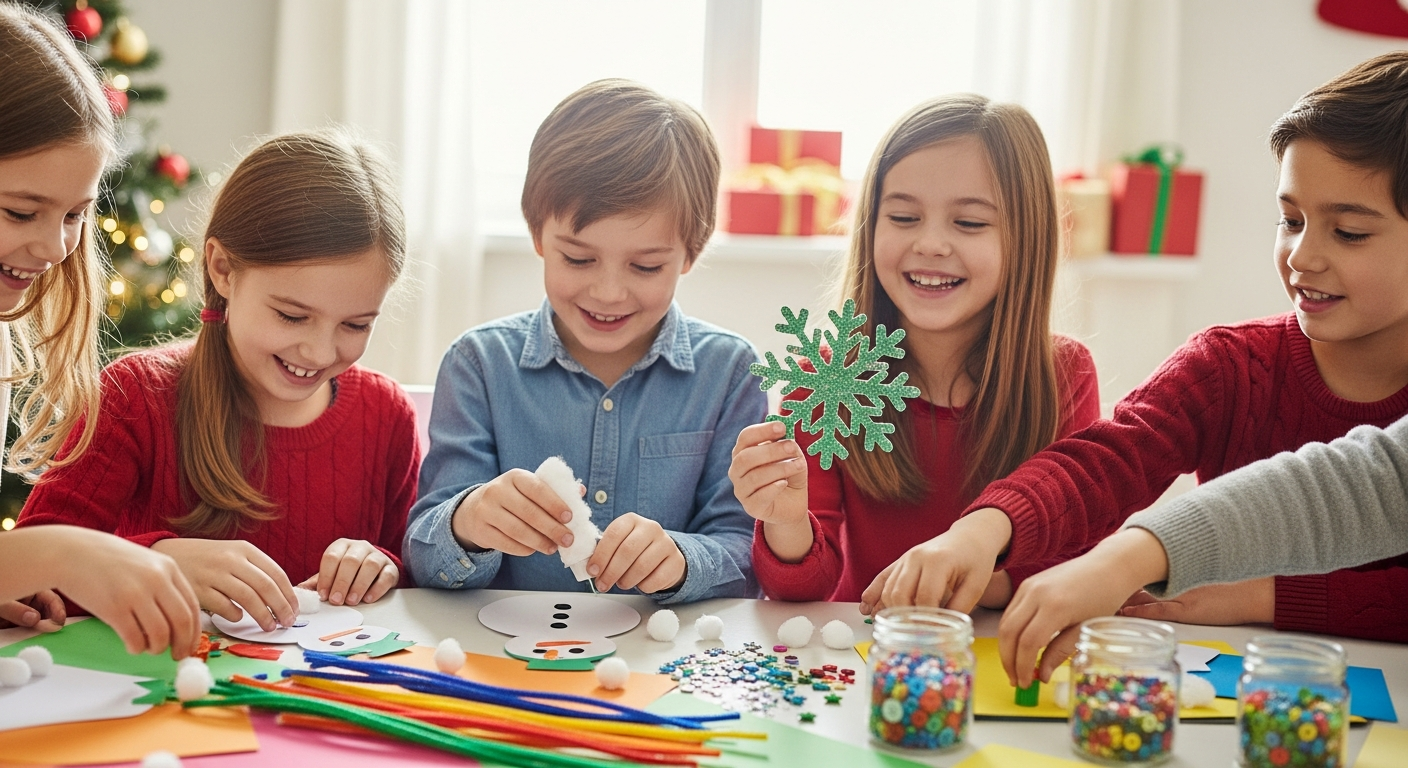
Table of Contents
- Introduction
- Why Easy Christmas Crafts Are a Must-Have This Holiday
- Speech Blubs: Where Smart Screen Time Meets Crafting Fun
- Top 10 Easy Christmas Crafts for Kids (Ages 2-8)
- Get the Most Out of Holiday Crafting: Communication Tips
- Speech Blubs: Your Partner on This Communication Journey
- Get Started with Speech Blubs Today
- Conclusion
- FAQ
Introduction
As the days get shorter and a chill is in the air, the holidays begin to feel magical, especially for kids! All the lights, songs, and colorful gifts create a wonderful feeling. It’s the perfect time to make memories, and what better way than with some fun, easy Christmas crafts? These simple projects are more than just something to do. They fill your home with holiday cheer and help your child learn and grow – from building fine motor skills to encouraging communication. They turn ordinary afternoons into fun learning adventures and create special family time. In this guide, we’ll look at some easy and fun Christmas crafts and how they can help your child grow and learn, all while building wonderful family traditions.
Why Easy Christmas Crafts Are a Must-Have This Holiday
Doing creative things like Christmas crafts has so many benefits beyond just making a pretty decoration. For kids, these hands-on activities are super important for their overall development – helping them with their thinking, physical skills, emotions, and especially, how they communicate.

More Than Just Fun: How Crafts Help Your Child Grow
Crafting is a great activity that helps kids grow in lots of ways:
- Fine Motor Skills and Dexterity:When kids do things like cut paper with scissors, use glue, peel stickers, or even play with dough, they're working on their hand-eye coordination and building strength in the small muscles of their fingers and hands. These are the same muscles they'll use for writing, drawing, and even getting dressed.
- Cognitive Growth:Following instructions for a craft, figuring out what to do when something goes wrong, or finding new ways to use materials all help kids' brains grow. They learn how things work, how things fit together, and what different materials are like. They use their imagination to turn simple things into something special.
- Sensory Exploration:The holidays are full of exciting things to see, smell, and touch, and crafts make this even better. Kids get to explore different textures – like fluffy cotton balls, sticky glue, bumpy pinecones, and smooth paper. They also discover lots of bright colors and maybe even the yummy smells of cinnamon or pine. This sensory input is super important for helping their brains develop and understand the world around them.
- Emotional Development:Finishing a craft, even a simple one, gives kids a great sense of accomplishment and makes them feel proud. This helps them feel good about themselves and encourages them to express themselves. Crafting also teaches them to be patient and keep trying, even when things are hard. It's a healthy way for them to show their feelings by using colors and shapes.
- Communication and Language Skills:This is where crafting really shines! As kids work with different materials, they naturally want to talk about what they're doing. They learn the names of colors, shapes, and objects ("red circle," "sticky glue," "sparkly glitter"). They use words like "cut," "glue," "paint," and "stick." They also ask for things ("More paper, please," "Can I have the blue crayon?"). As parents, you can talk about what they're doing, asking questions like "What are you making next?" or "How does that feel?" This natural back-and-forth conversation helps them build their vocabulary, use better sentences, and describe things in more detail.
- Social-Emotional Learning:When kids craft with siblings or friends, they learn to work together, share, and take turns. This helps them have positive social interactions and enjoy creating something together. Giving and receiving compliments on their work also helps them feel more confident around others.
Creating Memories and Strengthening Bonds
In a world where kids spend so much time looking at screens, crafting gives you a special chance to spend quality time together as a family. It's a time to unplug, slow down, and really connect with your children. These shared moments of creativity become treasured family traditions, creating a warm, happy, and connected family. Every ornament on the tree, every card sent, holds the memory of your child’s little hands working alongside yours, sparking conversations and smiles for years to come.

At Speech Blubs, we know how important it is for kids to be actively involved and have meaningful interactions. Our goal is to help children "speak their minds and hearts," and we believe that every chance for connection, whether through our app or through hands-on play like crafting, helps them reach this goal. Just like our "smart screen time" activities encourage kids to copy and interact, instead of just watching, crafting is a great way to have fun without screens, sparking conversation and building confidence. We provide a great tool for connecting with your family, adding to the joy of doing things together.
Speech Blubs: Where Smart Screen Time Meets Crafting Fun
At Speech Blubs, our goal is simple: we want to help children "speak their minds and hearts." This is really important to us because our founders grew up with their own speech challenges. They created Speech Blubs because it was the helpful, fun solution they wished they had when they were younger. We know what it’s like for kids and families who need help with speech, and we’re here to provide a helpful, easy-to-use tool for the 1 in 4 children who need it.
Our special approach combines science with the joy of play to create "smart screen time" experiences. We believe that technology can be a great tool for helping kids grow when used the right way. That's why we focus on being actively involved, offering a break from just watching cartoons. Instead of just watching, kids using Speech Blubs are encouraged to participate, interact, and learn through something called "video modeling." With video modeling, kids learn by watching and copying other kids – real kids just like them – who are showing them sounds, words, and phrases. This helps kids feel connected and makes learning fun and effective.
Think of it like this: just like you talk to your child and show them how to do things during a Christmas craft, our app offers a similar interactive experience. For a parent whose 3-year-old isn't talking much or is shy about speaking, working on a simple craft together creates a relaxed environment to practice sounds or simple words, like "glue," "cut," or "star." Similarly, Speech Blubs provides a fun, encouraging space where copying is fun, not forced. Our activities, like the ones in the "Animal Kingdom" or "Yummy Time" sections, offer a playful way to practice speech sounds and build vocabulary, just like the natural learning that happens when you do fun things together like crafting.
Our goal isn't to replace the fun of hands-on activities but to add to them, offering another way to grow and discover. We want to be a great tool for connecting with your family, helping you create fun learning moments together, whether you're making a handmade ornament or learning new words through our app. Our method is based on science, which puts us at the top of speech apps worldwide, making sure that every moment your child spends with Speech Blubs helps them on their communication journey. You can learn more about the science behind what we do on ourresearch page.
Top 10 Easy Christmas Crafts for Kids (Ages 2-8)
Get ready to grab some simple supplies and make some holiday magic! These crafts are designed to be easy, fun, and perfect for starting conversations and developing important skills.
1. Paper Plate Santa
Turn an ordinary paper plate into a jolly Santa Claus – a classic Christmas symbol!
- Materials Needed:Paper plate, red construction paper, cotton balls, glue, pink/peach paper for face (optional), markers (red, black).
- Step-by-step Instructions:
- Cut the paper plate in half. One half will be Santa's face.
- From the red construction paper, cut out a large triangle for Santa's hat and a smaller oval for his nose.
- Glue the red hat to the top, curved edge of the paper plate half.
- Glue cotton balls along the bottom edge of the hat for the brim and at the tip for a pom-pom.
- Glue more cotton balls to the bottom, straight edge of the plate for Santa's fluffy beard.
- Use markers to draw eyes and a smiling mouth. Glue the red oval nose in place.
- Speech Blubs Connection:As you glue the beard, talk about how "fluffy" it is. Practice "Ho Ho Ho" sounds and describe Santa's "red hat" and "big white beard." Our "Talking Head" activities in Speech Blubs encourage similar imitation and description of facial features.
- Developmental Benefits:Helps with fine motor skills (gluing, placing small objects), encourages descriptive language (colors, textures), promotes facial recognition, and fosters imaginative play.
2. Pinecone Christmas Trees
Bring a little bit of nature inside with these cute mini Christmas trees.
- Materials Needed:Pinecones (from outside or the store), green paint, small paintbrushes, glitter, mini pom-poms or beads, glue.
- Step-by-step Instructions:
- Make sure pinecones are clean and dry.
- Paint the pinecones green. Let them dry completely.
- Once dry, put glue on some of the pinecone "branches" and sprinkle with glitter.
- Glue small pom-poms or beads onto the pinecone to be ornaments. A larger pom-pom can be glued to the top as a tree topper.
- Speech Blubs Connection:Talk about the "rough" texture of the pinecone and the "sparkly" glitter. Practice counting the pom-pom "ornaments" or naming the colors you use. The "Numbers & Shapes" section of Speech Blubs can help you practice counting in a fun way.
- Developmental Benefits:Encourages exploring nature, strengthens fine motor control (painting small objects, precise placement), stimulates the senses (textures), and builds color recognition skills.
3. Handprint Reindeer
A truly personal craft that makes a wonderful keepsake!
- Materials Needed:Brown construction paper, red pom-pom, googly eyes, glue, child-safe scissors (for older kids), pencil.
- Step-by-step Instructions:
- Trace your child's hand (fingers spread apart) onto brown construction paper.
- Carefully cut out the handprint (adult help for younger children). This will be the reindeer's head and antlers.
- Glue a red pom-pom onto the thumb area (Rudolph's nose).
- Glue two googly eyes above the nose.
- You can draw a mouth or other details with a marker.
- Speech Blubs Connection:Talk about "my hand," "my fingers," "big red nose." Practice animal sounds for "reindeer" or describe what it looks like. Our "About Me" category in Speech Blubs helps children learn body parts and understand themselves better.
- Developmental Benefits:Helps with fine motor skills (tracing, cutting, gluing), promotes body awareness, encourages imaginative play, and creates a precious memory.
4. DIY Ornaments from Salt Dough
A classic craft that lets you be creative and add a personal touch.
- Materials Needed:1 cup flour, 1/2 cup salt, 1/2 cup water, Christmas cookie cutters, baking sheet, paint, glitter, ribbon or string.
- Step-by-step Instructions:
- Mix flour, salt, and water in a bowl until a dough forms. Knead on a lightly floured surface for a few minutes until smooth.
- Roll out the dough to about 1/4 inch thickness.
- Use Christmas cookie cutters to cut out shapes (stars, trees, gingerbread men).
- Use a straw or pencil to poke a hole at the top of each ornament for hanging.
- Bake at 250°F (120°C) for 2-3 hours, or until completely hard. Let cool.
- Once cool, decorate with paint and glitter.
- Thread ribbon or string through the hole for hanging.
- Speech Blubs Connection:Describe the "soft dough," the "round cookie cutter," and the "shiny paint." Use words like "mix," "roll," "cut," and "paint." Practice naming the shapes you create.
- Developmental Benefits:Improves fine motor skills (kneading, rolling, cutting), introduces basic kitchen ideas and measurement, fosters creativity through decorating, and teaches patience.
5. Cotton Ball Snowman
A simple craft that's great for kids to touch and feel.
- Materials Needed:Blue or black construction paper, cotton balls, glue, orange and black paper scraps (or markers) for features.
- Step-by-step Instructions:
- Have your child glue cotton balls onto the construction paper to make two or three large circles, creating the snowman's body.
- Cut small shapes from orange and black paper for the carrot nose, stick arms, and coal eyes/mouth.
- Glue these features onto the snowman. Or, draw them with markers.
- Speech Blubs Connection:Talk about "cold" and "white" as you glue the cotton balls. Create a simple story about the snowman, like "The snowman is happy!" or "He has a carrot nose."
- Developmental Benefits:Helps with fine motor skills (gluing, placing objects), lets them touch and feel different things (soft cotton), encourages simple shape creation, and promotes storytelling.
6. Candy Cane Reindeer
A sweet and easy craft that can be a fun treat or small gift!
- Materials Needed:Candy canes, googly eyes, brown pipe cleaners, small red pom-poms, hot glue gun (adult use only) or strong craft glue.
- Step-by-step Instructions:
- Take two candy canes and cross them, securing them together with a dot of hot glue at the intersection. This forms the reindeer's body and legs.
- Twist a brown pipe cleaner around the top curved part of one candy cane to create antlers. Shape them as desired.
- Glue two googly eyes onto the top curved part, just below the antlers, to make the reindeer's face.
- Glue a small red pom-pom below the eyes for Rudolph's nose.
- Speech Blubs Connection:Focus on descriptive words: "curly antlers," "sweet candy," "red nose." Practice animal sounds or phrases like "reindeer fly!"
- Developmental Benefits:Improves fine motor skills (twisting, attaching small objects), encourages symmetry, and provides practice in following multi-step instructions.
7. Toilet Paper Roll Christmas Characters
Recycle and create with these fun, stand-up holiday figures!
- Materials Needed:Empty toilet paper rolls, paint (various colors), construction paper scraps, googly eyes, glue, markers, yarn scraps.
- Step-by-step Instructions:
- Paint the toilet paper rolls in the colors you want (e.g., green for an elf, red for Santa, white for a snowman). Let dry.
- From construction paper, cut out things like hats, scarves, buttons, arms, and hair.
- Glue googly eyes onto the roll for the character's face. Draw mouths, noses, and other details with markers.
- Attach the paper accessories and yarn hair with glue.
- Speech Blubs Connection:Name the characters you're making ("This is Santa," "This is a snowman"). Describe their clothes ("Santa has a red hat," "The elf has a green jacket"). Play pretend with the finished characters, making them "talk" to each other. Our app’s categories, from "Whimsical Creatures" to "People," can give you ideas for describing characters and playing with voices.
- Developmental Benefits:Promotes recycling, helps with painting and cutting skills, encourages creative thinking, and fosters imaginative play and storytelling.
8. Yarn Wrapped Stars or Trees
A colorful craft that helps develop fine motor control.
- Materials Needed:Cardboard (from old cereal boxes), pencil, child-safe scissors, yarn in various colors, glue.
- Step-by-step Instructions:
- Draw star or Christmas tree shapes onto the cardboard.
- Cut out the cardboard shapes (adult help for complex shapes).
- Put a small amount of glue onto one end of a yarn strand and stick it to the back of the cardboard shape.
- Begin wrapping the yarn tightly around the cardboard shape, covering it completely.
- When you want to change colors or finish, secure the end with another small dot of glue on the back.
- Speech Blubs Connection:Talk about "long yarn" and "short yarn," "wrap around," and "tight." Practice naming the colors of the yarn as you use them.
- Developmental Benefits:Strengthens fine motor skills (wrapping yarn), improves hand-eye coordination, encourages color recognition, and builds patience and concentration.
9. Crayon Shaving Ornaments
A beautiful and simple craft that creates colorful, see-through decorations.
- Materials Needed:Wax paper, old crayons (peeled), pencil sharpener or grater, iron (adult supervised), hole punch, string or ribbon.
- Step-by-step Instructions:
- Cover your work surface. Place one sheet of wax paper flat.
- Use a pencil sharpener or grater to create crayon shavings from various colors onto the wax paper. Try mixing colors!
- Place a second sheet of wax paper on top, carefully covering the shavings.
- (Adult step) Place a thin towel over the wax paper and gently iron on a low setting. The crayon shavings will melt and stick together.
- Let cool completely. Once cool, cut out the shapes you want (stars, circles, trees).
- Use a hole punch to make a hole at the top of each ornament and thread with string for hanging.
- Speech Blubs Connection:Name the colors of the crayons and talk about how they "melt" and "mix." Describe the "colorful" new ornaments.
- Developmental Benefits:Teaches about color mixing and heat, improves fine motor skills (shaving, cutting), and encourages observation.
10. Popsicle Stick Stars or Snowflakes
Simple shapes and festive decorating come together in this versatile craft.
- Materials Needed:Popsicle sticks (natural or colored), glue, glitter, paint, sequins, small beads, string or ribbon.
- Step-by-step Instructions:
- Arrange popsicle sticks into star or snowflake shapes (e.g., three sticks crossed in the middle for a star, or multiple sticks coming from a central point for a snowflake).
- Glue the sticks together at their intersection points. Let dry thoroughly.
- Once the structure is solid, decorate it with paint, glitter, sequins, or beads.
- Glue a loop of string or ribbon to the back for hanging.
- Speech Blubs Connection:Count the popsicle sticks ("One, two, three sticks!"). Name the shapes you're creating ("star," "snowflake"). Use words to describe where things are: "on top," "next to," "in the middle."
- Developmental Benefits:Introduces basic geometric shapes, helps with spatial reasoning, strengthens fine motor skills (gluing, decorating), and encourages counting.
Get the Most Out of Holiday Crafting: Communication Tips
Crafting is more than just the finished product; it's a great way to help your child develop their language skills. Here's how to turn every craft session into a communication booster:
- Talk it Up:Talk about what you're doing as you craft: "First, we open the glue," "Now I'm putting the glitter on," "You're cutting the red paper." Describe the materials: "This yarn is soft," "The paint is sticky." Use action words and descriptive words.
- Model Language:Use clear, simple sentences that your child can understand and copy. If your child points to the glue, say "You want theglue." If they make a sound, say more: "Oh, you wantmorepaint!"
- Follow Their Lead:Let your child choose colors, materials, and even what they want to make, if possible. This helps them be independent and more likely to communicate what they want. "What color star should we make next?"
- Celebrate Efforts, Not Just Outcomes:Focus on the process and the joy of creating together. Praise them for trying and working hard, even if the final craft isn't "perfect." "Wow, you worked so hard on that snowman!" This helps them feel confident and takes away the pressure to be perfect, which encourages them to communicate more.
- Incorporate Specific Speech Goals:
- Articulation:If your child is working on specific sounds, use those sounds in the craft. For an 's' sound, talk about "sparkly stars" or "sticky glue." For 't', focus on "tree" or "tape."
- Vocabulary:Introduce new words about the craft or the holidays: "festive," "jingle," "sparkle," "decorate," "adorn."
- Sentence Structure:Encourage longer sentences by asking questions that need more than one word to answer. Instead of "Red or blue?", ask "What color do you want?" to get responses like "I want red paint."
- Sequencing:Practice putting steps in order: "First we cut, then we glue, then we decorate." Use words like "first," "next," "then," and "last."
Speech Blubs: Your Partner on This Communication Journey
While hands-on activities like crafting are great, we know that dedicated support for speech development can make a big difference. Speech Blubs is designed to help, working alongside you to help your child communicate better. We're committed to providing a helpful, fun solution for children, helping them speak their minds and hearts.
Our method is based on science, which puts us at the top of speech apps worldwide. We use video modeling, which means kids learn by copying others. Children watch real children, their peers, show sounds and words, creating a fun and effective way to learn. This special method has been carefully studied, and you can learn more about the science behind it on ourresearch page.
Don't just take our word for it; see what other parents are saying about how Speech Blubs has helped their child. Ourtestimonials pagehas stories of children who have found their voice and confidence with our app. If your child is struggling with speech, these stories can give you hope and show you practical solutions.
Not sure if your child could use a speech support tool like Speech Blubs? We've made it easy to find out. Take our quick 3-minutepreliminary screenerto get a simple assessment and a personalized plan. It has just 9 simple questions and gives you helpful information, guiding you to understand your child's needs and unlock a free 7-day trial.
We believe in making speech support easy to get and fun to use, turning screen time from just watching into a powerful, interactive learning experience. Our special way of teaching communication skills through "video modeling," where kids learn by watching and copying other kids, is designed to be fun, effective, and helpful, building confidence and making things easier for both children and parents.
Get Started with Speech Blubs Today
We believe that every child should have the chance to communicate confidently and happily. That's why we've made Speech Blubs to be a helpful, fun, and powerful tool for families. Helping your child on their communication journey is one of the best things you can do, and we want to make it as easy as possible.
We have two easy plans to fit your family's needs:
- Monthly Plan:For $14.99 per month, you get access to all of Speech Blubs' main features.
- Yearly Plan:Our best deal, priced at just $59.99 per year. That's only$4.99 per month, which is a huge 66% savings compared to the monthly plan!
The Yearly plan isn't just about saving money; it also gives you a full set of special features to help your child grow:
- A 7-day free trial:Try Speech Blubs before you pay. The Monthly plan doesn't have this.
- The extra Reading Blubs app:A bonus app to help your child learn to read, which helps them speak and read better.
- Early access to new updates:Be the first to get new features, activities, and content when they come out.
- 24-hour support response time:Get help quickly when you need it, so you can keep learning without problems.
The Yearly plan is the best choice, with great value and special benefits that really help your child grow. Don't miss out on these amazing advantages!
Ready to help your child speak confidently and have fun communicating? Choose the Yearly plan to get your free trial and all the features today!
- Download Speech Blubs on the App Store
- Get Speech Blubs on Google Play
- Or, create your account and start your 7-day free trial on our website today!
Conclusion
The holiday season is a magical time for children, full of wonder and chances for joy. Easy Christmas crafts are a great way to use this festive spirit, turning simple materials into special decorations and memories. More than just fun, these activities are great for helping kids grow, improving their fine motor skills, thinking skills, and especially, their communication and language development. By doing these fun projects, you're not just decorating your home; you're building confidence, encouraging creativity, and making your family stronger.
At Speech Blubs, we want to help every child express their unique thoughts and feelings. Our app, based on science and the personal experiences of our founders, offers a "smart screen time" solution that encourages active copying and interaction. Together, through fun crafts and helpful tools like Speech Blubs, we can create a supportive environment where every child feels able to communicate.
Help your child communicate better this holiday season and beyond. Start your 7-day free trial with Speech Blubs today by choosing our Yearly plan to get all the features and see how much our app can help!
- Download Speech Blubs from the Apple App Store
- Find Speech Blubs on Google Play
- Visit the Speech Blubs homepage for more information and to start your free trial!
FAQ
Q1: What are the best ages for these easy Christmas crafts?A1: Most of these crafts are good for children aged 2-8 years old, but they might need different amounts of help from adults. Younger children (2-4) will enjoy touching and feeling things and simple gluing, while older children (5-8) can do more on their own, like cutting, decorating in detail, and following instructions. Always make sure the craft is easy enough for your child's age and help them when needed.
Q2: How can I make crafting even better for my child's speech development?A2: To help your child's speech, talk a lot during crafting. Say what you're doing, describe materials using descriptive words (e.g., "sticky glue," "sparkly glitter"), ask questions that need more than one word to answer ("What color should we use next?"), and use clear, simple sentences. Encourage your child to make choices and ask for things, and always praise them for trying, focusing on the process, not just making it perfect. You can also connect specific craft words to sounds your child is working on.
Q3: Is Speech Blubs a replacement for professional speech therapy?A3: Speech Blubs is a helpful and effective tool to support a child's speech and language development. It's great for practicing, learning new words, working on sounds, and encouraging communication through fun activities. However, it's not meant to replace professional speech therapy, especially for children with big speech delays or disorders. We always recommend talking to a certified speech-language pathologist for a diagnosis and a full treatment plan. Our app works well together with professional help.
Q4: Which Speech Blubs plan is the best value?A4: The Yearly plan for Speech Blubs is a much better deal. At just $59.99 per year ($4.99/month), you save 66% compared to the monthly plan. The Yearly plan also includes a 7-day free trial, access to the Reading Blubs app, early access to new updates, and faster support – which the Monthly plan doesn't have. We highly recommend choosing the Yearly plan to get all the features and the best value for your child's communication growth.
Sobre el autor