
Artesanías Navideñas Rápidas y Fáciles para Niños Felices
Tabla de Contenidos Por qué las Manualidades son Más que Solo Diversión Manualidades Navideñas Rápidas y Fáciles por Categoría Maximizando las Oportunidades de Lenguaje Durante el Tiempo de Manualidades Por qué Speech Blubs es Tu Compañero Perfecto para las Manualidades...
 Por Speech Blubs Team•22 dic 2025•21 min.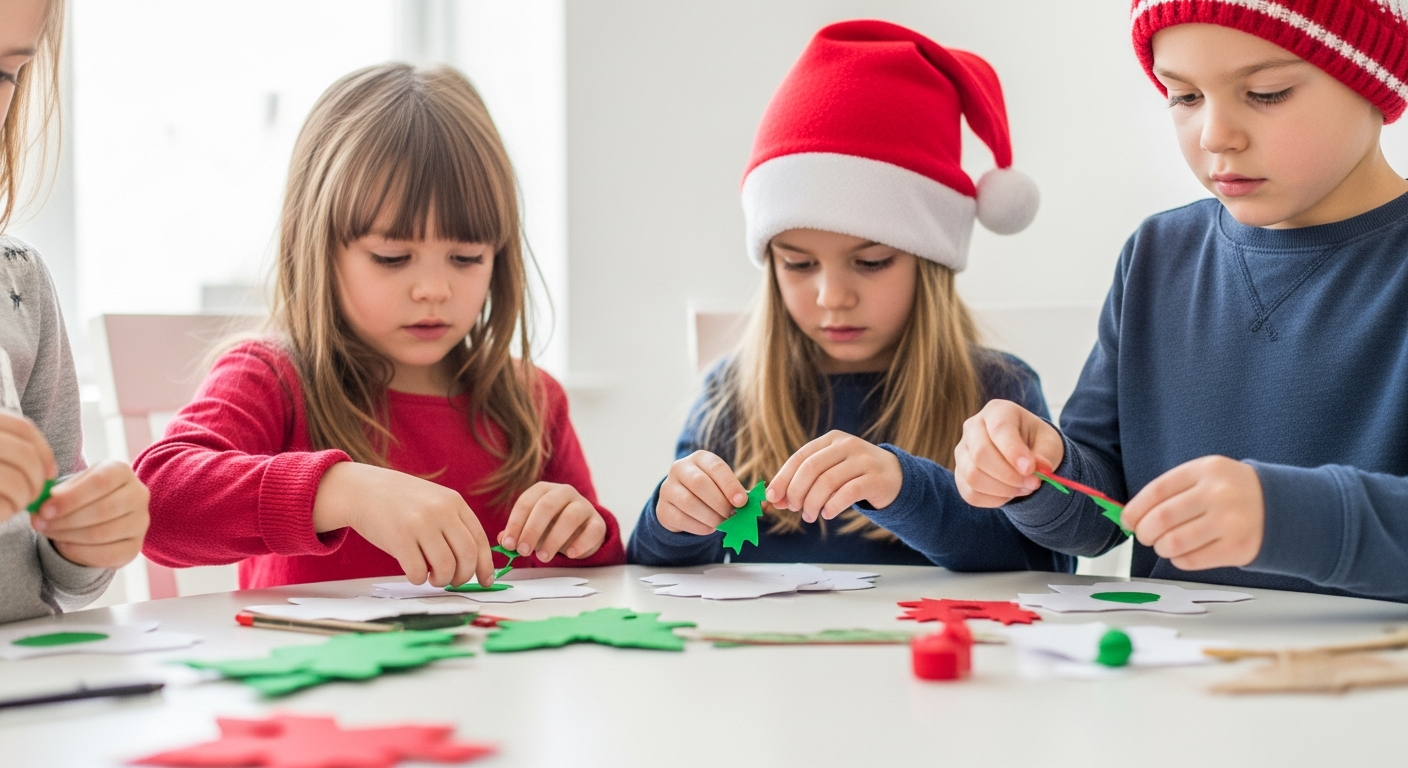
Table of Contents
- Crafting: More Than Just Fun!
- Quick & Easy Christmas Crafts by Category
- Making the Most of Crafting for Language
- Why Speech Blubs Loves Crafting
- Get Started with Speech Blubs Today
- Conclusion
- FAQ
The holidays can be a joyful whirlwind – endless lists, festive fun, and waiting for Christmas morning! It can be hard to find activities that connect the family and feel like Christmas, without adding stress. We all want those special moments of creating together, but the thought of complicated projects and messy cleanups can be scary. But what if creating memories and helping your child learn didn't require being an artist or hours of prep?
This blog post is your guide to super simple Christmas crafts for kids. We'll show you festive projects that are easy to do, fun to make, and easy to clean up, so everyone has more fun! Beyond the fun, we'll talk about how these activities help with important skills, from using their hands to problem-solving. Most importantly, we'll show you how these moments can help your child's language grow and connect, turning crafting into a learning experience. With a little creativity, you can turn holiday crafting into a tradition that helps your child's imagination, builds their confidence, and empowers them to speak up – making this Christmas extra special.

Crafting: More Than Just Fun!
Crafting with kids during the holidays is a wonderful tradition. But it does more than just make decorations or gifts. These simple activities are great for helping your child grow in all sorts of ways – physically, mentally, emotionally, and with their language.
Think about how focused a child looks as they carefully cut paper, how precise they need to be to add glue, or how they decide on the perfect glitter color. Each of these things helps build important skills for using their hands – skills they'll need for writing, getting dressed, and even eating. Crafting also helps them be creative and use their imagination, letting them show their ideas and bring them to life. And it feels amazing when they hold up what they made, which helps them feel proud and confident!
The Power of Play for Language Development
One of the biggest benefits of crafting, that we don't always think about, is how much it helps with language. When kids are using their hands, they're surrounded by words. Crafting gives them so many chances to:
- Learn New Words:Name materials (glue, glitter, paper, ribbon), describe colors, shapes, and how things feel (sticky, smooth, sparkly, soft, bumpy), and talk about what they're doing (cut, paste, draw, fold, paint).
- Follow Directions:Listen to and understand instructions that have multiple steps, which is important for school and everyday life.
- Describe Things:Encourage kids to talk about what they made, explain why they chose certain things, and describe what they're doing. This helps them share their thoughts and feelings.
- Ask and Answer Questions:Get them asking questions like "What's next?" or "Can I have the red one?" and practice answering questions like "What did you make?"
- Communicate with Others:Talk with family members, share ideas, and even take turns using materials.
These moments are about more than just making something; they're about creating a world of language where talking is natural, exciting, and has a purpose. When kids are having fun and feeling relaxed, they're more likely to explore sounds, words, and sentences.

How Speech Blubs Makes Learning Even Better
At Speech Blubs, we know how important play and talking are for learning communication skills. We want to help kids "speak their minds and hearts," and we think every moment, including crafting, is a chance to grow. While these crafts are great for "screen-free" fun, we know that sometimes kids need a little extra help and engaging activities that are backed by science. That's where Speech Blubs comes in!
We were started by people who had speech problems when they were kids. They wanted to create the tool they wish they'd had: a quick, helpful, and fun way to help the 1 in 4 children who need speech support. Our app combines science and play to create "smart screen time" that goes well with hands-on activities.
For example, if your child is working on certain sounds or words while making a "Pinecone Reindeer" (maybe practicing "nose" or "brown"), our app has sections for practicing those sounds and word categories. We use "video modeling," where kids learn by watching and copying other kids. This is a fun and effective way to practice sounds and words related to their crafting. This works because of "mirror neurons" – the same thing that happens in the brain when kids watch and copy things in real life. This makes our "smart screen time" active and engaging, not just something to watch.
Not sure if your child could use a little extra help with their speech? Take ourquick 3-minute check-upto get a simple idea of how they're doing and a free 7-day trial. It's a great way to see if they need any help with communication and how our app can help.
Quick & Easy Christmas Crafts by Category
Let's look at some easy Christmas craft ideas that are great for kids of all ages. Remember, the goal is to have fun, be creative, and communicate, not to be perfect!
1. Dazzling Ornaments
Handmade ornaments aren't just decorations; they're special keepsakes that bring back memories every year.
a. Salt Dough Ornaments (Ages 3+)
- Materials:1 cup flour, 1/2 cup salt, 1/2 cup water (about), cookie cutters, straw, paints, glitter, ribbon.
- Process:Mix flour, salt, and water to make dough. Roll it out and use Christmas cookie cutters (stars, trees, bells) to cut out shapes. Use a straw to make a hole for hanging. Bake at 250°F (120°C) for 2-3 hours until hard, or let it air dry for 24-48 hours. Once it's cool, kids can paint and decorate them.
- Communication Opportunities:
- Vocabulary:"Dough," "roll," "cut," "smooth," "star," "tree," "bake," "paint," "glitter," "ribbon."
- Following Directions:"Roll the dough flat," "Use the star cutter," "Paint it red."
- Describe Things:"My ornament is sparkly!" "This tree is green."
- Scenario:For a child working on action words, say "roll the dough!" or "cut the star!" Emphasize those words. If they love learning about colors, our app has a "Colors" section where they can practice naming and finding colors, which goes well with what they're doing with their ornaments.
b. Pinecone Reindeer Ornaments (Ages 4+)
- Materials:Pinecones, googly eyes, small red pom-poms (for noses), brown pipe cleaners (for antlers), glue, string or ribbon.
- Process:Glue googly eyes onto the wide end of the pinecone. Attach a red pom-pom below the eyes for a nose. Twist pipe cleaners into antler shapes and glue them to the top of the pinecone. Add a loop of string for hanging.
- Communication Opportunities:
- Body Parts:"Eyes," "nose," "antlers."
- Animal Sounds/Names:"Reindeer," "What sound does a reindeer make?" (Make one up!).
- Where Things Are:"On top," "below," "next to."
- Scenario:If your child loves animals, this craft is perfect! After making the reindeer, you can use ourSpeech Blubs appin the "Animal Kingdom" section to practice animal sounds and names, connecting what they made with new words.
c. Handprint Santa/Snowman Ornaments (Ages 2+)
- Materials:Air-dry clay or salt dough, paints, brushes, glitter.
- Process:Roll out clay/dough. Press the child's hand firmly into it. Cut around the handprint shape. Make a hole for hanging. Let dry. Once dry, paint the thumb as Santa's head and fingers as his beard, or paint it all white for a snowman.
- Communication Opportunities:
- Body Parts:"Hand," "fingers," "thumb."
- Color Names:"Red," "white," "pink."
- Describe Things:"My hand," "big," "small," "cold" (for snowman).
- Scenario:For a toddler just starting to name body parts, this craft helps reinforce "hand" and "fingers." Then, while painting, practice colors. "What color is Santa's hat? Red!" Repeating this helps them remember new words.
2. Festive Decorations for the Home
These crafts add a personal touch to your holiday decorations and are easy for little hands to do.
a. Paper Chain Countdown (Ages 3+)
- Materials:Construction paper (red, green, white), glue stick or tape, scissors.
- Process:Cut paper into strips. Form the first strip into a loop and secure it. Thread the next strip through the first loop, secure it, and repeat until you have a long chain. Make one loop for each day until Christmas!
- Communication Opportunities:
- Counting:Counting the strips, counting down the days.
- Colors:"Red strip," "green loop."
- Actions:"Cut," "glue," "loop," "hold."
- Scenario:This is great for early math skills and putting things in order. As you count down the days, you can ask, "How many sleeps until Christmas?" or "Which color comes next?" For children learning to form sentences, encourage "I cut the paper" or "I made a loop."
b. Cotton Ball Snowman (Ages 2+)
- Materials:Blue or black construction paper, cotton balls, glue, googly eyes, orange construction paper (for nose), markers.
- Process:Draw three circles on the paper (big, medium, small). Have the child glue cotton balls inside the circles to fill them. Add googly eyes, an orange triangle nose, and draw a mouth and stick arms.
- Communication Opportunities:
- Sizes:"Big," "medium," "small."
- How Things Feel:"Soft," "fluffy."
- Body Parts:"Eyes," "nose," "mouth," "arms."
- Scenario:This craft helps reinforce size concepts. "Which circle isbig? Which one issmall?" For children learning to name emotions, you can draw different mouths (happy, sad, surprised) and ask them to name the feeling, connecting what they see with the words for emotions.
c. Cardboard Roll Santa/Elf (Ages 3+)
- Materials:Empty toilet paper rolls, construction paper (red, green, white), cotton balls, glue, markers.
- Process:Wrap a toilet paper roll in red paper for Santa or green for an elf. Add a white strip for Santa's beard, cotton balls for his hat trim and beard, and a tiny pom-pom for his nose. For an elf, add pointy ears and a hat. Draw faces.
- Communication Opportunities:
- Character Names:"Santa," "Elf."
- Clothing Items:"Hat," "beard," "ears."
- Colors:"Red," "green," "white."
- Scenario:Playing with these figures after they're made is a great way to encourage imagination and talking. You can ask, "What does Santa say?" or "What gift does the elf have?" This leads to storytelling and building narrative skills.
3. Thoughtful Gifts & Cards
Nothing is better than a handmade gift from a child. These are easy ways for kids to share their love.
a. Personalized Christmas Cards (Ages 2+)
- Materials:Cardstock, markers, crayons, stickers, glitter glue, child's photo (optional).
- Process:Fold cardstock in half. Let children decorate the front with drawings, stickers, or their own photos. Write a simple message inside, or have them tell you what they want to say.
- Communication Opportunities:
- Sharing & Giving:Talking about who the card is for and why.
- Emotions:"Happy," "loving," "sending wishes."
- Writing/Drawing:Describing their artwork, practicing pre-writing skills.
- Scenario:This is a great chance for children to think about others. "Who are we sending this card to? What do you want to tell Grandma?" If your child is just learning to talk but loves to draw, this gives them something to talk about: "My drawing! My tree! My Santa!" These small words are important steps towards longer sentences. If you think your child is learning to talk later than expected, you can learn more about how we help on ourSpeech Blubs homepage.
b. Decorated Treat Bags (Ages 3+)
- Materials:Brown paper bags, markers, stamps, stickers, candy/small treats.
- Process:Children decorate paper bags with festive drawings, stamps, or stickers. Once dry, fill with homemade cookies or small candies.
- Communication Opportunities:
- Describe Things:"Sweet," "yummy," "colorful," "pretty."
- Actions:"Decorate," "fill," "give."
- Social Language:"Thank you," "Merry Christmas."
- Scenario:This craft encourages being generous and talking with others. Talk about the treats, their flavors, and who will get them.
4. Sensory & Play Crafts
Using multiple senses can be really good for learning and makes things extra fun.
a. Jingle Bell Shakers (Ages 1+)
- Materials:Empty plastic bottles (water bottles work well), small jingle bells, rice or dried beans, glue (to seal lid).
- Process:Help children put jingle bells and some rice/beans into the bottle. Securely glue the lid shut. Shake, shake, shake!
- Communication Opportunities:
- Sounds:"Shake," "jingle," "loud," "quiet."
- Actions:"Shake," "listen," "make music."
- Cause and Effect:"If I shake it, it makes noise!"
- Scenario:Great for very young children or those working on copying sounds. Copy the "shake, shake" sound. Encourage them to say "bell" or "shake." Our app has sections for copying sounds and actions, which would go well with this activity.
b. Christmas Slime (Ages 4+)
- Materials:Clear glue, liquid starch or contact solution + baking soda, food coloring (red/green), glitter, small festive beads or sequins.
- Process:Follow a simple slime recipe. Add food coloring and glitter to the glue before mixing with the activator. Knead until it forms slime.
- Communication Opportunities:
- How Things Feel:"Stretchy," "sticky," "squishy," "smooth."
- Colors & Sparkle:"Green," "red," "sparkly."
- Actions:"Stretch," "pull," "squeeze," "mix."
- Scenario:Slime is a great sensory experience! It gets children to describe what they're feeling and doing. "It's sostretchy!" or "Look, theredglitter!" This is a fun way to build their vocabulary.
5. Edible Crafts
Combining crafting with something yummy is always a win!
a. Cookie Decorating (Ages 2+)
- Materials:Pre-baked sugar cookies (store-bought or homemade), icing (tubes or bowls), sprinkles, candies.
- Process:Set out cookies, icing, and toppings. Let children decorate to their hearts' content.
- Communication Opportunities:
- Colors:"Green icing," "red sprinkles."
- Shapes:"Star cookie," "round candy."
- Taste:"Sweet," "yummy."
- Actions:"Spread," "sprinkle," "eat."
- Scenario:This is a classic for a reason! It's easy and the reward is instant. Focus on simple words like "more icing," "sprinkle," and naming the colors. For a parent whose 3-year-old is learning to talk later than expected and loves sweets, this is a great way to get them to say words like "cookie," "more," or "eat."
b. Chocolate-Dipped Pretzel Rods (Ages 3+)
- Materials:Pretzel rods, melting chocolate (white, dark, milk), festive sprinkles.
- Process:Melt chocolate. Dip pretzel rods halfway into the chocolate. Immediately cover with sprinkles. Place on parchment paper to cool and harden.
- Communication Opportunities:
- How Things Feel:"Crunchy" (pretzel), "smooth" (chocolate), "sprinkly."
- Colors:"White chocolate," "colorful sprinkles."
- Actions:"Dip," "sprinkle," "cool."
- Scenario:This activity is great for following simple steps. "First,dipin chocolate. Then,sprinkle." Reinforce the action words.
Making the Most of Crafting for Language
Crafting is already a great way to help language grow, but with a few simple ideas, you can make it even better. Remember, the goal is to talk naturally, not to force it.
Talk Back and Forth
The most important thing is to talk! Talk about what you're doing, ask questions, and be excited when your child tries to talk.
- Describe Everything:"I'm cutting thelong, redpaper." "You're gluing thestickycotton ball."
- Ask Questions:Instead of "Do you like it?", try "What's your favorite part?" or "Tell me about what you're making." This gets them to say more than just 'yes' or 'no'.
- Let Them Lead:If your child points to the glitter, say "Oh, you want thesparklyglitter!" and give it to them. Talk more about what they're interested in.
- Scenario:For a child learning to take turns in a conversation, making "Paper Plate Reindeer" is a great chance. You can say, "I'm gluing the eyes," then wait for them to say something or take their turn. "Your turn! What do you want to glue next?" This helps them learn how conversations work.
Learn New Words
Use new words and describe things often.
- Name Everything:Name the tools, colors, shapes, and how things feel as you use them.
- Use Describing Words:"This glue issticky." "Look at thebright greentree." "This ribbon isshiny."
- Put Things in Categories:"These are allornaments." "These are things we need fordecorating."
- Scenario:When making "Salt Dough Ornaments," you can talk about how the dough "feels," how the paint "smells," and how the glitter "shines." This helps them learn more than just basic nouns.
Practice Sounds
Craft time can be a fun way to practice certain speech sounds without pressure.
- Use Words with the Sounds They're Working On:If your child is working on the "s" sound, usescissors,stickers, andsprinklesfor a craft. "Can yousnipthe paper with thescissors?"
- Say Words Again:Say words with the target sounds often. For a child working on 'k' sounds, make a 'Christmascard' with 'cotton' balls and 'crayons'.
- Make Sounds:Use fun sounds – "snip-snip" for cutting, "squish" for glue, "boing" for a bouncy decoration.
- Scenario:For a parent whose child is working on the 'k' sound, making a "Cotton Ball Snowman" is a chance to say "cotton," "cold," "circle," and "cookie" (if you're having a snack!).
Encourage Them to Describe Things
Help your child tell stories about what they make.
- "Tell Me About It":After a craft is done, ask your child to describe it. "Tell me about your Santa. What's special about him?"
- Compare Things:"Your snowman has big buttons, and mine has small ones!"
- Explain the Steps:"How did you make that star?"
- Scenario:After decorating "Gingerbread Cookies," encourage your child to describe their cookie: "My cookie issparklyand has abigred nose!" This helps them feel confident in sharing their ideas.
Follow Directions
Crafts are great for practicing listening skills and understanding steps.
- Simple Directions (for younger children):"Glue the eye." "Put on the hat."
- Two-Step Directions (for older children):"First, cut the paper, then glue it on."
- Show Them:Show them the steps as you give directions.
- Scenario:While making "Pinecone Reindeer Ornaments," you can say, "First, get two googly eyes. Then, put glue on the back." This helps children practice listening and remembering.
Remember, the most important thing is to help them love communicating and feel confident. Don't worry about being perfect; focus on having fun together.
Why Speech Blubs Loves Crafting
As parents, we're always looking for tools that really help our children grow. We know that crafting is about more than just what you make; it's about having fun together and learning. At Speech Blubs, we want to help with every part of that.
We Want to Help Kids Speak Up
Our company was started because our founders had speech problems when they were kids. This helped them understand what children and families go through. They wanted to create a helpful and fun way to help kids "speak their minds and hearts." We want to provide speech support that combines science and play, creating "smart screen time." This isn't just watching; it's interacting and learning.
How Our "Smart Screen Time" Works
Our special video modeling method is what makes Speech Blubs special. Instead of just seeing pictures or cartoons, children learn by watching and copying other kids on screen. This is based on "mirror neurons," which are brain cells that help us copy what we see. When children watch other kids talking and making sounds in our app, their mirror neurons help them copy and learn. This is why we're one of the best speech apps in the world. You can read more about ourscientific researchon our website.
We offer a great alternative to just watching screens. Our app helps children talk and interact. This makes it a great addition to activities like Christmas crafting, where talking is already encouraged. It's about creating learning experiences that combine technology and real-world activities.
A Tool for Families to Connect
Speech Blubs isn't just for kids; it's a way for families to connect. The app helps you play together and support each other, turning screen time into quality time. Just like you'd sit with your child and help them glue cotton balls onto a snowman, you can sit with them, copy sounds, and celebrate their progress on the app. This helps them learn and grow, build confidence, and have less frustration.
Don't just take our word for it; readwhat other parents are sayingabout how Speech Blubs has helped their children.
Get Started with Speech Blubs Today
Are you ready to bring more joy, connection, and language growth into your home this holiday season? Imagine combining the fun of these Christmas crafts with Speech Blubs.
We have clear pricing options to make our app affordable for families:
- Monthly Plan:For just$14.99 per month, you can use our speech activities.
- Yearly Plan:Our most popular option is theYearly plan for $59.99 per year. That's only$4.99 per month, which means yousave 66%compared to the monthly plan!
The Yearly plan includes:
- A7-day free trial, so you can see if it's right for you.
- Access to theextra Reading Blubs app, which helps your child learn to read.
- Early access to updatesandsupport within 24 hours, so you always have the best resources.
The Monthly plan doesn't include these extra benefits, so the Yearly plan is the best choice for parents.
Ready to help your child speak up?Download Speech Blubs on the App StoreorGoogle Playto start your 7-day free trial with the Yearly plan today! You can alsocreate your account on our websiteto get started.
Conclusion
This holiday season, let's make "quick and easy" mean more than just fast – let's make it meaningful, connected, and helpful for growth. We've looked at some simple Christmas crafts that are great for kids, from salt dough ornaments to paper chains. These activities are about more than just making decorations; they're chances to be creative, use their hands, and help your child's language and communication skills grow.
By doing these projects together, you create a fun environment where talking comes naturally, questions are encouraged, and every snip and stick is a chance to learn and connect. When you combine this with Speech Blubs, which uses video modeling and copying other kids, you have a great way to help your child grow. We want to help children speak their minds and hearts, and with these crafts and our app, we can make that happen!
Don't let the holidays get in the way of these special moments. Start making memories and helping your child speak up today.
Ready to make this Christmas a time of joyful communication and creativity? Start with Speech Blubs now!Download Speech Blubs on the App StoreorGoogle Playto use all our features and the Reading Blubs app with a 7-day free trial. Choose theYearly planto get the best value and access to everything! You can alsosign up for your free trial on our website.
FAQ
Q1: What age are these crafts for?Most of the crafts can be changed to fit different ages, from toddlers (around 1-2 years old with help) to elementary school kids. Simple activities like Handprint Santa ornaments or Jingle Bell Shakers are great for younger kids, while older kids can do more complicated things like Salt Dough Ornaments or decorating cookies with less help. Always make the craft fit your child's skills and attention span.
Q2: What if my child doesn't want to craft?It's normal for children to have different interests. If your child doesn't want to do crafts, try to invite them, not make them do it. Offer different materials and let them explore without pressure. Focus on how things feel (squishing clay, tearing paper) or use things they love (if they love cars, make a "reindeer car" craft). Sometimes, just watching you do crafts can get them interested. Remember, the goal is to connect, so if crafting isn't working, find something else to do together.
Q3: How can these crafts help with speech development?Christmas crafts create a fun and easy place to practice language. They give you things to name (colors, shapes, materials), actions to describe (cut, glue, paint), and chances to follow directions and talk back and forth. By talking about what you're doing, asking questions, and being excited when your child talks, you can really help them learn new words, say them clearly, and describe things in a fun way.
Q4: Is Speech Blubs a replacement for speech therapy?No, Speech Blubs is meant to help a child's language development, not replace speech therapy. While our app uses science-based methods and is great for encouraging communication skills, children with speech delays may still need help from a speech therapist. We encourage parents to talk to a professional if they're worried about their child's speech development.
Sobre el autor