
Divertidas Manualidades Navideñas para Niños Autistas
Tabla de Contenidos Por qué las Manualidades Navideñas Son Especiales para Niños Autistas Consideraciones Clave para Hacer Manualidades con Niños Autistas Nuestras Ideas Favoritas de Manualidades Navideñas Sensoriales Integrando...
 Por Speech Blubs Team•22 dic 2025•25 min.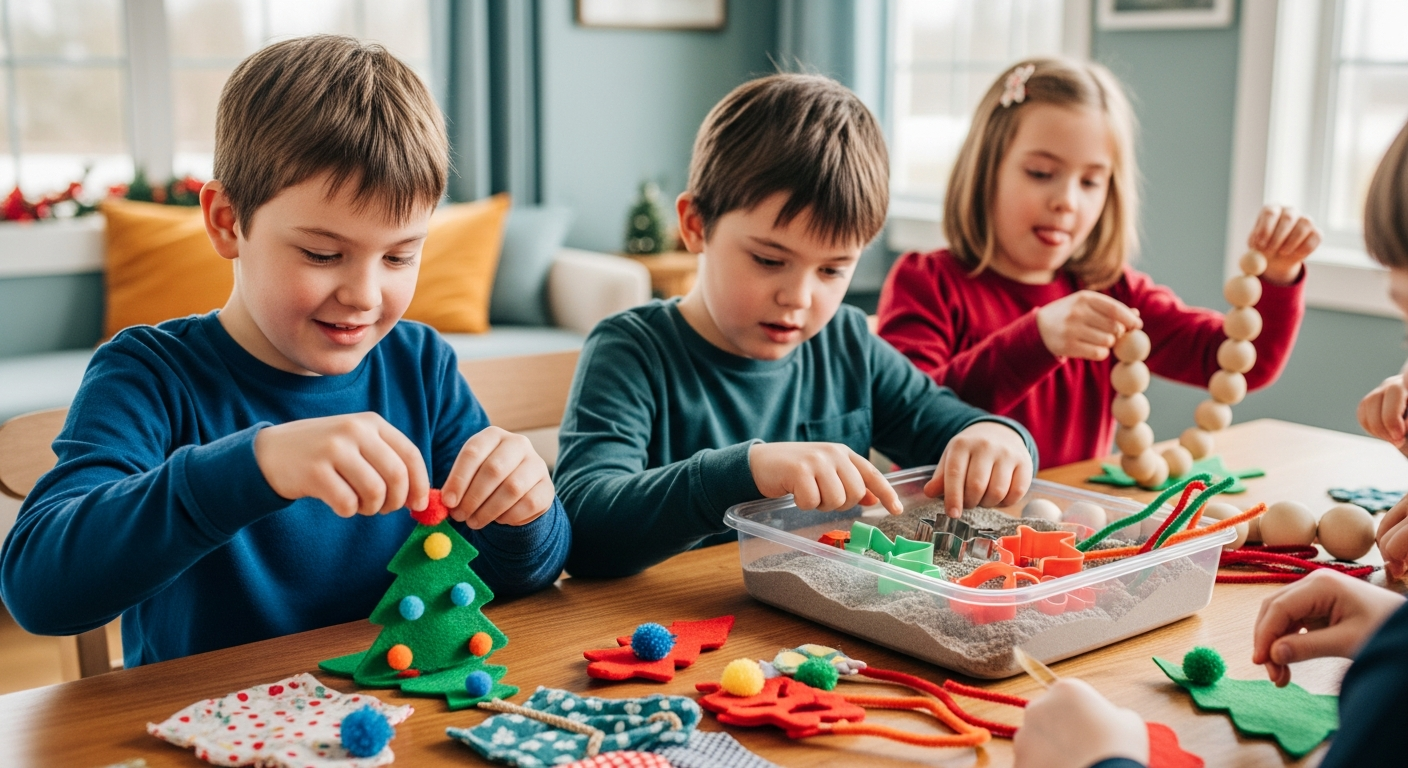
Table of Contents
- Why Christmas Crafts Are Extra Special for Kids with Autism
- Things to Keep in Mind When Crafting with Kids with Autism
- Our Favorite Christmas Craft Ideas That Are Gentle on the Senses
- How to Sneak Communication and Language into Christmas Crafts
- How Speech Blubs Can Make Crafting Even Better
- Tips for a Fun and Easy Crafting Time
- More Than Just Crafts: Making Memories That Last
- Ready to Help Your Child Communicate Better?
- Conclusion
- Frequently Asked Questions
As Christmas time gets closer, lots of families can't wait for all the fun. But for kids with autism, all the changes, new things to see and feel, and having to be around lots of people can be a bit too much sometimes. But the best part of the holidays is doing things together, and everyone loves making crafts! How can we make sure that Christmas crafts are not just fun, but also helpful, welcoming, and really interesting for kids with autism?
This blog post is here to help parents and caregivers make Christmas crafts that are fun, gentle on the senses, and help kids talk and connect. We'll talk about why choosing the right crafts is a good idea, how to change things to make them easier, and share lots of fun craft ideas. And most importantly, we'll show you how things like Speech Blubs can fit right in and make these creative times even better, turning simple crafts into chances to connect, learn, and show how you feel. We want to help families enjoy making things together, helping kids talk and feel confident, so every child can say what's on their mind and in their heart during this special time.

Why Christmas Crafts Are Extra Special for Kids with Autism
Making crafts during the holidays is more than just making pretty things. For kids with autism, it's a chance to learn and grow while having fun. If we do it in a way that's thoughtful and understanding, Christmas crafts can be a great way to help them grow and connect.
Exploring Senses in a Safe Way
Lots of kids with autism have special ways of feeling things, and sometimes new or surprising things can be hard. But crafting is a great way to explore senses in a safe way. Kids can touch different things like soft felt, bumpy pipe cleaners, and smooth paper. They can see bright colors and maybe even glitter (but be careful with it!). And they can even smell things like cinnamon playdough. The great thing about crafts is that you can show them these things one at a time, so your child can explore at their own speed and feel comfortable, without getting too overwhelmed, while still having fun.
Getting Better at Using Their Hands
From holding a paintbrush to cutting with scissors, using glue sticks, or putting beads on a string, almost every craft helps kids get better at using their hands. These little movements are important for things like writing, getting dressed, and eating. Christmas crafts are a fun way to work on hand-eye coordination, being able to use their hands well, and making their hands stronger. If a child doesn't like doing regular hand exercises, making a sparkly snowflake or decorating a gingerbread cookie can make learning feel like a fun game.
Times to Talk and Use Language
Crafting is a relaxed way to practice talking. Kids can say what they're doing, ask for things, talk about what they're making, or follow instructions. Using language in a real way like this is really helpful. Imagine a child asking for "more glue," talking about their "red star," or saying proudly "I made it!" These talks help them learn to say things and understand what others say. Things like Speech Blubs, which we'll talk about later, can make these times even better by helping them learn holiday words and encouraging them to copy what they hear.

Feeling Better and Showing How They Feel
Being creative can be really calming. Crafting lets kids show how they feel without using words. For kids who have a hard time saying how they feel, turning an idea into something real can be really empowering. Focusing and staying calm while crafting can also help kids feel better, helping them with worries or feeling too excited. Feeling good about finishing a project, even a simple one, helps them feel good about themselves and confident.
Getting Closer as a Family
Doing something creative together is a great way to make your family stronger. Crafting together helps you focus on the same thing, letting you play together or work together. It gives you chances to have fun, laugh together, and feel like you've done something together. These times are about more than just the craft. They're about making memories and feeling like you belong, making your family feel closer than ever. At Speech Blubs, we know how important these family times are, so our app is a great way to learn together and have fun.
Knowing What to Expect
While the holidays can be a bit crazy, a craft that's planned out can help kids feel like they know what to expect. Having a clear start, middle, and end, with pictures showing the steps and a goal, can be really helpful for kids with autism who like things to be planned. This makes crafting a good thing to do during a time that might feel overwhelming, giving them something steady and calming during the holiday hustle and bustle.
Things to Keep in Mind When Crafting with Kids with Autism
To make sure that Christmas crafting is a good time for everyone, it's important to think about what your child needs. What works for one child might not work for another. Here are some important things to think about:
How They Feel About Senses
This is often the most important thing to think about.
- Textures:Does your child not like sticky things? Use glue sticks instead of liquid glue, or let them wear gloves. If glitter is too much, use big sequins, pompoms, or paper that already has texture. Some kids love soft things like cotton balls or felt, while others like things that are smooth and dry.
- Smells:Some craft things (like paints, markers, and glues) can smell strong. Choose things that don't smell as much, or craft in a place with good air flow. You could also use nice smells like cinnamon or vanilla in playdough to make it a good experience.
- Sounds:Does crumpling paper or snapping pipe cleaners bother them? Pay attention to how loud things are and choose quieter things to do, or let them wear noise-canceling headphones if they need to.
- Visuals:Bright, flashing lights or a messy work area can be too much. Keep the crafting area neat and use calm colors. Show them new things one at a time.
How Well They Use Their Hands
Everyone is different when it comes to using their hands.
- Holding and Using Things:If your child has a hard time with small things, use bigger beads, thick crayons, or shapes that are already cut out. Instead of cutting complicated shapes, tearing paper can be a good way to make their hands stronger.
- Cutting:Use scissors that are easier to use or use pieces that are already cut out. Encourage them to tear paper for collages, which also makes their hands stronger and helps with coordination.
- Pasting:Glue sticks are often easier to use and not as messy as liquid glue. If they like touching things, finger paints can be an option if you're okay with a little mess.
- What This Looks Like:If a parent has a 4-year-old who has a hard time cutting small shapes but loves putting things together, a good idea would be to use felt shapes that are already cut out to make a Santa or reindeer ornament. The child can enjoy the feeling of the soft felt and gluing things together, feeling good about themselves without getting frustrated by cutting. This can also be a chance to practice simple instructions like "put the nose here" or "find the red hat," which can be practiced with the "Following Instructions" section of Speech Blubs after the craft.
How Long They Can Pay Attention and How Well They Handle Feeling Frustrated
Keep activities short, easy, and something they can finish.
- Break Things Down:Give instructions one or two steps at a time, instead of a long list. Using pictures to show each step can be really helpful.
- Have a Clear Goal:Have a clear, easy goal for the activity so your child knows what to expect and can feel good about finishing.
- Be Flexible:It's okay if the craft doesn't look exactly like the example. The fun is more important than the end result. Let them make "happy mistakes" and do things their own way.
- What This Looks Like:Imagine a child who likes crafting but gets bored or frustrated if a step is too hard. Instead of a complicated paper chain, try simple strips that are already cut out and only need to be looped and stapled. This lets them finish quickly and have something to show for it, making them feel excited. The parent can ask them "What color next?" or "How many links do we have?" to get them talking in short bursts.
How They Talk
Change how you give instructions and encourage them to talk.
- Use Pictures:Use pictures, diagrams, or show them each step.
- Use Easy Words:Use short, clear sentences. Don't use big words or confusing ideas.
- Let Them Choose:Instead of asking "What do you want?", ask "Do you want blue or red?" This helps the child feel in charge and makes it easier to talk.
- Let Them Talk Their Own Way:Be open to them talking, using gestures, pointing, or using devices to help them talk.
What They Like
Use what your child loves.
- If they love trains, can you make a train ornament? If they love animals, maybe a Christmas garland with animals on it. Making crafts about what they love can make them much more interested and excited.
Making a Safe Space That They Know What to Expect
- Have a Special Place:Having the same place to do crafts helps them know what to expect.
- Use Pictures to Show What's Next:A picture showing "Craft time -> Clean up -> Snack time" can help them worry less about what's coming.
- Get Ready Ahead of Time:Get everything ready before starting so you don't have to stop and can stay focused.
Our Favorite Christmas Craft Ideas That Are Gentle on the Senses
Here are some Christmas craft ideas made for kids who experience the world differently, focusing on different ways to feel things and easy to change.
Soft Things to Hang Up
- Pompom Garlands/Ornaments:Use big, colorful pompoms. Kids can put them on yarn with a big needle or just glue them onto cardboard shapes (like stars or trees). This is great for feeling things and using their hands.
- Felt Shapes:Felt shapes that are already cut out (stars, trees, stockings) can be decorated with fabric glue, other felt pieces, or big buttons. Felt is soft, easy to use, and not as messy as glitter.
- Wrapping with Yarn:Cut out cardboard shapes (like a star or a tree) and let kids wrap colorful yarn around them. This is great for using their hands and is a calming thing to do over and over.
Playdough That Smells Good
- Holiday Playdough:Make playdough at home and add smells like cinnamon, nutmeg, peppermint, or vanilla extract. Kids can use Christmas cookie cutters to make ornaments or figures. The smell helps them feel calm, and shaping the dough makes their hands stronger. You can even bake salt-dough after shaping it to make ornaments that last.
Things That Stick to Windows (Not Messy)
- Static Cling Art:Use static cling sheets or contact paper with shapes that are already cut out. Kids can put felt, tissue paper, or other light things on the sticky surface and move them around. This is fun to look at and helps them use their hands without making a big mess.
Decorations from Nature
- Painting Pinecones:Collect pinecones and paint them with paint that's safe for kids. You can leave them natural or decorate them with small things like bells or ribbons. This brings nature inside and has an interesting texture.
- Collages with Leaves/Twigs:If you have leaves from the fall or collect small twigs, you can glue them onto paper or cardboard to make Christmas scenes from nature. This encourages them to be creative and connect with the outdoors.
Characters from Cardboard Tubes
- Reindeer, Santa, Elves:Collect empty toilet paper or paper towel rolls. Kids can paint them and then add googly eyes, cotton ball beards, pipe cleaner antlers, or felt hats. These are easy to use and have clear steps to follow.
Crafts You Can Eat
- Cookie Decorating:Bake or buy plain sugar cookies or gingerbread shapes. Focus on easy decorating with frosting, big sprinkles, or candies. This is really fun, uses lots of senses (taste, smell, touch), and gives them chances to ask for things and describe them.
- Fruit Skewers:Use red and green grapes, strawberries, and melon chunks on a skewer to make festive "Christmas trees." This helps them use their hands well, eat healthy, and gives them a tasty reward.
Crafts That Light Up
- Jar Lanterns:Decorate clean glass jars with tissue paper, paint, or things from nature. Put a battery-operated tea light inside for a soft, glowing light. This is calming to look at.
- Paper Bag Luminaries:Decorate small paper bags and put a battery-operated tea light inside. Put them along a path or windowsill for a gentle holiday glow.
How to Sneak Communication and Language into Christmas Crafts
Christmas crafts are not just about making things. They are great chances to talk. Here's how to make language learning a part of your holiday activities, helped by the proven methods of Speech Blubs.
Using Words to Describe Things
Encourage your child to say what they are seeing, touching, and making.
- "What color is that paint?" ("Red!")
- "How does the felt feel?" ("Soft!")
- "Can you tell me about your Christmas tree ornament?" ("It's sparkly and has a big star.") This helps them learn words for colors, textures, shapes, and holiday things.
Following Instructions
Crafts naturally involve following steps, making them perfect for practicing understanding what people say.
- "First, glue the eyes. Then, add the nose."
- "Put the red pompomonthe tree."
- "Pick up the scissors." Use clear, simple instructions and show them what to do. Break big tasks into smaller, easier steps.
Asking for Things and Saying What They Need
This is a basic skill that crafts make really fun to practice.
- "More glue, please."
- "Help!" (When something is hard).
- "My turn." (When sharing things).
- "I like this!" or "I don't like sticky." These simple words are powerful because they help your child talk about their world and say what they like.
Talking About What They're Doing and Sharing Ideas
Encourage them to talk about what they're doing and what they've made, helping them talk to others.
- "Wow, that's a cool reindeer!"
- "What a beautiful snowflake!"
- "Tell me what you're making next." This helps them talk back and forth and pay attention together.
Taking Turns
If crafting with more than one child or with an adult, there are chances to take turns, share, and work together.
- "My turn to pick a color, then your turn."
- "Can you share the glitter with your sibling?"
- "Let's work together to make this garland." These talks help them get ready for more complicated ways of talking to others.
What This Looks Like: Using Crafts to Ask for Things with Two Words
For a child who is just starting to ask for things with two words, decorating gingerbread cookies is a great way to practice. As they reach for sprinkles, you can say, "Sprinkles, please." When they want icing, "Green frosting." Or, if they're done with something, "All done!" These simple, repeated words, used with something they want, help them feel confident and talk better.
How Speech Blubs Can Make Crafting Even Better
At Speech Blubs, we want to help children "speak their minds and hearts." Our company started because our founders grew up with speech problems and wanted to make the tool they wish they had. We want to give a good, fun, and quick way to help the 1 in 4 children who need help with their speech, using science and play in a way that's like no other. We give a good option to just watching screens (like cartoons) and a great way for families to connect. This fits perfectly with how Christmas crafts can help kids talk.
Learning by Watching Others
Our special way of "learning by watching others" is what Speech Blubs is all about. Children learn by watching and copying other kids on the screen. This is really helpful for learning to copy, which is important for both talking and following the steps in a craft.
- During Crafting:If your child is having a hard time copying an action like "cut" or "glue," you can practice similar actions in the Speech Blubs app beforehand. This gets them ready for the actions in the craft.
- Before Crafting:Before making a "star" ornament, use Speech Blubs to show them the word "star" by watching kids say it and copying them. This helps them know the word and makes it easier during the craft. Our scientific methods are based on lots of research, making us one of the best speech apps in the world, so you know it works. You can learn more about our scientific methods here.our scientific methodology here.
Learning Specific Words
Speech Blubs has different sections that are perfect for Christmas crafting.
- "Holiday Fun" Section:Explore and practice words about Christmas – "Santa," "tree," "present," "star," "bell." This helps them learn words they can use while talking about their crafts.
- "First Words" or "Animal Kingdom" (for animal crafts):Practice basic words about the craft materials or themes. For a child making a reindeer ornament, practicing "reindeer" or "brown" in the app can be a fun way to get ready.
- What This Looks Like:For a parent whose 3-year-old is a "late talker" and loves animals, the "Animal Kingdom" section of Speech Blubs is a fun way to practice "reindeer" or sounds like "ho ho ho" or related actions. By seeing other kids make these sounds and actions, it gives them a clear example to copy. This is active and fun, unlike just watching TV, making it a great way for families to connect.
Getting Ready to Talk
Beyond just words, Speech Blubs also helps get ready for talking, which helps with crafting:
- Paying Attention Together:Watching the same screen together, focusing on the same thing, helps them pay attention together during crafting.
- Taking Turns:Lots of things in the app involve taking turns, like sharing craft materials.
- Having Fun and Feeling Excited:The app is fun and keeps kids interested, making them feel good about learning and talking, which can help with crafting.
By using Speech Blubs, parents are giving their child more than just a screen. They're giving them a way to learn that's organized, fun, and works well with real things like Christmas crafting. It helps kids talk about their ideas and feelings, love talking, feel confident, and have fun learning together. We're happy to give a good addition to a child's plan and, if needed, help from a professional.Learn more about Speech Blubs and our goal to help children with their speech. and our mission to support children's speech development.
Tips for a Fun and Easy Crafting Time
To have the most fun and the least frustration, think about these tips for setting up your Christmas craft times.
Getting Ready Is Important
Get everything ready before inviting your child to the crafting table. This includes cutting out shapes, opening glue (if it's safe), and only putting out the things you need. A clear space helps them focus and makes it less likely that they'll make mistakes that lead to frustration.before inviting your child to the crafting table. This includes pre-cutting shapes, having glue open (if safe), and setting out only the necessary items. A clear, organized workspace prevents distractions and reduces the likelihood of "oops" moments that can lead to frustration.
Use Pictures to Help
Make a simple picture showing each step of the craft. For example: 1. Get paper. 2. Glue eyes. 3. Add nose. 4. Finish. This helps them know what to do and what to expect, making it easier and less scary.
Let Them Choose
Help your child feel in charge by letting them choose when you can. "Do you want red paint or green paint?" "Do you want a star or a tree ornament?" Giving two clear choices helps them not feel overwhelmed while still letting them feel like they have some control over what they're making.
Focus on the Fun, Not the Perfect Result
Don't worry about making it perfect. The goal is to have fun, explore, and talk, not to make something that belongs in a museum. Celebrate your child's effort and creativity, no matter what the final result looks like. A craft that's not perfect but made with joy is much better than a perfect one made with tears.
Be Flexible
If a step is too hard, make it easier. If your child wants to tear paper instead of cut it, let them! If they want to use colors that don't usually go together, encourage their unique ideas. Sometimes the best crafts are the ones that change from the original plan.
Celebrate What They Do and Say Good Things
Saying specific things is really helpful. Instead of "Good job," try "I love how carefully you glued those pompoms!" or "You worked so hard on that!" Saying what they did well helps them feel confident and keeps them wanting to do more.
Keep It Short
Pay attention to what your child is telling you. If they start to seem frustrated, lose interest, or get overwhelmed, it's okay to stop. A good, short time is better than a long one that ends with them upset. You can always come back to it later!
More Than Just Crafts: Making Memories That Last
Once the glue is dry and the glitter is settled, the fun of Christmas crafting doesn't have to end. The best part is how we celebrate and cherish what we've made and the times we had making them.
Showing off your child's artwork shows them that you value their creativity and effort. Whether it's hanging a funny painted pinecone on the tree or taping a handmade card to the fridge, these simple things help them feel good about what they've done and like they belong. Giving handmade crafts to family members makes it even more fun, teaching children about giving and the special feeling of a gift that's made by hand.
These times also give you more chances to talk about the skills you've been working on. "Can you tell Grandma about your sparkly star?" "Remember how we mixed the red and green paint for this?" By talking about the crafts again, you keep those language skills strong in a fun way.
Really, Christmas crafting with kids with autism is about more than just what you end up with. It's about helping them feel confident, love talking, not get frustrated, learn important skills, and most of all, make happy memories as a family. It's about making sure every child gets to feel the warmth and joy of the holiday season, supported and celebrated for who they are.
Ready to Help Your Child Communicate Better?
We hope these ideas help you make wonderful Christmas crafting memories with your child, that are full of talking and connecting. And as you do this, remember that Speech Blubs is here to help you every step of the way, making learning fun and effective.
We have two ways to subscribe so you can use all of our features and help your child speak their mind and heart:
- Monthly Plan:$14.99 per month.
- Yearly Plan:Just $59.99 per year, which is only $4.99 per month! That means you save 66% compared to the monthly option.
The Yearly Plan is the best choice for your family, giving you the most for your money and special things you can't get with the Monthly Plan. With the Yearly Plan, you'll get:
- A 7-day free trial to try out all of our amazing activities.7-day free trial to explore all our amazing activities.
- The extra Reading Blubs app, which helps with learning to read early.Reading Blubs app, designed to boost early literacy skills.
- Early access to new things and features, so you're always getting the newest stuff. and features, so you're always at the forefront of our latest innovations.
- Help within 24 hours, so you get quick help when you need it., ensuring you get quick assistance whenever you need it.
The Monthly Plan is good if you want to be flexible, but it doesn't have these great things. We really suggest you choose the Yearly Plan to get the most out of Speech Blubs, including your free trial and all the things that help your child communicate.
Don't wait any longer to give your child the chance to talk confidently. Take our quick 3-minute quiz to get a simple idea of how they're doing and a free 7-day trial.quick 3-minute preliminary screener to get a simple assessment and a free 7-day trial.
Ready to get started? Sign up and start your 7-day free trial today by choosing the Yearly Plan. You can also download Speech Blubs on the App Store or get Speech Blubs on Google Play to open up a world of talking and fun for your child. See what other parents are saying about how Speech Blubs has helped their child by reading our stories here. by choosing the Yearly Plan. You can also download Speech Blubs on the App Store or get Speech Blubs on Google Play to unlock a world of communication and joy for your child. Hear what other parents are saying about their child's success with Speech Blubs by checking out our testimonials here.
Conclusion
Christmas crafting with children with autism is really special, giving lots of chances to explore senses, use their hands, feel better, and connect as a family. By changing things to fit their needs, we can turn simple crafts into ways for them to grow and connect.
Using these fun activities with helpful things like Speech Blubs makes them even better. Our way of "learning by watching others" and learning specific words helps children learn basic talking skills, making every craft a way to have fun and learn. The best part isn't just making things, but sharing times together, feeling more confident, and being able to say what they think and feel.
This holiday season, let's celebrate every child and make a place where they can be creative and talk easily. Give your child the chance to talk better and learn with joy.Start your free 7-day trial today by choosing the Yearly Plan – the best deal for your family, with special features and help. Download Speech Blubs on the Apple App Store or Google Play Store and start your journey to a holiday season where you talk more and connect better. by opting for the Yearly Plan – the best value for your family, offering exclusive features and continuous support. Download Speech Blubs on the Apple App Store or Google Play Store and begin your journey toward a more communicative and connected holiday season.
Frequently Asked Questions
Q1: How can I make sure the craft doesn't feel like too much for my child?
A1: Get ready by getting everything you need ahead of time and setting up a calm space. Use pictures to show the steps, give them a few choices, and keep it short, stopping before they get frustrated. Focus on having fun making it rather than making it perfect.
Q2: What if my child doesn't want to do a craft?
A2: Respect what they want. Instead of making them do it, you can ask them to watch, give them a small task, or make the craft about something they really like. Sometimes, just having the materials around for them to play with on their own can make them curious without feeling pressured.
Q3: How does Speech Blubs help with crafting skills?
A3: Speech Blubs helps children practice copying actions, which is important for following the steps in a craft. Its sections like "Holiday Fun" help them learn words about Christmas crafts, and encourage them to ask for things and describe them. It makes screen time fun and helps children get ready for talking in the real world, building basic communication skills in a fun way.
Q4: What's the best way to show new craft materials to a child who is sensitive to how things feel?
A4: Show them new materials slowly, one at a time, letting them look at them and touch them when they're ready. Have things like gloves or brushes if they don't want to touch them directly. Say what the texture, color, and smell are, and always have things they like nearby to make them feel comfortable or as something else to do.
Sobre el autor