
Vivas Artesanías Navideñas para Niños: ¡Diversión Festiva en Familia!
Tabla de Contenidos Introducción La Magia de las Artesanías Navideñas para Mentes en Crecimiento Habla y Lenguaje: Creando Conversaciones Habilidades de Motricidad Fina: Manitas, Grandes Creaciones Desarrollo Cognitivo:...
 Por Speech Blubs Team•22 dic 2025•21 min.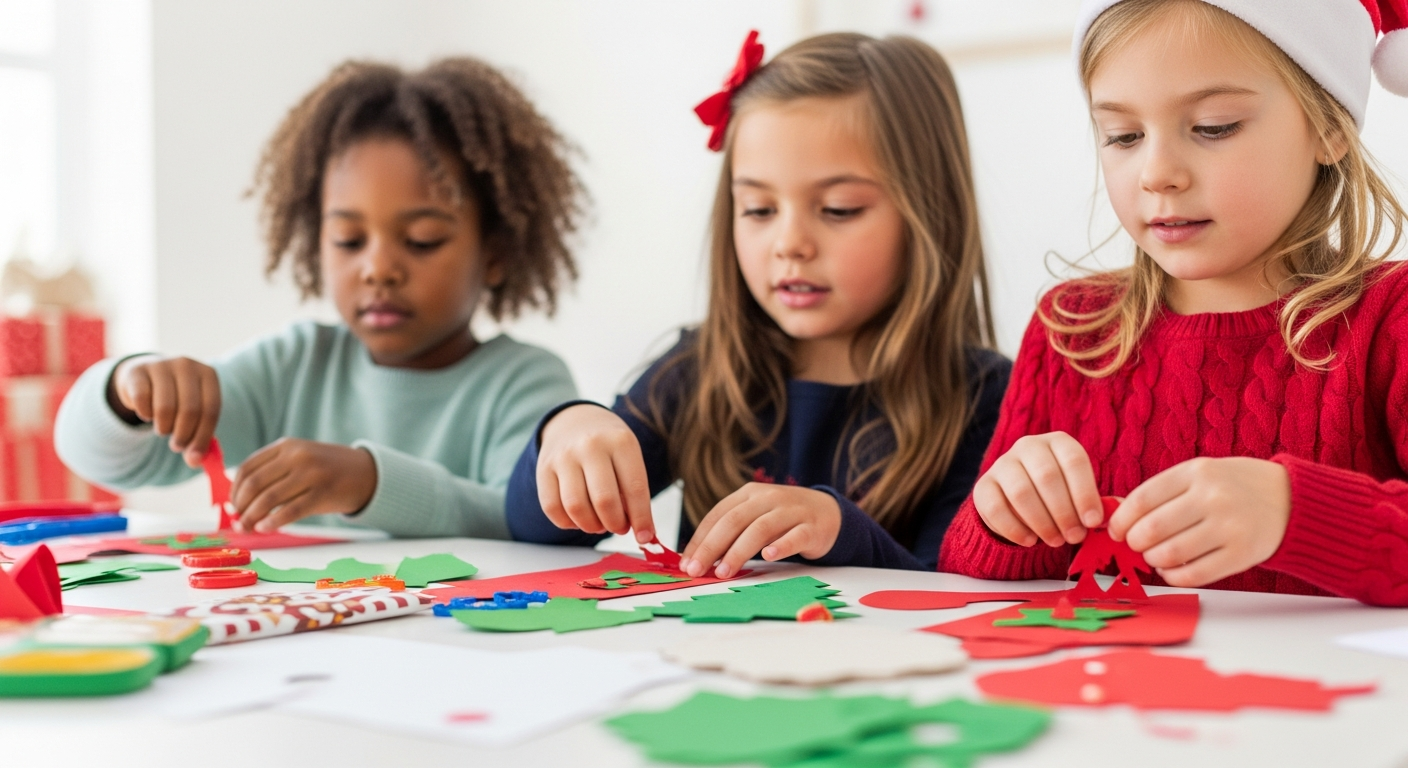
Table of Contents
- Introduction
- Christmas Crafts: Magical Fun for Growing Minds
- Speech and Language: Let's Craft Conversations!
- Fine Motor Skills: Little Hands, Big Creations
- Cognitive Development: Playtime Learning
- Emotional and Social Growth: Sharing the Holiday Joy
- Our Top 10 Easy Christmas Crafts for Kids
- "Smart Screen Time" and Craft Time: A Perfect Match!
- Crafting Fun: Tips for Parents
- Speech Blubs: Helping Your Child Communicate
- Speech Blubs: Which Plan is Right for You?
- Conclusion
- FAQ
The holidays are a whirlwind of bright lights, happy songs, and traditions we love. In all the excitement, there's something really special that happens when kids start creating. Have you ever thought about how those sparkly ornaments and homemade cards are more than just cute decorations? They're a great way to help your child grow, especially when it comes to talking! We all love seeing how proud kids are of what they make, but the best part is the learning that happens along the way. From picking out colors to telling you how they're making something, Christmas crafts are a fun way to help with speech, little-muscle skills, and thinking skills. This post will talk about how holiday crafts can help your child grow, share some of our favorite easy Christmas crafts, and show you how Speech Blubs can make these happy learning times even better, helping your child say what's on their mind and in their heart with confidence this holiday season and beyond.

Introduction
As the weather gets colder and Christmas songs start playing, families everywhere are getting ready for the holidays. For parents, this means lots of excitement, but also trying to find fun things to do with their kids. Baking cookies and decorating the tree are traditions we all love, but there's something extra special about doing Christmas crafts with kids. More than just glitter and glue, these crafts give kids a chance to learn important skills. This blog post isn't just a list of craft ideas. It's about how doing crafts during Christmas can really help your child with their speech, little-muscle skills, and thinking. We'll talk about why these simple things are so good for kids, share tips on how to make the most of them, and give you some great craft ideas that are both fun and educational. We want to give you the information and ideas you need to make this holiday season a time of learning, growth, and happy moments with your child, celebrating not just the crafts they make, but all the talking and skills they learn along the way.
Christmas Crafts: Magical Fun for Growing Minds
Crafts are a great all-around activity for kids. They use their senses, learn to solve problems, and get to make something they can be proud of. During the Christmas season, all the excitement, traditions, and the feeling of giving make crafts even more special. Kids aren't just making a snowflake; they're making a memory, a gift, and a part of their holiday story.
Think about just picking out what to use: "Should we use red or green glitter?" Just that question helps them make decisions and learn new words. As they cut, glue, and put things together, their little fingers are learning the skills they need for writing and taking care of themselves. When they talk about what they're making, who it's for, or what it will look like, they're telling stories, saying what they want, and learning how to share their ideas. Christmas crafts aren't just about making your house look pretty; they're about helping your child become confident, able to talk well, and ready to learn.

Speech and Language: Let's Craft Conversations!
One of the best things about doing Christmas crafts with your child is how it helps them learn to talk. Crafts naturally lead to talking, describing, and following directions, which is great for growing their language skills.
- Describing Things:Imagine your child decorating a paper plate Santa. You can talk about "red hats," "fluffy white beards," "sticky glue," and "sparkly glitter." Hearing these words all the time helps them learn new words and understand how to use them to describe things. "Can you give me thered, shinypaper?" "This glue feelswet and sticky." These kinds of talks make abstract ideas real and touchable.
- Following Directions:Craft projects are great for practicing how to follow steps. "First, cut the circle. Then, glue the cotton balls. Next, draw the eyes." Breaking things down into steps helps kids learn how to listen and understand time-related words like "first," "next," and "last." For kids who have trouble following directions with lots of steps, crafts are a fun and easy way to practice.
- Telling Stories:While your child is working, ask them to tell you about what they're making. "Who is this snowman for?" "What will Santa do with this sleigh?" "Tell me about your sparkly star." These questions help them use their imagination and build simple stories, share ideas, and say what they're thinking. It also helps them think about how other people feel.
- Talking About Problems:Crafts don't always go perfectly, and that's okay! When something spills or doesn't work, it's a good chance to talk about solving problems. "Oh no, the glitter spilled! What should we do?" "How can we make this stick better?" These moments help kids talk about problems and come up with ideas, which helps them think and talk better.
If you have a 3-year-old who is a "late talker" and loves animals but has trouble putting words together, making a reindeer ornament can be a great way to help. As they glue on googly eyes and pipe cleaner antlers, you can say the sounds and words: "Reindeer!Moo? No, reindeer say...snort!" or "Brown antlers! Sticky glue!" This gives them something to see and touch to help them learn new words. Our goal at Speech Blubs is to help children "say what's on their mind and in their heart," and crafts are a great way to start. We know that talking is more than just saying words; it's about connecting with others and feeling confident.
That's where Speech Blubs can really help. While you're busy with glitter and glue, our app can get your child ready to talk more by helping them learn basic words and encouraging them to copy others through our video modeling method. Kids learn by watching and copying other kids, which is a fun and effective way to learn new sounds and words. It makes them feel more confident and ready to talk while crafting. To learn more about the science behind what we do, visit ourresearch page.
Fine Motor Skills: Little Hands, Big Creations
The small movements we make when crafting are important for building fine motor skills, which we need for so many things we do every day, like taking care of ourselves, writing, and playing.
- Cutting:Using child-safe scissors to cut shapes, lines, or fringe makes hand muscles stronger, improves how both hands work together, and helps with hand-eye coordination.
- Gluing:Squeezing glue bottles, spreading glue sticks, and carefully placing small things takes precision, controlled movements, and strong fingers.
- Painting:Holding brushes, making strokes, and controlling how the paint flows helps with grip, wrist control, and being creative.
- Threading and Weaving:Putting beads onto pipe cleaners or yarn through holes takes focus, skill, and a good pincer grasp (using thumb and forefinger).
- Molding and Shaping:Playing with playdough or salt dough makes hand muscles stronger and encourages using your imagination to play with materials.
Learning these skills is about more than just making a pretty craft; it's about getting ready for school and beyond. These activities make the small muscles in the hands and fingers stronger, which helps kids hold a pencil, button a shirt, or tie their shoes.
Cognitive Development: Playtime Learning
Christmas crafts are also great for helping kids think and learn, teaching them in different ways and helping them solve problems.
- Sequencing and Planning:Most crafts have a series of steps. This helps kids learn and remember the order of things, which is important for doing well in school and in everyday life. They learn to plan what they're going to do, thinking about what comes next.
- Shape and Color Recognition:Crafts are a natural way to learn about and use different shapes and colors. "Can you find a blue circle for the snowman's hat?" or "Let's use a triangle for the Christmas tree."
- Cause and Effect:Kids learn by trying things out. "If I use too much glue, it gets messy." "If I press too hard, the paper rips." These things teach them about cause and effect.
- Spatial Reasoning:Putting pieces together, understanding how shapes fit, and making things look balanced all help with understanding space and how things fit together.
- Patience and Persistence:Crafts often take time and effort. Kids learn to be patient while glue dries or while they carefully cut out a shape. Finishing a craft, especially one that was hard, teaches them the value of trying hard and feeling good about what they've done.
Emotional and Social Growth: Sharing the Holiday Joy
Besides learning skills, doing crafts together during the holidays helps kids grow emotionally and socially, building connections and making them feel good about themselves.
- Sense of Accomplishment and Pride:Finishing a craft, no matter how simple, makes kids feel really good. Seeing what they made on display or giving it as a gift makes them feel proud and confident.
- Sharing and Cooperation:When doing crafts with siblings or friends, kids learn to share, take turns, and work together. These interactions are important for learning how to understand others and solve problems.
- Patience and Frustration Tolerance:Crafts can be hard sometimes. Learning to handle frustration when something doesn't work or waiting for a turn helps kids learn to be strong and control their feelings.
- Creating Gifts for Others:Making a gift for someone they love teaches kids about being generous and caring. It shows them how good it feels to give and how thoughtful a personal gift can be.
- Family Bonding:Spending time doing crafts together creates special moments of connection. Laughing, working together, and just being there with each other makes family bonds stronger and creates holiday memories that everyone will cherish.
Our Top 10 Easy Christmas Crafts for Kids
Here are some of our favorite easy Christmas crafts that are lots of fun and really good for helping kids grow. Remember to focus on the process, not just making things perfect, and talk to your child every step of the way!
1. Paper Plate Santas or Reindeer
- Materials:Paper plates, cotton balls, red/brown construction paper, googly eyes, glue, markers.
- Instructions:Decorate a paper plate to look like Santa (red hat, cotton ball beard) or a reindeer (brown antlers, red nose).
- Speech & Language Tip:Use describing words: "red hat," "fluffy beard," "big eyes," "pointy antlers." Practice action words like "cut," "glue," "draw." Ask, "What color is Santa's hat?" "How many eyes does the reindeer have?" Encourage them to make sounds like "ho ho ho" or "clip-clop."
- Fine Motor Tip:Great for cutting circles and strips of paper, peeling and sticking googly eyes, and gluing cotton balls to make it feel different.
2. Popsicle Stick Ornaments
- Materials:Popsicle sticks, glue, paint, glitter, sequins, yarn/ribbon.
- Instructions:Glue popsicle sticks into shapes (stars, triangles for trees, snowflakes). Paint and decorate. Add a loop of yarn to hang it up.
- Speech & Language Tip:Talk about shapes ("star," "triangle"), colors, and how things feel ("sparkly," "rough stick"). Practice counting sticks. Ask "What are you making?" "How many sticks did you use?"
- Fine Motor Tip:Gluing sticks together carefully, painting inside the lines, and putting on small decorations like sequins.
3. Handprint/Footprint Christmas Art
- Materials:Non-toxic paint, paper/cardstock, markers.
- Instructions:Dip hands or feet in paint and press them onto paper to make holiday pictures (like green handprints as a tree, white footprints as a snowman, reindeer from handprints).
- Speech & Language Tip:Talk about body parts ("hand," "foot," "fingers," "toes"). Use action words: "dip," "press," "paint." Tell them what you're doing: "First, we dip your hand. Then, we press it down."
- Fine Motor Tip:Learning about your body, learning to press evenly, and using markers to add details later.
4. Salt Dough Ornaments
- Materials:1 cup flour, 1/2 cup salt, 1/2 cup water. Cookie cutters, paint, glitter, ribbon.
- Instructions:Mix ingredients, knead dough, roll it out, cut out shapes, bake at low temperature (250°F) for 1-2 hours until it's hard. Paint and decorate when it's cool.
- Speech & Language Tip:Talk about how it feels: "soft dough," "sticky," "smooth." Talk about the shapes of the cookie cutters. Practice words like "mix," "roll," "cut," "bake."
- Fine Motor Tip:Kneading dough makes hands stronger, rolling with a rolling pin, carefully cutting with cookie cutters, and painting carefully.
5. Pipe Cleaner Candy Canes & Stars
- Materials:Red and white pipe cleaners, beads (optional).
- Instructions:Twist red and white pipe cleaners together to make candy canes. Or bend single pipe cleaners into stars and put beads on them.
- Speech & Language Tip:Use color words ("red," "white"), shape words ("curve," "pointy star"). Count beads. Talk about patterns. Ask "What color comes next?"
- Fine Motor Tip:Twisting, bending, and putting beads on require good control of little muscles and using both hands together.
6. Cotton Ball Snowmen
- Materials:Blue or black construction paper, cotton balls, glue, googly eyes, orange construction paper (for nose), markers.
- Instructions:Glue cotton balls onto paper to make a snowman. Add googly eyes, a carrot nose, and draw stick arms and buttons.
- Speech & Language Tip:Talk about quantity ("many cotton balls"), size ("big snowman," "little nose"), and how things feel ("soft," "fluffy"). Practice putting things in order.
- Fine Motor Tip:Pinching and gluing individual cotton balls helps with pincer grasp and precision.
7. Pom-Pom Christmas Trees
- Materials:Green construction paper (rolled into a cone), different colored pom-poms, glue.
- Instructions:Roll green paper into a cone and glue it. Decorate by gluing colorful pom-poms all over the "tree."
- Speech & Language Tip:Use color names ("red," "green," "blue" pom-poms), size words ("big pom-pom," "small pom-pom"), and where things are ("on top," "under," "all over").
- Fine Motor Tip:Picking up small pom-poms and putting them carefully with glue is great for pincer grasp and hand-eye coordination.
8. DIY Advent Calendars (Paper Chains)
- Materials:Construction paper (different colors), glue or stapler, markers.
- Instructions:Cut strips of paper. Link them together into a chain, gluing or stapling each link. Write a simple activity or number on each link.
- Speech & Language Tip:Count the days/links. Talk about the order of the days. Talk about the activities on each link. "What are we doing today?" "What color is this link?"
- Fine Motor Tip:Cutting straight strips, gluing or stapling carefully, and writing numbers or words.
9. Cinnamon Stick Ornaments
- Materials:Cinnamon sticks, craft glue, glitter, small buttons, ribbon.
- Instructions:Glue multiple cinnamon sticks together to make shapes (like a mini raft, then decorate it) or just tie a ribbon around one and decorate it.
- Speech & Language Tip:Talk about how it feels: "smells spicy," "rough stick." Talk about shapes. Practice words like "tie," "glue," "decorate."
- Fine Motor Tip:Handling small buttons, tying ribbon, and gluing on small decorations carefully.
10. Toilet Paper Roll Characters
- Materials:Empty toilet paper rolls, construction paper, glue, markers, cotton balls, googly eyes.
- Instructions:Wrap toilet paper rolls in colored paper (red for Santa, green for an elf, white for a snowman). Add faces, hats, buttons, and other details.
- Speech & Language Tip:Encourage them to play pretend with the characters. Ask "What does Santa say?" "What does the elf do?" Use character names and action words.
- Fine Motor Tip:Wrapping and gluing paper neatly, cutting small shapes for features, and drawing faces with markers.
"Smart Screen Time" and Craft Time: A Perfect Match!
Crafts are great, but we know that screen time is part of many families' lives. At Speech Blubs, we believe in "smart screen time" – which is active, fun, and helps kids grow, instead of just watching cartoons. Our app was created by people who had speech problems when they were kids, and it's the quick, helpful, and fun way to help kids that they wished they had. We help kids find their voice and "say what's on their mind and in their heart."
Our app uses "video modeling," where kids learn by watching and copying other kids. This is based on science. It's an active way to use screens and helps families connect.
Imagine this: Your child is having trouble saying the colors they want for their Christmas craft. A short time with Speech Blubs can teach them color words by showing fun videos of other kids saying the words. After using the app, they might be able to point to the red glitter and say "red!" with a smile. This isn't about stopping craft time; it's about helping your child talk more during craft time.
Our app has over 5,000 activities in sections like "Early Sounds," "Talking for the First Time," and "Sentence Building," which are all made to help kids learn basic talking skills. So while you're helping them cut paper and glue sequins, Speech Blubs can be helping them say what they're doing and what the materials are. We want to help the 1 in 4 kids who need help with speech by making a fun and helpful way to learn, using science and play to make "smart screen time." We give families a way to use screens that isn't just watching cartoons and helps them connect with each other. Ready to help your child talk more and make their craft time even better?Download Speech Blubs on the App StoreorGoogle Playto start helping them talk more clearly and confidently.
Crafting Fun: Tips for Parents
To really help your child grow with Christmas crafts, your job as a parent is important. Here are some tips to make it better:
- Focus on the Fun, Not Just the Result:The learning happens while they're making things, not just when they're finished. Celebrate trying and exploring, even if the craft isn't "perfect."
- Let Your Child Lead:Give them choices, but let them be creative. If they want to make a blue Santa, let them! This helps them be independent and express themselves.
- Ask Questions That Make Them Think:Instead of "Is this red?", ask "What color did you choose?" or "Tell me about your design." This makes them give longer answers and use their imagination.
- Talk About What You're Doing and What Things Are Like:As you do crafts, say what you're doing ("I'm cutting the paper with the scissors") and what the things are like ("This glitter is so sparkly!"). This shows them how to use language.
- Make a Special "Craft Zone":Put down a tablecloth or newspaper to protect things. Having a special area where they can make a mess encourages them to try things out and makes cleanup easier.
- Don't Worry About the Mess!Crafts can be messy, and that's part of the fun (and learning!). Focus on the happiness and growth, and remember that cleaning up can be something you do together.
- Be There and Pay Attention:Put away distractions and focus on doing the activity with your child. Giving them your full attention is one of the best things you can do, helping them connect with you and learn more.
Speech Blubs: Helping Your Child Communicate
At Speech Blubs, we want to help children talk well and happily. Our goal is to help the 1 in 4 kids who need help with speech. We believe every child should be able to find their voice and say what they think and feel. Our app isn't just a tool; it's based on the experiences of our founders, who made the app they wish they had when they were growing up with speech problems.
Our method is based on science, using "video modeling" to help kids learn by watching and copying other kids. This makes learning fun and helpful, and it's why we have high ratings, putting us at the top of speech apps. You can learn more about the science behind what we do on ourresearch page.
Speech Blubs has lots of ways to learn new words, practice sounds, and learn how to make sentences, with over 5,000 fun activities. It's a great addition to what a child is already doing, and it helps them practice and learn at home.
Want to know how your child is doing with their talking and how Speech Blubs can help? Take ourquick 3-minute screenerto get a simple idea of where they are and what to do next. It's a good way to start helping your child talk and see how we can help. You can also read stories from other parents who have seen their children improve on ourtestimonials page.
Speech Blubs: Which Plan is Right for You?
We want to make it easy for every family to get good speech help. We have two plans to fit your needs:
- Monthly Plan:For $14.99 each month, you can use our Speech Blubs app. This plan is flexible and lets you try the app one month at a time.
- Yearly Plan:For only $59.99 each year, you get much more. That's just $4.99 each month, which lets yousave 66%compared to the monthly plan.
The Yearly Plan is made to give you the best experience. It includes:
- A 7-day free trial:Try Speech Blubs before you decide.
- The extra Reading Blubs app:This app helps with reading skills.
- Early access to new things:Get to see our new features first.
- Fast help when you need it:We'll answer your questions quickly.
Please remember:The Monthly plandoes notinclude these extras. If you want the best value, the most features, and to help your child for a long time, the Yearly plan is the best choice.
Conclusion
This holiday season, turn your kitchen table into a fun place to learn. Christmas crafts are a great way to help your child talk, use their little muscles, think, and connect with others. From a simple paper plate Santa to a sparkly pipe cleaner ornament, each craft helps them grow, feel confident, and love to talk.
Remember, the best part isn't just the finished craft, but the fun of making it, the talks you have, and the time you spend together. And if you want help with your child's talking skills, Speech Blubs is here. Our method of using science and fun "smart screen time" helps your child say what they think and feel clearly and happily.
Ready to make this holiday season fun and also help your child grow? Start this journey with us.Create your Speech Blubs accounttoday and start your 7-day free trial. To get all the features, including the Reading Blubs app and fast support, choose ourYearly plan. Download the app now from theApp StoreorGoogle Playand see how we can help your child say what's on their mind and in their heart!
FAQ
Q1: What ages are these crafts good for?
Many of these crafts can be changed to fit different ages, from toddlers (with a lot of help) to early elementary school. For younger kids, focus on easy things like gluing cotton balls, tearing paper, or finger painting. Older kids can do more cutting, painting, and putting things together. Always use safe materials and watch them closely.
Q2: How can I get my child to talk more while doing crafts?
The key is to make it fun and easy. Talk about what you're doing ("I'm cutting the red paper!"), ask questions ("What color will you use next?"), give them choices ("Do you want glitter or sequins?"), and say good things about what they're doing. Talk about what you see them doing and ask about their ideas. Don't correct them, just say the words correctly yourself.
Q3: How does Speech Blubs fit into our family's life, especially during the busy holidays?
Speech Blubs is made to be flexible. Even short times of 5-10 minutes can help a lot. During the holidays, you can use it before doing a craft to learn words about the craft, or as a calm activity before or after a big family get-together. It's "smart screen time" that helps your child, not just something to watch.
Q4: What if my child gets upset with a craft?
It's normal to get upset when you're learning! If it happens, encourage them, break the task into smaller steps, or suggest something easier. Tell them it's okay if it's not "perfect." The goal is to have fun and learn, not just to make something. If they're really upset, it's okay to take a break and come back to it later, or just do something else. Be patient and understanding.
Sobre el autor