
Divertidas manualidades navideñas para niños: ¡Diversión festiva en familia!
Tabla de contenido La magia de las manualidades navideñas para la comunicación y el desarrollo Nuestras divertidas manualidades navideñas favoritas para niños Convierte el tiempo de manualidades en tiempo de habla: consejos de expertos para padres El habla...
 Por Speech Blubs Team•22 dic 2025•19 min.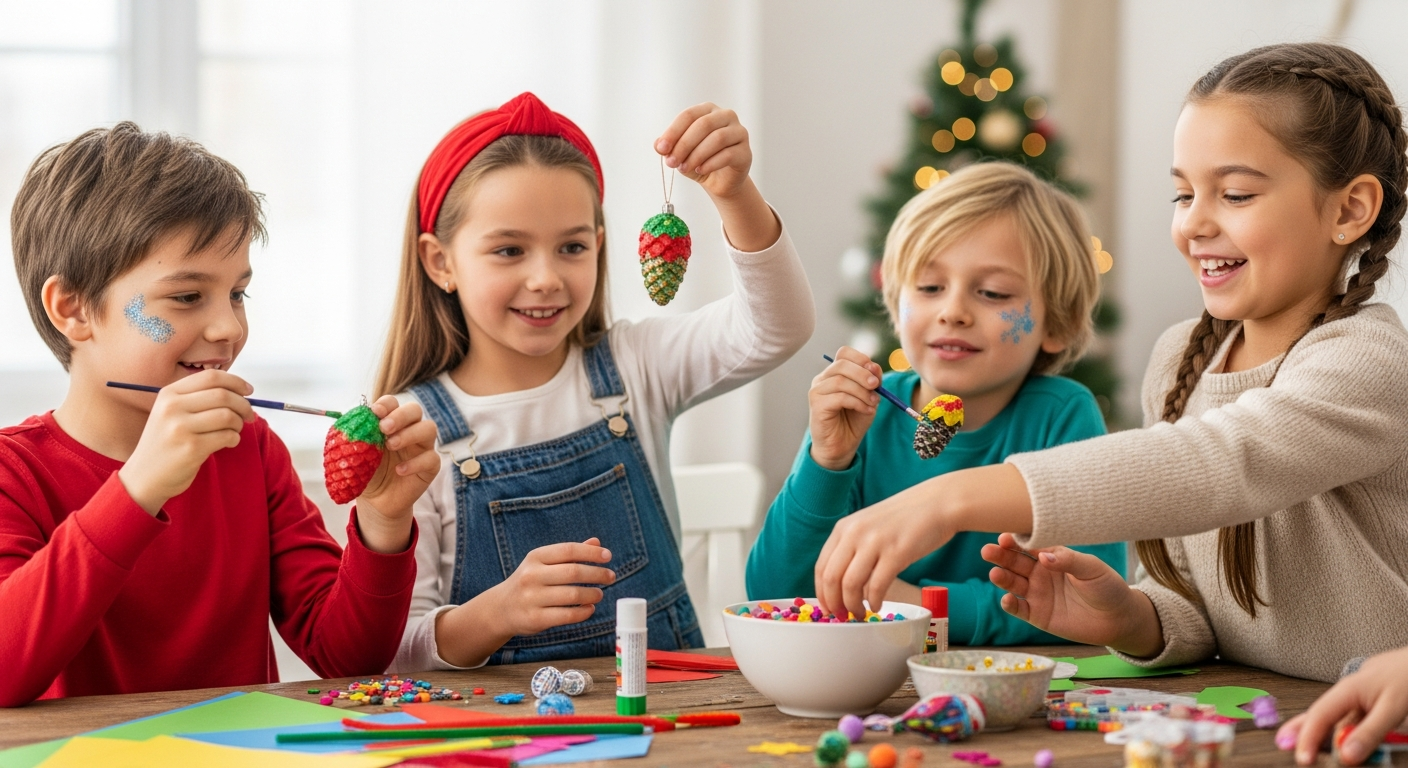
Table of Contents
- The Magic of Christmas Crafts for Communication and Development
- Our Favorite Cool Christmas Crafts for Kids
- Turning Craft Time into Speech Time: Expert Tips for Parents
- The Speech Blubs Difference: Supporting Your Child's Communication Journey
- Making the Most of Speech Blubs: Value and Pricing
- Conclusion
- FAQ
As the crisp air of winter settles in and holiday lights begin to twinkle, a familiar magic fills the air. For many families, this season sparks a desire for connection, creativity, and joy. But with our busy lives, it can be hard to find those truly special moments with our kids that are both fun and helpful. This holiday season, imagine turning simple things into treasured memories, encouraging not only art but also important communication skills.
At Speech Blubs, we want to help kids speak their minds and hearts, and we know that every little interaction can help them grow. We know the challenges some kids face with talking – our company was started by people who had speech problems themselves and wished they had a tool like this growing up. We're dedicated to providing a quick, effective, and fun solution for kids who need help with their speech, using both science and play in our "smart screen time" activities. While our app is a great tool, we also know how important hands-on activities are for building family connections and naturally encouraging speech development.

This blog post will explore the wonderful world of cool Christmas crafts for kids, with lots of ideas that do more than just decorate. We'll show how these holiday projects can help with communication, build important skills, and create family memories that will last forever. Get ready to find fun crafts for different ages, with tips on how to turn every cut, glue, and sprinkle into a speech-boosting adventure. Our goal is to inspire you to enjoy the holiday season with creativity, connection, and a better understanding of how play helps your child's communication.
The Magic of Christmas Crafts for Communication and Development
Christmas crafts are more than just a way to decorate your house or keep your kids busy; they're like fun learning games. For kids, especially those learning to talk, crafting is a great way to use all their senses to improve their communication skills. It's a fun, hands-on way to learn that fits right in with the holiday spirit.
Why Crafts are More Than Just Fun
Think about what goes into making a craft: you have to plan, pick out materials, follow instructions, solve problems, and, most importantly,talkabout it all. This natural process is a great way to help kids develop their language. They learn new words for colors, shapes, textures, tools, and actions (like "cut," "glue," "paint," "stick"). They practice listening by following directions and putting steps in order. They develop storytelling skills by explaining what they're doing or talking about the craft later.
Plus, crafts encourage kids to focus on the same thing with a parent or caregiver, which is important for learning to talk. When you're both focused on making a sparkly snowman, you're naturally talking back and forth, taking turns, and having fun together, all of which helps build a strong foundation for conversation. These moments become treasured memories and learning experiences.
Building Foundational Skills
Besides talking, crafting helps develop other important skills that are essential for overall development, including speech:

- Fine Motor Skills:Cutting with scissors, using small beads, squeezing glue, or painting details all help improve fine motor control. These skills are important for writing, but also for the precise movements of the tongue, lips, and jaw that are needed for clear speech. Strengthening hand muscles can also help with oral motor development.
- Cognitive Skills:Crafting involves putting things in order (first, then, next), solving problems (what if the glue doesn't stick?), sorting (putting all the red pieces together), and following instructions with multiple steps. These thinking skills are connected to understanding and using language.
- Sensory Exploration:Feeling different materials – the stickiness of glue, the softness of felt, the coolness of paint – is a great way to use the senses, which can be especially fun for some kids and help them focus on what they're doing.
- Creative Thinking and Self-Expression:Crafts let kids use their imagination and express themselves. They can tell stories with what they create, which often makes them more willing to talk about their ideas and feelings. This freedom to express themselves builds confidence, which can help with communication difficulties.
For a parent whose 3-year-old is a 'late talker' and loves animals, making a paper plate reindeer can be a fun way to practice animal sounds like 'reindeer goes gallop, gallop!' or 'red nose!'. Then, using Speech Blubs’s 'Animal Kingdom' section to reinforce these sounds and early words, where children learn by watching and copying other kids, is a great way to help them learn. Our video modeling method, which is based on research, uses children's natural ability to learn by copying, making learning new sounds and words a fun game. To see how our science-based methods create joy and progress, you canlearn more about the science behind Speech Blubs' video modeling here.
Encouraging Verbal Interaction
Craft time is the perfect time to talk. From getting your supplies to showing off your finished projects, there are lots of chances to have a conversation:
- Requesting:"Can I have the red paper?" "More glue, please!"
- Describing:"This glitter is sparkly!" "My snowman has a big carrot nose."
- Commenting:"That's a pretty star!" "Oh, no, the paint spilled!"
- Instructing:"First, we cut the circle, then we glue the eyes."
- Questioning:"What color should we use next?" "Where does the ribbon go?"
These interactions are the building blocks of conversation. By doing these activities together, children are not just making a craft; they are actively building their communication skills in a natural, relaxed way.
Our Favorite Cool Christmas Crafts for Kids
Let's get into some great Christmas craft ideas, sorted by how easy they are and what age they're good for. Remember, the goal is always to participate and interact, not to be perfect!
Easy Peasy Crafts for Toddlers & Preschoolers (Ages 1-4)
These crafts are simple, don't require much fine motor control, and are great for early language development. Always watch young children closely, especially with small pieces.
1. Handprint & Footprint Ornaments
- Materials:Salt dough (flour, salt, water), paint, glitter, ribbon, clear sealant (optional).
- How-to:Mix salt dough ingredients, roll it out, and press your child's hand or foot into it. Cut around the print, make a hole for a ribbon, and bake or let it air dry. Once it's hard, let your child paint and decorate it.
- Speech Blubs Connection:This craft is perfect for identifying body parts ("Where's your hand?"), action words ("press," "paint," "roll"), colors, and describing things ("soft dough," "sparkly paint"). For a parent working on first sounds, practicing 'h' for 'hand' or 'f' for 'foot' while making the craft, and then using Speech Blubs' various activities to encourage specific sounds and word combinations, can create fun learning moments. We focus on turning screen time into "smart screen time" that sparks communication.
2. Paper Plate Santas & Reindeer
- Materials:Paper plates, cotton balls, googly eyes, construction paper (red, brown, white), glue, markers.
- How-to:For Santa: paint the plate red, glue cotton balls for the beard and hat trim. Add paper eyes, nose, and mouth. For Reindeer: paint the plate brown, add paper antlers, googly eyes, and a red nose (for Rudolph!).
- Speech Blubs Connection:This activity is great for identifying colors, making simple requests ("red paper," "more glue"), animal sounds (for reindeer), and describing facial features ("big eyes," "fuzzy beard"). If your child is having trouble saying certain sounds, like 'r' for 'reindeer,' you can say it while you're crafting. Then, check out the app's sound sections for extra practice. You candownload Speech Blubs on the App Storeorget Speech Blubs on Google Playto explore the world of fun speech development!
3. Pom-Pom Christmas Trees
- Materials:Cardstock, green paint, pom-poms (various colors), glue, glitter.
- How-to:Roll the cardstock into a cone shape and glue it. Paint it green. Once it's dry, let your child glue pom-poms all over to decorate their "tree."
- Speech Blubs Connection:Focus on colors ("red pom-pom," "green tree"), counting (one, two, three pom-poms), and prepositions ("on the tree," "under the tree"). This is a simple craft that allows for lots of repetition and labeling.
Creative Crafts for Elementary Kids (Ages 5-8)
These crafts require a little more skill and the ability to follow several steps, offering more chances to practice putting things in order, using descriptive language, and solving problems.
1. Popsicle Stick Sleds & Ornaments
- Materials:Popsicle sticks, glue, paint, glitter, string.
- How-to:For sleds: arrange the sticks to make a sled shape (a flat platform with two curved runners). Glue them together. For ornaments: arrange the sticks into stars, snowflakes, or tree shapes. Paint and decorate. Add a string for hanging.
- Speech Blubs Connection:Perfect for explaining steps ("First, we lay the sticks, then we glue"), counting sticks, spatial concepts ("over," "under," "next to"), and describing the final product. If your child is working on putting things in order, making a multi-step craft like a popsicle stick ornament is a good way to practice the steps. Then, Speech Blubs' activities, designed to encourage specific sounds and word combinations, can reinforce these new communication patterns in a fun, interactive way.
2. Salt Dough Ornaments (More Detailed)
- Materials:Salt dough, cookie cutters (Christmas shapes), paint, glitter, clear sealant.
- How-to:Roll out the salt dough. Use cookie cutters to make shapes. Make a hole for hanging. Bake or let it air dry. Once it's cool, paint and decorate with more detail than simple handprints.
- Speech Blubs Connection:This activity encourages following multi-step directions, describing shapes, colors, and textures, and predicting what will happen ("What will happen if we add more water?"). It's also great for practicing words related to baking or cooking. Not sure if your child could use a little extra help? Take ourquick 3-minute preliminary screenerto get a simple assessment and a free 7-day trial.
3. DIY Snow Globes
- Materials:Small glass jars with lids, waterproof glue, glitter, distilled water, glycerin, small waterproof figurines (e.g., mini trees, snowman).
- How-to:Glue the figurine to the inside of the jar lid. Fill the jar with water, add a pinch of glitter and a few drops of glycerin (helps the glitter fall slowly). Screw the lid on tightly.
- Speech Blubs Connection:This craft sparks wonder and encourages descriptive language ("shimmering," "twinkling," "slowly falling"). Children can explain the process, describe the scene inside, and talk about cause and effect. It's a great sensory experience that prompts lots of questions and observations.
Advanced Crafts for Older Kids & Family Projects (Ages 9+)
These crafts encourage complex planning, detailed work, and working together, making them great for developing advanced language skills and bonding as a family.
1. Felt Ornaments
- Materials:Felt sheets (various colors), embroidery floss, needle (blunt for younger kids), scissors, stuffing, beads/sequins.
- How-to:Cut felt into Christmas shapes (stars, trees, gingerbread men). Stitch two pieces together, stuffing it lightly before closing. Decorate with beads or sequins.
- Speech Blubs Connection:This is great for following detailed instructions, using specific words ("stitch," "thread," "seam," "stuff"), and planning ("What color should I use for the star?"). It also provides chances for problem-solving conversations and expressing preferences. These discussions are key for children to learn to "speak their minds and hearts."
2. Pinecone Animals & Decorations
- Materials:Pinecones, googly eyes, felt scraps, small pom-poms, pipe cleaners, glue.
- How-to:Turn pinecones into reindeer, owls, or festive trees by gluing on various decorations.
- Speech Blubs Connection:Encourages imaginative storytelling ("My pinecone reindeer is flying to the North Pole!"), descriptive language about natural materials ("prickly," "earthy," "spiky"), and solving problems together. This kind of open-ended play can be very helpful.
3. DIY Advent Calendars
- Materials:Cardboard, small boxes, craft paper, paint, markers, small treats or activities.
- How-to:Create a calendar structure from cardboard. Decorate small boxes or paper envelopes, numbering them 1-24. Fill them with tiny toys, chocolates, or pieces of paper suggesting family activities.
- Speech Blubs Connection:This project is great for planning, putting things in order (days of the month), counting, and talking about what to expect ("What will be in number 5?"). It's a long-term project that builds excitement and provides daily opportunities to talk.
Turning Craft Time into Speech Time: Expert Tips for Parents
To get the most out of your Christmas craft sessions for speech development, you need to put in a little effort. Here are some expert tips to guide your interactions:
- Narrate and Describe Everything:As you craft, talk about what you're doing, seeing, and feeling. "I'm cutting theredpaper now." "The glue feelssticky." "Look at thesparklyglitter!" Use simple, clear sentences.
- Ask Open-Ended Questions:Instead of "Is this blue?", ask "What color is this?" or "What should we do next?". "Tell me about your snowman." These questions encourage more than a "yes" or "no" answer.
- Model Language:If your child points to the glue, say, "You want theglue. Say 'glue, please.'" Repeat words and phrases often. Modeling gives them good examples to copy.
- Encourage Imitation:During the craft, if you say "cut," encourage your child to say "cut" while they do it. Our main method at Speech Blubs, "video modeling," is based on this idea – children learn by watching and copying other kids. This natural way of learning makes speech development fun and effective.
- Use Repetition:Children learn by repeating things. Say the names of colors, shapes, and actions multiple times during the activity.
- Follow Their Lead:Let your child choose the craft or the materials when possible. When they are interested, they are more likely to talk.
- Be Patient and Positive:Celebrate effort and participation, not just the finished product. A positive and encouraging environment is important for building confidence in communication.
Remember, combining screen-free activities like crafts with targeted, interactive "smart screen time" from an app like Speech Blubs creates a strong, well-rounded approach to language development. We designed Speech Blubs to be a screen-free alternative to just watching TV (like cartoons) and a great way to connect as a family, not a replacement for it.
The Speech Blubs Difference: Supporting Your Child's Communication Journey
At Speech Blubs, we know that every child's communication journey is different. Our goal is to provide a quick, effective, and fun solution for kids who need help with their speech, empowering them to speak their minds and hearts. Our founders, who had speech challenges themselves, created Speech Blubs as the tool they wished they had—which shows how dedicated we are to helping.
"Smart Screen Time" vs. Passive Viewing
We're different from just watching TV because we offer "smart screen time." Our app requires active participation, making it a dynamic learning tool that goes well with hands-on activities like crafting. Children are engaged in copying, interacting, and responding, which turns screen time into a helpful developmental opportunity.
Video Modeling: How it Works and Why It's Effective
Our special approach is based on "video modeling." Children learn by watching and copying other kids on screen. This method uses mirror neurons in the brain, which fire both when we do something and when we watch someone else do it. This natural desire to copy makes learning sounds, words, and phrases very effective and fun for children. When your child sees other children making specific sounds or saying words, they are much more likely to try it themselves.
For example, if your child loves crafting a snowman, they might also enjoy the 'Outdoor Adventures' section in Speech Blubs, where they can practice words like 'snow' or 'cold' by copying other kids. This connects their real-world experiences with targeted speech practice. We are highly rated on the MARS scale, putting us in the top tier of speech apps worldwide because of our scientific foundation and engaging content. You canread what other parents are saying about Speech Blubsand see the positive impact we've had.
Our app has a huge library of activities that target sounds, words, sentences, and early reading skills, all designed to be fun and interactive. It's a great addition to a child's overall development plan and, when needed, professional therapy. You can explore our resources and learning opportunities by visiting theSpeech Blubs homepage.
Making the Most of Speech Blubs: Value and Pricing
We're honest about our pricing because we want to make sure you get the best value for your family. Speech Blubs offers two subscription plans to fit different needs:
- Monthly Plan:For $14.99 per month, you get access to all core Speech Blubs features.
- Yearly Plan:For just $59.99 per year, you get much more value. This is only $4.99 per month, which means yousave 66%compared to the monthly plan!
Why the Yearly Plan is the Best Choice
The Yearly Plan is not only cheaper; it also comes with exclusive features designed to help your child learn even more:
- 7-Day Free Trial:Only with the Yearly Plan can you try Speech Blubs for a full week before you commit. This lets you see how fun and effective our app is for your child.
- The Extra Reading Blubs App:Included at no extra cost, Reading Blubs is a great app that helps children develop important pre-reading and early literacy skills, further improving their communication skills.
- Early Access to New Updates:Be the first to try new activities, features, and content as we continue to improve Speech Blubs.
- 24-Hour Support Response Time:Get priority access to our support team, so any questions or issues are taken care of quickly.
The Monthly Plan does not include these benefits. If you want to give your child the best speech and language support and want to unlock all the features of Speech Blubs, the Yearly Plan is the best choice.
Ready to get started on this fun journey of communication and learning? You cancreate your Speech Blubs account and begin your 7-day free trial todayby selecting the Yearly Plan. Or, download the app and select the Yearly Plan to begin:Download Speech Blubs on the App StoreorGet Speech Blubs on Google Play.
Conclusion
This holiday season, enjoy the magic of cool Christmas crafts for kids as a wonderful way to connect with your children, spark their creativity, and greatly improve their communication skills. From simple handprint ornaments that encourage early vocabulary to detailed advent calendars that help with planning and descriptive language, every craft session is a chance to grow. By actively engaging with your child, talking about what you're doing, asking questions, and modeling language, you can turn holiday fun into helpful learning experiences that build confidence.
At Speech Blubs, we support these fun, hands-on family moments, knowing that they help build a foundation for effective communication. We're here to support you with our "smart screen time" approach, using video modeling to make speech development fun and effective for kids who need it. Our app is the tool our founders wished they had—a mix of science and play designed to help children speak their minds and hearts.
Don't let this holiday season go by without using these great opportunities for connection and development. Ready to combine the fun of crafting with a powerful, science-based tool for speech development? Start your journey today! We encourage you tochoose the Yearly planwhen you sign up to unlock the 7-day free trial, the bonus Reading Blubs app, and exclusive features.
Download Speech Blubs on the App StoreorGet Speech Blubs on Google Playto get started. You can alsocreate your Speech Blubs account and begin your 7-day free trialdirectly on our website. Give your child the gift of confident communication this Christmas!
FAQ
Q1: How do Christmas crafts specifically help with speech development?
A1: Christmas crafts help with speech development by introducing new words (colors, shapes, materials, actions), encouraging fine motor skills (important for oral motor control), helping with putting things in order and following directions, and encouraging talking through shared activities. Children naturally describe what they're doing, ask for materials, and share their creations, all of which build communication skills.
Q2: What age groups are these crafts good for, and how can I change them to fit my child?
A2: We've sorted crafts into Easy Peasy (toddlers & preschoolers, ages 1-4), Creative (elementary kids, ages 5-8), and Advanced (older kids & family projects, ages 9+). You can change crafts by making the steps simpler, pre-cutting materials for younger children, letting them choose colors or decorations, or using more complex materials and steps for older children. The key is to make sure they are actively participating and interacting at their level.
Q3: How can Speech Blubs help with our holiday craft activities?
A3: Speech Blubs helps by offering "smart screen time" that reinforces the language skills learned during crafting. For example, if your child practices animal sounds while making a reindeer craft, they can then practice those sounds by copying other kids in Speech Blubs' "Animal Kingdom" section. Our app provides targeted, engaging activities that build on real-world experiences, making learning complete and fun.
Q4: What is the best way to get started with Speech Blubs?
A4: The best way to get started and unlock all the benefits of Speech Blubs is by choosing our Yearly Plan. This option includes a 7-day free trial, the bonus Reading Blubs app, early access to new updates, and quick support. You can start your free trial and explore our features bycreating your Speech Blubs account on our websiteor bydownloading the app on the App StoreorGoogle Playand selecting the Yearly Plan.
Sobre el autor